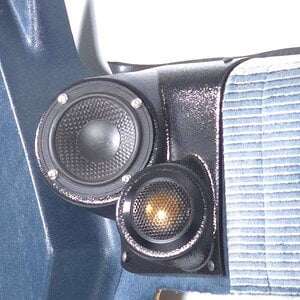
Yeah, but isn't he using it as a front center channel with a 6.5" speaker, not as a bridging method to get more power for a sub?It's not meant to be wired this way with tweeters, it's used for subwoofers because they need and benefit from more power. Tweeters receive the least power in the system and connecting them to a bridged amplifier is a good way to kill them.
When an amplifier is bridged, the speaker(s) connects to two channels, typically at th L+ and R- terminals. Some work this way, others need to have a switch moved to the Bridged position and those usually don't work in stereo mode after that. What's actually happening when the switch is moved- the signal that would go to one of the channels is inverted and the result is higher voltage from the output.
If you want a center channel, use a low powered amplifier (with common grounded speaker output) for the speaker (full range, not just a tweeter) and use the L+/R- terminals. This has been done for more than 65 years in stereo systems for the home.
The whole L-, R+ (or vice-versa) idea to power a center is old school.
Hafler actually patented some versions of the concept back in the 60's to get a center channel form a stereo amp setup, and Dynaco made a special outboard box to do it: https://web.archive.org/web/20120617074926/http://www.the-planet.org/dynaco/Misc/Quadaptor.pdf
I'm sure that's where the idea came from when they tried it in cars in the 80's/90's (when power was more expensive and options for amps were limited).
Last edited: