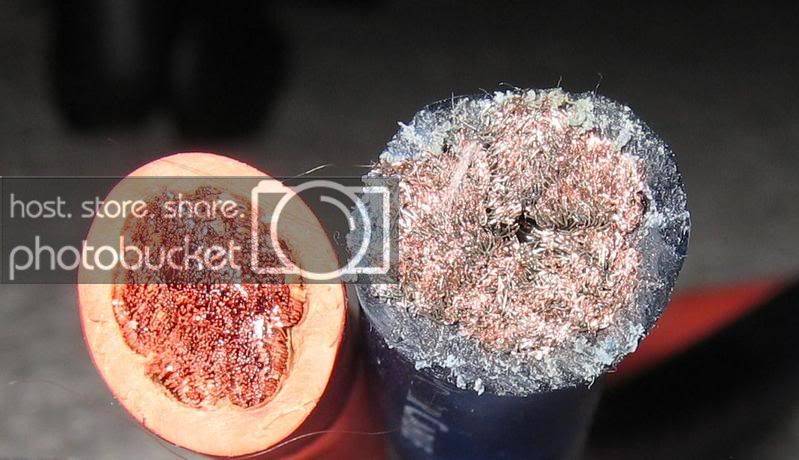
heres what it is.
copper wire is copper wire, that is a moot point.
flexibility is determined by jacket type, wire size, and strand count.
tinned wire is, when used in environments where corrosion will happen, a better choice, but not a better conductor.
high strand count is good because when dealing with electricity, there is something called the 'skin' effect. this is based on the fact that more electrons pass down the surface of a conductor rather than down the center of the conductor. so tons and tons of strands in a clump will have way more surface area than a giant thick copper buss bar that is 10 feet long. also strand count makes the wire more flexible. but this is just a nice benefit for installing in tight spaces.
oxygen free is a bonus because like i said, copper corrodes way faster than nickel or tin or any alloy they 'tin' wires with (coat the wire). this tinning process prevents corrosion, and oxygen is what causes it. its called oxidization for a reason meow. //content.invisioncic.com/y282845/emoticons/wink.gif.608e3ea05f1a9f98611af0861652f8fb.gif
so in short;
1. cars have lots of corrosion.
2. tinned wires prevent corrosion.
3. high strand count helps conduct electrons.
4. high strand count improves flexibility.
5. yay.
so there you have it. welding wire will be just as good as car audio power wire as far as performance goes. but you need to take precautions to prevent corrosion with that battery terminal goo stuff.
so who cares. long as it has a high strand count, and low guage, i would use it.