To better understand why your subs are blowing you need to know about what your gain knob is doing and how clipping hurts your equipment.
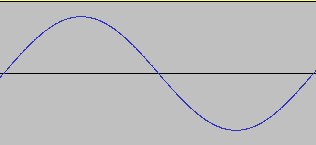
First, this is what a good sound wave looks like:
And this is what a clipped sound wave looks like:
Clipping is what is likely killing your subs. Not getting into too much detail, basically your sub makes sound by moving the cone based on the sound wave. When you're sending your sub hundreds of watts you can imagine the voice coil will heat up. The sub cools itself as it plays by moving air around the voice coil. But in a clipped wave, the sub is being sent a lot of power but is just sitting still. So how do we prevent this?
Start by eliminating anything that could be boosting your music. An EQ on your phone or headunit, bass boost gain on your amp, anything like that.
Next, you need to tune your amp using the proper settings. Since the headunit is a source for potential clipping you need to check that as well. Most cheap headunits will begin to clip their output before you reach max volume. If your headunit goes up to 35, try using it at 28 or 30. If it goes up to 60+, try it at 50 or 55. Once clipping is introduced into the signal, there's no way to get rid of it.
It's difficult setting your amp gain properly without the right equipment. But for you I would say don't go much over 1/2 of your gain. Gain is not a volume knob, it's a way of matching the amp to what your headunit is putting out for a signal. You can always have the gain a little too low and be on the safe side. If you set the gain too high, your amp will clip the sound wave really, really badly. Set your low pass filter somewhere around 60-80hz and set your subsonic to 30hz. Those should be relatively safe starting points.
Finally, if you keep feeling a temptation to turn your amp gain up just a little bit, or turn the volume on your headunit up a few more clicks, you should consider stepping up your system a bit. It's better to overbuild and have headroom than to push your system beyond its limits.










 For Sale Sky High Car Audio 6x9" Neo Mid-Bass Woofer Pair BNIB!
 Looking to buy a pioneer premier dex p99 car stereo if anyone has one for sale.