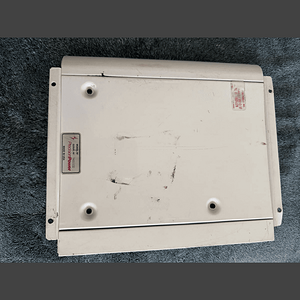
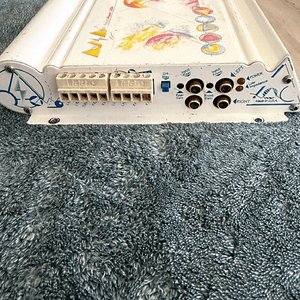
Do I need more amp or a higher preout voltage?

Just spitballing here, but would I stand to gain anything by going to two more efficient 12" subs in a sealed enclosure running off of the same 300 watts? I had a pair of MTX Eliminator 15" subs one time (I know I'm dating myself) mounted free air behind the rear seat of an old Chevy Nova that just hammered off of 300 watts. Maybe doubling my woofer area and getting more efficient subs would get me what I'm looking for and still be able to stay with a sealed enclosure. I really don't like the sound of ported boxes and if I can avoid going that route I will.
Thats what I would do. I'd also keep it old school then as well. Maybe 3 original W6s? Dual 6 ohm drivers. Wire the drivers in series then parallel them to the amp for a final 4ohm load. SQ should be top ntoch and with the surface rea of 3X10" should be able to supply output.

 
That is simply not true.
BS. With subs it takes a shit ton of distortion before it is audible. Our own ears become the problem at these frequencies, we are simply inefficient at listening to these frequencies. There are always the people with super-hearing that say they can though //content.invisioncic.com/y282845/emoticons/rolleyes.gif.c1fef805e9d1464d377451cd5bc18bfb.gif
If it was so **** audible to hear a clipped signal then we wouldn't need tutorials on setting gains for subwoofers.

 
The Results

While it is has been recognized for years that human hearing is not very sensitive to low bass frequencies, which must be reproduced with much more power and intensity in order to be heard, what these results show is that our detection threshold for “noise” (made up of harmonically related and non-harmonically related test tones) is practically non-existent at low frequencies. (The “noise” test tones are noise in the sense that they are not musically related to tones commonly found in musical instruments.) In fact, the “noise” tones at 20 Hz and 40 Hz had to be increased to levels louder than the music itself before we even noticed them. Put another way, our ability to hear the test frequency “noise” tones at frequencies of 40 Hz and below is extremely crude. Indeed, the results show we are virtually deaf to these distortions at those frequencies. Even in the mid-bass at 280 Hz and lower, the “noise” can be around -14 dB (20% distortion), about half as loud as the music itself, before we hear it.

http://www.axiomaudio.com/distortion.html

 
BS. With subs it takes a shit ton of distortion before it is audible. Our own ears become the problem at these frequencies, we are simply inefficient at listening to these frequencies. There are always the people with super-hearing that say they can though //content.invisioncic.com/y282845/emoticons/rolleyes.gif.c1fef805e9d1464d377451cd5bc18bfb.gif
If it was so **** audible to hear a clipped signal then we wouldn't need tutorials on setting gains for subwoofers.
While your reasoning is based in truth, your simply not correct. yes our ears do not hear distortion as easily in the subbass region, but to say the sub must surpass xmech before it becomes audible? You are off your rocker. What does xmech (the driver's "physical limitations") even have to do with audibility of distortion, according to your theory? //content.invisioncic.com/y282845/emoticons/eyebrow.gif.fe2c18d8720fe8c7eaed347b21ea05a5.gif
It doesn't take a golden ear to hear distortion in subbass, nice try. Lets turn your last statement around on you. If subbass distortion was so inaudible, we wouldn't have gain setting tutorials based around setting the gains by ear (listening for distortion).

I think you should be reading more and typing less in this convo, you seemed to be rather confused about the topic. Here you are lecturing about subbass distortion, and you dont evcen think its audible. Heck if we can't hear it, might as well crank our subbass amplifier gains, right? //content.invisioncic.com/y282845/emoticons/wink.gif.608e3ea05f1a9f98611af0861652f8fb.gif

The Results
While it is has been recognized for years that human hearing is not very sensitive to low bass frequencies, which must be reproduced with much more power and intensity in order to be heard, what these results show is that our detection threshold for “noise” (made up of harmonically related and non-harmonically related test tones) is practically non-existent at low frequencies. (The “noise” test tones are noise in the sense that they are not musically related to tones commonly found in musical instruments.) In fact, the “noise” tones at 20 Hz and 40 Hz had to be increased to levels louder than the music itself before we even noticed them. Put another way, our ability to hear the test frequency “noise” tones at frequencies of 40 Hz and below is extremely crude. Indeed, the results show we are virtually deaf to these distortions at those frequencies. Even in the mid-bass at 280 Hz and lower, the “noise” can be around -14 dB (20% distortion), about half as loud as the music itself, before we hear it.

http://www.axiomaudio.com/distortion.html
Interesting, now you think you cant hear distortion below 280hz? Do you set your sub gains by guess? And you fail to realize my contention with your statement had to do with your comment that the speaker's 'physical limitations' must be exceeded before distortion becomes audible. None of your quote above discusses that topic in any way, now you just want to discuss distortion levels based on frequency. Ive never argued subbass distortion is harder to hear than midrange, clearly it is. Stay on topic.
 
I think my amp is toast. I just went to the garage to replace the fuse I thought was bad in the amp's main power lead coming off the battery. Turns out it's good. Using a DMM I checked the power at the main power terminal on the amp and the power's there. I also checked the remote turn on signal and it's there as well. Both plug-in fuses on the amp are good as well. Unless this amp has an internal fuse that I'm not aware of, it may be toast. Something strange though, I thought 4 channel amps were basically two separate 2 channel amps mounted in one chassis. I'm not getting any sound from any of my speakers. You'd think that with a 4 channel amp, if an amp blows, it would only affect two of the channels and not all 4. That's why I'm wondering if this amp some kind of an internal fuse that's common to both amps.

 
Do you have a friend that will let you test out their amp? You might find that your current amp was on its way out all along.

As to your question on the 2 amps on the same chassis... that's only sometimes true. Plus there can be failures in the input stage on the amp which can make all of the channels go dead.

 
Does anyone have a stick dynamite? I'm just ready to blow this whole effin system to pieces!!!!!!!!!! I called Kicker tech support to find out if the amp has any internal fuses and it doesn't. He told me to check the preout voltage coming from my HU (with the volume set at like 20) and I'm getting nothing there. Nothin in DC, nothing in AC. I checked to make sure the HU's defeat function wasn't turned on and it's not. Why wouldn't I be able to read any voltage on my preouts? This whole thing has got me so effin pissed off!!!!!!! after I spent an entire week installing all this shitt and nothing works. Can you hear me screaming??????????

 
Does anyone have a stick dynamite? I'm just ready to blow this whole effin system to pieces!!!!!!!!!! I called Kicker tech support to find out if the amp has any internal fuses and it doesn't. He told me to check the preout voltage coming from my HU (with the volume set a t like 20) and I'm getting nothing there. Nothin in DC, nothing in AC. I checked to make sure the HU's defeat function wasn't turned on and it's not. Why wouldn't I be able to read any voltage on my preouts? This whole thing has got me so effin pissed off!!!!!!! after I spen an entire week installing all thi shitt and nothing works. Can you hear me screaming??????????
Relax, once it's all said and done you'll be fine.

 
Relax, once it's all said and done you'll be fine.
But now I'm right back to where I started; not knowing what the problem is. I don't know if I have a bad amp or if I'm actually getting no preamp signals from my HU.

 
But now I'm right back to where I started; not knowing what the problem is. I don't know if I have a bad amp or if I'm actually getting no preamp signals from my HU.
put the dmm leads on the rca cable's on one of them f.e. the left channel one, then set dmm to read AC, turn vol up to 20, see if u get a reading at all.

 
Activity
No one is currently typing a reply...
Old Thread: Please note, there have been no replies in this thread for over 3 years!
Content in this thread may no longer be relevant.
Perhaps it would be better to start a new thread instead.

About this thread

grampi

10+ year member
CarAudio.com Elite
Thread starter
grampi
Joined
Location
Cheyenne
Start date
Participants
Who Replied
Replies
134
Views
6,085
Last reply date
Last reply from
luvinthebass
IMG_0710.png

michigan born

    May 14, 2026
  • 0
  • 0
IMG_0709.png

michigan born

    May 14, 2026
  • 0
  • 0

New threads

Top