The only thing you've proven is that you have a somewhat short temper, and don't like being disagreed with (in which case the interwebs is gonna be a harsh ride for you, my friend).
Clamping woofers at all frequencies - indeed - that takes some time, and I'm sure you've got other things to do - (besides following up with supporting data)... good thing I picked up a DATS, takes it about 10 seconds... //content.invisioncic.com/y282845/emoticons/graduate.gif.d982460be9f153bb54e5d4cb744f6ae8.gif
For everyone else - here's a couple graphs I grabbed this evening (please forgive the scale between the two being a tad off):
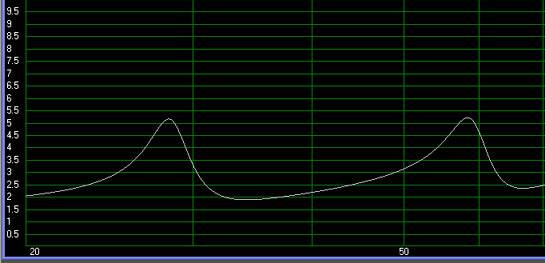
Daily beater box, Impedance plotted in WinISD
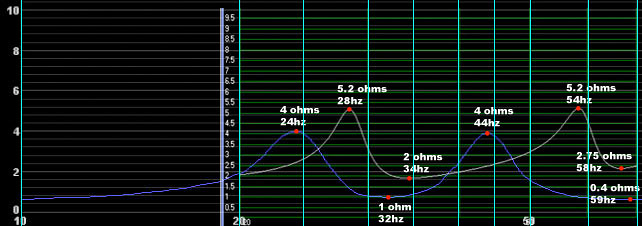
WinISD is showing a predicted port tuning around the 34hz area (the lowest impedance dip to the right of the peak on the left) with impedance maxing out around the 58hz area
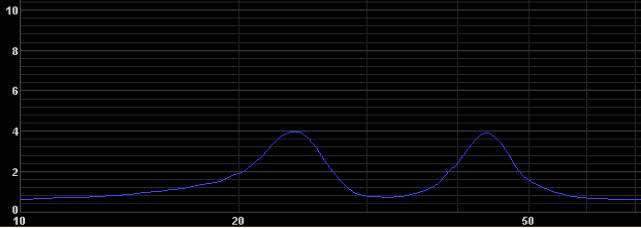
And here's what the DATS actually sampled in the car - (*a few words about that below the graph)
DATS is showing a similar shaped curve with tuning in the low 30s, and a shift to the left for the upper impedance peak. Why is this? Cabin gain (aka transfer function), as previously mentioned. Different vehicles are going to accentuate/attenuate different frequencies - and thus affect the impedance of the system.
*concerning my note above, this enclosure weighs around 150 pounds, not going to be able to get a out-of-car measurement at the moment. However, based on my experience, the impedance is going to raise slightly, and the peaks shift to that matching more closely the predicted WinISD curve.
So to sum up, top graph - took about 5 minutes of work at the keyboard.
Bottom graph - took about 3.5 hours of box building.
Now is that top graph 'close enough' for planning a box design? I suppose everyone has to decide that for themselves...