I agree with reducing road noise.
awesome.
Sorry I don't understand this. If the noise is louder than the radio, then you can't hear the radio.//content.invisioncic.com/y282845/emoticons/confused.gif.e820e0216602db4765798ac39d28caa9.gif
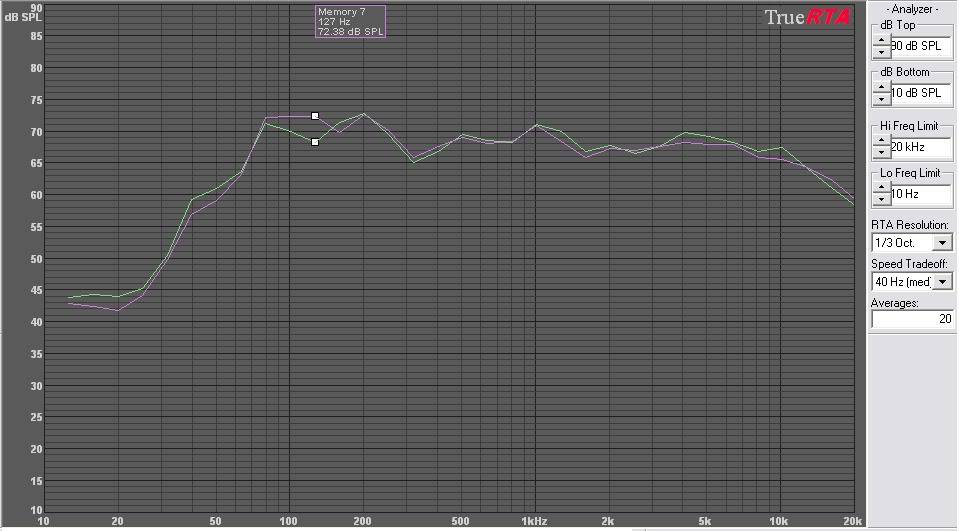
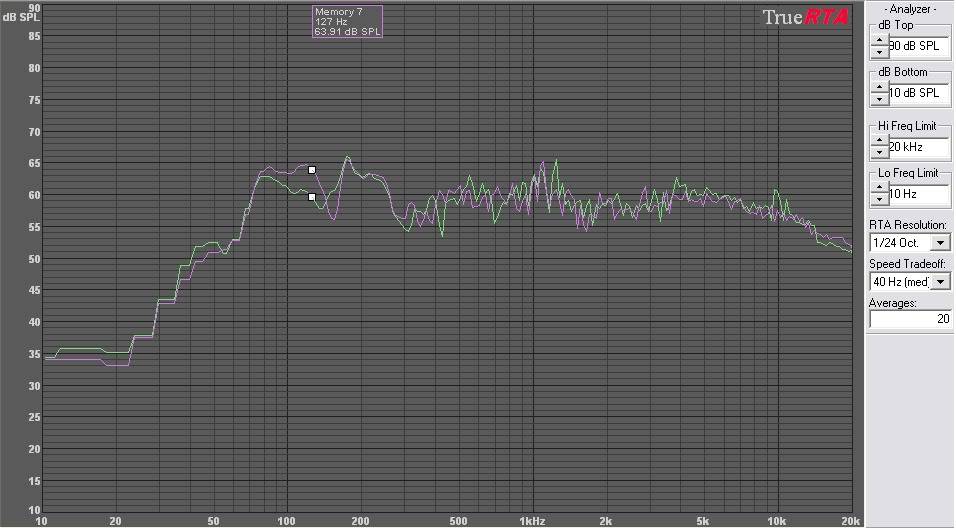
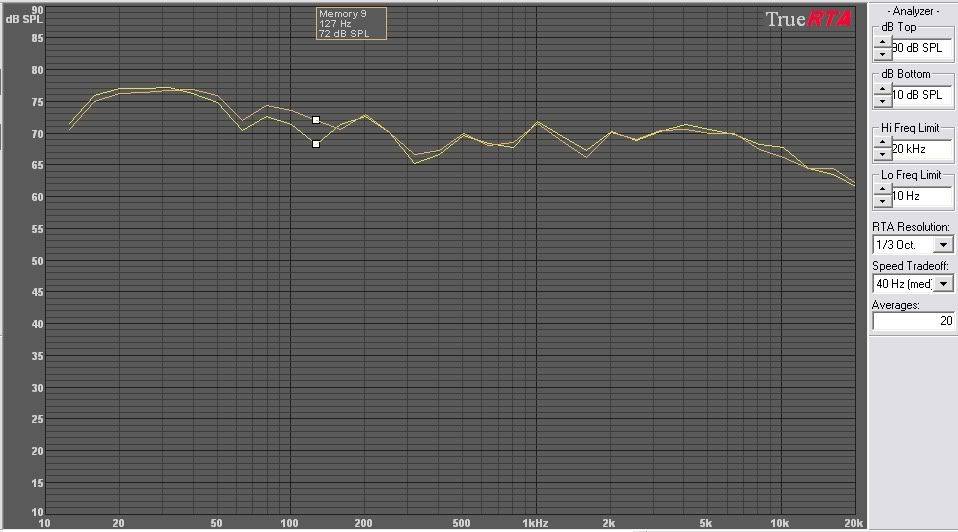
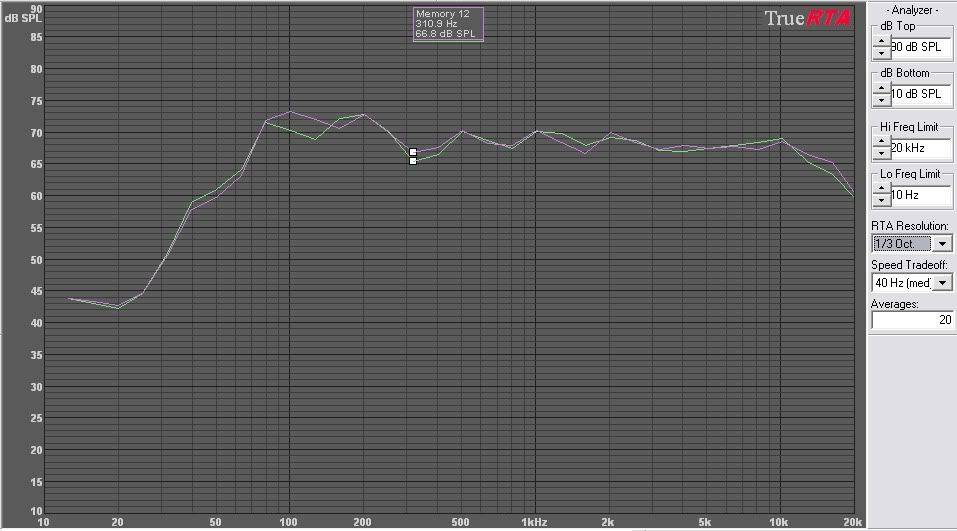
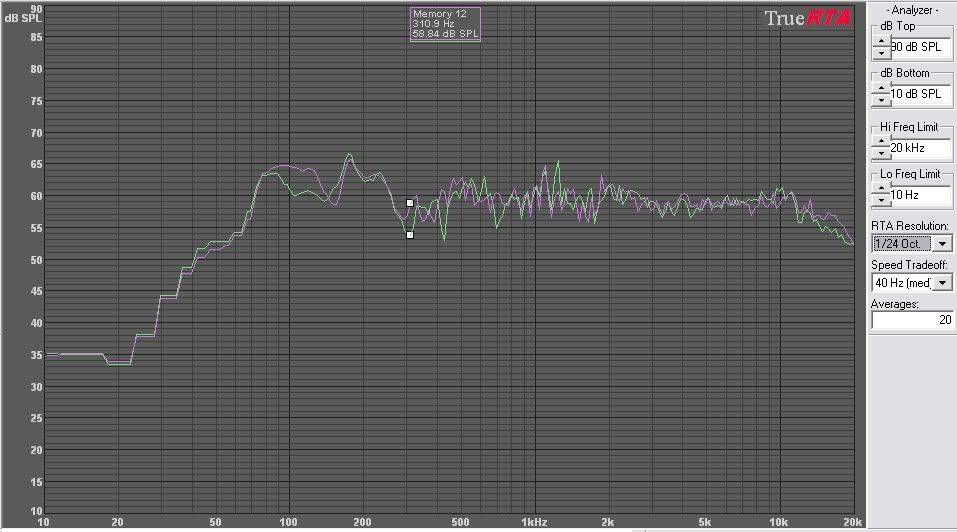
This is based on if you were to rta the response. The rta does not c,are whether it is noise or sound. So, if the bb noise is louder in some places or even all, since it essentially acts on an era like pink or brown noise, the rta will consider this a smoothed response to a point of the weighted function used. So, what I meant was, the bb noise will smooth the response in a measured aspect, not seerating sound from noise, like our ears do. //content.invisioncic.com/y282845/emoticons/biggrin.gif.d71a5d36fcbab170f2364c9f2e3946cb.gif hope that helps a bit
True, which is why many sq guys have very nice home stereos, It is way easier to have a low noise floor.
i could not agree more.
Can you find a reference to this? I found this: Equal-loudness contour - Wikipedia, the free encyclopedia If I am reading this correctly we are least sensitive at lower and higher frequency,and most sensitive around 2-5K.
Ironically, this is a great reference and something very similar to what I used in the military. All my references are from there so I cannot show any if I had it because my clearance was a tssci(highest possible) and when I got out, I had to shred everything I noted. But basically, if you look at this curve in the pic(Wikipedia is amazing by the way for having this), then you notice that a dip occurs between your referenced frequencies of 2-5kHz, and below 2khz...actually shown in that graph, closer to 1khz, the sensitivity increases(and I say sensitivity because though it is referenced in db, all other factors are constant in these measurements) nearly consistently down to the lowest frequencies. So, the higher the db(referenced), the higher our sensitivity to those frequencies are. If you were to mirror that response curve, you will get something that is realistic to an sq setup response for natural output. Now, keep in mind that yes, at lower frequencies we do tend to lose audible sensitivity, but this is counteracted by physical sensitivity such as vibrations...these will enhance the perspective of loudness even though they are inaudible. The same goes for higher frequencies when pain occurs from natural distortion of tweeters. Does that make sense? So, have you ever turned up a system, and the tweeters are painful? A great example would be most Mb quart drivers. This is what I am talking about for sensitivity...not measured sensitivity like it may be explaining such as simply listening to the source. I'm incorporating sensitivity with increased distortion or physical pressure changes. Because that makes a difference in an audible experience as well. Take bass shakers as a perfect example.
Um, you kind of lost me here. As far as Equal-loudness contours, Doesn't this not matter? (did I just hear someone hit the groan button ) The basic/simplified reason: If the mics recording the music have a flat FR and the speakers playing it back have a flat FR - Then sound comes out of the speakers the same as it went in!
See last
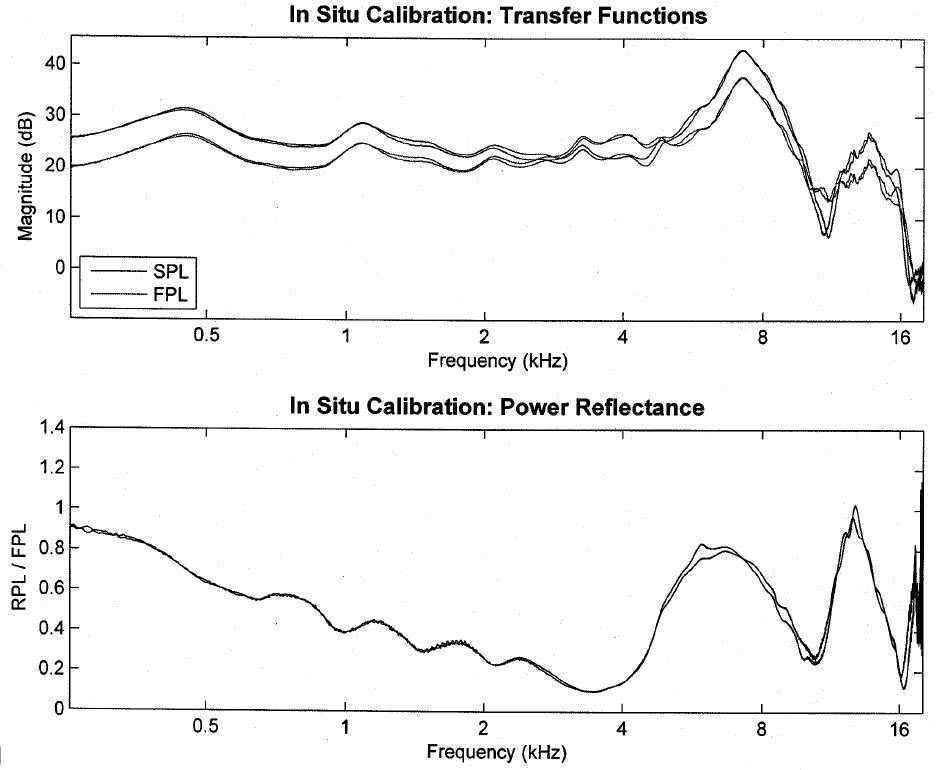
So if you know your car's transfer function, then you can design around that for the best SQ?
Yes and no. The transfer function changes in an environment for every single inch of listening positions available, and just by turning your head, you change the functions response. But an averaged function can be obtained. In a vehicle, there are actually symmetrically only 3 usable functions for every position in the vehicle. Once these are averaged independently with whatever resolution you choose...meaning number of listening positions, then they are averaged as a single response curve. So, accurately compensating for this perfectly is impossible for sq, but that also depends on the preferences sq response as well. And it is not just for sq, and actually is much easier to design around spl based setups due to the averages needed and changes that occur. But yes, a more accurate sq response can also be obtained than just putting speakers in and facing them to the listening point. A lot(and I mean a lot) can be involved than just the transfer function variables in setting the system up. But to answer the question more focused to the function, it is a yes and no answer and depends on what the goals are before they can be obtained or not. In some cases, it will not help, and will hurt the sq response, but that is why equalizers exist.
Please know that I am not trying to argue, I am trying to learn. I will try to rephrase my original question. What sound do most car audio guys, (Not the sq guys, as I think we are the minority here.) like to hear? What makes them or the kid on the street say "That is the best system I have ever heard! I want my car to sound like that!"
Oh, no problem at all. I hope this helped a little. As far as the general consensus of a full range sound, that is obviously relative, but majority...i have to agree that an anechoically flat response is generally not ideal. That more bass is considered to obtain a rich sound from a system. And if you look at the curve from the wiki source, you will see that the lower the frequency, the more output is needed to accommodate for lost (audible as they show it) sensitivity in that region.