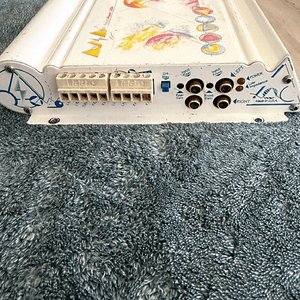
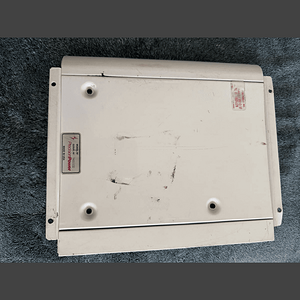
Soundqubed/audioque hdc3.0 12s

you have modified and modified, now put more in there and see if it flexs, you are missing the point, if you add more sound pressure and sound waves without modifying more you would have more flex from more preasure and waves, more pressure and more waves is more dbs...
i think you're missing the point

 
i think you're missing the point
the point is to retain the level of db without flex as much as possible correct?

we were originally looking at videos with flex seeing the output of the hdc3 12s, just to get a guesstimation of output, and along came everybody!!! lol

 
The same setup in my car would flex more in a Honda civic because they have a lower build quality.
not because of a lower quality build so to say, but the size of the area has changed and thus the ratio of sound pressure and waves would change but yes you are right..

 
not because of a lower quality build so to say, but the size of the area has changed and thus the ratio of sound pressure and waves would change but yes you are right..

the ratio of sound pressure and waves?

where the fock did you get this science from?

I have taken a fluid mechanics class for the engineering degree I have and in fact air behaves as a Newtonian fluid. Never learned about the ratio of sound pressure and waves.

 
the ratio of sound pressure and waves?
where the fock did you get this science from?

I have taken a fluid mechanics class for the engineering degree I have and in fact air behaves as a Newtonian fluid. Never learned about the ratio of sound pressure and waves.
think about when you are building a box and the difference between a small box and a big box, your car is basically a box, ratio is just the 2 numbers output and space output travels... and bro thats some basic high school sh1t you'd don't need a degree from...

 
Sound intensity is defined as the sound power per unit area. The usual context is the measurement of sound intensity in the air at a listener's location. The basic units are watts/m2 or watts/cm2 . Many sound intensity measurements are made relative to a standard threshold of hearing intensity I0 :

The most common approach to sound intensity measurement is to use the decibel scale:

Decibels measure the ratio of a given intensity I to the threshold of hearing intensity , so that this threshold takes the value 0 decibels (0 dB). To assess sound loudness, as distinct from an objective intensity measurement, the sensitivity of the ear must be factored in.

Since audible sound consists of pressure waves, one of the ways to quantify the sound is to state the amount of pressure variation relative to atmospheric pressure caused by the sound. Because of the great sensitivity of human hearing, the threshold of hearing corresponds to a pressure variation less than a billionth of atmospheric pressure.

The standard threshold of hearing can be stated in terms of pressure and the sound intensity in decibels can be expressed in terms of the sound pressure:

The pressure P here is to be understood as the amplitude of the pressure wave. The power carried by a traveling wave is proportional to the square of the amplitude. The factor of 20 comes from the fact that the logarithm of the square of a quantity is equal to 2 x the logarithm of the quantity. Since common microphones such as dynamic microphones produce a voltage which is proportional to the sound pressure, then changes in sound intensity incident on the microphone can be calculated from

where V1 and V2 are the measured voltage amplitudes .

if you need me to upload a whole pdf on it I can, and the graph of 2 loud speakers the only thing changed in the ratio is the amount of space the sound has to travel...


 
Sound intensity is defined as the sound power per unit area. The usual context is the measurement of sound intensity in the air at a listener's location. The basic units are watts/m2 or watts/cm2 . Many sound intensity measurements are made relative to a standard threshold of hearing intensity I0 :

The most common approach to sound intensity measurement is to use the decibel scale:

Decibels measure the ratio of a given intensity I to the threshold of hearing intensity , so that this threshold takes the value 0 decibels (0 dB). To assess sound loudness, as distinct from an objective intensity measurement, the sensitivity of the ear must be factored in.

Since audible sound consists of pressure waves, one of the ways to quantify the sound is to state the amount of pressure variation relative to atmospheric pressure caused by the sound. Because of the great sensitivity of human hearing, the threshold of hearing corresponds to a pressure variation less than a billionth of atmospheric pressure.

The standard threshold of hearing can be stated in terms of pressure and the sound intensity in decibels can be expressed in terms of the sound pressure:

The pressure P here is to be understood as the amplitude of the pressure wave. The power carried by a traveling wave is proportional to the square of the amplitude. The factor of 20 comes from the fact that the logarithm of the square of a quantity is equal to 2 x the logarithm of the quantity. Since common microphones such as dynamic microphones produce a voltage which is proportional to the sound pressure, then changes in sound intensity incident on the microphone can be calculated from

where V1 and V2 are the measured voltage amplitudes .

if you need me to upload a whole pdf on it I can, and the graph of 2 loud speakers the only thing changed in the ratio is the amount of space the sound has to travel...
Plagiarizing to sound smart ftmfw

Sound Intensity

 
Plagiarizing to sound smart ftmfwSound Intensity
lol, to sound smart? no copying so he could read I never claimed it was mine, and told dude to google it in a pm, also uploaded a pdf, both are from notre dame college, I tried putting it in to plain words but the college dude said the ratio thing so I gave him the ratio paperwork... dude it really don't matter to me cuz I know what I am talking about (lol even if noone else does) I thought I hit it on the nail when I explain that the car is the same as a sub box... but i guess not, also just like the mic in the 80prs...

 
Great sub. Put 1000-1500 rms on it tune your box low (like 32ish) and they will put that psi sub (which is also a great sub) to shame. As far as getting really low why not quit jacking around and get 15's? Just sayin

But on the real I have 4 of the aluminum coil hdc15's in a tahoe running off a crescendo bc 5500d and getting low is not the problem, Fixing the rattles is a huge problem however!! Lol

 
Activity
No one is currently typing a reply...
Old Thread: Please note, there have been no replies in this thread for over 3 years!
Content in this thread may no longer be relevant.
Perhaps it would be better to start a new thread instead.

About this thread

Nutdawg651

CarAudio.com Elite
Thread starter
Nutdawg651
Joined
Location
56308
Start date
Participants
Who Replied
Replies
75
Views
6,477
Last reply date
Last reply from
pro-rabbit
IMG_0710.png

michigan born

    May 14, 2026
  • 0
  • 0
IMG_0709.png

michigan born

    May 14, 2026
  • 0
  • 0

New threads

Top