fwb_1234
10+ year member
CarAudio.com Elite
Questions are bolded.
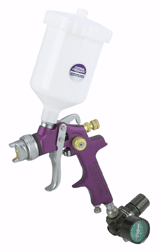
So, I got this with my compressor, used. It's a central pneumatic (read: Harbor Freight), but it seems that it would be hard to mess up that technology.
Anyway, I was messing with it today and I found some stuff that worked and some that didn't.
I turned on my compressor, let it fill up, and turned the regulator to about 40 (prolly 40-45) psi. The guy who I bought this from had a pressure gauge right under the gun and that read about 40 psi too. When I pull the trigger the pressure drops some, is that normal?
The first paint I tried was some latex enamel interior paint. It was pretty thick. After fooling with the settings a bit, I got maximum flow and the lease splattery pattern with the air coming from the 8 holes right around the paint hole (as opposed to the 4 holes that were on the little wings. The distribution of air was adjusted by a knob on the side. What is the point of changing the airflow?
I had to hold the gun very close to the target (scrap mdf) to get any sort of coverage, less than six inches.
I tried thinning the paint out with some thinner, then realized it needed to be thinned with water, but it was dinner so I poured some water in the bucket and sprayed until it was just water. When it was jut water spraying, it actually looked like a respectable spray. I took the bucket off the top, cleaned it. Then I took the air directing nozzle assembly off, and took a wrench to the fitting that was behind that. That came off and revealed the little paint "chamber." I cleaned that out with a water hose. I also unscrewed a knob on the rear of the gun and took out the pin and spring, just to see what was up. Then I sprayed it with some air to get the water out and put it back together. Is this the right way to clean this thing? It seemed like a lot of work.
After dinner, I set up some lights and tried my luck with some white oil based paint we used on the trim in the house. It was thinner than the brown latex paint used in the paragraph above. It may have been thinned prior to me using it. I tried some of it straight from the can into the sprayer and it sprayed much better than the thicker brown paint. I also thinned it out some more with some thinner and tried again. Obviously, it was thinner so it was a finer mist. Can I use both types of paint in the gun? The latex dries faster and cleans up easier, so I prefer it. Also, how am I supposed to know when the paint is thin enough?
When I was done with that, I cleaned out the paint bucket, and sprayed until it was just air. Then I pouring in some thinner and shot that through. It came out clear. I took it all apart and, using some thinner, cleaned it. It took about 10 minutes to clean. Is ten minutes about how long it should take me to clean the thing?
And there is a knob on the bottom of the sprayer, right in front of the air hookup. Turned all the way one way, it cuts of the air, but otherwise it seemed to do nothing. Does it do anything?
I planned on using it to spray boxes and furniture, not cars, btw.
So, I got this with my compressor, used. It's a central pneumatic (read: Harbor Freight), but it seems that it would be hard to mess up that technology.
Anyway, I was messing with it today and I found some stuff that worked and some that didn't.
I turned on my compressor, let it fill up, and turned the regulator to about 40 (prolly 40-45) psi. The guy who I bought this from had a pressure gauge right under the gun and that read about 40 psi too. When I pull the trigger the pressure drops some, is that normal?
The first paint I tried was some latex enamel interior paint. It was pretty thick. After fooling with the settings a bit, I got maximum flow and the lease splattery pattern with the air coming from the 8 holes right around the paint hole (as opposed to the 4 holes that were on the little wings. The distribution of air was adjusted by a knob on the side. What is the point of changing the airflow?
I had to hold the gun very close to the target (scrap mdf) to get any sort of coverage, less than six inches.
I tried thinning the paint out with some thinner, then realized it needed to be thinned with water, but it was dinner so I poured some water in the bucket and sprayed until it was just water. When it was jut water spraying, it actually looked like a respectable spray. I took the bucket off the top, cleaned it. Then I took the air directing nozzle assembly off, and took a wrench to the fitting that was behind that. That came off and revealed the little paint "chamber." I cleaned that out with a water hose. I also unscrewed a knob on the rear of the gun and took out the pin and spring, just to see what was up. Then I sprayed it with some air to get the water out and put it back together. Is this the right way to clean this thing? It seemed like a lot of work.
After dinner, I set up some lights and tried my luck with some white oil based paint we used on the trim in the house. It was thinner than the brown latex paint used in the paragraph above. It may have been thinned prior to me using it. I tried some of it straight from the can into the sprayer and it sprayed much better than the thicker brown paint. I also thinned it out some more with some thinner and tried again. Obviously, it was thinner so it was a finer mist. Can I use both types of paint in the gun? The latex dries faster and cleans up easier, so I prefer it. Also, how am I supposed to know when the paint is thin enough?
When I was done with that, I cleaned out the paint bucket, and sprayed until it was just air. Then I pouring in some thinner and shot that through. It came out clear. I took it all apart and, using some thinner, cleaned it. It took about 10 minutes to clean. Is ten minutes about how long it should take me to clean the thing?
And there is a knob on the bottom of the sprayer, right in front of the air hookup. Turned all the way one way, it cuts of the air, but otherwise it seemed to do nothing. Does it do anything?
I planned on using it to spray boxes and furniture, not cars, btw.