Wowza!Every thing in these amps was done with a purpose for SQ and reliability. The amps share NOTHING between the two channels, they source their own ground from one common point in the power supply and are not combined anywhere in the signal chain. Every signal path in the amp is shrouded by a ground trace on each side of the signal line to create a 360 degree noise shield around the signal, the board is 3 OZ copper, the big big class D amps are proud of saying they use 2 OZ copper. We use 3 OZ to minimize any high current losses and to reduce heat build up in the board. We use twin Burr Brown op-amps and neither channel is shared between the two. Even the gain pot is a 10% part where the standard for the industry is a 20% gain pot. The gain pot is the nearest point that the two signal paths come to each other.
These amps can be ordered with a DIP header and a DIP pack to set the voltage input exactly to the headunit (2,4,5 7,8 volts in) instead of using a gain control. there will be a plug in crossover card available and factory installed when ordering for he people that want a crossover. For those who don't the siganl path will be un-effected by the crossover since it will not be plugged in. the crossover card will also utilize a gain control or DIP packs to exactly set the crossover points and stop any chance of signal difference between the two channels. Ther is plent more i can go over about these amps. We will post a pic of the old haet sink in a little bit and I will go over those improvements we addedto the new heat sink. These amps can't be touched by anything we have done in the past and will outperform anything on the market that is true SQ.
The power filtering is handled in three stages to decrease noise ot a bare minimum, the power is filtered directly at the bridge rectifiers, then again when leaving the power supply in the center of the board, and again directly at the output devices to keep the power to them as squeaky clean as possible and to storing energy directly at the output devices. All caps are high grade audio caps, that are extremely low ESR and high temp caps. 6 different protection systems protect the amp, and are non-interactiive with the signal path. This is just a few of the advantages to this amp.
Power supply efficiency is in the plus 80 percent range and over all efficiency is in the low to mid 70 percent range. The LP2150 will make rated power of 150 x 2 with 30 amps of current. An example of the 2.2HV versus the first prototype of the LP2150, the 2.2HV had an internal voltage of 97 volts and the LP2150 had an internal voltage of 84 vo;lts yet the power output was almost identical except at low frequency and the 2150 beat the 2.2HV, the final version of the 2150 makes tons more power than a 2.2HV and also sounds tons better,and the 2.2HV was known as one of the great SQ amps.
We also use the highest grade of audio devices currently offered by On semi (Motorola) these devices only run at 30 percent of their capability, they are also the largest cased audio devices on the market and are used to dissapate heat effectively and quickly into the heat sink. The power supply only runs at around 27 percent of its capability at rated power. This terminates in well over 3 dB of headroom, and the damping factor is rated at the speaker terminals at 20 Hzs at greater than 375, not taken from an point on the circuit board to get a higher rating or at a higher frequency to make the figure bigger.
Any price talk yet?Every thing in these amps was done with a purpose for SQ and reliability. The amps share NOTHING between the two channels, they source their own ground from one common point in the power supply and are not combined anywhere in the signal chain. Every signal path in the amp is shrouded by a ground trace on each side of the signal line to create a 360 degree noise shield around the signal, the board is 3 OZ copper, the big big class D amps are proud of saying they use 2 OZ copper. We use 3 OZ to minimize any high current losses and to reduce heat build up in the board. We use twin Burr Brown op-amps and neither channel is shared between the two. Even the gain pot is a 10% part where the standard for the industry is a 20% gain pot. The gain pot is the nearest point that the two signal paths come to each other.
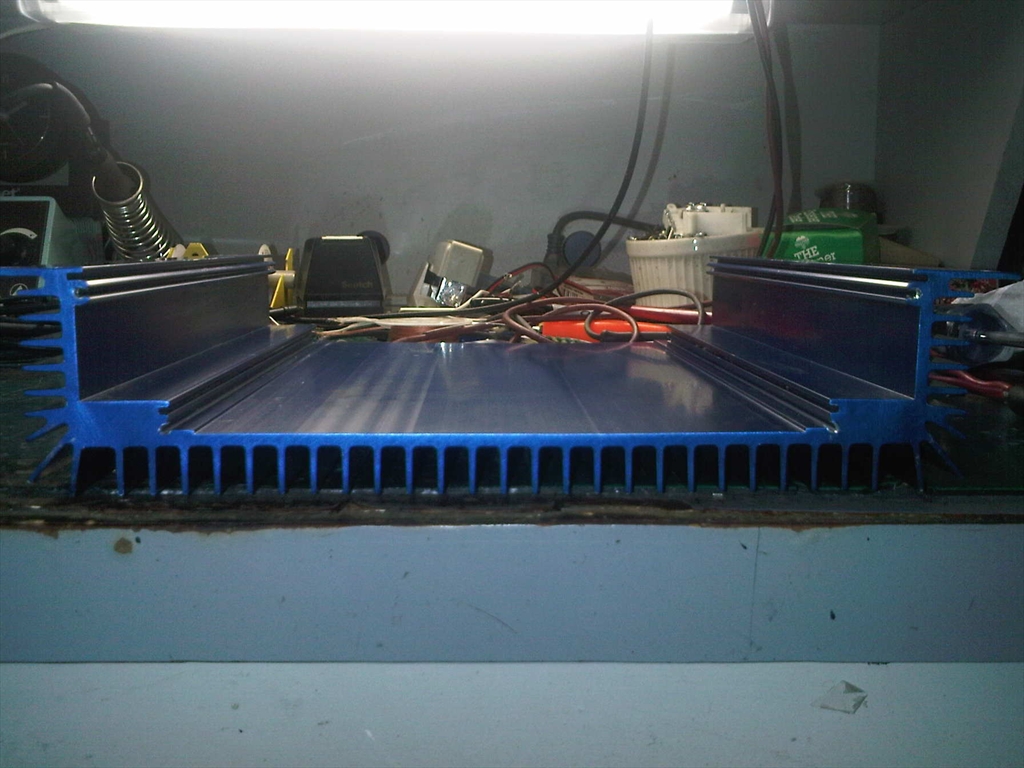
These amps can be ordered with a DIP header and a DIP pack to set the voltage input exactly to the headunit (2,4,5 7,8 volts in) instead of using a gain control. there will be a plug in crossover card available and factory installed when ordering for he people that want a crossover. For those who don't the siganl path will be un-effected by the crossover since it will not be plugged in. the crossover card will also utilize a gain control or DIP packs to exactly set the crossover points and stop any chance of signal difference between the two channels. Ther is plent more i can go over about these amps. We will post a pic of the old haet sink in a little bit and I will go over those improvements we addedto the new heat sink. These amps can't be touched by anything we have done in the past and will outperform anything on the market that is true SQ.
The power filtering is handled in three stages to decrease noise ot a bare minimum, the power is filtered directly at the bridge rectifiers, then again when leaving the power supply in the center of the board, and again directly at the output devices to keep the power to them as squeaky clean as possible and to storing energy directly at the output devices. All caps are high grade audio caps, that are extremely low ESR and high temp caps. 6 different protection systems protect the amp, and are non-interactiive with the signal path. This is just a few of the advantages to this amp.
Power supply efficiency is in the plus 80 percent range and over all efficiency is in the low to mid 70 percent range. The LP2150 will make rated power of 150 x 2 with 30 amps of current. An example of the 2.2HV versus the first prototype of the LP2150, the 2.2HV had an internal voltage of 97 volts and the LP2150 had an internal voltage of 84 vo;lts yet the power output was almost identical except at low frequency and the 2150 beat the 2.2HV, the final version of the 2150 makes tons more power than a 2.2HV and also sounds tons better,and the 2.2HV was known as one of the great SQ amps.
We also use the highest grade of audio devices currently offered by On semi (Motorola) these devices only run at 30 percent of their capability, they are also the largest cased audio devices on the market and are used to dissapate heat effectively and quickly into the heat sink. The power supply only runs at around 27 percent of its capability at rated power. This terminates in well over 3 dB of headroom, and the damping factor is rated at the speaker terminals at 20 Hzs at greater than 375, not taken from an point on the circuit board to get a higher rating or at a higher frequency to make the figure bigger.

//content.invisioncic.com/y282845/emoticons/greedy.gif.5a53e6246569d7ab79867170f3b06629.gif lolThey will not be cheap, but compared to the other SQ brands such as Zapco, Audison, Focal, Tru Technology, Mosconi and the such we come in several hundred dollars cheaper. We do not have the exact prices yet, but the really near ballpark is going to be
LP2075 (75x2 RMS @ 12.8 at 100 HZ or less) 900-1000.00
LP2150 (150x2 RMS same conditions 1200-1300.00
LP2250 (250x2 RMS same conditions 1800-1900.00
One thing you have to remember is that our pwoer ratings are at 12.8 at 100 HZ or less, all the brands I listed are at 14.4 volts at 1Khz. So our power output is SIGNIFICANTLY higher if we rate them like the other brands at 14.4.
Example the LP2150 is rated for 150x2 at 12.8, at 14.4 it makes a minimum of 195 watts a channel RMS. Comparing power versus price the Zapco 150x2 is 1499.00 retail, and the BASE True Technology 110x2 (they don't make a 150x2) is 1599.00 and if you want the SQ stage 4 upgrades (almost all the parts that you get with our STANDARD production unit) the price jumps to 2699.00 for the Tru Technology piece. We are going to be well hated by these companies when word gets out about a really TRUE SQ line of amps we have.
indeed ...But yes when you put them in perspective they are a great deal...
I know the feeling ...Why must I be poor???!!!
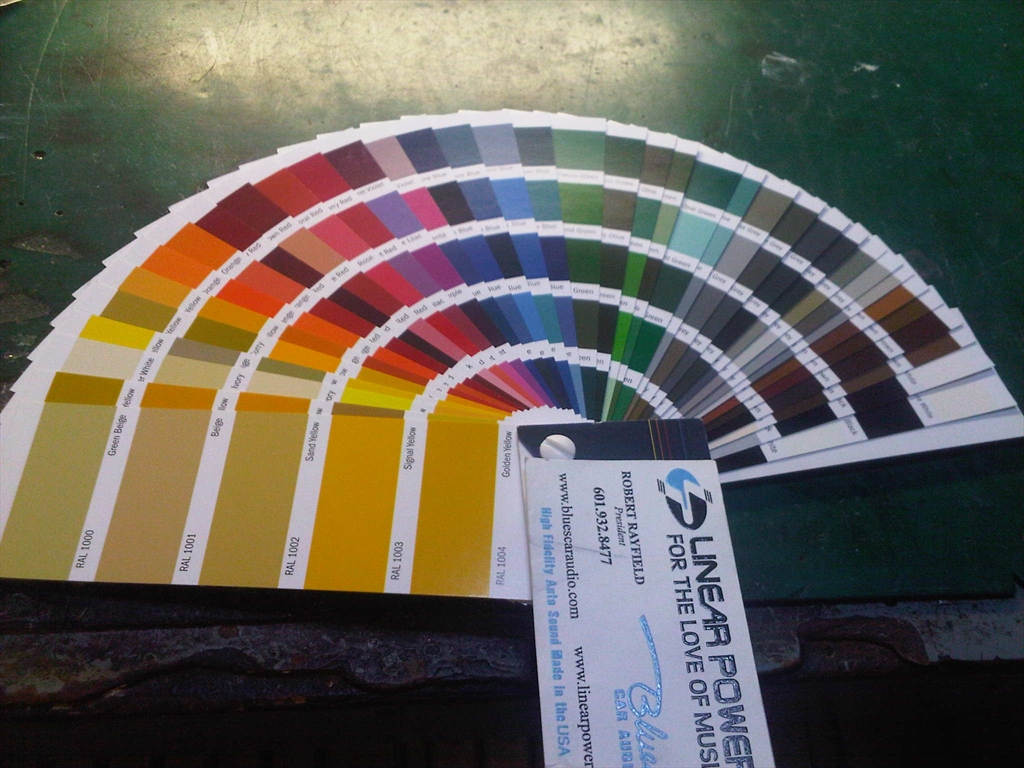
something about colors ??? I think that will not be a problem ...That will be awesome... OP any word on the colors?