Couple EQ questions?

efm80
10+ year member

Senior VIP Member
with an EQ in a deck I have a few questions:

1.) Lets say you have a graphic eq that has 20, 31.5, 80 freqencies to boost or cut. Now these are obviously subwoofer frequncies if you have one and a properly crossed over hpf, so my ? is when you boost or cut them does it affect the subwoofer? Or is an eq(talking about the 800prs) just affecting your front and rear speakers and not your subwoofers?? On my older premier deck when I mess with the low freq. eq it does not seem to affect my subs in the back

2.) Also when you adjust a certain frquency, lets say 8k, are you just boosting or cutting that exact frequency, or are other frequencies around that 8k also affected??

thanks

eddie

 
1) Eq will effect every speaker in your system.

2) Just that Frequency if it's an independent band eq, which the 880 & 800 are.

Do you have the 800?

 
1) Eq will effect every speaker in your system.
2) Just that Frequency if it's an independent band eq, which the 880 & 800 are.

Do you have the 800?
thinking about getting the 800prs. either that or the Kenwood DDX812 if I go with a double din.

So its only affects that exact frquency. So when you boost 8k why does it seem to seem to make all the higher end louder??

eddie

 
I'm not sure about the Pioneer because I think its a straight through EQ...but on the Kenwood it has independant front and rear EQ...so If you adjust your highs on the front stage it won't effect your rear fill....One thing I don't like about the Kenwood is its inability to go active....unless externally processed of course...

 
thinking about getting the 800prs. either that or the Kenwood DDX812 if I go with a double din.So its only affects that exact frquency. So when you boost 8k why does it seem to seem to make all the higher end louder??

eddie
What HU are you using?

 
So its only affects that exact frquency. So when you boost 8k why does it seem to seem to make all the higher end louder??

eddie

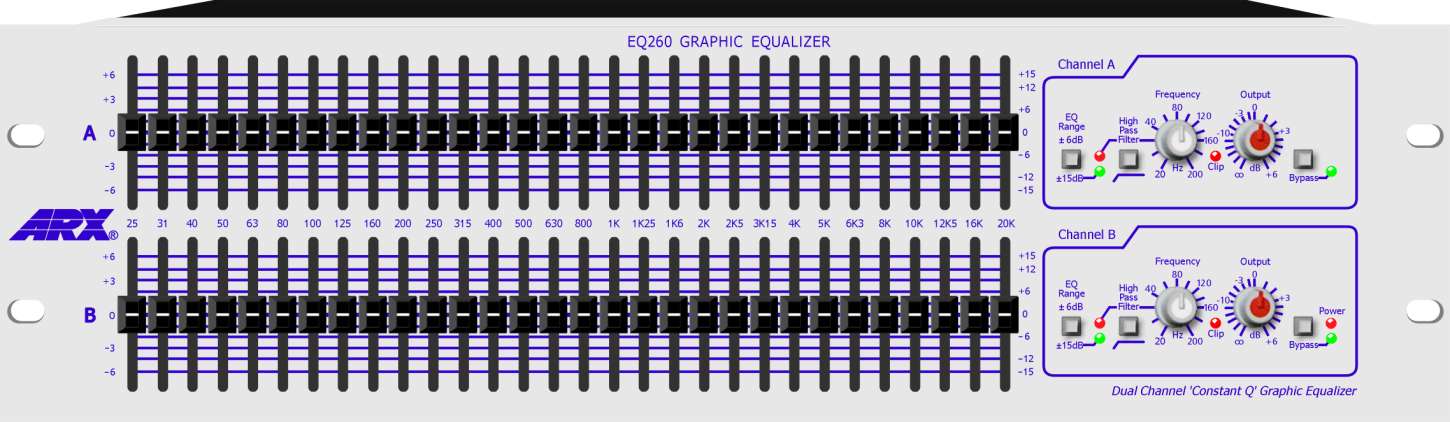
No, it's not an exact frequency, but a slope across that section of the spectrum; 1/3 or 1/2 octave. Depending on how the crossover in the eq is designed it may be 6-12 db per octave slope above and below the center freq. 8 khz is the CENTER of that boost, but not the only frequecy that is boosted.

So a sublte boost of only 1-2 at 8 khz should only be noticable at 8 (or between around 7.8 khz - 8.2 khz).

A harder boost of 3-4 db at 8 khz, will effect a wider band, like 7 - 9 khz.

A severe boost 5-8 db, will effect a wide part of that band (6 - 10 khz), but still centered at 8 khz.

It's like the peak of an ice berg or a mountian. At first its only a point, but the higher it gets, the wider it gets.

8 khz is pretty high already. Above most vocal sounds and into the timbre of cymbals and where airy sounds begin. Most stock speaker systems don't go much higher than 10-12 khz.

1 Khz is generally considered the "middle" freq of human hearing. Most of the human voice is 300 - 3,500 hz. Our total hearing range is about 20 - 20,000 hz.

 
EQ260-f-big2.jpg
 
No, it's not an exact frequency, but a slope across that section of the spectrum; 1/3 or 1/2 octave. Depending on how the crossover in the eq is designed it may be 6-12 db per octave slope above and below the center freq. 8 khz is the CENTER of that boost, but not the only frequecy that is boosted.So a sublte boost of only 1-2 at 8 khz should only be noticable at 8 (or between around 7.8 khz - 8.2 khz).

A harder boost of 3-4 db at 8 khz, will effect a wider band, like 7 - 9 khz.

A severe boost 5-8 db, will effect a wide part of that band (6 - 10 khz), but still centered at 8 khz.

It's like the peak of an ice berg or a mountian. At first its only a point, but the higher it gets, the wider it gets.

8 khz is pretty high already. Above most vocal sounds and into the timbre of cymbals and where airy sounds begin. Most stock speaker systems don't go much higher than 10-12 khz.

1 Khz is generally considered the "middle" freq of human hearing. Most of the human voice is 300 - 3,500 hz. Our total hearing range is about 20 - 20,000 hz.
that makes perfect sense! thanks for the great answer bro. quick question. If 8k is already pretty high, why do some of these EQ's go up to 16k and even the 800prs goes up to 20k! what affect would you notice from those frequencies??? And if a deck has some adjustable EQ freq. at like 20, 31, 60hz would those affect your subwoofers???? thanks

And cloudwalka I am using the Premier DEH-MP780. Its an older one that has a 3 Band parametric EQ.

eddie

 
And if a deck has some adjustable EQ freq. at like 20, 31, 60hz would those affect your subwoofers????
As was mentioned, it will be dependent upon the deck.

But if it's a less expensive unit, it will probably affect the subwoofer output aswell.

And cloudwalka I am using the Premier DEH-MP780. Its an older one that has a 3 Band parametric EQ.
If it's a true parametric, you can adjust the "bandwidth" of frequencies that the boost/cut will affect. It is called the "Q", and adjusting the Q will adjust the bandwidth and slope of the effects of adjusting that equalizer band. The lower the Q, the wider the bandwidth. The higher the Q, the narrower the bandwidth.

Also, EQ's extend up to 20khz because that's how high human hearing is capable of extending.

 
As was mentioned, it will be dependent upon the deck.
But if it's a less expensive unit, it will probably affect the subwoofer output aswell.

If it's a true parametric, you can adjust the "bandwidth" of frequencies that the boost/cut will affect. It is called the "Q", and adjusting the Q will adjust the bandwidth and slope of the effects of adjusting that equalizer band. The lower the Q, the wider the bandwidth. The higher the Q, the narrower the bandwidth.

Also, EQ's extend up to 20khz because that's how high human hearing is capable of extending.
thanks bro, but why if it is a "less expensive" deck will it affect the subwoofer output?? So better decks low bands of EQ do not affect subs??

Also it is a true parametric with Q settings. Its actually very useful, just takes some time to tune. If you had a choice Sqeak, would you purchase a deck with a 7 band "parametric" EQ or a deck with a 13 or 16 band "graphic" EQ??

thanks!

eddie

 
thanks bro, but why if it is a "less expensive" deck will it affect the subwoofer output?? So better decks low bands of EQ do not affect subs??
Also it is a true parametric with Q settings. Its actually very useful, just takes some time to tune. If you had a choice Sqeak, would you purchase a deck with a 7 band "parametric" EQ or a deck with a 13 or 16 band "graphic" EQ??

thanks!

eddie
A 7-band parametric in the right hands would be quite a bit more capable than would a 16 band graphic. 7 bands is a lot for a parametric, 16 bands is not alot for a graphic.
 
Activity
No one is currently typing a reply...
Old Thread: Please note, there have been no replies in this thread for over 3 years!
Content in this thread may no longer be relevant.
Perhaps it would be better to start a new thread instead.

About this thread

efm80

10+ year member
Senior VIP Member
Thread starter
efm80
Joined
Location
las vegas,nv
Start date
Participants
Who Replied
Replies
11
Views
900
Last reply date
Last reply from
audioholic
IMG_20260515_202650612_HDR.jpg

sherbanater

    May 15, 2026
  • 0
  • 0
IMG_20260515_202732887_HDR.jpg

sherbanater

    May 15, 2026
  • 0
  • 0

New threads

Top