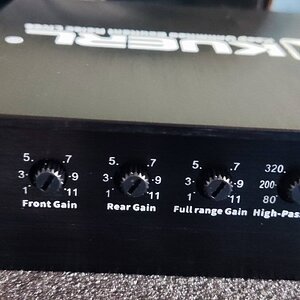
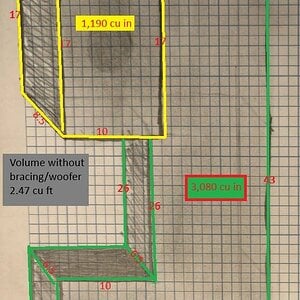
Anybody have opinions on wiring diagram?

Helo, I corrected myself about the fuse in the back. why do you got to be a dick. You trying to impress someone? Holy crap, you can post a chart.. you got me good.//content.invisioncic.com/y282845/emoticons/clap.gif.178cba2c538c68e720c727fcb024b19c.gif How about next time you just say what you have to say instead of flaming other people.
Wasn't trying to be a dick, but it annoys me when people try to state as fact something that is complete BS.
ANL are nice for systems, because if you get a real hard pump and pull something closer to the MAX powers alot of people try to claim (like the 27,000W sony amp rated at 500rms) then they will not blow the fuse and make you replace it for 1 second of bump. Downside is your letting your amps get away with more then intended. I would go with a fast blow fuse for the amplifier fuse for that reason. everything else I would do the slow blows so your charging system had a few seconds grace to get the bats re-charged.
For a sub amp I would use an ANL for two reasons. First if the amp is really big and needs external fusing, its the only type of fuse that will be big enough. Second, amps are designed to pull excess power when needed, sub amps especially. It's not getting away with anything, it's called headroom. RMS power ratings are based on two things, the ability of the amp to produce an unclipped signal and the ability of the amp to shed the heat created from producing that amount of power continuously. Most all amps can do way more for short bursts without any negative consequences. During music playback the amp is not producing anywhere near its max RMS power and if you do the math on most amps, the current required to produce rated power is greater than the rated fusing. Pretty much all amps today have some sort of overload protection. If the amp is truly doing more than it should it will shut itself off. The fuse is there only as a backup and if it comes to the point that the fuse blows, there is already something wrong with the amp. A fast blow fuse won't offer any greater protection than a slow blow in the event of a massive overcurrent, because once you get in the range of where a slow blow will break, the fast blow isn't really any quicker. The only difference is the annoyance factor of having to change a fast blow fuse (which will blow at lower than its rated amperage, BTW) every time you turn i up a bit on really dynamic music.
I'm sorry if I offended anyone with anything I say. So much stuff in systems is personal opininon on how it should be done or what to use wear. I hate it when people try to specificaly target otheres for differance of opinons.
I singled you out only to correct false information. It wasn't meant as a personal slam. You'd know if I was getting personal, trust me.
 
Just so you know, in that fuse explination you linked me, it said that ANLs were intended for main power wire. Not saying your really wrong with anything else, just saying that even that article said what its for. But in defense of what your saying also... I havent seen anything approaching the close to 300A he will need in anything but a ANL or a circuit breaker. So where as I dont think it si the BEST thing he should use, its better then a breaker, and theres nothing else available in that range.

 
Biggest fuse that I know of that is not an ANL is a MIDI (mini ANL) and they are available up to 150A and are also slow blow. If you were really concerned about it you could go to the trouble of getting a fused distro block to split the 0ga into 3-4 4ga each with a 100A MAXI fuse and then use a ground distro block to re consolidate it back to a single 0ga but you don't need to go to that trouble.

The larger amps are built with the type of fuse that would be used with them in mind. The manufaturer takes the required overcurrent needed to blow the fuse and the current required operate the amp into consideration when specifying a fuse. They are designed to be used with a slow blow fuse. If you were to switch to a fast blow you would have to guess at how big you would need to go to allow the amp to operate normally without constantly blowing fuses and at that point there is no guarantee that you will have the right size fuse anymore to protect the amp.

 
Activity
No one is currently typing a reply...
Old Thread: Please note, there have been no replies in this thread for over 3 years!
Content in this thread may no longer be relevant.
Perhaps it would be better to start a new thread instead.

About this thread

xpl0it

10+ year member
CarAudio.com Elite
Thread starter
xpl0it
Joined
Location
everywhere
Start date
Participants
Who Replied
Replies
64
Views
3,884
Last reply date
Last reply from
helotaxi
IMG_20260506_140749.jpg

74eldiablo

    May 22, 2026
  • 0
  • 0
design.jpeg

WNCTracker

    May 22, 2026
  • 0
  • 0

New threads

Top