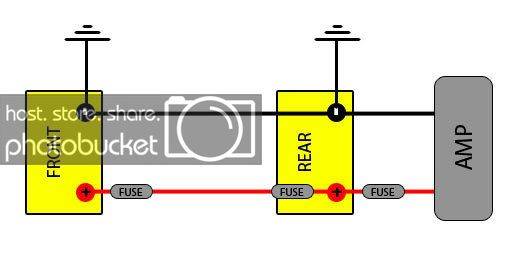
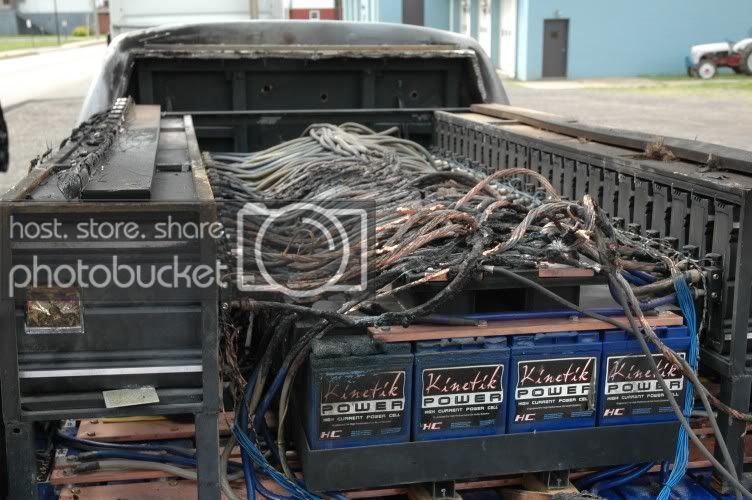
Here is the best dumbed down way i could think of explaining this.
When you have a power source like a battery, it has the ability to store electrons that are used to do work. Some work examples would be lights, sound, or heat. Basically, when electrons flow, they will do some work.
Now, since electrons flow in a circle in a DC system, the are created on the positive plates of your battery and flow out of the POS+ post of your battery. They then follow the shortest path back to the NEG- post. They don't care what they have to do to get there, they just want to get there.
So if that shortest path is a dead short, they will do some work in the form of heating up the wires making the connection. That heat will typically start a fire given we are talking about fairly large batteries. Even some of the smaller audio batteries like the HC600 has enough stored power to produce near a thousand amps at a dead short. That will melt even the best 1/0 wire for sure.
So what you have to ask yourself is this: Are you SURE that your POS+ wire will NEVER short out? Imagine a rear end accident. Your battery has the chance of moving around and not being exactly where you intend it to be under normal circumstances. In that circumstance where you are rear ended and the battery is shorted, if you have a fuse, it will blow opening the circuit. No fire. Now if you didn't fuse that wire, then you can be sure to have a fire on hand and you better be able to get out of that car before it melts through the trunk floor and hits the gas tank.
Are you sure you don't want that $10 fuse?