why are aero ports better than any other?

I've never had to double-up on mdf, but I do use some internal bracing when neccessary. When you make 5ft long boxes like me, you have to use bracing.
Which is 100% understandable. My point is that a slot port wall isn't going to always give you much benefit you in terms of bracing, especially if that slot port is a good distance away from a sub. At some point you will need to do internal bracing.

 
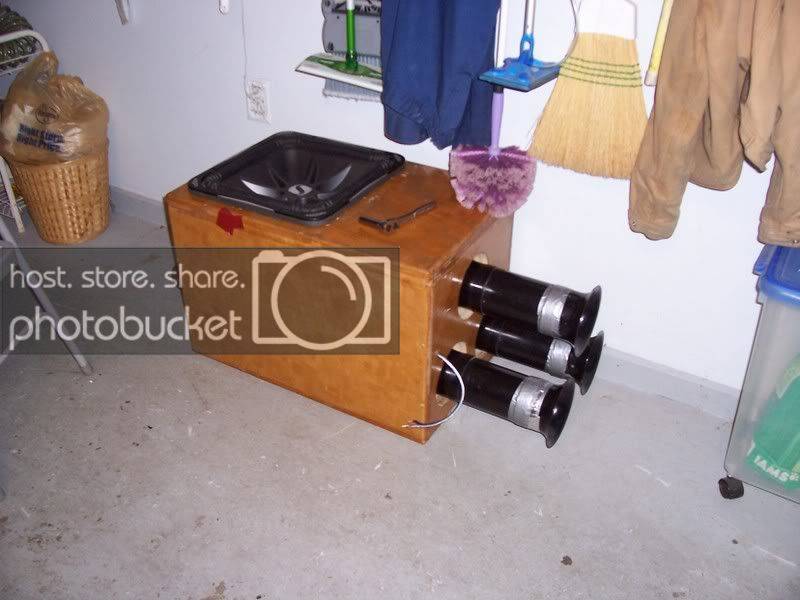
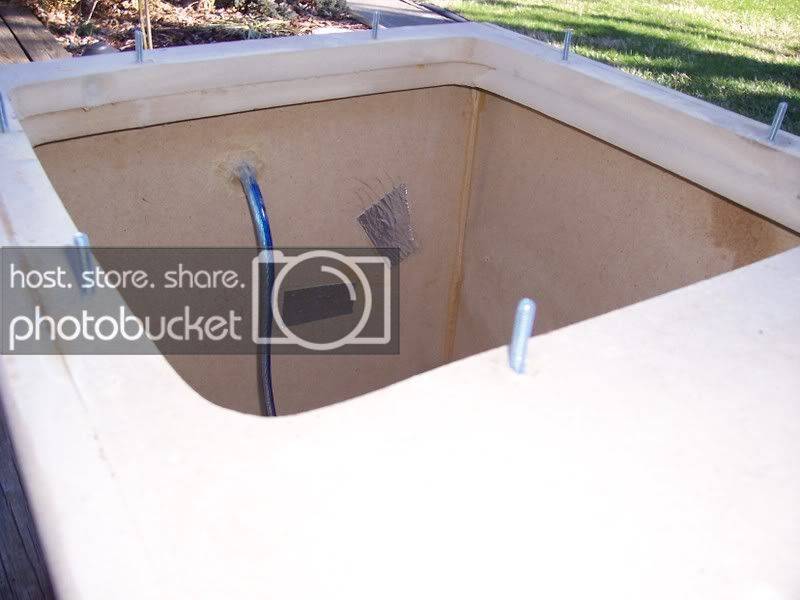
I'm more referring to the dimensions of the box and sub placement rather than double layering. For example, my aero boxes:
100_1049.jpg


100_1202.jpg


With the placement of the sub (near corners) and overall slim design bracing isn't very necessary. They don't seem to flex, especially considering that the bigger one did a 146 @ 40hz at the headrest.
Placement of the speaker near the corners does not help with the necessity of bracing. The speaker will create a certain amount of pressure inside the box either way. The only question is how much the walls will flex given this amount of pressure.
Most times internal bracing is not only more efficient than double-wall boxes, its usually leads to a stronger box as well.

A 'small' box that doesn't require bracing, be it due to box size or power going into the box, really isn't relevant to our discussion.

Cheers.

 
I'm curious as to why it doesn't? Does material not flex more as it becomes longer?
Why would putting the mounting hole for the speaker closer to the corners make the material shorter? The baffle you mount the speaker to does not change size according to where you place the cut-out hole.
 
^^^What audioholic said.
The pressure created by the sub has much more effect on box flex than the sub itself does.
Then why have people blown boxes apart more easily at a low frequency (when the sub has more throw) compared to a higher frequecy? If you stuck a meter in the box at a low frequency would the sound pressure be greater?

 
The only thing I know about speaker placement nears walls is, in extreme situations, like SPL competition, placing the speaker near one wall, but not others, is said to create a rocking motion while the cone excurts. Uneven pressures about the cone, created by having a 'loading wall' near one quadrant of the cone and not the others, will cause non-linear excursion and possibly blow the speaker prematurely. Again, Im speaker of extreme power and pressure situations, SPL competition. Foir most daily boxes, how close the speaker is mounted to the wall(s) shouldn't make any noticeable difference.

 
Why would putting the mounting hole for the speaker closer to the corners make the material shorter? The baffle you mount the speaker to does not change size according to where you place the cut-out hole.
Is the joint not the stiffest part of the box?

BTW I'm not trying to argue with you.

 
Then why have people blown boxes apart more easily at a low frequency (when the sub has more throw) compared to a higher frequecy? If you stuck a meter in the box at a low frequency would the sound pressure be greater?
Okay, so now you seem to be relating the frequency being played to the mounting position of the sub? Im confused what your position is at this point, boxes blow from mounting the speaker too far from the corners, or from playing too low a freq with a long throw driver...?
 
Im confused what your position is at this point, boxes blow from mounting the speaker too far from the corners, or from playing too low a freq with a long throw driver...?
My post was in response to the person that I quoted. He said that flex was due to the pressure within the box and not the sub itself. That is why I brought up frequency vs. sound pressure.

Edited - To make sense

 
Is the joint not the stiffest part of the box?
BTW I'm not trying to argue with you.
I know you aren't arguing, no worries bud.
Yes, the corner is the strongest point. What I think you are missing however is the speaker will generate the same amount of force on the baffle wall whether its mounted near the corners, or in the center.

Lets say we mounting the speaker VERY near the corners/end of a very long box. You are suggesting the box will flex less because the driver is mounted near the corners, where strength is the greatest. The problem is you are forgetting its not so much the physical vibration of the speaker itself that causes enclsoure flex, its the pressure generated from the cone's motion. This force will be generated, and be approximately the same inside the box, no matter how close you mount the speaker to the walls/corners.

In the example, the speaker mounted close to the corners, common sense would say the vibrating mass is near the strongest point in the box, therefore this should produce the least amount of 'flex'. But in reality its the pressure that is flexing the walls, and that pressure will still be the same amount in the center of the walls as it would have been had the speaker been placed in a different spot on the baffle.

Hope that clears it up for you.

 
I know you aren't arguing, no worries bud.
Yes, the corner is the strongest point. What I think you are missing however is the speaker will generate the same amount of force on the baffle wall whether its mounted near the corners, or in the center.

Lets say we mounting the speaker VERY near the corners/end of a very long box. You are suggesting the box will flex less because the driver is mounted near the corners, where strength is the greatest. The problem is you are forgetting its not so much the physical vibration of the speaker itself that causes enclsoure flex, its the pressure generated from the cone's motion. This force will be generated, and be approximately the same inside the box, no matter how close you mount the speaker to the walls/corners.

In the example, the speaker mounted close to the corners, common sense would say the vibrating mass is near the strongest point in the box, therefore this should produce the least amount of 'flex'. But in reality its the pressure that is flexing the walls, and that pressure will still be the same amount in the center of the walls as it would have been had the speaker been placed in a different spot on the baffle.

Hope that clears it up for you.
Yes, that makes sense. However, I still have yet gotten a concrete answer as to why a low frequency and strong throw is more likely to break a joint opposed to a higher frequency and lower throw. What if both produce the same SPL inside the box? What's the most likely outcome?

 
Activity
No one is currently typing a reply...
Old Thread: Please note, there have been no replies in this thread for over 3 years!
Content in this thread may no longer be relevant.
Perhaps it would be better to start a new thread instead.

About this thread

memphis_vette

10+ year member
CarAudio.com Elite
Thread starter
memphis_vette
Joined
Location
Redding, CA
Start date
Participants
Who Replied
Replies
38
Views
2,632
Last reply date
Last reply from
Lakota
IMG_20260516_193114554_HDR.jpg

sherbanater

    May 16, 2026
  • 0
  • 0
IMG_20260516_192955471_HDR.jpg

sherbanater

    May 16, 2026
  • 0
  • 0

New threads

Top