*New Test: Sundown SAZ-1500D*

Dont the eagle pitchers rest at a lower voltage but can give out much more current?
I know they have a ton of reserve and are good for tone bursts IIRC.

Mike bartells uses them in his extreme 3-4 van. //content.invisioncic.com/y282845/emoticons/smile.gif.1ebc41e1811405b213edfc4622c41e27.gif

 
Yea Im tryin to find a link for em online but so far no luck.

I bet my can has space for one under the hood.

hmmmm //content.invisioncic.com/y282845/emoticons/smile.gif.1ebc41e1811405b213edfc4622c41e27.gif

 
Yea Im tryin to find a link for em online but so far no luck.

I bet my can has space for one under the hood.

hmmmm //content.invisioncic.com/y282845/emoticons/smile.gif.1ebc41e1811405b213edfc4622c41e27.gif
http://www.ephorizon.com/Horizon/Products/Batteries/Product_Spec.htm

//content.invisioncic.com/y282845/emoticons/smile.gif.1ebc41e1811405b213edfc4622c41e27.gif

And yes, they are no longer manufactured.

 
It just when the coil moves throughout the gap, change in temperature of the coil, etc. IIRC, larger boxes are usually more prone to it than smaller ones. Those are all reasons for impedence rise but just a couple.

 
Then tell me how to accurately determine actual wattage then.
The way we did it is the way that i've ALWAYS seen done, by anyone. It's the same way loyd tests amps, its the same way scottie j tests, its the same way EVERYONE tests. Except for you apparently.

I'm not sure what you are trying to accomplish with your posts. Seems like you are just being difficult for the sake of being difficult.

The ratings I produced are REAL world results that nearly anyone with a decent electrical system can acheive. If you somehow see a giant flaw in the way things are done, then do them yourself.

I thought I was doing a service to the caraudio.com community (at least as far as I can tell from all the people thanking me for posting the tests), but apparently you don't see any benefits from it. Maybe I should just stop testing amps all together until I learn the "proper" way from you? //content.invisioncic.com/y282845/emoticons/rolleyes.gif.c1fef805e9d1464d377451cd5bc18bfb.gif

For the sake of this thread and its relevance to the topic, don't bother posting any more of your shit in my thread.
So my posts trying to clear up the falsness in your tests are just "shit" to you? I guess ignorance is bliss. //content.invisioncic.com/y282845/emoticons/rolleyes.gif.c1fef805e9d1464d377451cd5bc18bfb.gif

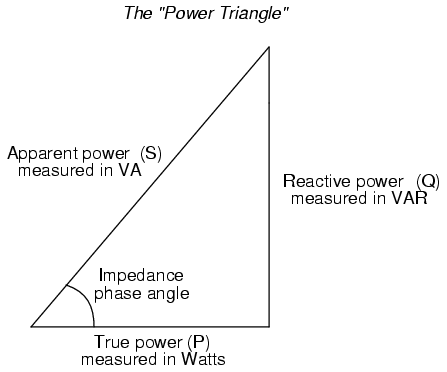
I'm not being difficult here; I'm trying to clear things up. You have NOT measured true RMS power and neither has anybody else who randomly tests like this. CEA does not measure power like this. They use purely resistive loads which almost completely eliminates the imaginary part of the power triangle. Have you bothered reading my posts, or xluben's posts (take note of the power triangle), and trying to understand them? Your results are NOT real results as you have a good amount of inductance as seen with the impedance rise. Anything over the DCR is rise in impedance which is caused by inductance. This makes the apparent power larger than the true power.

Let me mspaint it for you:

2yplthz.png


Notice how the black and red lines in triangle "A" are not very close to being the same size? Notice how the black and red lines in triangle "B" are much closer in length? This is the difference in apparent power (red line) and true power (black line). The blue line represents the reactive part of the load due to inductance.

If you want to make this test more accurate, use a purely resistive load and a scope to check for clipping. Then and only then will you have a pretty accurate test. If you can't do that, and keep it controlled, then try finding a frequency where the impedance rise is very minimal to reduce the variation in power.

I'm not trying to be a dick here, unlike you. I'm just trying to correct things and help you learn something. I'm sorry that you're upset I'm not praising you for these results. The only "real world" results you have given were the dB number difference from the 2500.1 and this amp.

Oh, and adding a capacitor in series will reduce impedance rise but I would not recommend doing it at all. It won't be worth the time or hassle and you would not see a gain from it, but it would work.

 
this is a really n00b question, but how does impedance rise occur?
Impeadance rise comes from resistance of cone motion and inductance. Also, as temperature rises, Re rises which inherently causes a rise in impeadance as well...Impeadance rise from the coil heating up is a form of power compression.

 
So my posts trying to clear up the falsness in your tests are just "shit" to you? I guess ignorance is bliss. //content.invisioncic.com/y282845/emoticons/rolleyes.gif.c1fef805e9d1464d377451cd5bc18bfb.gif
I'm not being difficult here; I'm trying to clear things up. You have NOT measured true RMS power and neither has anybody else who randomly tests like this. CEA does not measure power like this. They use purely resistive loads which almost completely eliminates the imaginary part of the power triangle. Have you bothered reading my posts, or xluben's posts (take note of the power triangle), and trying to understand them? Your results are NOT real results as you have a good amount of inductance as seen with the impedance rise. Anything over the DCR is rise in impedance which is caused by inductance. This makes the apparent power larger than the true power.

Let me mspaint it for you:

2yplthz.png


Notice how the black and red lines in triangle "A" are not very close to being the same size? Notice how the black and red lines in triangle "B" are much closer in length? This is the difference in apparent power (red line) and true power (black line). The blue line represents the reactive part of the load due to inductance.

If you want to make this test more accurate, use a purely resistive load and a scope to check for clipping. Then and only then will you have a pretty accurate test. If you can't do that, and keep it controlled, then try finding a frequency where the impedance rise is very minimal to reduce the variation in power.

I'm not trying to be a dick here, unlike you. I'm just trying to correct things and help you learn something. I'm sorry that you're upset I'm not praising you for these results. The only "real world" results you have given were the dB number difference from the 2500.1 and this amp.

Oh, and adding a capacitor in series will reduce impedance rise but I would not recommend doing it at all. It won't be worth the time or hassle and you would not see a gain from it, but it would work.
So basically you want me to do testing with a 1 ohm resistor?

How is that a real world test? Nobody ever has a pure 1 ohm load consistently across all frequencies that you would find in any music. Doing a pure 1 ohm test is a completely WRONG test to do if you are looking for REAL WORLD power results.

I don't care what an amp can do with a 1 ohm load, I care what it does IN MY CAR, WHERE IT COUNTS. If you somehow think that the way you are testing amps is a correct interpretation of what an amp will do in a car on music/tones, then you are fairly ignorant.

Once again, I don't care to listen to your crap any more. I posted MY results with the way I test, if you know of a better way to test things out, then do the tests yourself and post the results. Until then, don't bother telling me how to do things without doing them yourself.

 
//content.invisioncic.com/y282845/emoticons/confused.gif.e820e0216602db4765798ac39d28caa9.gif
NewBitmapImage.jpg


and yes there is also RMS power, but it's not Vrms*Irms. that is apparent power.

02218.png


and, as you can see by the power triangle, the actual power will be less than the apparent power.
Doh! You're right. I wasnt thinking. I ment to just say RMS power. ie I*V. //content.invisioncic.com/y282845/emoticons/smile.gif.1ebc41e1811405b213edfc4622c41e27.gif

 
So basically you want me to do testing with a 1 ohm resistor?
How is that a real world test? Nobody ever has a pure 1 ohm load consistently across all frequencies that you would find in any music. Doing a pure 1 ohm test is a completely WRONG test to do if you are looking for REAL WORLD power results.

I don't care what an amp can do with a 1 ohm load, I care what it does IN MY CAR, WHERE IT COUNTS. If you somehow think that the way you are testing amps is a correct interpretation of what an amp will do in a car on music/tones, then you are fairly ignorant.
They are saying that music is dynamic and not a single tone. Do a test a more than one frequincy.

Also Vrms*Irms is not W 'rms.'

 
They are saying that music is dynamic and not a single tone. Do a test a more than one frequincy.
Also Vrms*Irms is not W 'rms.'
Like i've stated multiple times, this test was more than just a power test. It was a comparison to my zx2500 in the SAME EXACT CONDITIONS.

If i did that frequency test with the sundown, that would mean i would have to do it with the kicker as well, which I don't care to do.

If it makes any bit of difference, the sundown did a 150.2 playing young jeezy-thug motivation 101. But that really doesn't prove much because I never metered the zx2500 on music.

I did this test the way i've been told how, and the way that everyone else has done their tests. Why I'm catching so much flack for it I don't know. I don't recall this much b*tching going on in loyd's thread....

 
Activity
No one is currently typing a reply...
Old Thread: Please note, there have been no replies in this thread for over 3 years!
Content in this thread may no longer be relevant.
Perhaps it would be better to start a new thread instead.

About this thread

tommyk90

5,000+ posts
THE WHOLE THING!!!
Thread starter
tommyk90
Joined
Location
Chicago Heights, IL
Start date
Participants
Who Replied
Replies
120
Views
9,212
Last reply date
Last reply from
Immacomputer
IMG_20260516_193114554_HDR.jpg

sherbanater

    May 16, 2026
  • 0
  • 0
IMG_20260516_192955471_HDR.jpg

sherbanater

    May 16, 2026
  • 0
  • 0

New threads

Top