Electrical Upgrade

Emanuel Rodriguez

CarAudio.com Recruit
Hello everyone, I am planning on upgrading my current sound system in my 08 silverado. I am currently running around 1500w rms on voice and bass together. I wanna upgrade my subwoofers and go up to total of around 2500w rms. My lights currently dim when I turn up my audio so I want to know what should I upgrade first before I upgrade. I am still on stock electrical, no big 3 or anything like that. Would I have to upgrade my alternator to push that kind of power?
Thanks for yall help
 
Hello everyone, I am planning on upgrading my current sound system in my 08 silverado. I am currently running around 1500w rms on voice and bass together. I wanna upgrade my subwoofers and go up to total of around 2500w rms. My lights currently dim when I turn up my audio so I want to know what should I upgrade first before I upgrade. I am still on stock electrical, no big 3 or anything like that. Would I have to upgrade my alternator to push that kind of power?
Thanks for yall help
Hey Emanuel,

Upgrading your sound system to 2500W RMS is a great goal, but it definitely requires some electrical upgrades to ensure you don’t run into issues like dimming lights or insufficient power. Here’s a detailed breakdown of what you should consider before you make the jump:

### 1. **Big 3 Upgrade**
Before upgrading your subwoofers or adding more power, I highly recommend doing the Big 3 upgrade. This involves replacing the stock wiring for your:

- **Battery to Alternator** (positive wire)
- **Battery to Chassis Ground** (negative wire)
- **Chassis Ground to Engine Block**

Using thicker gauge wire (like 1/0 or 4 AWG) will significantly improve the flow of current and reduce voltage drop, which can help alleviate the dimming lights issue.

### 2. **Upgrading Your Alternator**
With a planned output of 2500W RMS, the stock alternator may not be sufficient. You will likely need to upgrade to a high-output alternator designed for car audio setups. Depending on your current alternator’s output, look for one that can provide at least 200-250 amps.

### 3. **Battery Upgrade**
Consider adding a secondary battery or upgrading to a high-performance AGM (Absorbent Glass Mat) battery. A good deep-cycle battery can handle the high current demands when you crank up the volume, especially during bass-heavy tracks.

### 4. **Capacitor (Optional)**
If you don’t want to go through the hassle of upgrading the battery or alternator right away, you can also consider adding a capacitor. Capacitors can help provide a quick burst of power to your amplifiers when needed, but they are more of a temporary solution and won't replace the need for a proper electrical upgrade.

### 5. **Wiring and Fuses**
Make sure to use the correct gauge wiring for your new setup and ensure that your fuses are rated appropriately for the added power. You should have a fuse on both the battery side and the amplifier side, sized according to the power requirements of your system.

### Conclusion
Before upgrading your subwoofers or amplifiers, focus on these electrical upgrades to ensure you have a solid foundation for your system. Once your electrical system is up to par, you’ll not only see better performance from your audio setup but also avoid potential damage to your equipment due to insufficient power.

Feel free to ask more questions or for clarification on any of these points! I’d also love to hear from other members who might have additional insights or experiences.
 
First and foremost, get an idea of what average daily drivers use on a relatively high-wattage system, like 2.5k. Second, a caveat of sorts.

If you're going to use your system for parking at the local bass soundoff or playing it hours on end without the motor on, that's not what I'm recommending this for.

If you're like most, and it's a daily driver that you want good and loud when you want it to be, and normal to elevated listening levels every day, these suggestions are for you.

Watch this video to get an idea of what a realistic amperage draw MOST people should expect.


Contrary to the order in which the "BOT" suggests upgrades, given the advances in battery tech, the best thing for a 2.5k system would be as follows:

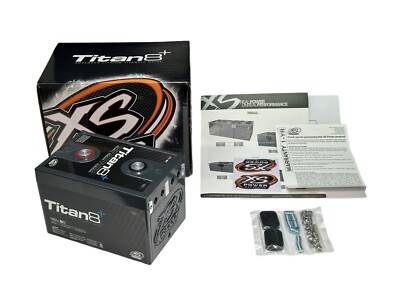
Big three w/larger battery under the hood, 2nd battery in the cabin, preferably a lithium solution, but one of these at only $99 can help a lot.


Preferably something like this:


Even better, given that at this $350.00 price, (reg $5-$600) includes built-in power and ground distribution, no brainer in my book:


Got your popcorn, ready to hear all the naysayers?

I spent the better part of a year looking into these as an option before trying them in a previous build. It worked great for my 2500-watt setup, and also for a buddy of mine who is still using it in his truck's 3000-watt system.

With a 100A BMS, its max continuous is 100A, which, if you watched that video, should not be an issue. These are also capable of a 3-second 275A burst and up to 450A burst of 1-second or less (you're never going to see better than 250-300A on 14.4 at 2500 watts), so more than adequate for this use.

$240.00


Large 1/0 OFC cable for +/- from primary to secondary, scondary parallel grounding, all help get current circulation in tip top shape.
 
Last edited:
First and foremost, get an idea of what average daily drivers use on a relatively high-wattage system, like 2.5k. Second, a caveat of sorts.

If you're going to use your system for parking at the local bass soundoff or playing it hours on end without the motor on, that's not what I'm recommending this for.

If you're like most, and it's a daily driver that you want good and loud when you want it to be, and normal to elevated listening levels every day, these suggestions are for you.

Watch this video to get an idea of what a realistic amperage draw MOST people should expect.


Contrary to the order in which the "BOT" suggests upgrades, given the advances in battery tech, the best thing for a 2.5k system would be as follows:

Big three w/larger battery under the hood, 2nd battery in the cabin, preferably a lithium solution, but one of these at only $99 can help a lot.


Preferably something like this:


Even better, given that at this $350.00 price, (reg $5-$600) includes built-in power and ground distribution, no brainer in my book:


Got your popcorn, ready to hear all the naysayers?

I spent the better part of a year looking into these as an option before trying them in a previous build. It worked great for my 2500-watt setup, and also for a buddy of mine who is still using it in his truck's 3000-watt system.

With a 100A BMS, its max continuous is 100A, which, if you watched that video, should not be an issue. These are also capable of a 3-second 275A burst and up to 450A burst of 1-second or less (you're never going to see better than 250-300A on 14.4 at 2500 watts), so more than adequate for this use.

$240.00


Large 1/0 OFC cable for +/- from primary to secondary, scondary parallel grounding, all help get current circulation in tip top shape.

Thanks for all the recommendations. I am definitely going to get started on the big 3 when I get the chance, and I am going to look more into adding a second battery. What agm battery would you recommend for my truck to swap out the standard one? I know there's a lot of different things like amp hours and I dont know much about them
 
Thanks for the suggestions. I'll look more in to adding a battery. Can you tell me more about the farad cap like what they are and how they work
I recommend the alternator so you will have constant power. For a Silverado, they are pretty inexpensive and easy to change out.
A capacitor is like a battery, but they charge and discharge much quicker than a battery. With an appropriate alternator, you will have the needed power. However, when a bass tone hits, the amplifiers are demanding instant amperage. A capacitor will supply that instantaneous need. With a 20-farad capacitor, you will have enough power stored for longer bass tones. However, a 10-farad will also work fine due to 2500 not being used continuously.

I've literally built hundreds of high-power systems, and I've upgraded power systems every way you can think. The bigger alternator and large capacitor have always solved the problem. Just make sure it's a good quality capacitor. Stinger and Fosgate probably have the best ones on the market.
 
Thanks for the suggestions. I'll look more in to adding a battery. Can you tell me more about the farad cap like what they are and how they work
With advances in battery tech, I'd worry about getting the auxiliary battery first. Any of the ones suggested is more than adequate.

As with any application, everything is a compromise, and deciding which way to go with a 2 to 2.5k-watt system is one of the more difficult choices to make.

It's kind of on the smaller side of what I'd consider large wattage systems, but it's really right there at the point where you have to start getting into some serious (and costly) electrical upgrades to make it work at it's peak. As with anything car audio, too much is almost always better than too little.

All the lithium units function substantially faster than LA or AGM batteries do, not as fast as a capacitor (which are almost instant), but unlike a capacitor, they also have storage capacity that capacitors don't have - the better compromise in my thinking.

But at $100.00, the Ioxus ultracap (which is a 375 farad cap) is a decent option too. No need to spend $100 on a 5 to20 farad old-school capacitor if you can get 375 farads for the same $ amount.

Frankly, even if you haven't started yet, that Titna8 on eBay is a steal. Get one before that seller sells out.

When the battery under the hood needs replacing, just grab the biggest lead-acid or AGM that will fit that is within the budget.

Spec for spec, the Absorbent Glass Mat (AGM) is essentially just a sealed lead-acid battery, that is going cost about 50%-150% more than its lead-acid counterpart, and if the specs happen to be virtually the same, won't work significantly better for audio if there is an aux lithium battery taking up audio duty that's wired in parallel.

You will get improved/faster charging, better vibration resistance, and 50%-95% longer life from the AGM, so while not a bad investment, cost, not performance, is more of a factor.

AH is a measurement of storage capacity; the higher the AH number, the higher the storage capacity, relative to voltage and current.

It's the total amount of electrical charge the battery can deliver at a specific current over a set period of time.

In a 2.5-3k watt system, you don't need to upgrade the alternator, just not necessary anymore like it used to be, that's my opionion and I've not been shown that it isn't correct, least not these days considering the alternatives.

I'm running 3.5-5k systems with 1 primary (Bosch AGM) and 1 aux battery (GloweVoltage S1), on a 110A stock alt, and never have a single issue with voltage drop, dimming, or any battery capacity issues whatsoever.

There are different approaches to how one fills this need, too. I tend to look at the overall cost/benefit ratio given the size and use of the system one is putting together to determine the most bang for the buck.

What you decide from the suggestions you get also depends on your level of DIY capabilities, installation prowess, and what you're willing to put into the build yourself.

 
I recommend the alternator so you will have constant power. For a Silverado, they are pretty inexpensive and easy to change out.
A capacitor is like a battery, but they charge and discharge much quicker than a battery. With an appropriate alternator, you will have the needed power. However, when a bass tone hits, the amplifiers are demanding instant amperage. A capacitor will supply that instantaneous need. With a 20-farad capacitor, you will have enough power stored for longer bass tones. However, a 10-farad will also work fine due to 2500 not being used continuously.

I've literally built hundreds of high-power systems, and I've upgraded power systems every way you can think. The bigger alternator and large capacitor have always solved the problem. Just make sure it's a good quality capacitor. Stinger and Fosgate probably have the best ones on the market.
Agreed. This is a no brainer. High output alternators are not only easy to install on that generation Silverado but their easy to find.

I personally wouldn't blow $400+ on all these batteries that act as buffer when like you said can just create the constant power you need for about the same price.

It'd be like adding a bunch of stabilizers on a compromised building foundation when the alternate is just building a foundation that far exceeds the needs of the building.
 
That year, the model 1500 was usually equipped with a 145A to 160A Alt, stock.

Installing a higher-ish output 250A alt is not going to help when the car is off or sitting at idle, showing off the system to others.

A $350.00 Titan8 will always help, on or off, and it's nomore complicated, usually a lot easier than instaling upgraded alternator.

Not everyone is keen on getting into an engine compartment and changing out an alternator or doing the big three, for that matter, or ensuring that they install a smaller belt or larger pulley should one or the other be the only option to get out of it what is needed.

Upgrading an alternator for a 2500-watt system is the last thing I'd do, personally.

As originally suggested, if this is for a daily driver, an aux battery would be my first option, not the 2nd option.
 
Alternator like I pointed out is incredible easy on the 2nd gen silverados since it's top mounted. You can pay someone to swap out the alt and do the big 3 and it would take them less than 30 minutes total to do both. Running/wiring multiple batteries especially if you want one in the rear + adding capacitors will 100% take more effort for less results.

As for idle that's more justification for going the alt route. Alts like those from Singer Alternators are run with an overdrive pulley so you'll get about 2/3rds of the total amperage at idle which is insane. Most OEM alternators barely charge if at all at idle your just pulling straight battery. That's a night and day difference.

That's not even factoring in that some of these alts include bypasses for the factor voltage regulators (which the 2nd gen silverados have) so that's another plus as well you can get full volts at all times
 
Last edited:
Alternator like I pointed out is incredible easy on the 2nd gen silverados since it's top mounted. You can pay someone to swap out the alt and do the big 3 and it would take them less than 30 minutes total to do both. Running/wiring multiple batteries especially if you want one in the rear + adding capacitors will 100% take more effort for less results.

As for idle that's more justification for going the alt route. Alts like those from Singer Alternators are run with an overdrive pulley so you'll get about 2/3rds of the total amperage at idle which is insane. Most OEM alternators barely charge if at all at idle your just pulling straight battery. That's a night and day difference.

That's not even factoring in that some of these alts include bypasses for the factor voltage regulators (which the 2nd gen silverados have) so that's another plus as well you can get full volts at all times
It appears that it is pretty straightforward on that specific GM model.

I just prefer to run 1/0 gauge, +/- front to back, under the vehicle, with clips, back into the cab; it's just what I'm accustomed/prefer to do with all the battery options these days.

Especially when you can get a Titan8 S5 all-in-one lithium battery, a superior solution for audio systems in general, for $350.00 - SOLD!.

The great thing about forums is that one always comes away with different options.
 
Another data point.

I have a 3300 watt system.
I upgraded my alternator from 100amp to 150amp.

My voltage stayed above 13 even when I started pushing it hard. I would be driving the car. I cant speak to idling, i didn't do that very much.

Big 3 was done on my car.
 
Last edited:
Another data point.

I have a 3300 watt system.
I upgraded my alternator from 100amp to 150amp.

My voltage stayed above 13 even when I started pushing it hard. I would be driving the car. I cant speak to idling, i didn't do that very much.

Big 3 was done on my car.
That's a good point.

Most people would brush that off as a fairly minor upgrade (100 to 150) but reality is if it takes 75-80 amps to run your car then you're now going from having just 20-25 available amps for your stereo to now 75-80 amps.

The amount of available power you can now create for accessories has essentially tripled.

It's like someone who makes 100k a year with 80k of it bills/taxes getting a 20% raise. Most would say oh yeah that's pretty decent raise but in reality that persons savings has just increased by 100%.
 
Last edited:
That's a good point.

Most people would brush that off as a fairly minor upgrade (100 to 150) but reality is if it takes 75-80 amps to run your car then you're now going from having just 20-25 available amps for your stereo to now 75-80 amps.

The amount of available power you can now create for accessories has essentially tripled.

It's like someone who makes 100k a year with 80k of it bills/taxes getting a 20% raise. Most would say oh yeah that's pretty decent raise but in reality that persons savings has just increased by 100%.
Actually, a 20% raise nets him $120,000.00 a year.

Now, if taxed at 24% and the bills remain the same, then it's really more like a 70% increase in actual liquidity, but it's still just a 20% raise accompanied by a 70% bump in available capital.

;)
 
Last edited:
Activity
No one is currently typing a reply...

About this thread

Emanuel Rodriguez

CarAudio.com Recruit
Thread starter
Emanuel Rodriguez
Joined
Location
Texas
Start date
Participants
Who Replied
Replies
14
Views
1,208
Last reply date
Last reply from
Doxquzme
IMG_20260516_193114554_HDR.jpg

sherbanater

    May 16, 2026
  • 0
  • 0
IMG_20260516_192955471_HDR.jpg

sherbanater

    May 16, 2026
  • 0
  • 0

New threads

Top