

The Camry
Hey, I Try.
So as far as i have always understood it. Crossing a speaker over at say 100hz means its its 3db down at that frequency and then goes down more for whatever slope you have. I also get that how it gets to -3db is also effected...
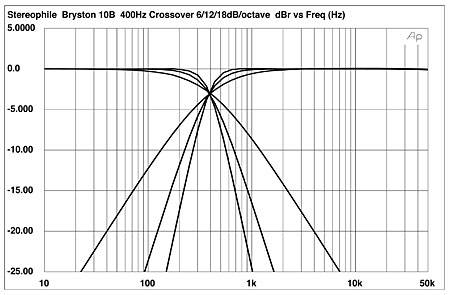
referring to the first pic. how different slopes effect how it gets to -3db.
Ive always heard that if you crossover two speakers at the same crossover point. you get a hump in the frequency response. Something like..two speakers in phase gives those freq a boost.
So heres my question. Lets say you crossover a sub and a midbass at 100hz. instead of them both being at -3db at the crossover point. wouldnt them both playing the same frequency actually create a slight dip at say 90 and 110 and then a big bump in the freq response right at 100hz?
i havnt been able to find any pics of graphs or whatnot that shows that..
referring to the first pic. how different slopes effect how it gets to -3db.
Ive always heard that if you crossover two speakers at the same crossover point. you get a hump in the frequency response. Something like..two speakers in phase gives those freq a boost.
So heres my question. Lets say you crossover a sub and a midbass at 100hz. instead of them both being at -3db at the crossover point. wouldnt them both playing the same frequency actually create a slight dip at say 90 and 110 and then a big bump in the freq response right at 100hz?
i havnt been able to find any pics of graphs or whatnot that shows that..







