Bi-Amping.

Just bridge the Arc amp and use those comps.
agreed. bridge the amp and run through the crossover. 120W though the crossover will be much louder than 60W to each driver.

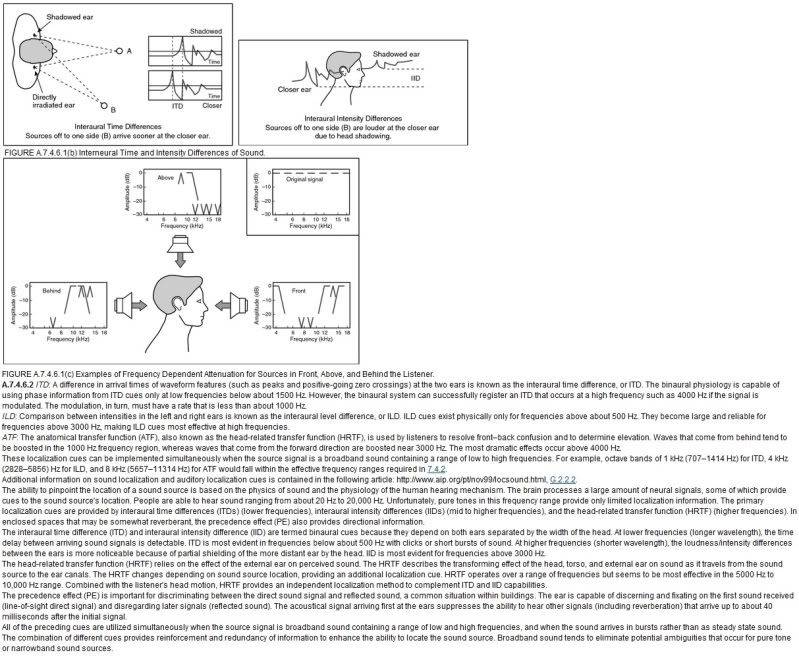
while you will lack the additional control, proper tweeter crossover points/slopes and proper tweeter placement can negate the need for separate T/A thanks to localization by IID and not ITD.

 
tweeter aiming and location is step 1. then you adjust the crossover point/slope based on the interaction between tweeter and woofer and how it performs in your vehicle at your intended listening position(s). a lot of listening and auditioning is required for fine-tuning. i use velcro to temporarily position tweeters so i can listen to different locations and aiming. it helps to have a processor that allows for adjustable crossover points/slopes since each location may require a different crossover point. running active makes this process much easier.

I don't know enough about your vehicle and installation to say how you should do it.

step one is probably running active while you fine-tune your crossover points/slopes. then, once you have location, aiming, and crossovers figured out, you could build your own passives that mimic the active crossovers. from there you could then bridge the amp for more power/output while retaining the desired filters.

above about 4kHz you no longer need to worring about time alignment as localization cues are based on intensity. i can help summarize that concept with an image.


---------- Post added at 12:30 PM ---------- Previous post was at 12:30 PM ----------


HRTFexplained.jpg


gee keep_hope_alive you really make it all so simple....LOL

I'm going to not run out right now and change my car around.

anyway...

I have a question about this topic.

I have bi-amp capable MB Quart crossovers

I am getting ready to bridge my 4 channel amp into 2 channels and run that to the crossovers

I do not see any reason why I should not bridge and just run all 4 channels to the crossover (bi-amping). I am happy with the sound right now and have the tweeters aimed off axis and think they sound good. I just want it louder.

So for me bridging the 4 channels to 2 and running those to the crossover (200 rms x 2) would be my easiest and best bet?

Bi-amping only allows for better control of the balance between mids and highs, right?

 
most people are happy with more power. the simple solution is to bridge the amp and power the crossover normally.

the #1 reason i think bi-amp is helpful is time alignment, level control, and/or equalization - i.e. control. if you can EQ each output separately and control level separately, you can improve the overal sound quality and sound stage. most passive crossovers are in the 2kHz range, which means your tweeters are responsble for localization information based on arrival time. as such, some T/A can make a huge difference in the sound stage. bi-amp gives you that extra control. but if you have T/A, EQ, and level control - you should also have crossovers that would eliminate the passive crossovers completely.

active is efficient in that the amplifiers are only responsible for a portion of the signal bandwith, and power is not lost to the passive crossover components. this uses less power overall compared to bi-amp.

that said, there are some very well designed passive crossovers that include shaping networks, zobel networks, and filters to improve the speaker response. also, some are very well designed so that the blend between the two drivers is very nice and a flat response is realized. when you go active, you're now responsible for those crossover points and you really need an RTA to monitor the roll-off and constructive and destructive interference that will always happen.

 
Vehicle is a 2004 Honda Pilot. Deck is a Kenwood Excelon KDC-693, Diamond D662A comps in the front, Diamond 363.5 coaxials in the back, Arc Audio KS900.6 amp, Kicker CVR 10" dual 2 ohm sub in a seaed box, and a 3Sixty.2. All speakers are mounted in factory locations. I guess I want to know if their is anything that I should change to make the whole active aspect work. I know there will be some additional wiring to all speakers needed, but other than that what else.

 
measure the distance between your head rest and each speaker (to the nearest inch).

take pics of the interior that include mounting locations (remove the door skin so we can see the actual speaker mount).

i'll have to look at the specs for the HU, amp, and RF piece to know what each can do, then evaluate the crossover specs.

you don't have enough amp channels to run the front active + rear + sub unless you combined the front/rear woofers and ran the tweeters on their own channels. i'll let you know where i would start.

 
I would start with the following:

HU Front RCA Output - feeds 3Sixty.2 front inputs

HU Rear RCA Output - not used

HU Sub RCA Output - feeds 3Sixty.2 sub inputs

HU Rear Speaker Output - powers the rear coaxial drivers directly

3Sixty.2 Front RCA Output - feeds Arc front inputs

3Sixty.2 Rear RCA Output - feeds Arc rear inputs

3Sixty.2 Sub RCA Output - feeds Arc sub inputs

Arc Amp Front Speaker Output - powers front Diamond tweets

Arc Amp Rear Speaker Output - powers front Diamond woofers

Arc Amp Sub Speaker Output - powers subwoofer

In the 3Sixty.2:

- set front output to High pass around 4kHz

- set rear output to Band pass between about 63Hz - 4kHz

- set sub output to Low pass around 80Hz

In the Arc Amp

- bypass all crossovers (set to Full)

- set to 4 ch in with direct sub inputs.

In the HU

- set rear speaker output to High pass around 120Hz

- bypass front and rear crossovers (outputs to Full)

- use fader to fade to front so that the rear speakers are given less power - giving you more usable HU volume

 
if you wanted some additional safety, you could set the front Arc amp crossover to High pass at 500Hz. that way if you messed something up in the 3Sixty.2 the tweeters wouldn't blow instantly.

when running active, you must be VERY careful to never give the tweeter amp a full range signal. this means the programming in the 3Sixty.2 needs to be done before you actually power your tweeters (or run the tweeters through the passive crossovers while you tune the system).

 
measure the distance between your head rest and each speaker (to the nearest inch).
That always sounds terrible. The interior of a vehicle is not a-symmetrical and the above method of time correction shouldn't even be used as a baseline. It sounds bad 100% of the time you try this.

Remember those old Alpine tape measures that had the steps on it? Reps used to hand those out and tell installers to use measured to their right ear when adjusting the time correction on their capable head units. Sounded like garbage 100% of the time.

 
That always sounds terrible. The interior of a vehicle is not a-symmetrical and the above method of time correction shouldn't even be used as a baseline. It sounds bad 100% of the time you try this.
Remember those old Alpine tape measures that had the steps on it? Reps used to hand those out and tell installers to use measured to their right ear when adjusting the time correction on their capable head units. Sounded like garbage 100% of the time.
someone who makes absolute statements like that sounds like a n00b. not saying you are, but you're talking like someone with very limited experience, or someone who repeats more than they understand.

T/A based on PLD can work fine when the drivers are placed on-axis with proper crossover points. when you get off axis, there are other things to consider based on placement due to reflections that are stronger than direct sound. while the vehicle is mostly symmetric, the dash is not, and our seating location certainly is not.

we need to know driver PLD's and aiming/placement as step one since there is no option to listen to the vehicle and we are helping remotely. I'm just talking about crossover points right now. at no point did i say to set T/A based solely on those numbers. don't jump to assumptions. i generally don't recommend T/A numbers, as I believe they need to be fine-tuned by ear. but I want to know PLD and placement so I can recommend crossover settings based on the following:

HRTFexplained.jpg


Last edited by a moderator:
I thought more about the comment that PLD alone can result in poor T/A results. and I think I know where bad experiences with this come from.

first and foremost - if you don't image when you take IID, ITD, HRTF, and PLD into mathematical consideration when adjusting speaker location, aiming, crossover points, and time alignment - then you have phase interference. phase interference is a HUGE problem for people trying to tune a sound stage in cars for a number of reasons.

1. it is understood by few people in car audio. most people don't even consider it or know it exists.

2. it is dominated by installation methods. install is the weakest link in most systems.

3. if phase (both electrical and acoustic) is not considered in every facet of the install, problems will crop up.

the car is a tricky environment due to glass at ear level. we get many specular reflections that throw off the information we are getting. for example, when sound plays from a right speaker, our right ear hears the direct sound then the left ear hears a reflected sound (of almost equal level and bandwidth) a short time later. if we can get the left channel to arrive before the reflected right channel, we have a better chance of properly localizing sound. however, the reflected right channel is on axis and the direct left channel is commonly off axis. to correct for this, we adjust T/A but in doing so we create other issues.

if the initial time delay gap (ITDG) is too short, we perceive it as the same sound. much research has been done in the subject of ITDG (a lot by Berenek) and it's effect on localization - mostly in concert halls but the same concepts apply to car audio. psychoacoustic theory applies regardless of application.

another reason is that in car audio, we are trying to put the sound stage somewhere that it is unlikely to be using T/A based on PLD alone. while it won't sound poor, the sound stage won't be where your typical competition judge wants it to be. but really, that only matters for a tiny percent of the population - and they aren't asking general questions in car audio forums. when we're talking about the above average installation, the majority of people don't care about a sound stage that is impeccable. they want something that sounds "good", and "good" can be had with some simple installation methods and tuning techniques.

in the end, acoustics is like *** - everyone thinks they are an expert.

 
Activity
No one is currently typing a reply...
Old Thread: Please note, there have been no replies in this thread for over 3 years!
Content in this thread may no longer be relevant.
Perhaps it would be better to start a new thread instead.

About this thread

fish1234

10+ year member
Senior VIP Member
Thread starter
fish1234
Joined
Location
Pensacola, Florida
Start date
Participants
Who Replied
Replies
28
Views
2,913
Last reply date
Last reply from
fish1234
IMG_20260516_193114554_HDR.jpg

sherbanater

    May 16, 2026
  • 0
  • 0
IMG_20260516_192955471_HDR.jpg

sherbanater

    May 16, 2026
  • 0
  • 0

New threads

Top