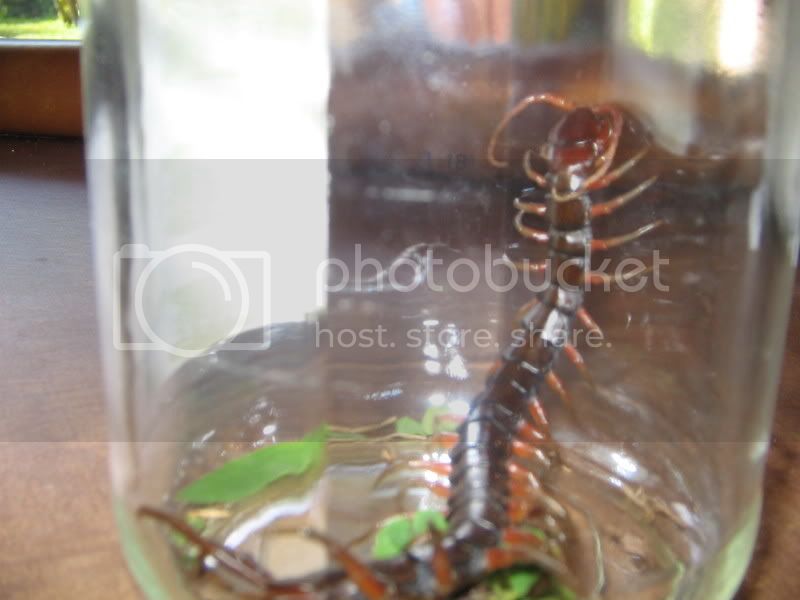
Centipedes are long-lived; some have been known to live up to 6 years. Most species feed upon small creatures such as insects. With the powerful jaws located immediately under the head they grasp and kill their prey by injecting venom. Occasionally, man may be bitten by centipedes but the poison usually produces only a moderate reaction similar to a bee sting. The only concern would be to those allergic to insect venoms and other toxins, particularly small children. In cases involving severe reactions, consult a physician at once.
Centipedes may be found in a variety of habitats but prefer moist, protected places such as under stones, rotted logs, leaves or bark. They spend the winter as adults and lay eggs during the warm months. Generally, eggs are laid in the soil and covered by a sticky substances. A few species give birth to living young.
The house centipede, Scutigera coleoptrata, originally lived only in Mexico but is now found throughout the United States. It is the only species capable of reproducing in houses and is often seen in and around homes where dampness occurs. The house centipede is active at night, moving about in search of insects. When full grown it is about 1 1/2 inches in Iength and feeds primarily on small insects such as cockroaches, clothes moths, house flies and other insects it may encounter in the house. The long back legs capture the prey with a "lassoing'' action. Although centipedes are beneficial in that they destroy other insects, most people have an aversion to their presence in homes.
(Hence they are found in wet areas and lay their eggs in STICKY substances... Which makes since since you have been RUBBING ONE OFF ALL NIGHT)
These house centapedes are poisonous.. but not deadly.. look out they bite.. put your.. giblets away