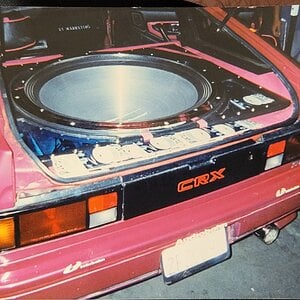
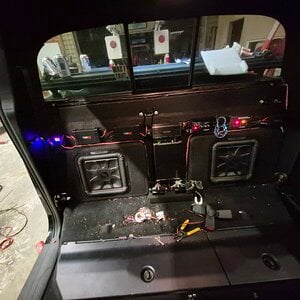
Featured New build after 13 years. Now What?

Or, better yet, run the entire setup active!
What do you mean? You are probably referring to technology I'm not familiar with. I'm pretty basic at this stuff.

I will, of course, experiment with bypassing the XEC-700, but I am analog guy at heart and I don't really like DSP the same way that I do not use a lot of fancy EQ.

One reason liked my old Alpine CDA units were the only have TWO adjustments, bass and treble.

When I had my old set up I used the Alpine with and w/o an XEC-500. I kept the Sony back then so went with it this time.

OH:: forgot to mention. SWITCHING RCA'S FIXED EVERYTHING UP.

Looks like I just had some dust or dirt perhaps. But, I still think I am mismatched somewhere.

Hey, I measured 10-12v coming out of the XEC-700 with my scope. Does that make sense to you????

My gains are set about half way.
 
The best and simplest way to run your system is to run it one of two ways, neither of which involves the use ot the Sony crossover.

The head unit has 6 dedicated 4-volt preamp outputs, it has all the features you need to cross-passively (using the passive crossovers you already have installed) or actively, dedicated amplified channels to all 4 drivers (channels) and to the sub.

You have 4 drivers and a subwoofer, 5 channels of RCA outs are all you need, but all 6 if you sum the remaining pair for the sub, which is recommended.

You want to do this because you're currently wasting a lot of energy and sound doing it the way you are. It's going to significantly improve the sound (and simplify/enhance your system control, which, after all, is the goal.

Option 1, Passive setup.

You get one of those 6-channel RCAs or use 3 sets of ones you already have and run it passively (using the crossovers you already have installed) as follows.

Front-R/L and rear- R/L RCAs to the four inputs on the Kicker amp. Red is right, the other is left, front and rear designation doesn't matter in this configuration, but you should still make a note which is which for the other option, running the system actively crossed, bypassing your installed crossovers.

The remaining RCAs on the pioneer HU are designated for use with a subwoofer. Run those to the low-level inputs on the subwoofer.

This is the easiest way to set up your system, as it is installed right now.

The 4 channels of the amp are now getting a signal, so you will set the kicker amps' crossovers to so you hook set the crossovers as follows:

1778200422237.png


And wire your two speaker leads from the amp to the L/R speaker leads as follows:
1778200405569.png

Run the subwoofer cahhnel outputs from the head unit, set the HU EQ filters as follows:
LP of 80Hz and a HP as low as you can unless the sub is ported and you know the tuning frquency of the port, then its's 1/2 octave below the tuning frequncy of the sub.

This IS the way to utilize the best sound, best ouput to the comps usinfg the supplied crossovers - and no Sony crossover at all.

You could also set the amplifiers crossovers to off and use the head unit to set the HP filters at 60-90Hz, depending on what sounds best, this is even a better way.
 
Now for the other option.

You do have the option to bypass the crossovers since they are mounted outside, where you can access the wires leading to the midbass and the tweeters, which allows you to bypass the crossovers altogether.

While this option requires the same head unit-to-amplifier connections, it does change all the settings.

In an active setup, you would designate one set of channels (say the front R/L channels from the HU to amp 1 L/R as the tweeter channels, set the crossovers in the head unit for the tweeters, run 20uf capacitors inline to the positive lead on the tweeters, and instead of bridging the amplifier, you would then ru n a new speaker lead to the crossover and instead of running the tweeter off the crossover lead, you would take that lead and splice the new wire lead from the amplifier and run the tweeters individually amplified as the HU designated F/R channels (there is a reason this is important asside from the crossover setting you will need to use in the HU).

I could not figure out the x-over points Alpine uses for those comps, but I am familiar with that tweeter, and I would set the HP filter using a Linkwitz-Riley, if it's available, otherwise whatever 24db the Pio offers, setting the HP filter, x-over point at 3.5k.

Then you take the remaining RCAs from the HU, the L/R rear channels, and run them to the respective L/R amp 2 inputs on the amplifier.

Then remove the lead going to your crossovers, remove the lead coming off the crossovers to the midbass drivers, and splice it into the wire going to your L/R midbass drivers in the doors. Set the head unit where you want the LP to cross over, use Linkwitz-Riley (or what's available) crossover type using a 24db slope at 3.5k for the LP filter on the 5.25 drivers.

And set the sub accordingly.

This is the optimal sounding setup.

Your head unit has all these settings available to set up your system. Why would you not learn how to use them, your leaving really great sound on the floor.

4V/6CH Preamp Outputs + Sub Control: The Pioneer DMH-W3050NEX features three pair of 4.0-volt preamp outputs (Front/Rear/Subwoofer). The unit's front and rear preamp outputs can be faded (front/rear), while the subwoofer preamp output is non-fading. The Pioneer DMH-W3050NEX lets you adjust the subwoofer preamp output's phase (normal/reverse) and volume (+10 to -24).

Crossovers: The DMH-W3050NEX employs high-pass and low-pass crossovers to tailor the head unit to your connected speaker setup.

  • Standard:Allows you to set the high-pass and low-pass crossover network for a standard Front, Rear, and Subwoofer speaker setup using either speaker-level or low-level outputs.
    • HPF: The head unit's -6 to -24dB/octave high pass filter only allows frequencies higher than those in the selected range (25, 31.5, 40, 50, 63, 80, 100, 125, 160, 200, or 250 Hz) to your front and rear speakers through the unit's speaker-level or line-level outputs.
    • LPF: The subwoofer preamp output features an -6 to -24dB/octave low pass filter so only frequencies lower than those in the selected range (25, 31.5, 40, 50, 63, 80, 100, 125, 160, 200, or 250Hz) are output to your connected subwoofer.
  • Network: Allows you to set the high-pass and low-pass crossover network for a complex 3-way speaker system with Highs, Mids, and Sub using low-level outputs only.
    • Highs: The high-pass crossover for your tweeters can be set to 1.25, 1.6, 2, 2.5, 3.15, 4, 5, 6.3, 8, 10, or 12.5 kHz with a -6 to -36dB/octave roll-off.
    • Mids: You can set a high-pass and low-pass crossover from your midrange/midbass drivers. The low-pass crossover can be set to 1.25, 1.6, 2, 2.5, 3.15, 4, 5, 6.3, 8, 10, or 12.5 kHz with a -6 to -36dB/octave roll-off. The high-pass crossover can be set to 25, 31.5, 40, 50, 63, 80, 100, 125, 160, 200, or 250 Hz with a -6 to -36dB/octave roll-off.
    • Lows: The low-pass crossover for your subwoofers can be set to 25, 31.5, 40, 50, 63, 80, 100, 125, 160, 200, or 250 Hz with a -6, -12, 18, or -24 dB/octave roll-off.
EEQ (Easy EQ) + 13-Band Graphic EQ: There are seven stored equalizer curves which you can easily recall at any time. You can choose from - Powerful, Natural, Vocal, Super Bass, Flat, or Custom . The Custom mode allows you to manually adjust the level (+/- 12dB) of each band of the head unit's 13-band graphic equalizer (50, 80, 125, 200, 315, 500, 800, 1.25k, 2k, 31.5k, 5k, 8k, and 12.5k Hz).

Audio Settings: The head unit provides further sound adjustments for your car audio system.

  • Listening Position & Time Alignment: For a better sound-stage you can select your optimal listening position. You can choose from All, Front Left, Front Right, or Front. You can also select to manually fine tune the sound stage, using Digital Time Alignment (DTA) by selecting the distance (0-200") for each individual speaker in the vehicle compared to your listening position.
  • Bass Boost: You can easily boost the subwoofer bass level by using the Bass Boost function. The Bass Boost feature allows you increase the subwoofer level from 0 to +6 (12dB).
  • Loudness: The Loudness function compensates for deficiencies in the low- and high-frequency ranges at low volume. You can set the Loudness to High, Mid, Low, or Off.
  • Speaker Output Level: You can adjust each speaker and sub channel independently from +10 to -24 to best even out the sound in your vehicle.

Each driver is individually amplified, individually crossed, with minimal equipment in the middle; this is the best SQ way to set up your system.

The other advantage this provides you is the ability to control all four drivers independently, from the menus in the head unit, at your fingertips.

It also allows you the very important ability to time align your setup, just a much better option than just getting it "to play" something.

There is another option too, using the amp bridged solely to the 5.25" drivers and using a pair of the HUs speaker leads to power just the tweeters.

Likely, you don't want to hear about that if this last option doesn't appeal to you.

But if it does, let me know, I'll post that up for you as well.

There you go, you're free $135.00 consulatation!!! :ROFLMAO:
 
Now for the other option.

You do have the option to bypass the crossovers since they are mounted outside, where you can access the wires leading to the midbass and the tweeters, which allows you to bypass the crossovers altogether.

While this option requires the same head unit-to-amplifier connections, it does change all the settings.

In an active setup, you would designate one set of channels (say the front R/L channels from the HU to amp 1 L/R as the tweeter channels, set the crossovers in the head unit for the tweeters, run 20uf capacitors inline to the positive lead on the tweeters, and instead of bridging the amplifier, you would then ru n a new speaker lead to the crossover and instead of running the tweeter off the crossover lead, you would take that lead and splice the new wire lead from the amplifier and run the tweeters individually amplified as the HU designated F/R channels (there is a reason this is important asside from the crossover setting you will need to use in the HU).

I could not figure out the x-over points Alpine uses for those comps, but I am familiar with that tweeter, and I would set the HP filter using a Linkwitz-Riley, if it's available, otherwise whatever 24db the Pio offers, setting the HP filter, x-over point at 3.5k.

Then you take the remaining RCAs from the HU, the L/R rear channels, and run them to the respective L/R amp 2 inputs on the amplifier.

Then remove the lead going to your crossovers, remove the lead coming off the crossovers to the midbass drivers, and splice it into the wire going to your L/R midbass drivers in the doors. Set the head unit where you want the LP to cross over, use Linkwitz-Riley (or what's available) crossover type using a 24db slope at 3.5k for the LP filter on the 5.25 drivers.

And set the sub accordingly.

This is the optimal sounding setup.

Your head unit has all these settings available to set up your system. Why would you not learn how to use them, your leaving really great sound on the floor.

4V/6CH Preamp Outputs + Sub Control: The Pioneer DMH-W3050NEX features three pair of 4.0-volt preamp outputs (Front/Rear/Subwoofer). The unit's front and rear preamp outputs can be faded (front/rear), while the subwoofer preamp output is non-fading. The Pioneer DMH-W3050NEX lets you adjust the subwoofer preamp output's phase (normal/reverse) and volume (+10 to -24).

Crossovers: The DMH-W3050NEX employs high-pass and low-pass crossovers to tailor the head unit to your connected speaker setup.

  • Standard:Allows you to set the high-pass and low-pass crossover network for a standard Front, Rear, and Subwoofer speaker setup using either speaker-level or low-level outputs.
    • HPF: The head unit's -6 to -24dB/octave high pass filter only allows frequencies higher than those in the selected range (25, 31.5, 40, 50, 63, 80, 100, 125, 160, 200, or 250 Hz) to your front and rear speakers through the unit's speaker-level or line-level outputs.
    • LPF: The subwoofer preamp output features an -6 to -24dB/octave low pass filter so only frequencies lower than those in the selected range (25, 31.5, 40, 50, 63, 80, 100, 125, 160, 200, or 250Hz) are output to your connected subwoofer.
  • Network: Allows you to set the high-pass and low-pass crossover network for a complex 3-way speaker system with Highs, Mids, and Sub using low-level outputs only.
    • Highs: The high-pass crossover for your tweeters can be set to 1.25, 1.6, 2, 2.5, 3.15, 4, 5, 6.3, 8, 10, or 12.5 kHz with a -6 to -36dB/octave roll-off.
    • Mids: You can set a high-pass and low-pass crossover from your midrange/midbass drivers. The low-pass crossover can be set to 1.25, 1.6, 2, 2.5, 3.15, 4, 5, 6.3, 8, 10, or 12.5 kHz with a -6 to -36dB/octave roll-off. The high-pass crossover can be set to 25, 31.5, 40, 50, 63, 80, 100, 125, 160, 200, or 250 Hz with a -6 to -36dB/octave roll-off.
    • Lows: The low-pass crossover for your subwoofers can be set to 25, 31.5, 40, 50, 63, 80, 100, 125, 160, 200, or 250 Hz with a -6, -12, 18, or -24 dB/octave roll-off.
EEQ (Easy EQ) + 13-Band Graphic EQ: There are seven stored equalizer curves which you can easily recall at any time. You can choose from - Powerful, Natural, Vocal, Super Bass, Flat, or Custom . The Custom mode allows you to manually adjust the level (+/- 12dB) of each band of the head unit's 13-band graphic equalizer (50, 80, 125, 200, 315, 500, 800, 1.25k, 2k, 31.5k, 5k, 8k, and 12.5k Hz).

Audio Settings: The head unit provides further sound adjustments for your car audio system.

  • Listening Position & Time Alignment: For a better sound-stage you can select your optimal listening position. You can choose from All, Front Left, Front Right, or Front. You can also select to manually fine tune the sound stage, using Digital Time Alignment (DTA) by selecting the distance (0-200") for each individual speaker in the vehicle compared to your listening position.
  • Bass Boost: You can easily boost the subwoofer bass level by using the Bass Boost function. The Bass Boost feature allows you increase the subwoofer level from 0 to +6 (12dB).
  • Loudness: The Loudness function compensates for deficiencies in the low- and high-frequency ranges at low volume. You can set the Loudness to High, Mid, Low, or Off.
  • Speaker Output Level: You can adjust each speaker and sub channel independently from +10 to -24 to best even out the sound in your vehicle.

Each driver is individually amplified, individually crossed, with minimal equipment in the middle; this is the best SQ way to set up your system.

The other advantage this provides you is the ability to control all four drivers independently, from the menus in the head unit, at your fingertips.

It also allows you the very important ability to time align your setup, just a much better option than just getting it "to play" something.

There is another option too, using the amp bridged solely to the 5.25" drivers and using a pair of the HUs speaker leads to power just the tweeters.

Likely, you don't want to hear about that if this last option doesn't appeal to you.

But if it does, let me know, I'll post that up for you as well.

There you go, you're free $135.00 consulatation!!! :ROFLMAO:


They should hire you over the bot, Hal.

I will play around with the set up some and report back. I agree I have power left on the table and it is being choked somewhere.

My philosophy has always been to have discreet components for every function, for example, let the receiver just produce output, have the crossover unit cross the frequencies and have the amplifier just amplify.

I did not consider bi-amping until now but this is in theory possible with the 4 channel kicker and the Sony or the way that you mentioned which is a bit more complicated.

I will have to study your response some more. Once I get done moving, I can take it apart again in my shop at home and go through it again.

Right now, I need to pack up!!!
 
Activity
No one is currently typing a reply...

About this thread

pisto

CarAudio.com Newbie
Thread starter
pisto
Joined
Location
nyc/ soon to be texas
Start date
Participants
Who Replied
Replies
20
Views
511
Last reply date
Last reply from
Doxquzme
1778578257023.png

Glen Rodgers

    May 12, 2026
  • 0
  • 0
Screenshot_20260511_212804_Amazon Shopping.jpg

Blackout67

    May 11, 2026
  • 0
  • 0

New threads

Top