different models = different processing = different output... so again its possible but stupid when you could much more easily buy matching equiptment...
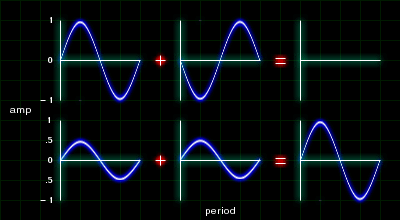
This is why I responded cot. You seem to contradict yourself... telling thsi guy miniscule differences in level matching will make audible problems, mis-matching equipment creates different outputs (implying that will create problems) yet when we apply that same logic to your system, you break out graphs and sine waves to try and explain just the opposite.
I do not bring this up to fight, I bring this up in an attempt to show you your own logic fights itself... so maybe you should consider taking a second look at your logic ladder.
Its not about sine waves, its not even about sound wave interaction in the air... its about different speakers with different output 'footprints' (freq responses) trying to play the same material. In some areas they will reinforce each other more than other areas. In a situation where we are looking for as level a freq response as possible, having two different driver types/sizes/models trying to deliver the same freq response is only going to complicate things. Not good.
You can add 14 sets of tweeters to your front stage, it will be louder... but will it sound 'better'. The beauty is in the ear of the beholder, THAT is what you STILL do not understand cot. If your system, set up that way, sounds better to you, great. Clearly output is the cornerstone to your key to sounding good, to each their own. BUT there is a far cry from personal preference, to recommending to strangers to do this because 'it sounds better'. You can say it would take an RTA to hear such imperfections, but to a listener who knwos what he's doing, and knows the reference material, it would/could be pretty obvious. Serious EQ'ing could help the problem, and many 'experts' over the years have tried complex xover setups to get it 'right', and some have been successful. But in the end it always comes down to the same thing, too much complication, too much money/effort expended for too little positive result (if any), and frankly... its simply not necessary. Any decent sub system set up properly should be able to handle the 2 to 3 octaves you'd require it to play.
Any arguement you put forth, at this point, is merely sour grapes because you did not know any better when you initially built your system. Admit it, given the choice again, you would not go with four 10's and a 13. //content.invisioncic.com/y282845/emoticons/wink.gif.608e3ea05f1a9f98611af0861652f8fb.gif We all make mistakes, and we've all built some hideous sysems (oh yes, Ive tried my hand at mis-matching subs too when I was younger lol)... but the important thing is learning from your mistake and moving on. You made a mistake, it happens... its time to admit it (to yourself if nothing else) and move on.