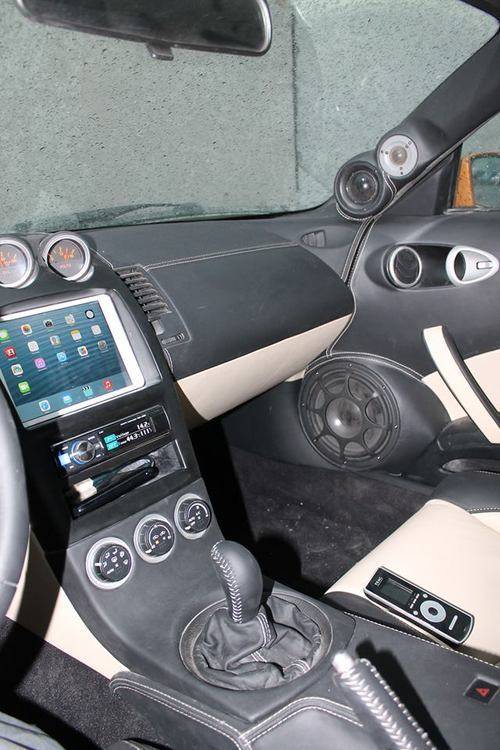
Hands on experience with DSPs/LOCs

I see the iDatalink Maestro + Rockford Fosgate - DSR 1 as the solution to your application. In my opinion the AudioControl DQ61 isn't the interface for this.

I really appreciate you taking the time to share your knowledge, you as well Jeff...

I'm caught in a hard spot because I am wanting to have some "passion" in this system, and solid sound quality...

but, I remember back in the day when I was really into car audio as well as actually playing guitar and making music... I want that perfect tone, but if I have TOO many options and layers of tweaking, and crossing over, and equalizing... that I just get lost in a fog, and end up constantly trying to tweak for a better sound...

I'm hoping that being older and smarter, that I can find that happy medium, that sweet spot, between relatively easy gratification, and having enough control to get it how I want it without getting lost, or just not quite smart enough to handle it... I'm one of those guys that's very intelligent in some ways and slow in others...

With you guys help the picture is coming a little more into focus...

I obviously (considering I have no knowledge of frequency values) need a set of parameters to go by as a rough start, and make sure my tweeters are safe at all times...

From what I understand, the amp I'll be using for at least the components, is an exceptionally good old school, made in the USA ppi pcx4125, I already know you guys will probably suggest only the digital crossover, but is the crossover on a great amp just plain unacceptable?
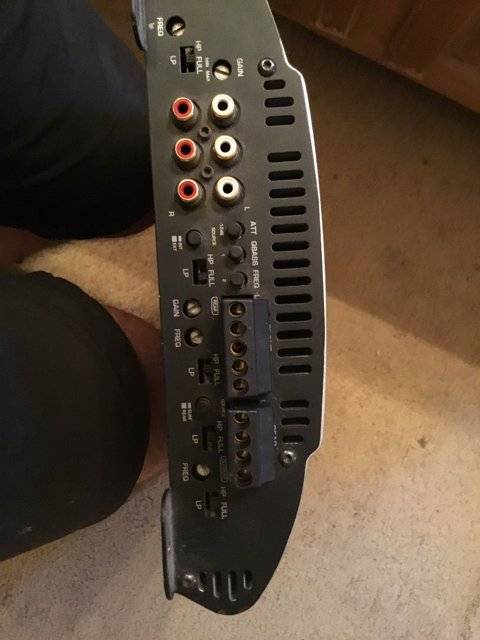
023467bfda32973f23f23b59c0b96574.jpg


I'm going to look harder at the speakers, and try to hear some in person (I feel likely to support a local business with something other than the speakers because I want the master sheet and little extras from crutchfield...

I literally listen to anything and everything, but my passion, is the lower toned distortion in heavy metal guitars...

I fear getting highs that are too bright, another reason I need to educate my self on crossover frequencies

Sent from my iPad using Tapatalk
 
I really appreciate you taking the time to share your knowledge, you as well Jeff...
I'm caught in a hard spot because I am wanting to have some "passion" in this system, and solid sound quality...

but, I remember back in the day when I was really into car audio as well as actually playing guitar and making music... I want that perfect tone, but if I have TOO many options and layers of tweaking, and crossing over, and equalizing... that I just get lost in a fog, and end up constantly trying to tweak for a better sound...

I'm hoping that being older and smarter, that I can find that happy medium, that sweet spot, between relatively easy gratification, and having enough control to get it how I want it without getting lost, or just not quite smart enough to handle it... I'm one of those guys that's very intelligent in some ways and slow in others...

With you guys help the picture is coming a little more into focus...

I obviously (considering I have no knowledge of frequency values) need a set of parameters to go by as a rough start, and make sure my tweeters are safe at all times...

From what I understand, the amp I'll be using for at least the components, is an exceptionally good old school, made in the USA ppi pcx4125, I already know you guys will probably suggest only the digital crossover, but is the crossover on a great amp just plain unacceptable?
023467bfda32973f23f23b59c0b96574.jpg


I'm going to look harder at the speakers, and try to hear some in person (I feel likely to support a local business with something other than the speakers because I want the master sheet and little extras from crutchfield...

I literally listen to anything and everything, but my passion, is the lower toned distortion in heavy metal guitars...

I fear getting highs that are too bright, another reason I need to educate my self on crossover frequencies

Sent from my iPad using Tapatalk
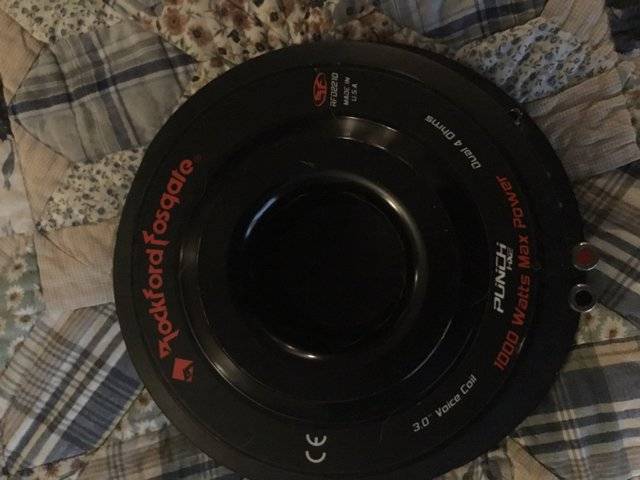
Been "sitting" on this amp and hanging on to these speakers for 12-14 years
2c1d1191dfd3baeccad725df90fa4217.jpg
t
6f62d5853c25ec447471ddab497bc479.jpg


Sent from my iPad using Tapatalk

 
a proper tune will sound good on anything you throw at it, It should sound like a real life studio performance on your dash. you usually cross tweeters at 2500-8000hz high passed and mids around the same low passed.

Those amp crossovers are no where near close to 1% adequate for any real results. Everything should be done on the DSR-1 soley, nothing on the amp, it should be full passed.

The video i did on the tuning software at 02:55 goes over what basic ranges you would see for a subwoofer, midbass, midrange and tweeter crossover. Just pause and slow it down and really see what hz and slopes are being used and how the graph looks like as a whole how everything is delegated to their own jobs.

About that thing about having too much to tweak. Its better than having garbage sound and no options to tweak.


I really appreciate you taking the time to share your knowledge, you as well Jeff...
I'm caught in a hard spot because I am wanting to have some "passion" in this system, and solid sound quality...

but, I remember back in the day when I was really into car audio as well as actually playing guitar and making music... I want that perfect tone, but if I have TOO many options and layers of tweaking, and crossing over, and equalizing... that I just get lost in a fog, and end up constantly trying to tweak for a better sound...

I'm hoping that being older and smarter, that I can find that happy medium, that sweet spot, between relatively easy gratification, and having enough control to get it how I want it without getting lost, or just not quite smart enough to handle it... I'm one of those guys that's very intelligent in some ways and slow in others...

With you guys help the picture is coming a little more into focus...

I obviously (considering I have no knowledge of frequency values) need a set of parameters to go by as a rough start, and make sure my tweeters are safe at all times...

From what I understand, the amp I'll be using for at least the components, is an exceptionally good old school, made in the USA ppi pcx4125, I already know you guys will probably suggest only the digital crossover, but is the crossover on a great amp just plain unacceptable?
023467bfda32973f23f23b59c0b96574.jpg


I'm going to look harder at the speakers, and try to hear some in person (I feel likely to support a local business with something other than the speakers because I want the master sheet and little extras from crutchfield...

I literally listen to anything and everything, but my passion, is the lower toned distortion in heavy metal guitars...

I fear getting highs that are too bright, another reason I need to educate my self on crossover frequencies

Sent from my iPad using Tapatalk
Also, I'm obviously not clear on the maestro and the DSR, but from what I understand, the maestro "harnesses" right in to factory amp, and I'm still debating on amplifying rear, but pretty sure it wouldn't make for a good sounding system to amplify the center channel,

I'm confused on how the center channel plays in... from what I can tell from people's opinions, and my own from reading them, I should just leave the center on factory amp...

I'm not going to immediately amplify the rear, but get the feeling when I get the itch for "more" I will upgrade and amplify them as well.

Sent from my iPad using Tapatalk

 
a proper tune will sound good on anything you throw at it, It should sound like a real life studio performance on your dash. you usually cross tweeters at 2500-8000hz high passed and mids around the same low passed.
Those amp crossovers are no where near close to 1% adequate for any real results. Everything should be done on the DSR-1 soley, nothing on the amp, it should be full passed.

The video i did on the tuning software at 02:55 goes over what basic ranges you would see for a subwoofer, midbass, midrange and tweeter crossover. Just pause and slow it down and really see what hz and slopes are being used and how the graph looks like as a whole how everything is delegated to their own jobs.

About that thing about having too much to tweak. Its better than having garbage sound and no options to tweak.


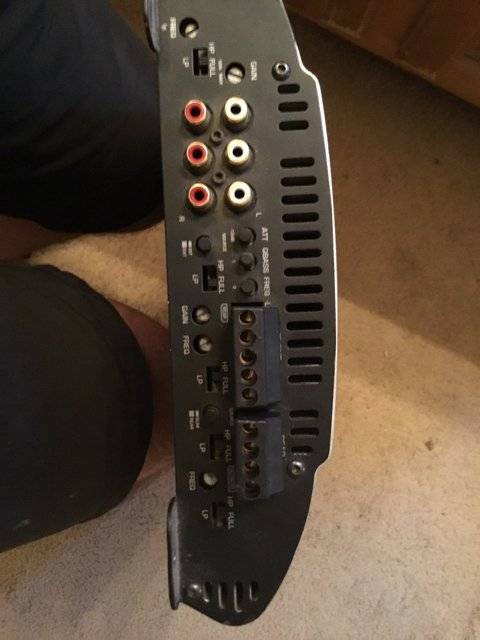
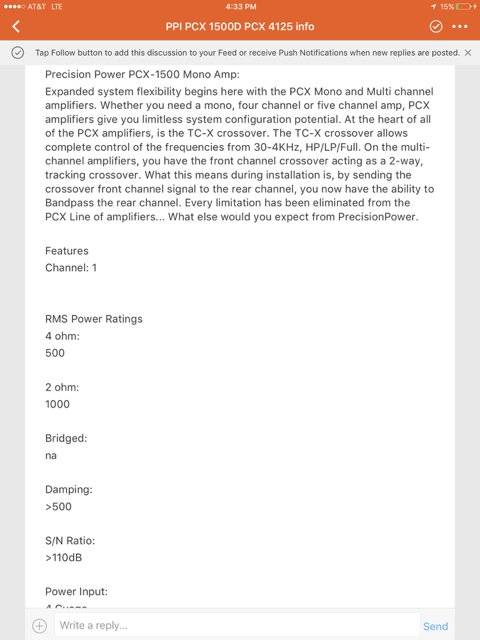
I'm about to check out the vid.... this is the crossover info on the ppi, just for shits and giggles

2510b92098a4bef3b609294e870831f1.jpg


Sent from my iPad using Tapatalk

 
Also, I'm obviously not clear on the maestro and the DSR, but from what I understand, the maestro "harnesses" right in to factory amp, and I'm still debating on amplifying rear, but pretty sure it wouldn't make for a good sounding system to amplify the center channel,
I'm confused on how the center channel plays in... from what I can tell from people's opinions, and my own from reading them, I should just leave the center on factory amp...

I'm not going to immediately amplify the rear, but get the feeling when I get the itch for "more" I will upgrade and amplify them as well.

Sent from my iPad using Tapatalk
upgrade smart and properly, like you said you dont have experience in car audio so take it from all the world class competitors.

You dont want to amp or upgrade rears. You want over 200 watts to each mid, midbass and at least 125-150 to the tweeters.

All up front, on axis (facing you if possible) Whatever your understanding of car audio is, you really need to actually learn from THE best setups in the world rather than conventional average joe knowledge if you want good results rather than below mediocre results.

This is a typical 3 way setup with the mid and midrange on the A pillar and midbass in the doors. This type of setup will be WAAAAAY more than your ears can ever hope to handle loudness wise but the SQ will melt your face and everyone that sits in it. You'll be taken to a whole different level of sonic bliss.

tumblr_inline_mwu41jhMWL1raoqwm.jpg


In that setup there is no center however all the sound will sound like its coming straight from the center of the dash THATS WHAT TIME ALIGNMENT IS FOR. Having a sh*t center will just drag down your overall sound quality because when you have different speakers playing the same frequencies in different parts of the vehicle, the sounds actually cancel out and have phase issues which means YOU LOSE CLARITY. Having rears will destroy that center image and any kind of sound stage you were hoping for. Basically you just went from a magnificent studio concert to a ghetto blaster playing garbage noise when you choose to keep the center and rears.

But thats all on you. You can remain ignorant to how proper setups are done or your can do it your own way. I'm done with this hard headedness.

I'd recommend looking up MECA SQ competitions around your area and hear a properly done setup first before you spend money on everything.

Guarantee you no one will be caught dead using rear speakers.

 
I'm about to check out the vid.... this is the crossover info on the ppi, just for shits and giggles
2510b92098a4bef3b609294e870831f1.jpg


Sent from my iPad using Tapatalk
yeah thats cute.. try having crossovers capable of 20hz to 20khz aka the whole sound spectrum and thats capable for all 8 channels. Thats the power of sound processing.

 
I really appreciate you taking the time to share your knowledge, you as well Jeff...
I'm caught in a hard spot because I am wanting to have some "passion" in this system, and solid sound quality...

but, I remember back in the day when I was really into car audio as well as actually playing guitar and making music... I want that perfect tone, but if I have TOO many options and layers of tweaking, and crossing over, and equalizing... that I just get lost in a fog, and end up constantly trying to tweak for a better sound...

I'm hoping that being older and smarter, that I can find that happy medium, that sweet spot, between relatively easy gratification, and having enough control to get it how I want it without getting lost, or just not quite smart enough to handle it... I'm one of those guys that's very intelligent in some ways and slow in others...

With you guys help the picture is coming a little more into focus...

I obviously (considering I have no knowledge of frequency values) need a set of parameters to go by as a rough start, and make sure my tweeters are safe at all times...

From what I understand, the amp I'll be using for at least the components, is an exceptionally good old school, made in the USA ppi pcx4125, I already know you guys will probably suggest only the digital crossover, but is the crossover on a great amp just plain unacceptable?

I'm going to look harder at the speakers, and try to hear some in person (I feel likely to support a local business with something other than the speakers because I want the master sheet and little extras from crutchfield...

I literally listen to anything and everything, but my passion, is the lower toned distortion in heavy metal guitars...

I fear getting highs that are too bright, another reason I need to educate my self on crossover frequencies

Sent from my iPad using Tapatalk
I hear you about the passion and you're right about the tweaking options. The more options some people have, the more likely they may never be happy because they will alsways be tweaking. For me though, it's the opposite. The less options I have the more frustrated I get when I do not have the option to fix it with something like a DSP. Case in point is my Fords factory radio. I learned my lesson and I now get the good quality stuff first with the bells and whistles so I always have the option to upgrade without buying all new equipment because I tried to save $150 at first.

Don't sweat the options on the DSP. Download the App and play around with it for a week. It's going to take time to learn. Test ride the TwK 88 software too and you might find its basic function easy to use. You can still run a two way speaker set with passive crossover with the DSR1 or JL TwK because they both have a basic function to keep things simple and you would still have some left, right, and sub time alignment control just like you would with the DQ61 with basic EQ. You could use that setup and be perfectly happy with it or as you read more and educate yourself to the point where you have more confidence than you can remove that component sets passive crossover and try active. The point is it can be as simple as the DQ61 or a full out high power 3-way with subwoofer setup such as Jeff is showing. The manufactures of these DSP's are making them fit everyone's skill level so they can sell more of them, which is smart.

I would recommend you do not use that PPI amplifiers crossovers to run an active setup. It would be very difficult to do without an RTA and you could easily blow a tweeter with one wrong move if you don't know what you are doing. I have to say I haven't tried that myself but I know enough about these to not recommend that route. The PPI amp itself however I'm sure is a perfectly fine amplifier to use with a DSP or aftermarket HU.

Your fear about the highs being too bright can easily be fixed with any of these DSP's. many passive crossovers also have tweeter attenuation just for that purpose to tame them if the customer wants. The DSP is really about the best tool to come out in car audio in a long time. I absolutely love mine.

Generally speaking it's best to cross over with a two way as low as you can with the tweeter you have. The rule of thumb is to cross over about two times the fs of the tweeter when using a steeper slope such as 18 through 24 db per octave. The better and larger the tweeter is, generally means it can be crossed lower. For example that NVX X series set has a crossover point of 1500 hertz with the passive set. No that is not a typo and you can go to NVX site yourself and download the manual to see for yourself. I have the SB Acoustics version of those NVX tweeters crossed over at 2400 hertz @ 24 db LR right now with Focal Woofers and it sounds really good. In my truck I have my tweeters crossed over at 2600 hertz @ 24 db LR because that is about as low as the Tang Bang tweeters can go before it doesn't sound as good. I have a passive set in my CX5 with the DQ61 and that I think is about 4000 hertz @ 12 db per octave. This is where I plan to replace with the NVX or SB Acoustics set.

I like to have a low crossover point because it brings the sound stage up high on your dashboard and keeps the door woofers in the frequency range that they play best. Larger woofers suffer from something called beaming, which you can google to learn about. The larger your mid woofer is the lower the point at which the mid woofer starts beaming higher frequencies.

This is where a three way speaker system has an advantage because you can cross over the woofer under 1000 hertz, the mid range around 4000 to 8000 hertz, and the tweeter 4000 to 8000 hertz and like Jeff pointed out, you can put the smaller midrange and tweeter up higher closer to your ear level. Three way active setups are something I havent ventured into yet as they are complicated and expensive to build. Great sound quality though can be had with a properly set up two way with a subwoofer. The subwoofer is key in any sound system and I could not imagine any system without one. I don't care how good you think your 6.5' mid woofers bass is they will never play 20-50 hertz like a large subwoofer can.

Some good reads for you to learn more:

http://www.audiocontrol.com/downloads/tech-papers/tech-paper-102.pdf

https://www.sounddeadenershowdown.com For proper sound deadening

Speaker beaming tables frequency tables

Car Audio Fabrication - Custom Techniques , Video Tutorials Car Audio And https://m.youtube.com/user/CarAudioFabrication

 
Not trying to hijack this thread, but since a lot of it is talking about the DSR-1, I figured I'd ask a question...mainly to @Jeffdachef since it looks like you have, or will have, some experience with it. I was just looking at the website for that DSP, and they say it has UP TO 10ms of time delay. I looked it up, and that equates to 9 feet at sea level. Is this correct, or is this a typo? I only ask because whenever I take the DSP plunge, I'm going to need something which can handle the fact that my sub port opening is over 10 feet behind me, which means I would need more than 10ms of delay for my front stage.
 
[quote name='Sguirrelfeather']Not trying to hijack this thread, but since a lot of it is talking about the DSR-1, I figured I'd ask a question...mainly to @Jeffdachef since it looks like you have, or will have, some experience with it. I was just looking at the website for that DSP, and they say it has UP TO 10ms of time delay. I looked it up, and that equates to 9 feet at sea level. Is this correct, or is this a typo? I only ask because whenever I take the DSP plunge, I'm going to need something which can handle the fact that my sub port opening is over 10 feet behind me, which means I would need more than 10ms of delay for my front stage.[/QUOTE]

You shouldn’t have to delay much for the speaker thats farthest away. You’re supposed to delay the closest speaker the most which is usually your front left speaker closest to the driver seat. Don’t think you need more than 10ms of delay. That’s already alot.


Sent from my iPhone using Tapatalk
 
You shouldn’t have to delay much for the speaker thats farthest away. You’re supposed to delay the closest speaker the most which is usually your front left speaker closest to the driver seat. Don’t think you need more than 10ms of delay. That’s already alot.

Sent from my iPhone using Tapatalk
Oh, I know how it works. If, for example, my sub port is 15 ft away from me, and my left front tweet is 3 ft in front of me, then essentially I have to make up for that other 12 feet the sub sound must travel for them to arrive at the same time, right? This 12 feet means I would need to delay the front signal by 10.8ms. Can't do that with the DSR. This is the situation I have because I have a huge SUV. I don't know the exact numbers for my speaker distances, but this is pretty close. I'll have to go look at the settings on my active HU to be sure.

 
Thanks. Yeah, if I ended up running Audio Control, I was going to "at least" get the DQ model with what appears to be, at some "basic" Eq ability, as well as time alignment...
It seems to me the products I'm looking at, make a $150 on up to $300 jump in price point for time alignment ?

Is that worth the money in your opinion, and how much does that screw up the sound for the passenger?

Sent from my iPad using Tapatalk
the audiocontrol *****. for the money the minidsp or JL twk IMO are good bargains.

 
upgrade smart and properly, like you said you dont have experience in car audio so take it from all the world class competitors.
You dont want to amp or upgrade rears. You want over 200 watts to each mid, midbass and at least 125-150 to the tweeters.

All up front, on axis (facing you if possible) Whatever your understanding of car audio is, you really need to actually learn from THE best setups in the world rather than conventional average joe knowledge if you want good results rather than below mediocre results.

This is a typical 3 way setup with the mid and midrange on the A pillar and midbass in the doors. This type of setup will be WAAAAAY more than your ears can ever hope to handle loudness wise but the SQ will melt your face and everyone that sits in it. You'll be taken to a whole different level of sonic bliss.

tumblr_inline_mwu41jhMWL1raoqwm.jpg


In that setup there is no center however all the sound will sound like its coming straight from the center of the dash THATS WHAT TIME ALIGNMENT IS FOR. Having a sh*t center will just drag down your overall sound quality because when you have different speakers playing the same frequencies in different parts of the vehicle, the sounds actually cancel out and have phase issues which means YOU LOSE CLARITY. Having rears will destroy that center image and any kind of sound stage you were hoping for. Basically you just went from a magnificent studio concert to a ghetto blaster playing garbage noise when you choose to keep the center and rears.

But thats all on you. You can remain ignorant to how proper setups are done or your can do it your own way. I'm done with this hard headedness.

I'd recommend looking up MECA SQ competitions around your area and hear a properly done setup first before you spend money on everything.

Guarantee you no one will be caught dead using rear speakers.
Yeah, I can feel the love from that set-up, just by looking at it and previous experiences with excellent tone... When it's done right it should bring a tear to your eye.

Just to be clear, do I eliminate rears altogether or can I leave them be on factory. Same question on center channel... I don't use the phone/Bluetooth feature, and my wife could probably do without it, but I believe the center channel handles that and a few other "audible cues", can I leave it on factory?

That's where I still have a bit of confusion...

I'm assuming the factory amp (Which I believe is located near the rear of my f150) is where I will wire the DSP/line converter in...

"From what I understand" (which could be wrong) I would likely take the front left and front right lines, and wire them to DSP/converter, and from those two channels, the device will "sum and flatten" those channels, and convert them into as many usable channels my particular device provides...

I'm assuming I can use those channels for whatever I need, including subs... and "assuming" I can leave center and rear channels as is...

Does this sound correct to you? Or do I take another route, where I would Imagine -everything- the entire brain of the vehicles audio, will be in a harness... that way would be much more confusing to me as far as what to do about center and rear channels...

Jeffdachef

Jcsaudio

Sent from my iPad using Tapatalk

 
I hear you about the passion and you're right about the tweaking options. The more options some people have, the more likely they may never be happy because they will alsways be tweaking. For me though, it's the opposite. The less options I have the more frustrated I get when I do not have the option to fix it with something like a DSP. Case in point is my Fords factory radio. I learned my lesson and I now get the good quality stuff first with the bells and whistles so I always have the option to upgrade without buying all new equipment because I tried to save $150 at first.
Don't sweat the options on the DSP. Download the App and play around with it for a week. It's going to take time to learn. Test ride the TwK 88 software too and you might find its basic function easy to use. You can still run a two way speaker set with passive crossover with the DSR1 or JL TwK because they both have a basic function to keep things simple and you would still have some left, right, and sub time alignment control just like you would with the DQ61 with basic EQ. You could use that setup and be perfectly happy with it or as you read more and educate yourself to the point where you have more confidence than you can remove that component sets passive crossover and try active. The point is it can be as simple as the DQ61 or a full out high power 3-way with subwoofer setup such as Jeff is showing. The manufactures of these DSP's are making them fit everyone's skill level so they can sell more of them, which is smart.

I would recommend you do not use that PPI amplifiers crossovers to run an active setup. It would be very difficult to do without an RTA and you could easily blow a tweeter with one wrong move if you don't know what you are doing. I have to say I haven't tried that myself but I know enough about these to not recommend that route. The PPI amp itself however I'm sure is a perfectly fine amplifier to use with a DSP or aftermarket HU.

Your fear about the highs being too bright can easily be fixed with any of these DSP's. many passive crossovers also have tweeter attenuation just for that purpose to tame them if the customer wants. The DSP is really about the best tool to come out in car audio in a long time. I absolutely love mine.

Generally speaking it's best to cross over with a two way as low as you can with the tweeter you have. The rule of thumb is to cross over about two times the fs of the tweeter when using a steeper slope such as 18 through 24 db per octave. The better and larger the tweeter is, generally means it can be crossed lower. For example that NVX X series set has a crossover point of 1500 hertz with the passive set. No that is not a typo and you can go to NVX site yourself and download the manual to see for yourself. I have the SB Acoustics version of those NVX tweeters crossed over at 2400 hertz @ 24 db LR right now with Focal Woofers and it sounds really good. In my truck I have my tweeters crossed over at 2600 hertz @ 24 db LR because that is about as low as the Tang Bang tweeters can go before it doesn't sound as good. I have a passive set in my CX5 with the DQ61 and that I think is about 4000 hertz @ 12 db per octave. This is where I plan to replace with the NVX or SB Acoustics set.

I like to have a low crossover point because it brings the sound stage up high on your dashboard and keeps the door woofers in the frequency range that they play best. Larger woofers suffer from something called beaming, which you can google to learn about. The larger your mid woofer is the lower the point at which the mid woofer starts beaming higher frequencies.

This is where a three way speaker system has an advantage because you can cross over the woofer under 1000 hertz, the mid range around 4000 to 8000 hertz, and the tweeter 4000 to 8000 hertz and like Jeff pointed out, you can put the smaller midrange and tweeter up higher closer to your ear level. Three way active setups are something I havent ventured into yet as they are complicated and expensive to build. Great sound quality though can be had with a properly set up two way with a subwoofer. The subwoofer is key in any sound system and I could not imagine any system without one. I don't care how good you think your 6.5' mid woofers bass is they will never play 20-50 hertz like a large subwoofer can.

Some good reads for you to learn more:

http://www.audiocontrol.com/downloads/tech-papers/tech-paper-102.pdf

https://www.sounddeadenershowdown.com For proper sound deadening

Speaker beaming tables frequency tables

Car Audio Fabrication - Custom Techniques , Video Tutorials Car Audio And https://m.youtube.com/user/CarAudioFabrication
I'm checking out your links... the complete deadening package would be an awesome investment...

My 2011 Ford F-150 supercrew (Lariat, nicest trim package) has the least road noise I've heard in almost any vehicle... I had a 2008 lariat before this one, very nice truck, low road noise/good insulation, but the 2011 blows it away with how quiet it is...

I am however going to put a lot of effort into "doctoring the front doors"... never done it, but I want to do it right...

It's always seemed to me, that even if they were cumbersome, putting some kind of sealed enclosure "on" the door or in the floor board. I've seen the kick panels, but can't imagine them sealing well.

Sent from my iPad using Tapatalk

 
Activity
No one is currently typing a reply...
Old Thread: Please note, there have been no replies in this thread for over 3 years!
Content in this thread may no longer be relevant.
Perhaps it would be better to start a new thread instead.

About this thread

HardcoreBob

Senior VIP Member
Thread starter
HardcoreBob
Joined
Location
Dallas
Start date
Participants
Who Replied
Replies
31
Views
7,590
Last reply date
Last reply from
Jcsaudio
IMG_20260516_193114554_HDR.jpg

sherbanater

    May 16, 2026
  • 0
  • 0
IMG_20260516_192955471_HDR.jpg

sherbanater

    May 16, 2026
  • 0
  • 0

New threads

Top