Expert Opinion sought for modular system installation

mgctch

CarAudio.com Newbie
Hello Audiophiles and Gear Heads:

I request your assistance/opinion on how best to develop/implement a complete system installation. While not a newbie to high end audio, I do not have expertise in car audio installation and request your collective comments and suggestions on how best to proceed.

Listening Preferences: I am interested in creating what I understand is called an SQ audio system. My musical preferences start with symphonic, baroque to romantic, followed by jazz, big band, acoustic, electronic and rock, if the music generally involves complex melodies or harmonies. Truthfully, I listen to a wide variety of sounds; if it's good sound it's good sound. I play music at average to slightly higher than average sound levels, but not excessively loud.

Goal: I am trying to create a system that will fit my current vehicle as well as be transferable for installation into a future planned vehicle. Currently, the car is a vintage Kia Sedona with an infinity premium sound system stock installed; hopefully, in 2-3 years, replacing that with a Sedan; preferably a Lexus 300ES or 350, possibly a hybrid version. The current Kia power system is I believe 1000 watts with a 150 amp alternator.

Current planned upgrade. First, replace the existing head unit with a Kenwood Excelon DDX9907; my understanding is it has 6 RCA preamp outlets with 5-6 volts per channel plus a subwoofer outlet, takes FLAC files, Hi Res audio and radio stations, built in CD, and lossless audio wired or wireless with apple car play.

This would then be connected into a Helix Ultra S DSP with 12 channels of processing.

The Helix Ultra would be powered by 4 amps: Two Morel 4.400 amps, 70 watts each channel, class a/b, with each one amp powering the left and the right front speaker set for sound separation; one infinity Kappa Four, 125 wats, with two channels for L/R backfill and one channel powering a center speaker (or possibly 2 center speakers as asked below); and one Infinity 3004a Reference subwoofer amp powering a subwoofer with 300 watts bridged. Why the infinities? Because I already own them and would to like to use them than buy new.

Speakers:

The subwoofer would be an ORION XTR8SWH2. It is 8" because it fits the hole in the current vehicle as well as fits the hole in future Sedan as well as being a free air sub. So I do not lose usable trunk space ard/or have space to install an extra battery if needed in a future hybrid car. Very deep bass is not associated as a general rule with symphonic music especially not baroque, think Vivaldi or Mozart. Moreover I prefer accurate bass than booming loud sound bass.

The rear fill is proposed to be Morel Tempo Integra 6x9. Why? Well 6x9 fits the current car and could fit a future Sedan. Also, it's just rear fill and I do not want to spend a fortune on rear speakers. While I would like an SQ car sound, I have no intertion of SQ competition. this build is solely for personal enjoyment. However, I am open to going component in back. Opinons?

The front is the most problematic. A center speaker would be used to listen to sports, talk radio, news and weather. The Center is currently planned to be replaced by a TANG full range 4" mid which I also currently own.

Both regular speaker sides would consist of the following 4 way. Yes, a 4 way. Midbass would be Morel Carbon Elate MW6 6.5; Midrange Morel MM3 3.5.; Tweeter; preferably a Dayton Audio AMT 2-4 (or a Mundorf 60s); and a super tweeter, a Dayton Audio Mini 8. The MW6 mounted in door panels possibly angled in pods upwards. The MM3 placed in a valicar aluminum pods, in both cars mounted on the dash angled towards driver center. And Both Daytons placed in the A pillars either in pods. Why Morel? I like the Morel warm sound,

Overall Opinions to this project?

Specific Questions:

1. I was thinking about inserting another regular tweeter behind the center mid full range firing backward to provide center stage localization similar in concept to a center speaker set up in a 7.1 home audio movie/tv system. No idea if this works in a car situation.

2. I was thinking of connecting the Dayton tweeter set in parallel or series powered by one channel of Morel amps on each side, rather that each tweeter on a separate channel, because the Daytons take only 50 and 15 watts of power. Also, thought about a 9000 hz? passive crossover between the Dayton 2-4 and the mini 8 in addition to relying on the Helix DSP to prevent mini 8 blowout and/or minimize "hiss," though I recognize that some "hiss" is what gives a super tweeter the air of a super tweeter sound (also people say there is only hiss at high SPL).

3. Using Mundorf 60 rather than DA 2-4.

4. If 2, then bridging two channel of the Morels to power each of the MW6s.

5. As noted above, going component in the rear. If so, what components are recommended? I was thinking of Morel CDX 3.5s and either 6s or a tweeter set I have and never used, Hyquphon Elites.

I believe in planning rather than buying and replacing. So, any thoughts would be greatly and deeply appreciated to prevent mistakes.

Thank you in advance for your assistance.
 
Build Photo
  1. Not right now
Title Suggestions
  1. Not right now
Oh, Hal, you're too humble... or scared!

And for the hard part, trying to build a system for one car in the hope you can move it to another, not a great plan for success.

Different cabins, different requirements for output, different tuning, just not a good thing to plan on.

Just consider that most often, what you save from this build, you can likely put in the next and be good with it.

If you're considering such a system, a 4-way front stage is redundant, a bit overkill in a car, as it really nets you little if anything in return, money that would be better spent elsewhere in the system.

Every time you cross drivers at different frequencies, you insert polarity/phase shifts in the output. Two is simple, three is a bit more difficult and is, well, unnecessary.

Even when using DSPs, it's still a greater task to accommodate and correct.

AMT/Ribbon tweeters are very nice-sounding drivers, but are notoriously difficult to aim in a car, and the Mondorf is a very expensive driver to boot.

And it's almost blasphemous to mix Dayton Mini's with other high-end drivers. The mini is a decent little guy, but it's just hanging out with the big boys if adding it to a good three-way and it will never keep up or sound as good as a decent set of Belisma or Scan-speak beryliums, just not even the same converstaion, like powering a JL 12W6 with a 250 watt, peak power 10000 watt BOSS monoblock, you just don;t do it.

There is simply no reason to cut out from a great set of tweeters, partial duty, and have the mini come in and finish up where it is already way behind the game. Just don't do it.

And, if you're thinking of just overlaying the mini on top of a great set of tweeters, that's a mess too; you absolutely do not want multiple high-frequency drivers doing all or part of the same thing the other is doing, it's a sound stage no-no.

Multiple tweeters in different locations will destroy your stage, again, just don;t do it.

Additionally, unless you have 5.1, 7.1, or Atoms recorded material, and a head unit that will actually decode it and send the multiple discrete channel information to the speakers, it's simply not the same as a home theater, and since 98% of all music is recorded and mixed in two-channel stereo, why ruin a good thing?

Leave surround sound for the home theater, bail the center channel speaker, go with a 3-way from stage and differential rear fill using a full range driver in the rear good from around 300 to 2k, and you're golden.

Consider a 10" or 12" low-profile sealed setup such as the stereo integrity BM-11. Two of them in a 1 cu ft stuffed and sealed cabinet on a 1500 watt amp is going to destroy any 8" you use, hands down.

Were talking about an OD of 14"x6"x 32" box with two of those drivers - or cut it by half and use 1!

As for the rest, that HU is a great unit, fine with that.

Assuming you go with an active 3-way front end, and differential rear fill using a single high-end full-range driver, coaxial or two-way components in the rear, then you'll need at least 10-12 channels of DSP.

Keep in mind that unless you have a good calibration MIC and the ability to tune the system, you're looking at an additional $500 to $750 just to have someone tune it either there or remotely!

There are a couple that are my favorites, the miniDSP C-8x12 DL with the best autotuner on the market, 8 in and 12 out, perfect for someone getting into the DSP end of things and not wanting to shell out loads of money to have someone else tune.

It still requires a bit of experience or a willingness to learn, but there is a lot of help on the miniDSP site.

The Helix DSP Ultra S - 12 is one unless you decide to go with one that is also an amplifier, but that limits the flexibility of the amplification you will want to use. Not many of the multi-channel DSP processors/amplifiers have standard output, which, in my book, is a must.

Another is the Down fo sound EZY-1216 DSP, the undisputed budget king.

What I don't see is anything related to noise or vibration suppression.

I could go on and on and on with recommendations, but if I were my 25-year-old me and knew then what I know now after 40+ years in the hobby, I would consider visiting the Resonix site and learn about deadening the car first, it's that important.

The best equipment in the world sounds better, but still only marginally if there is a lot of noise in the car that you're trying to overcome.

I've got time and experience in SQ builds, more equipment knowledge packed into my head that you'll ever want to know about, but you really need to start there.

Resonix is expensive, and while there are alternatives, starting there, prioritizing the installation of all the drivers, and quieting the environment will produce better results with lesser gear than the very best gear in a lesser installation.
 
Oh, Hal, you're too humble... or scared!

And for the hard part, trying to build a system for one car in the hope you can move it to another, not a great plan for success.

Different cabins, different requirements for output, different tuning, just not a good thing to plan on.

Just consider that most often, what you save from this build, you can likely put in the next and be good with it.

If you're considering such a system, a 4-way front stage is redundant, a bit overkill in a car, as it really nets you little if anything in return, money that would be better spent elsewhere in the system.

Every time you cross drivers at different frequencies, you insert polarity/phase shifts in the output. Two is simple, three is a bit more difficult and is, well, unnecessary.

Even when using DSPs, it's still a greater task to accommodate and correct.

AMT/Ribbon tweeters are very nice-sounding drivers, but are notoriously difficult to aim in a car, and the Mondorf is a very expensive driver to boot.

And it's almost blasphemous to mix Dayton Mini's with other high-end drivers. The mini is a decent little guy, but it's just hanging out with the big boys if adding it to a good three-way and it will never keep up or sound as good as a decent set of Belisma or Scan-speak beryliums, just not even the same converstaion, like powering a JL 12W6 with a 250 watt, peak power 10000 watt BOSS monoblock, you just don;t do it.

There is simply no reason to cut out from a great set of tweeters, partial duty, and have the mini come in and finish up where it is already way behind the game. Just don't do it.

And, if you're thinking of just overlaying the mini on top of a great set of tweeters, that's a mess too; you absolutely do not want multiple high-frequency drivers doing all or part of the same thing the other is doing, it's a sound stage no-no.

Multiple tweeters in different locations will destroy your stage, again, just don;t do it.

Additionally, unless you have 5.1, 7.1, or Atoms recorded material, and a head unit that will actually decode it and send the multiple discrete channel information to the speakers, it's simply not the same as a home theater, and since 98% of all music is recorded and mixed in two-channel stereo, why ruin a good thing?

Leave surround sound for the home theater, bail the center channel speaker, go with a 3-way from stage and differential rear fill using a full range driver in the rear good from around 300 to 2k, and you're golden.

Consider a 10" or 12" low-profile sealed setup such as the stereo integrity BM-11. Two of them in a 1 cu ft stuffed and sealed cabinet on a 1500 watt amp is going to destroy any 8" you use, hands down.

Were talking about an OD of 14"x6"x 32" box with two of those drivers - or cut it by half and use 1!

As for the rest, that HU is a great unit, fine with that.

Assuming you go with an active 3-way front end, and differential rear fill using a single high-end full-range driver, coaxial or two-way components in the rear, then you'll need at least 10-12 channels of DSP.

Keep in mind that unless you have a good calibration MIC and the ability to tune the system, you're looking at an additional $500 to $750 just to have someone tune it either there or remotely!

There are a couple that are my favorites, the miniDSP C-8x12 DL with the best autotuner on the market, 8 in and 12 out, perfect for someone getting into the DSP end of things and not wanting to shell out loads of money to have someone else tune.

It still requires a bit of experience or a willingness to learn, but there is a lot of help on the miniDSP site.

The Helix DSP Ultra S - 12 is one unless you decide to go with one that is also an amplifier, but that limits the flexibility of the amplification you will want to use. Not many of the multi-channel DSP processors/amplifiers have standard output, which, in my book, is a must.

Another is the Down fo sound EZY-1216 DSP, the undisputed budget king.

What I don't see is anything related to noise or vibration suppression.

I could go on and on and on with recommendations, but if I were my 25-year-old me and knew then what I know now after 40+ years in the hobby, I would consider visiting the Resonix site and learn about deadening the car first, it's that important.

The best equipment in the world sounds better, but still only marginally if there is a lot of noise in the car that you're trying to overcome.

I've got time and experience in SQ builds, more equipment knowledge packed into my head that you'll ever want to know about, but you really need to start there.

Resonix is expensive, and while there are alternatives, starting there, prioritizing the installation of all the drivers, and quieting the environment will produce better results with lesser gear than the very best gear in a lesser installation.
Initially, I would express my thanks for the time that it took to prepare such a long, detailed and thoughtful response.

Regarding Hal. It is AI created jumble of platitudes with no actual recommendations nor observations. Unlike your thoughtful post, I ignored "HAL."

Within my lengthy post, I noted that I would be using the Helix Ultra S DSP that you mentioned. So your comments on DSPs is noted, but I will just use the Ultra S. A Brax is more DSP than I need and I will need minimum of 12 channels for my system so Helix Ultra S it is.

Re sound deadening. Yes, of course you are correct. All equipment in world is not as useful as reducing outside noise and dampening vibration in the car. I did not mention installation of sound deadening material in my post because I thought it a standard assumption with a SQ build. I intend to use a triple insulation layered install. For patriotic reasons as well as performance, I probably will use the Second Skin line of products for deadening.

Regarding the DA mini 8 super tweeter, I have had second thoughts, as you mentioned, on putting in a super tweeter. More reading confirms your comment that the DA Mini is just NOT well matched in my proposed build. In any event, rather than the mini 8, I thought about using the Steg SST 50. HOWEVER, I am not sure I would like the high end "hiss" associated with super tweeters. I use an Aperion super tweeter in my home audio build without problems, generally, But,, Based on auditory studies, the "hiss" is usually associated with nonlinearity frequency rise in the 12000 -15000 range. I have NO idea whether the Mini 8 or Steg SST 50 suffer from that. So, I now lean to just installing a 3 way, with a Steg MSS3 4" mid and Steg MMS6 6.5 woofer. Once that is installed and the Mundorf tweeter placed I will see/hear if the highs meet my needs. I might "experiment" with a super tweeter later, the problem is I dont want to continuously pay to make mods of my a pillars. I initially thought to install a super tweeter at the same time as all the others for efficiency purposes AND if I do not like the high highs just shut it off via the Helix DSP, but I now am unsure if its worth it as you mentioned. Experimenting with a Mini 8 at 60 is doable, experimenting with a Steg SST 50 at 700 is not.

Plainly, by switching equipment from one car to another, placement of equipment in the second car will need separate tuning. But that is what a DSP, especially the 12 channel Helix Ultra S is for. The point is NOT to buy equipment that is NOT usable in the second vehicle. To that end, I have rethought using a 6x9. There is no place for that in a Lexus 300 or 350. So, I may now go with a component rear fill. But that problem is minor to me.

Regarding aiming of the Mundorfs, I did not put into my post which was long as it was, that I intended to place both the Mundorfs and any midrange into aluminum pods sold by Valicar of Germany, both to provide ressonance support, insulation from sun and heat, as well as ease of installation. I do not want to pay for custom made A pillars which take time to make and would interfere as well with the operation of air bag deployment. Moreover, as screw in pods, The Valicar pods would be modular and transferable to a subsequent vehicle. Lastly, I would place the pods on ball joints to aid in postitioning. I have seen tests results where the aiming should be at the hearrest of the driver. Yes, it minimizes the passenger side, but I am old and have no/few passengers. The sound is solely for me. Finally, I would experiment with placing the Mundorfs horizontally not vertically in order to widen the soundstage. the spread of sound up and down from the horizontal placement of the Mundorfs in a car is less important that the lateral dispersion moreover horizontal placement minimizes glass reflection. I infer the reason horizontal placement of AMT tweeters and Mundorfs in particular is not done is because their rectangular shape is dificult to install horizontally in a pillar thus they are installed veritically and hence hard to "aim" properly. This problem is solved by using premade aluminum pods attachable anywhere In the car and aimable via ball joints.

The cost of tuning or equipment to tune oneself is immaterial. The equipment is around d 6-8000. Another few thousand for installation and tuning is a minor add on cost. However, that being said, and watching all the videos on You Tube, learning to tune oneself, seems a fun skill to pick up in my dotage. Only problem is I use a Mac not a Windows computer and Helix operates on a DOS system. Maybe I pickup a 200.00 DOS computer.

Again, thank you so much for your input.
 
Oh, Hal, you're too humble... or scared!

And for the hard part, trying to build a system for one car in the hope you can move it to another, not a great plan for success.

Different cabins, different requirements for output, different tuning, just not a good thing to plan on.

Just consider that most often, what you save from this build, you can likely put in the next and be good with it.

If you're considering such a system, a 4-way front stage is redundant, a bit overkill in a car, as it really nets you little if anything in return, money that would be better spent elsewhere in the system.

Every time you cross drivers at different frequencies, you insert polarity/phase shifts in the output. Two is simple, three is a bit more difficult and is, well, unnecessary.

Even when using DSPs, it's still a greater task to accommodate and correct.

AMT/Ribbon tweeters are very nice-sounding drivers, but are notoriously difficult to aim in a car, and the Mondorf is a very expensive driver to boot.

And it's almost blasphemous to mix Dayton Mini's with other high-end drivers. The mini is a decent little guy, but it's just hanging out with the big boys if adding it to a good three-way and it will never keep up or sound as good as a decent set of Belisma or Scan-speak beryliums, just not even the same converstaion, like powering a JL 12W6 with a 250 watt, peak power 10000 watt BOSS monoblock, you just don;t do it.

There is simply no reason to cut out from a great set of tweeters, partial duty, and have the mini come in and finish up where it is already way behind the game. Just don't do it.

And, if you're thinking of just overlaying the mini on top of a great set of tweeters, that's a mess too; you absolutely do not want multiple high-frequency drivers doing all or part of the same thing the other is doing, it's a sound stage no-no.

Multiple tweeters in different locations will destroy your stage, again, just don;t do it.

Additionally, unless you have 5.1, 7.1, or Atoms recorded material, and a head unit that will actually decode it and send the multiple discrete channel information to the speakers, it's simply not the same as a home theater, and since 98% of all music is recorded and mixed in two-channel stereo, why ruin a good thing?

Leave surround sound for the home theater, bail the center channel speaker, go with a 3-way from stage and differential rear fill using a full range driver in the rear good from around 300 to 2k, and you're golden.

Consider a 10" or 12" low-profile sealed setup such as the stereo integrity BM-11. Two of them in a 1 cu ft stuffed and sealed cabinet on a 1500 watt amp is going to destroy any 8" you use, hands down.

Were talking about an OD of 14"x6"x 32" box with two of those drivers - or cut it by half and use 1!

As for the rest, that HU is a great unit, fine with that.

Assuming you go with an active 3-way front end, and differential rear fill using a single high-end full-range driver, coaxial or two-way components in the rear, then you'll need at least 10-12 channels of DSP.

Keep in mind that unless you have a good calibration MIC and the ability to tune the system, you're looking at an additional $500 to $750 just to have someone tune it either there or remotely!

There are a couple that are my favorites, the miniDSP C-8x12 DL with the best autotuner on the market, 8 in and 12 out, perfect for someone getting into the DSP end of things and not wanting to shell out loads of money to have someone else tune.

It still requires a bit of experience or a willingness to learn, but there is a lot of help on the miniDSP site.

The Helix DSP Ultra S - 12 is one unless you decide to go with one that is also an amplifier, but that limits the flexibility of the amplification you will want to use. Not many of the multi-channel DSP processors/amplifiers have standard output, which, in my book, is a must.

Another is the Down fo sound EZY-1216 DSP, the undisputed budget king.

What I don't see is anything related to noise or vibration suppression.

I could go on and on and on with recommendations, but if I were my 25-year-old me and knew then what I know now after 40+ years in the hobby, I would consider visiting the Resonix site and learn about deadening the car first, it's that important.

The best equipment in the world sounds better, but still only marginally if there is a lot of noise in the car that you're trying to overcome.

I've got time and experience in SQ builds, more equipment knowledge packed into my head that you'll ever want to know about, but you really need to start there.

Resonix is expensive, and while there are alternatives, starting there, prioritizing the installation of all the drivers, and quieting the environment will produce better results with lesser gear than the very best gear in a lesser installation.
I forgot to respond to two of your points. Regarding the center speaker. That is a Tang full range mid. I understand it is used in the top of the line BYD and Geeley china auto limos. I listen to sports, talk and news. In addition, I especially bought the Kenwood head unit that I did because it is one of the few units that incorporates a CD player. I have 100s of CDs for music but also, CDs that have talk on college courses in history, philosophy, music and science. I have found that human "conversation". "Talk" as opposed to singing voice is NOT good to be heard in a stereo format. It is precisely for this reason that home movie theater sound has a Center Stage through which dialogue in thx or other video formats is conveyed. conversation needs to be directly centered not imitated centered. Moreover with a dedicated center channel my understanding is that a Helix Ultra S can take use of that In processing algorithms.

Lastly regarding SUBS. At the outset of my original post I indicated that I listen mostly to symphoinic music and mostly baroque. I not sure you heard Vivaldi or Mozart but there is NO sounds coming out at 20 hz in that music. Maybe if I wanted to hear a Bach Grand Organ Sonata but thats not my music either. I did consider a 10" Sub specially a Morel ultimo titanium 10, but that neither fits conveniently in my van or later into a lexus. And I do not want to fill my vehicles with boxes and be unable to transport functional items. You may not know that a Lexus rear seats do not fold down. Hence any BOX or BOXes makes the trunk unusable. Similarly in a mini van with 3 row seats the space behind the 3rd row would be unable with sub boxes. Both the van and the lexus have built in space for an open air 8" sub. Hence my idea to purchase the Orion 8" a free standing open air sub usable in both vehicles. However If there is another type sub similar to it I would consider it. Again thanks for your input.
 
Let me premise my answer with the following info on me.

I'm a wannabe musician wrapped up in an EE's body, who plays drums, bass guitar, all manner of keys, and the cello.

My musical preferences range from the Toccata and Fugue in D minor, BWV 565, Handel, (Baroque period is hands down my favorite of the masters' eras), to Gangsta's Paradise, with Steely Dan, The Doobies, Eagles, Aerosmith, Tool, Nine Inch Nails, Taylor Swift, Spandau Ballet, The Go Gos, Deep Purple, and the Beatles thrown in for good measure.

On CD, SACD, or Ultra Blu-ray, I own a master copy of Nigel Kennedy, Vivaldi - The Four Seasons, Handels greatest, several from Heaven (Danish band), ALL the Beatles albums, including the 2009 remastered box series in Mono and Stereo, Led Zep box sets, all manner of rock and roll, immersive new wave and new age, and about 650 CDs (and counting) in total.

So, my perspective on how that gets reproduced is that you try for the best, full spectrum ouput so that there isn't any compromise with any genre.

Regarding the sub, if 8 is it, it's doable, and there are some really stellar units that I am familiar with, but I cannot say firsthand anything about that Orion driver, as I've not used or heard the Orion sub.

Rap and Rock are not the ultimate keepers of low-end reproduction; that would fall to orchestral music. I'm not including rebassed music (it doesn't count).

Keep in mind that a standard bass guitar is lowest at around 41 Hz, while the contrabassoon hits down to 27 Hz, and the pipe organ reaches into the lowest register, the infrabass (infrasonic) frequencies, to around 16hz.

Back to the build.

As for deadening, Second Skin is good, Resonix is hands down the best product going, and it's not debatable.

AS for a Center channel configuration, I suppose if you can save one of the tunes for use with the center, that would be fine, and Tang Ban makes several suitable wideband drivers that will handle everything from 300-20k well enough.

I just do not use them in my personal builds, as you should be able to attain the height and centralized localization of the front stage without using a center; alwasy seemd to be a way to emulate that which is truly an outstanding sounding front stage when it's accomplished with two-channel stereo.

One's the real deal, the other is, well, fake.

Onto the tweeters, again. ;)

The Mondorf is a stellar performer, and I'm a fan of AMTs. enjoy them in my Martin Logan XT F200s, exceptionally clean and crisp, effortlessly do the work without ear fatigue, but I can also place them in the utmost sweet-spot in my living room environment.

Therin lies the conundrum - placement.

The Mundorf is installed vertically, in pillars or in other areas, because that is the way the driver was designed, intended to work, in a home speaker, as the negative characteristics are minimized by speaker placement, not easily accomplished in a car.

Even installed horizontally (sideways), they're still a royal pain in the arse to get correct; it's just not a simple task.

The results are still going to create a significant off-axis frequency drop-off, and depending on the proximity to the window, dash, or windshield. to a lesser degree, defractions lesson, but at a cost. wide horizontal plane, lousy vertical plane.

So instead of sounding like they are turning off and on when you move your head from side to side, it happens when you are bee-bopping along and bobbing your head up and down - just not my cup of tea in the car environment, and the reason you don't see many doing it is that it's difficult to do it correctly.

Car installs are hard enough to get right, not to have to deal with those additional issues, not for me anyway. So if you go that route, up to you, but I would wager that a good set of berylilliums will show AMTs the door, they're that good up to 25k.

Good berylium tweeters have all the subtle nuances of a high-end silk, the quick attack of an alloy or ceramic (without the bit muted articulation), with zero listening fatigue often associated with the other domes mentioned, they're that good.

And that high-frequency output you don't like, I highly recommend against any kind of manual frequency attenuation/manipulation/elimination; that's a bad thing all the way around.

What you likely do not like is the ear fatigue associated with many tweeters.

This is primarily due to the tweeter's breakup starting to occur early due to design and cost limitations with regard to the dome material used.

That fatigue will still be present (to a lesser degree) with the Mundorfs as they can be brutally open and detailed, exposing any flaws in placement or other limitations of the equipment in the build.

This is where I come back time and time again to using berylium domes, they are roughly on a par with the AMTs out there, but they are exceptionally smooth, suffer breakup for above the 20k range of human hearing, cost about the same or less than a good AMT, and perform as well in accuracy and better as far as the staging is concerned.

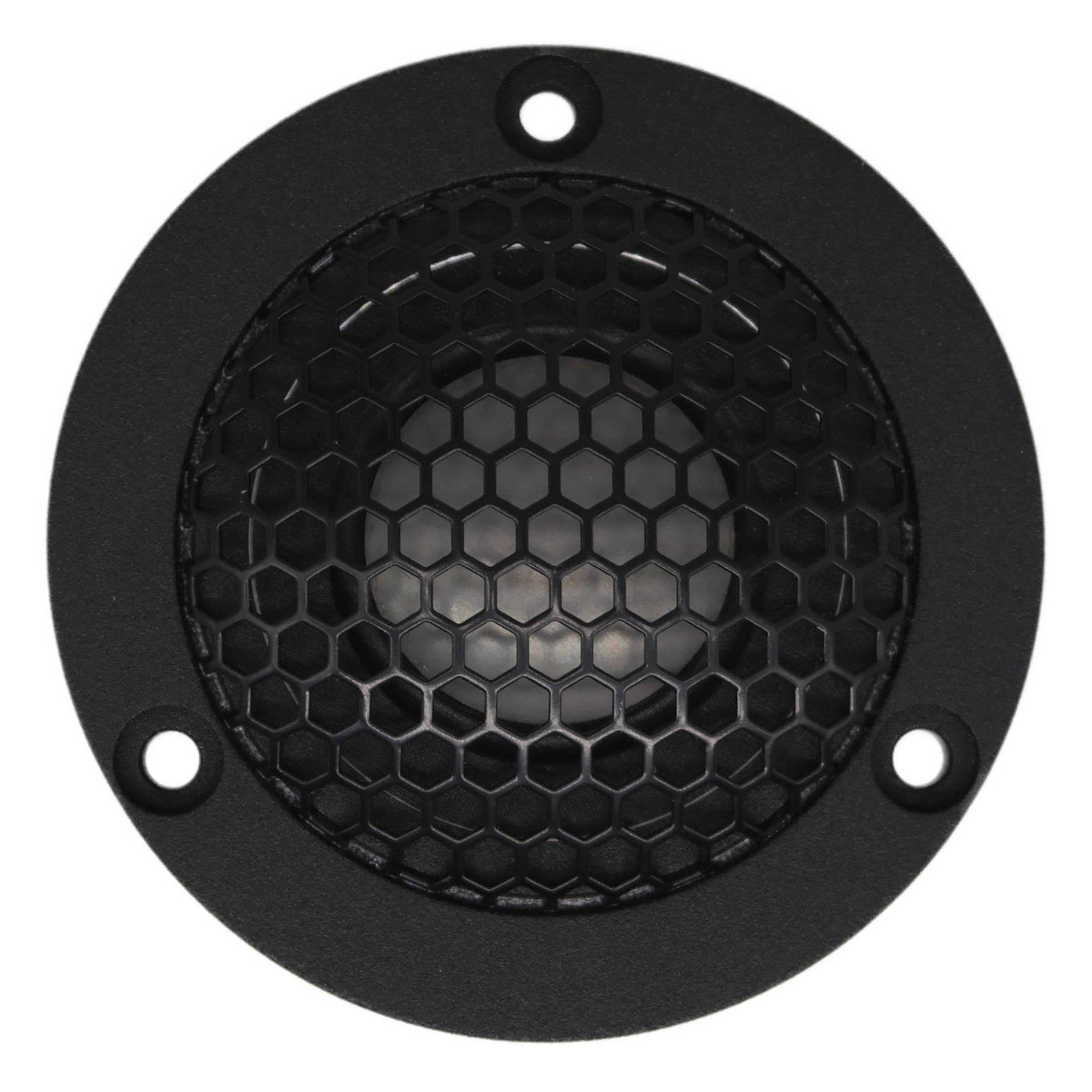
I'm using these in the Valicar pods:


Go and listen to a set of beryliums if you can, then the Mundorfs, see if you really think the AMT is the better choice. I'll likely never use another type of tweeter for my front stage again, I'm that happy with the sound, it's really something.

Back to the 8's.

Here are a couple that come to mind:

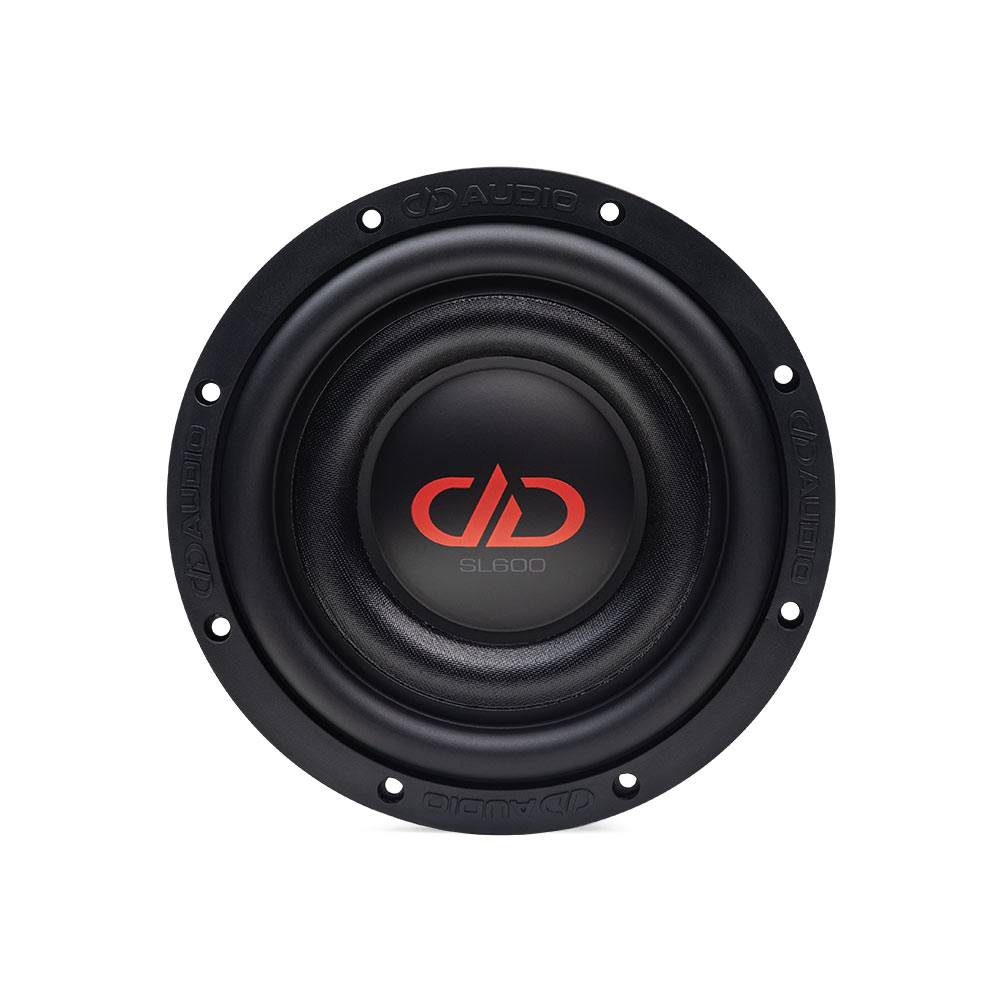
This is till my favorite shallow sub, along with one other. The DD Audio is purpose-built for small, shallow installations, and it's truly one that approaches/matches the performance of its bigger, full-depth siblings.


Audiofrog


Helix Ci5


PRV


American BASS


As for amplification, gonna spring one on you that is pretty amazing in all aspects:


That amp will handle the entire front stage as well as a set of coaxials or full-range drivers for the rear.

Grab one of these little 6"x 6" x 2" marvels, run it at 4 ohms, give you a plethora of power to play with up or down, attenuate to taste or need.


Or, one of these for subwoofer duty.


Or one of these:


Or one of these:


On any of those AudioIntensity amp deals, load them into the cart, and the price on some is lower when loaded into the cart.

The sub amp will be contingent on the need and the power available at the spec'd wired load, preferably, a 4 ohms load on a higher-wattage 1-ohm-rated amp at 4 ohms works better than a lower wattage amp running at 1 ohm.
 
Let me premise my answer with the following info on me.

I'm a wannabe musician wrapped up in an EE's body, who plays drums, bass guitar, all manner of keys, and the cello.

My musical preferences range from the Toccata and Fugue in D minor, BWV 565, Handel, (Baroque period is hands down my favorite of the masters' eras), to Gangsta's Paradise, with Steely Dan, The Doobies, Eagles, Aerosmith, Tool, Nine Inch Nails, Taylor Swift, Spandau Ballet, The Go Gos, Deep Purple, and the Beatles thrown in for good measure.

On CD, SACD, or Ultra Blu-ray, I own a master copy of Nigel Kennedy, Vivaldi - The Four Seasons, Handels greatest, several from Heaven (Danish band), ALL the Beatles albums, including the 2009 remastered box series in Mono and Stereo, Led Zep box sets, all manner of rock and roll, immersive new wave and new age, and about 650 CDs (and counting) in total.

So, my perspective on how that gets reproduced is that you try for the best, full spectrum ouput so that there isn't any compromise with any genre.

Regarding the sub, if 8 is it, it's doable, and there are some really stellar units that I am familiar with, but I cannot say firsthand anything about that Orion driver, as I've not used or heard the Orion sub.

Rap and Rock are not the ultimate keepers of low-end reproduction; that would fall to orchestral music. I'm not including rebassed music (it doesn't count).

Keep in mind that a standard bass guitar is lowest at around 41 Hz, while the contrabassoon hits down to 27 Hz, and the pipe organ reaches into the lowest register, the infrabass (infrasonic) frequencies, to around 16hz.

Back to the build.

As for deadening, Second Skin is good, Resonix is hands down the best product going, and it's not debatable.

AS for a Center channel configuration, I suppose if you can save one of the tunes for use with the center, that would be fine, and Tang Ban makes several suitable wideband drivers that will handle everything from 300-20k well enough.

I just do not use them in my personal builds, as you should be able to attain the height and centralized localization of the front stage without using a center; alwasy seemd to be a way to emulate that which is truly an outstanding sounding front stage when it's accomplished with two-channel stereo.

One's the real deal, the other is, well, fake.

Onto the tweeters, again. ;)

The Mondorf is a stellar performer, and I'm a fan of AMTs. enjoy them in my Martin Logan XT F200s, exceptionally clean and crisp, effortlessly do the work without ear fatigue, but I can also place them in the utmost sweet-spot in my living room environment.

Therin lies the conundrum - placement.

The Mundorf is installed vertically, in pillars or in other areas, because that is the way the driver was designed, intended to work, in a home speaker, as the negative characteristics are minimized by speaker placement, not easily accomplished in a car.

Even installed horizontally (sideways), they're still a royal pain in the arse to get correct; it's just not a simple task.

The results are still going to create a significant off-axis frequency drop-off, and depending on the proximity to the window, dash, or windshield. to a lesser degree, defractions lesson, but at a cost. wide horizontal plane, lousy vertical plane.

So instead of sounding like they are turning off and on when you move your head from side to side, it happens when you are bee-bopping along and bobbing your head up and down - just not my cup of tea in the car environment, and the reason you don't see many doing it is that it's difficult to do it correctly.

Car installs are hard enough to get right, not to have to deal with those additional issues, not for me anyway. So if you go that route, up to you, but I would wager that a good set of berylilliums will show AMTs the door, they're that good up to 25k.

Good berylium tweeters have all the subtle nuances of a high-end silk, the quick attack of an alloy or ceramic (without the bit muted articulation), with zero listening fatigue often associated with the other domes mentioned, they're that good.

And that high-frequency output you don't like, I highly recommend against any kind of manual frequency attenuation/manipulation/elimination; that's a bad thing all the way around.

What you likely do not like is the ear fatigue associated with many tweeters.

This is primarily due to the tweeter's breakup starting to occur early due to design and cost limitations with regard to the dome material used.

That fatigue will still be present (to a lesser degree) with the Mundorfs as they can be brutally open and detailed, exposing any flaws in placement or other limitations of the equipment in the build.

This is where I come back time and time again to using berylium domes, they are roughly on a par with the AMTs out there, but they are exceptionally smooth, suffer breakup for above the 20k range of human hearing, cost about the same or less than a good AMT, and perform as well in accuracy and better as far as the staging is concerned.

I'm using these in the Valicar pods:


Go and listen to a set of beryliums if you can, then the Mundorfs, see if you really think the AMT is the better choice. I'll likely never use another type of tweeter for my front stage again, I'm that happy with the sound, it's really something.

Back to the 8's.

Here are a couple that come to mind:

This is till my favorite shallow sub, along with one other. The DD Audio is purpose-built for small, shallow installations, and it's truly one that approaches/matches the performance of its bigger, full-depth siblings.


Audiofrog


Helix Ci5


PRV


American BASS


As for amplification, gonna spring one on you that is pretty amazing in all aspects:


That amp will handle the entire front stage as well as a set of coaxials or full-range drivers for the rear.

Grab one of these little 6"x 6" x 2" marvels, run it at 4 ohms, give you a plethora of power to play with up or down, attenuate to taste or need.


Or, one of these for subwoofer duty.


Or one of these:


Or one of these:


On any of those AudioIntensity amp deals, load them into the cart, and the price on some is lower when loaded into the cart.

The sub amp will be contingent on the need and the power available at the spec'd wired load, preferably, a 4 ohms load on a higher-wattage 1-ohm-rated amp at 4 ohms works better than a lower wattage amp running at 1 ohm.
Thank you for your input,. There is too much you have given for me to mull on for me to comment at this time. I will definitly research all your recommendations.

Regarding the sub recommendations the key for me is whether they are open air subs. I do not want a box cluttering my trunk. The reason for the Orions is that research suggests that they are recommended replacements for blown Lexus subs as they perfectly fit the 8" hole in the rear deck. Orion says they designed it to be shallow open air to specifically fit Toyota Avalons, Lexus300 and 350 and certain BMW. But I will look into ALL your suggestions. Didnt know a contra bassoon hit that low in frequency range, but I not sure I want to design system to hit the occasional bassoon note in a specific piece of music. However your info is very very interesting to me.

Re the Mundorfs, aiming is a problem, I concede, as in all ribbon/planers, (AMTs are a bit wider), Decades ago I owned 8 ft Magnepans then Quads, familiar with the problems. Horizontal vs vertical installation was intended as an experiment. Placement of Mundorfs on ball joint stands which allow for easy rotation in multiple directions was my proposed solution to the placement problem. I can move the speaker until it is aimed best.

Re the center speaker, as I noted, I do NOT just listen to music in my vehicle. I listen to news, sports, and college lectures. Speech, lectures, in stereo just do not sound good to me. Mono is best. The center speaker is designed to be used with the Helix conductor to have a "tune" that blanks out ALL other speakers, especially deep base, except for the center so that all talk comes through the full range Tang.

Your ideas need to be reflected upon by me. Thank you.
 
Thank you for your input,. There is too much you have given for me to mull on for me to comment at this time. I will definitly research all your recommendations.

Regarding the sub recommendations the key for me is whether they are open air subs. I do not want a box cluttering my trunk. The reason for the Orions is that research suggests that they are recommended replacements for blown Lexus subs as they perfectly fit the 8" hole in the rear deck. Orion says they designed it to be shallow open air to specifically fit Toyota Avalons, Lexus300 and 350 and certain BMW. But I will look into ALL your suggestions. Didnt know a contra bassoon hit that low in frequency range, but I not sure I want to design system to hit the occasional bassoon note in a specific piece of music. However your info is very very interesting to me.

Re the Mundorfs, aiming is a problem, I concede, as in all ribbon/planers, (AMTs are a bit wider), Decades ago I owned 8 ft Magnepans then Quads, familiar with the problems. Horizontal vs vertical installation was intended as an experiment. Placement of Mundorfs on ball joint stands which allow for easy rotation in multiple directions was my proposed solution to the placement problem. I can move the speaker until it is aimed best.

Re the center speaker, as I noted, I do NOT just listen to music in my vehicle. I listen to news, sports, and college lectures. Speech, lectures, in stereo just do not sound good to me. Mono is best. The center speaker is designed to be used with the Helix conductor to have a "tune" that blanks out ALL other speakers, especially deep base, except for the center so that all talk comes through the full range Tang.

Your ideas need to be reflected upon by me. Thank you.

And I agreed, you should be able to set a tune that you can switch on the fly to utilize the center channel, for whatever purpose, that's not in disagreement.

As for the subs, that too was a consideration with the exception of maybe the American BASS, which is likely more suited to a ported enclosure, but all if the recommendations were to use in the existing cavity, not a new box.

I also indicated the Orion might be fine, just have not used it, and looking at its relatively high fs and low Qts of .42, lower-ish power handling, and a sealed enclosure of .75 cu ft, it will work in the space, but I was unable to model it to determine the EBP.

The complete TS parameters are difficult to find, at least in the time frame I attempted to find them.

The PRV, for instance, has a 2" voiccoil and a QTS of .92, an XMAX of 14mm, and it only needs 1 cu ft of air - ideal for a small sealed application.

Lots of options, but be sure to check out those GaNFET amps from Soundidigital, pretty amazing little buggers.
 
Activity
No one is currently typing a reply...

About this thread

mgctch

CarAudio.com Newbie
Thread starter
mgctch
Joined
Location
Illinois
Start date
Participants
Who Replied
Replies
6
Views
169
Last reply date
Last reply from
Doxquzme
IMG_1225.png

tyler0508

    May 27, 2026
  • 0
  • 0
Curves.jpg

ThxOne

    May 25, 2026
  • 0
  • 0

New threads

Top