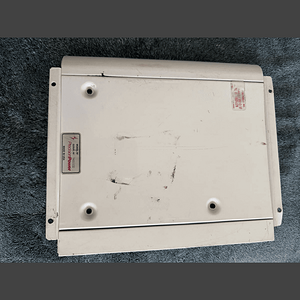
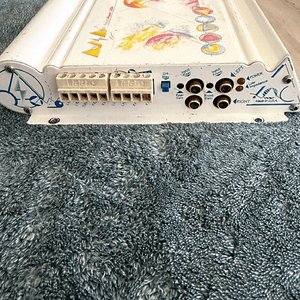
clamping amp

4.4ohm is possible for a box rise try it at different frequencies start at 35 and step up by 5 Hz and your clamp needs to be true rms. Or. It. Wont be accurate. Unless it's. 60hz

 
4.4ohm is possible for a box rise try it at different frequencies start at 35 and step up by 5 Hz and your clamp needs to be true rms. Or. It. Wont be accurate. Unless it's. 60hz
how do u tell if its true rms, it has no manual since it is not mine

 
It should say it right on it. If not 60hz is the only frequency that will be accurate. The impedance. Changes at different frequencies so you will get. Different. Readings

 
AC CURRENT

20A

200A

1000A

Resolution

10mA

100mA

1A

Accuracy(50Hz - 60Hz)

+ (2.5% + 8)

+ (2.5% + 5)

+ (2.5% + 5) for 800A and below

If >800A, the reading is only for reference.

AC Current

Frequency response: 50~60Hz

Indication: Average (rms of sine wave)

Overload protection: 1200A within 60seconds,

Jaw opening: 2"(5cm)

 
What that means is you do not have a true rms clamp meter, so it is only accurate around 60hz as was mentioned before. If while measuring a 60hz tone you see a max of 5.5 amps on your clamp meter and your second DMM is reading 24.4, then your amp is pushing out 134 watts and seeing a resistance of 4.4 ohms at 60hz and level you have selected.

That is the basic explanation. There is a much more accurate and detailed explanation which follows but you can ignore if your question was already answered.

First to find out how much clean or undistorted power an amplifier is putting out you need an oscilloscope measuring the 60hz wave while you clamp it.

First measure the output of your head unit for clipping. Find out at what voltage or output level the head unit clips at or if it does (some manufacturers will set the internal gain so that you will never have clipped or distorted output from the head unit low level outputs). Next feed a 60hz test tone to your amplifier from the headunit making sure to never go above the point at which you measured clipping from the head unit. Turn the amplifier up until you see the signal start to turn into a square wave. This is the actual undistorted output power of your amplifier.

Second, your subwoofer will change impedance throughout its frequency range. The impedance given from the manufacturer is its nominal impedance or a rough median impedance characteristic. Impedance is also affected by the enclosure that you mount your speakers in which is sometimes called box rise. This can be minimal or quite pronounced such as with horn designs where, when operated over a specific frequency range present a very high impedance load to an amplifier.

Find an impedance curve graph of your subwoofer to give you a good idea of how what you are seeing at 60hz relates to the impedance over the rest of the frequency range.

 
Also what is the input voltage to the amplifier while clamping? If you are running off the battery while clamping than this seems very reasonable.

You have an amp that is rated at 300watts rms into 4 ohms at 12.5 volts. That means that with two subs hooked up they will be seeing 150 watts each. Your amplifiers is seeing 4.4 ohms and if this test was done at 12 volts that is probably exactly what you should expect from the amplifier.

 
Activity
No one is currently typing a reply...
Old Thread: Please note, there have been no replies in this thread for over 3 years!
Content in this thread may no longer be relevant.
Perhaps it would be better to start a new thread instead.

About this thread

splwj47

10+ year member
CarAudio.com Veteran
Thread starter
splwj47
Joined
Location
Great White North
Start date
Participants
Who Replied
Replies
27
Views
2,185
Last reply date
Last reply from
vector
IMG_0710.png

michigan born

    May 14, 2026
  • 0
  • 0
IMG_0709.png

michigan born

    May 14, 2026
  • 0
  • 0

New threads

Top