Best way to set EQ!

HardCoreSound
10+ year member

Wide Reciever Brap
Hey guys,

I just got my new system as you know and I am really happy with my subs. I have a couple questions though ill keep this nice and simple. Heres what my system consists of to help you answer my questions.

- (2) Re Se's (600rms each)

- Pioneer HU

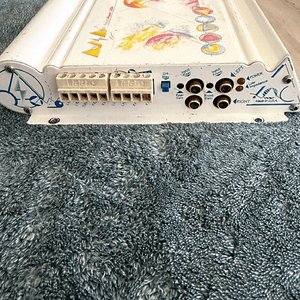
- Power Acoustik A2400DB amp (1800 rms)

- CDT Components (130 rms)

- Sony 200w x 2 @ 4 ohms (speaker amp)

Questions:

1) Bass Boost - Should this be used at all? I was fooling around with it and when I put it on 6 (full) i just put the volume to 10 and the subs sound like when the bass boost is off but the volume is 30. It seems like the gains in the bass are quite significant but will it blow my subs?

2)3 band EQ- I have a 3 band equalizer with high, mid, and low. I noticed that if I turn up the low it does so in my speakers to so i just keep it at 1. I also have the mid at 2 right now and the high at 6. (6 being the highest). What is the optiom setting for these eq's?

Thank you!

 
1) Bass Boost - Should this be used at all? I was fooling around with it and when I put it on 6 (full) i just put the volume to 10 and the subs sound like when the bass boost is off but the volume is 30. It seems like the gains in the bass are quite significant but will it blow my subs?
I'm assuming you're only talking about bass boost for you subwoofers (cause some people have this option on their front-stage channels). In short, it doesn't really matter. However, if you really want to set everyting up right, then I wouldn't fool with it. Why? Because in theory and practice you should set your gain to how you will mostly play the music. If you set the gain with a bass boost, then fine. However, you can get the same results by setting the gain higher without boost. I wouldn't do either, but that's your choice.

*assuming you know about setting gains for no clipping*

2)3 band EQ- I have a 3 band equalizer with high, mid, and low. I noticed that if I turn up the low it does so in my speakers to so i just keep it at 1. I also have the mid at 2 right now and the high at 6. (6 being the highest). What is the optiom setting for these eq's?
There's no general "optimum" for these settings. It's really all based on how you like your music. If you want more midrange then you give that a bump. If you like highs, give that a bump and so on. Just set it how you like it. If you hear distortion, back it down.

 
Thank you for the quick and informative reply. I guess the guy who installed it at the local shop, set the gains optimally in his view. Im just saying will bass boost from my deck blow the subs it makes them WAY LOUDER its a night and day difference.

Also for the EQ setting kk thank you I will just use mess around with it

What about the HP Filter whats that?

 
Thank you for the quick and informative reply. I guess the guy who installed it at the local shop, set the gains optimally in his view. Im just saying will bass boost from my deck blow the subs it makes them WAY LOUDER its a night and day difference.
Hmmmm, gain setting with me is a weird thing. Alot of people say to use a DMM (digital multi meter) and set using the rule of (Power*Resistance)^.5=Voltage setting on amp. I use this for a subwoofer, but I just listen for distortion when setting my midbass/midrange/tweeter. Here's the tutorial for setting gains with a DMM.

When setting with a DMM using test tones you are actually giving more power than what you would use when listening to music. Reason being is that test tones are almost always recorded at 0db, and music is usually -3db. So, that means you can actually get higher volume before hearing distortion when setting with a test tone and DMM. I’m not saying this is good at all, but it’s something to know in the future.

The reason I say all this is the installer could’ve used either method. If he set by ear then turning up the boost will likely be a bad thing. If he set with a DMM then the bass boost may not hurt. I really suggest reading the "gain setting" thread I linked above. Also, ask your installer before you go cranking stuff. You can either blow your sub, or you’ll fry the amp. Either of the 2 would be bad. You can have that “night and day” difference, but it won’t last long if the amp is overpowering too much.

*also, so it doesn’t go unmentioned, your subwoofer box plays a huge role in the sound and power you need to give to your subwoofer*

Also for the EQ setting kk thank you I will just use mess around with it
Good. You’re the one listening. Noone can tell you what you like. Just make sure that if the music sounds distorted (you’ll notice, trust me) that you back the settings down.

What about the HP Filter whats that?
HP= High Pass Filter. Basically it means that anything above that setting is allowed to play (pass). For example, if you have a HP setting at 80hz on your deck for your components, you will be allowing everything above 80HZ to play.

This logic is the same for a Low Pass Filter (LP). Take the same example of 80hz. If you have your subwoofer LP’d at 80hz, that means that anything below 80hz is allowed to play.

Now, for some people who want a speaker to play a certain range they’ll use what is called “bandpassing”. This incorporates both HP & LP filters. For example, if you have a midrange speaker you want to play between 400hz & 5000hz you’ll HP at 400hz, and LP at 5000hz.

There's also "Slopes" to be considered when using crossovers. The higher the slope number (24db vs. 6db slope), the faster the signal is attenuated. In laymen's terms, this basically means that the power seen by the speaker is diminished much quicker when using a higher slope.

FYI: x-over = crossover = HP/LP filter. “My subwoofer is crossed over at 80hz.” From what you know above and knowing that you don’t use a high-pass filter for a subwoofer (you could, but noone does) you think to yourself, “oh, that means his subwoofer plays from 80hz and below”.

Hopefully that didn’t confuse the crap out of you. If so, I’ll try to explain again.

 
//content.invisioncic.com/y282845/emoticons/smile.gif.1ebc41e1811405b213edfc4622c41e27.gif

Hmmmm, gain setting with me is a weird thing. Alot of people say to use a DMM (digital multi meter) and set using the rule of (Power*Resistance)^.5=Voltage setting on amp. I use this for a subwoofer, but I just listen for distortion when setting my midbass/midrange/tweeter. Here's the tutorial for setting gains with a DMM.
When setting with a DMM using test tones you are actually giving more power than what you would use when listening to music. Reason being is that test tones are almost always recorded at 0db, and music is usually -3db. So, that means you can actually get higher volume before hearing distortion when setting with a test tone and DMM. I’m not saying this is good at all, but it’s something to know in the future.

The reason I say all this is the installer could’ve used either method. If he set by ear then turning up the boost will likely be a bad thing. If he set with a DMM then the bass boost may not hurt. I really suggest reading the "gain setting" thread I linked above. Also, ask your installer before you go cranking stuff. You can either blow your sub, or you’ll fry the amp. Either of the 2 would be bad. You can have that “night and day” difference, but it won’t last long if the amp is overpowering too much.

*also, so it doesn’t go unmentioned, your subwoofer box plays a huge role in the sound and power you need to give to your subwoofer*

Good. You’re the one listening. Noone can tell you what you like. Just make sure that if the music sounds distorted (you’ll notice, trust me) that you back the settings down.

HP= High Pass Filter. Basically it means that anything above that setting is allowed to play (pass). For example, if you have a HP setting at 80hz on your deck for your components, you will be allowing everything above 80HZ to play.

This logic is the same for a Low Pass Filter (LP). Take the same example of 80hz. If you have your subwoofer LP’d at 80hz, that means that anything below 80hz is allowed to play.

Now, for some people who want a speaker to play a certain range they’ll use what is called “bandpassing”. This incorporates both HP & LP filters. For example, if you have a midrange speaker you want to play between 400hz & 5000hz you’ll HP at 400hz, and LP at 5000hz.

There's also "Slopes" to be considered when using crossovers. The higher the slope number (24db vs. 6db slope), the faster the signal is attenuated. In laymen's terms, this basically means that the power seen by the speaker is diminished much quicker when using a higher slope.

FYI: x-over = crossover = HP/LP filter. “My subwoofer is crossed over at 80hz.” From what you know above and knowing that you don’t use a high-pass filter for a subwoofer (you could, but noone does) you think to yourself, “oh, that means his subwoofer plays from 80hz and below”.

Hopefully that didn’t confuse the crap out of you. If so, I’ll try to explain again.
amazing info your a great guy thank you for taking the time to help me out. I guess I will just keep the bass boost of or at 1 or 2 if anything. Thank you bro!

 
Activity
No one is currently typing a reply...
Old Thread: Please note, there have been no replies in this thread for over 3 years!
Content in this thread may no longer be relevant.
Perhaps it would be better to start a new thread instead.

About this thread

HardCoreSound

10+ year member
Wide Reciever Brap
Thread starter
HardCoreSound
Joined
Location
Terrel Owens look alike
Start date
Participants
Who Replied
Replies
6
Views
9,338
Last reply date
Last reply from
bikinpunk
IMG_0710.png

michigan born

    May 14, 2026
  • 0
  • 0
IMG_0709.png

michigan born

    May 14, 2026
  • 0
  • 0

New threads

Top