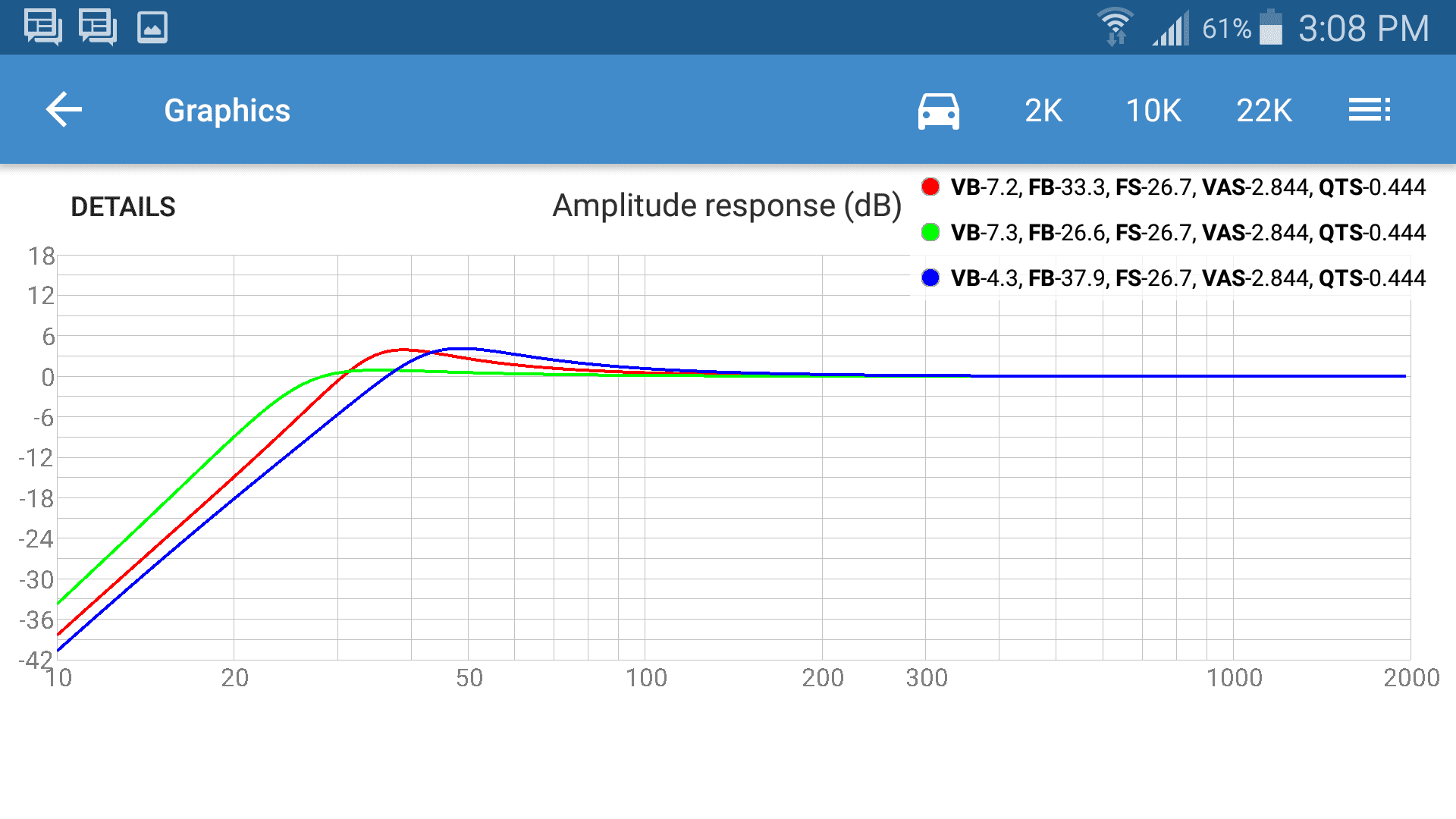
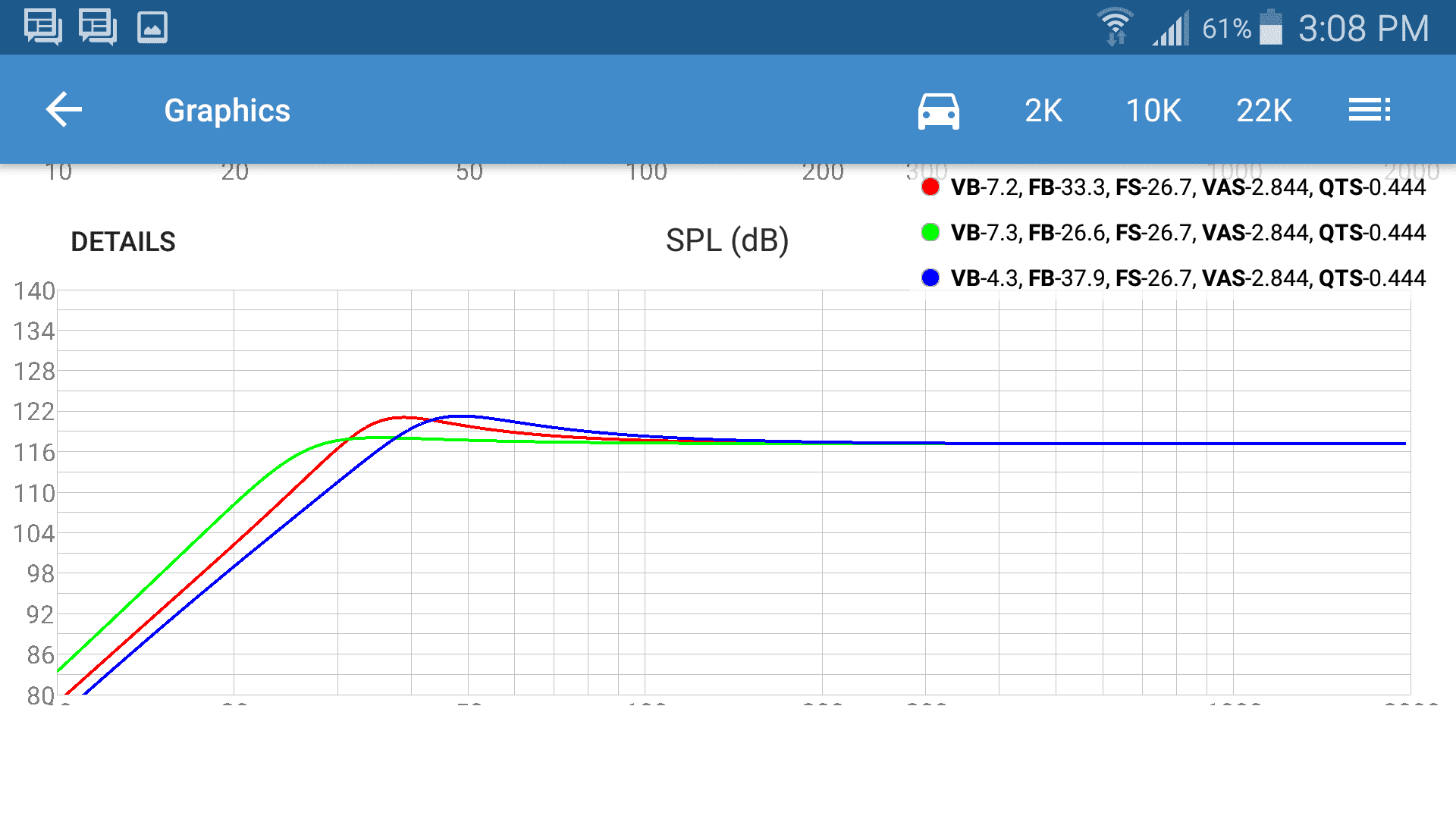
You saw for yourself it won't happen in your airspace. Do play with port length and compare what you hear to what you see on that program. The lines you see on the software (doesn't much matter which, the math is long established and the formulas the same). You'll find that the line you see is going to be more accurate with the box outside or in a very large room. Reflected sound waves add peaks and nulls when you put it in the car. These vary of course but are somewhat predictable, all of the low end will be exaggerated and you'll typically get a bump around tuning (regardless of the predicted curve) and a bump somewhere between 45 and 60hz wherever your vehicle resonates.Would really like that hump 10 cycles to the left!
I hear you loud & clear hispls.You saw for yourself it won't happen in your airspace. Do play with port length and compare what you hear to what you see on that program. The lines you see on the software (doesn't much matter which, the math is long established and the formulas the same). You'll find that the line you see is going to be more accurate with the box outside or in a very large room. Reflected sound waves add peaks and nulls when you put it in the car. These vary of course but are somewhat predictable, all of the low end will be exaggerated and you'll typically get a bump around tuning (regardless of the predicted curve) and a bump somewhere between 45 and 60hz wherever your vehicle resonates.
I can tell you what you explained when you first made this post is consistent with the 2 humped camel I explained and what that green line you plotted will actually sound like in-car.
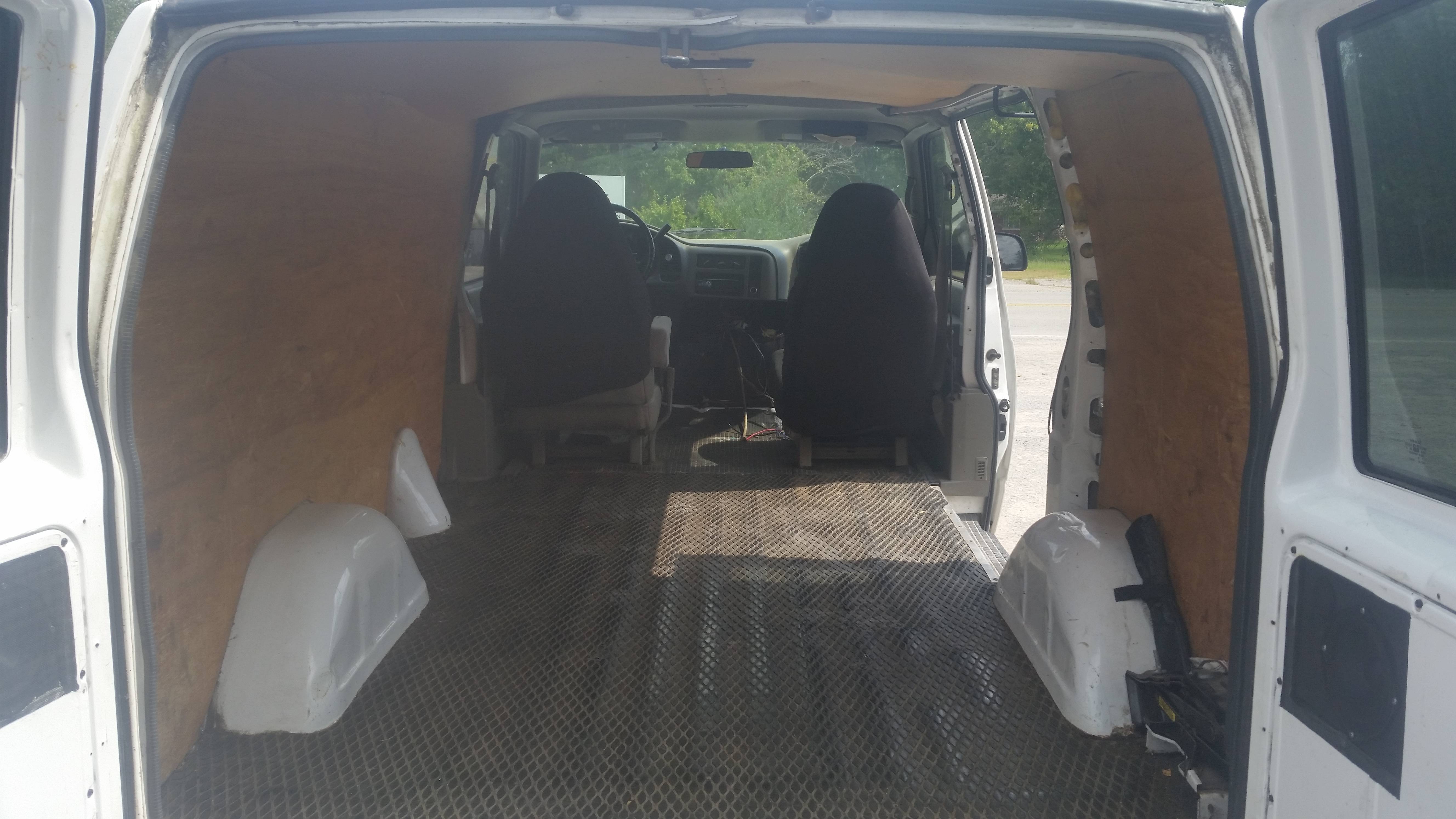
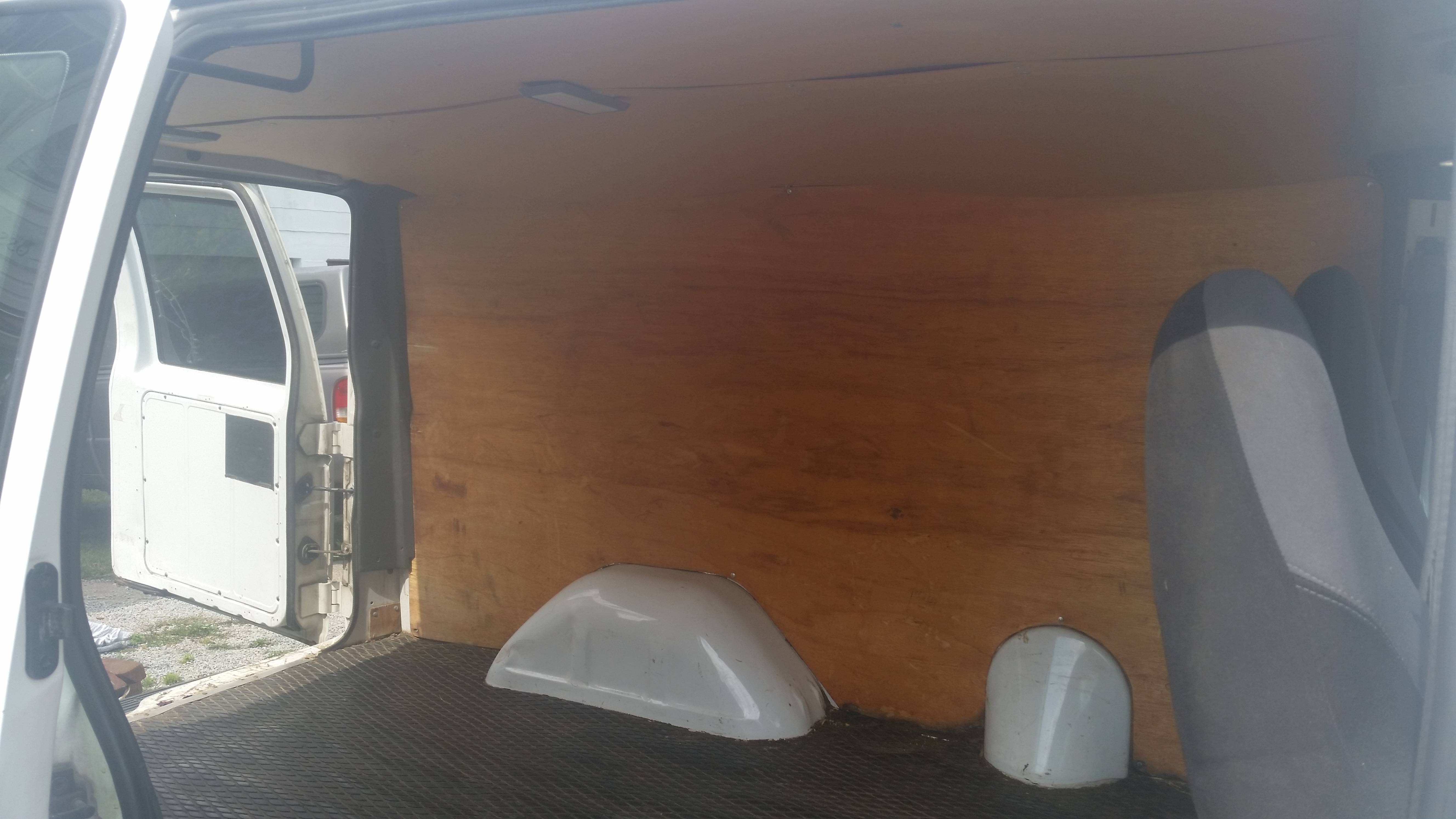
To some degree I think you can predict your main peaks via measuring corner to corner front to back dividing that into the speed of sound then dividing by 1/4 and 1/2. Expect standing waves around those points, predicting nulls may be more difficult as would be predicting overall gains. It's really a matter of wavelength. Low frequencies have a very long wavelength and are subject to interference from their own reflections coming from all directions. Most of this interference will be constructive (make it louder). You can use generalizations to get a ballpark idea what to expect but beyond that you need to test and ideally own an RTA or SPL meter to really quantify and see what's happening.I hear you loud & clear hispls.I was fixing to ask why I didn't SEE the camel hump I HEARD. Great explanation...learning more by the hour.
Is there a way to culminate a large enough sample in order to look at the amplitude response after a specific/generic vehicles transfer function is applied?
Or is it still at a point that those that have been in the industry long enough, with many builds under their belt can say something like "expect an X-db bump around xx-hz in that type of vehicle?
This company says that when they hit 3000 members they will activate the transfer function parameters to be used by clients. Is that hogwash or something that is attainable?
I will play with the port some more as u suggested if nothing else than to get a feel for things.
You've been indispensable to my learning curve & want you to know I do very much appreciate it.
Could you elaborate a little on this?To some degree I think you can predict your main peaks via measuring corner to corner front to back dividing that into the speed of sound then dividing by 1/4 and 1/2. Expect standing waves around those points...
Corner to corner being the farthest two points in your vehicle. Corner up where you put your feet and the opposite corner in the rear of the passenger side for example. Speed of sound divided by the frequency is how long the wavelength is so your peaks will be at 1/2 and 1/4 of the wavelength. Wavelengths are pretty long and you'll get some gain above and below the frequency, and a car interior is such an oddball shape that you'll get ballpark at best, but it's a good estimating tool for what frequencies to watch.Could you elaborate a little on this?I know the speed of sound is based off of temp,humidity,elevation & such. And I could find an average number for my climate. But what of the corner to corner measuring & dividing by x amount, then by x again...I dont follow.
Also, when dealing with modeling software in the vent section where it asks for:
Square/round
# of ports
#of flush ends count
Options are "No" "1" "2"
What are flush ends?
Again, your absolutely right...so I added 3cu/ft.You saw for yourself it won't happen in your airspace. Do play with port length and compare what you hear to what you see on that program.
It gave me something that I didn't know I wanted.Be careful you don't over-drive those subs now. Smaller box = less mechanical control over the woofers.... it'll take less power to push them to excursion.
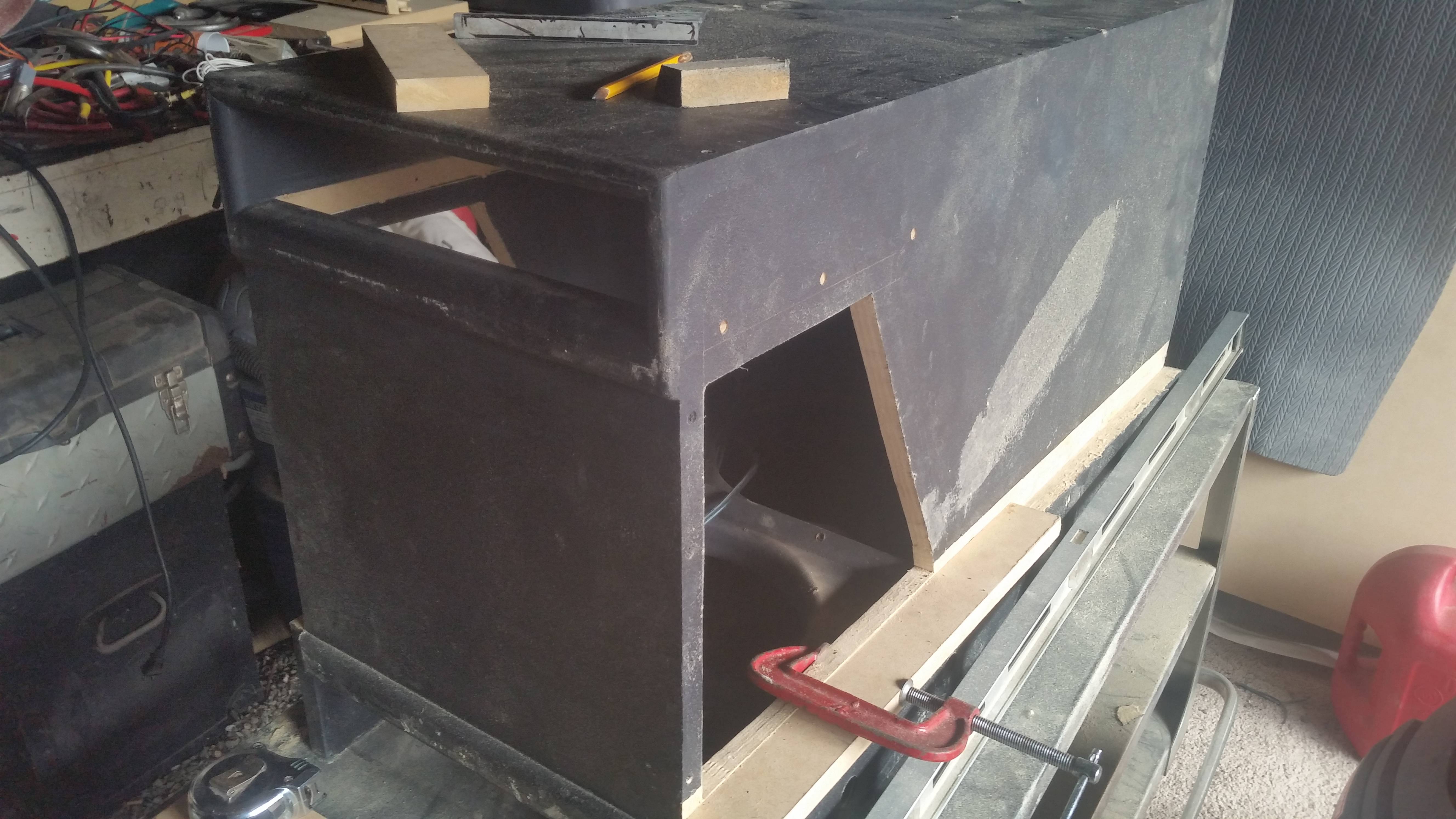
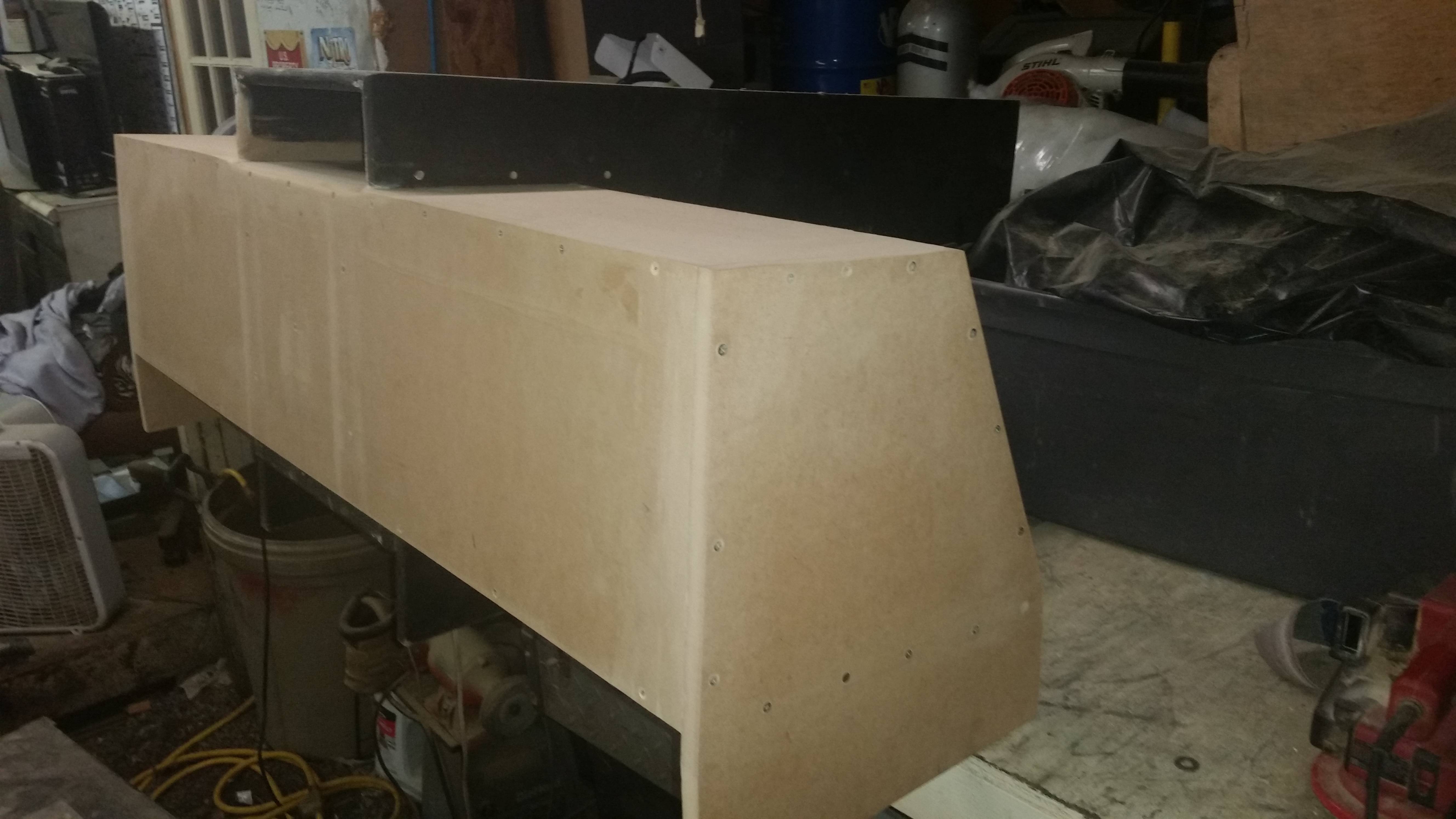
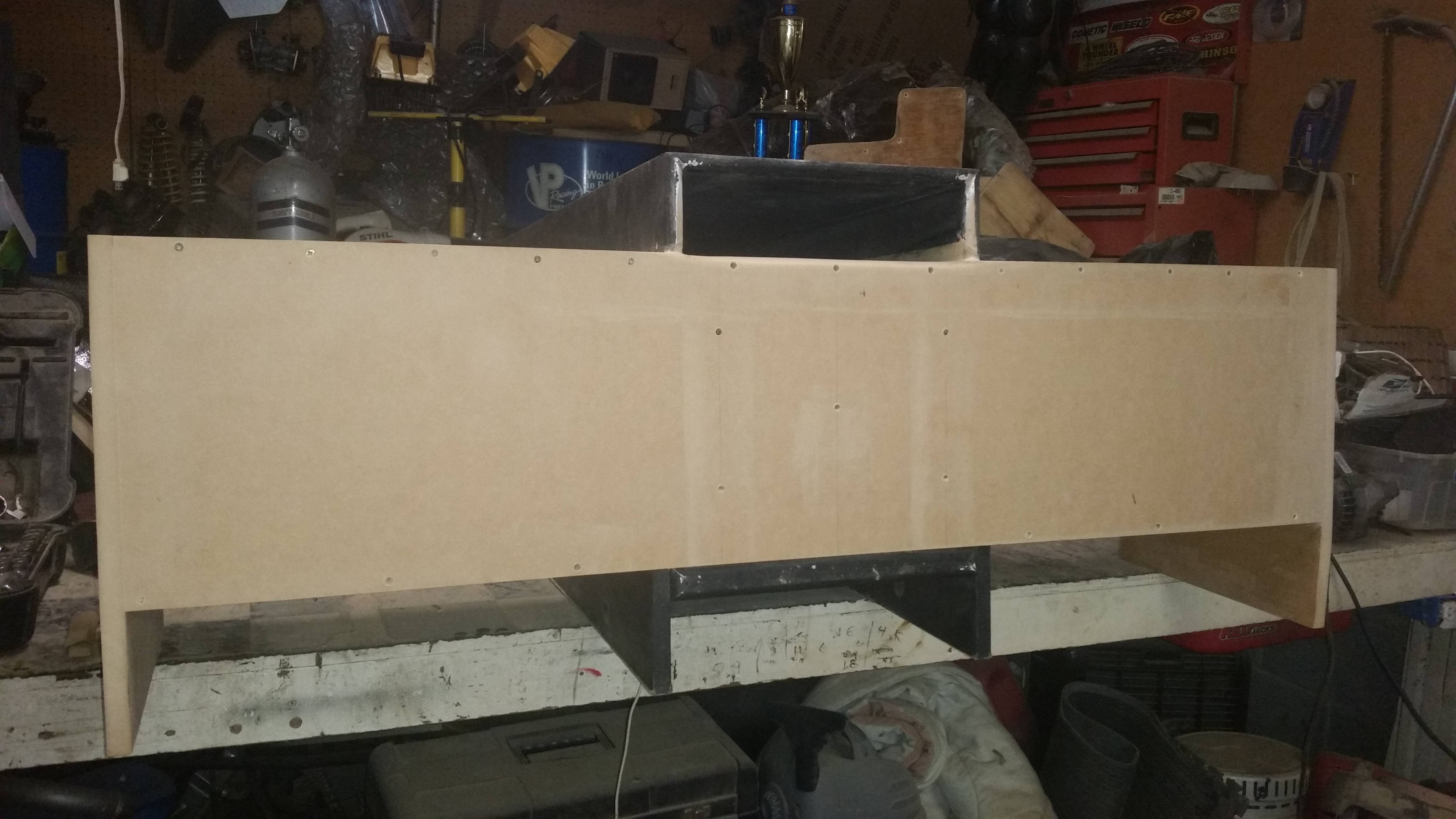
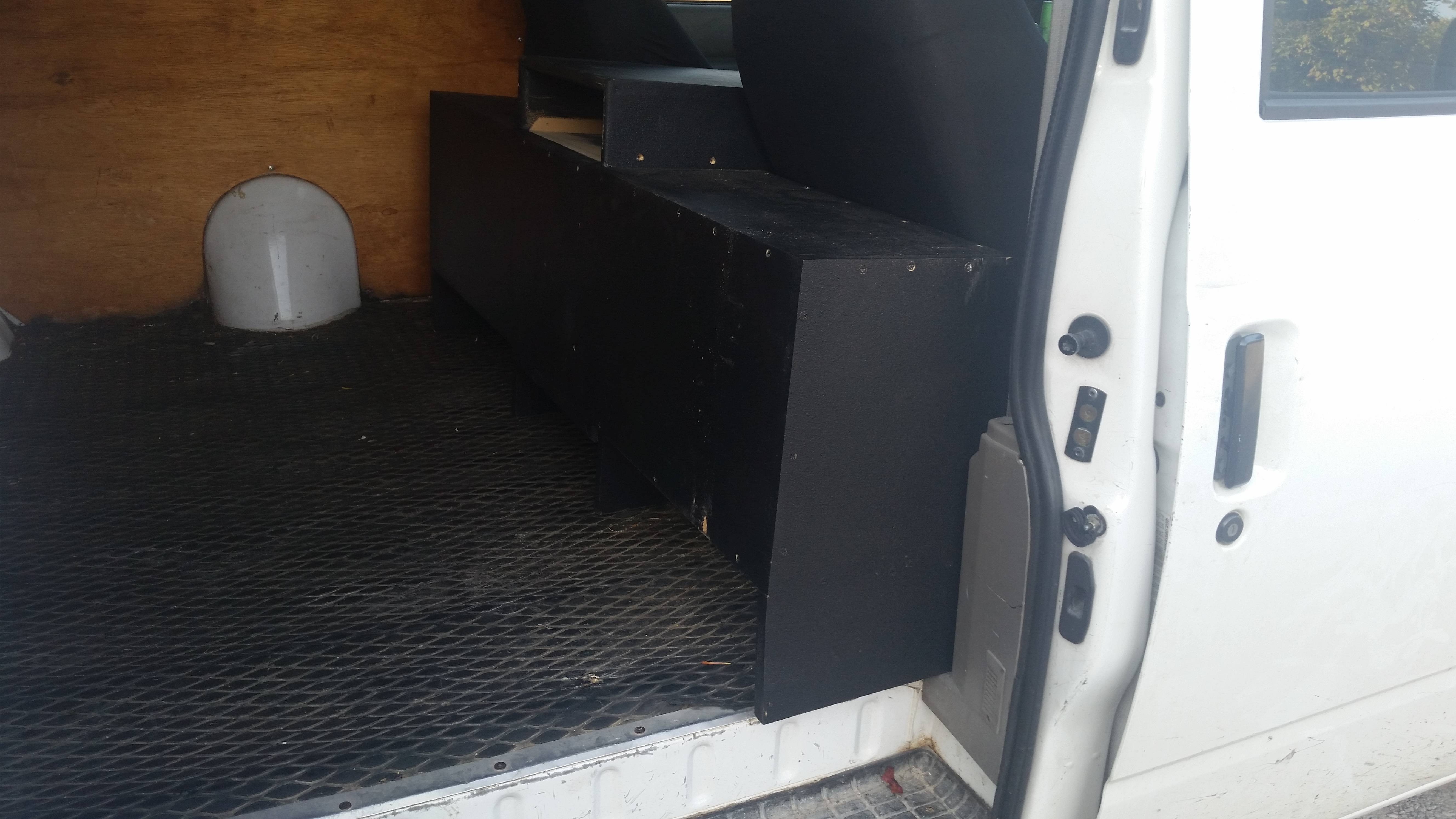
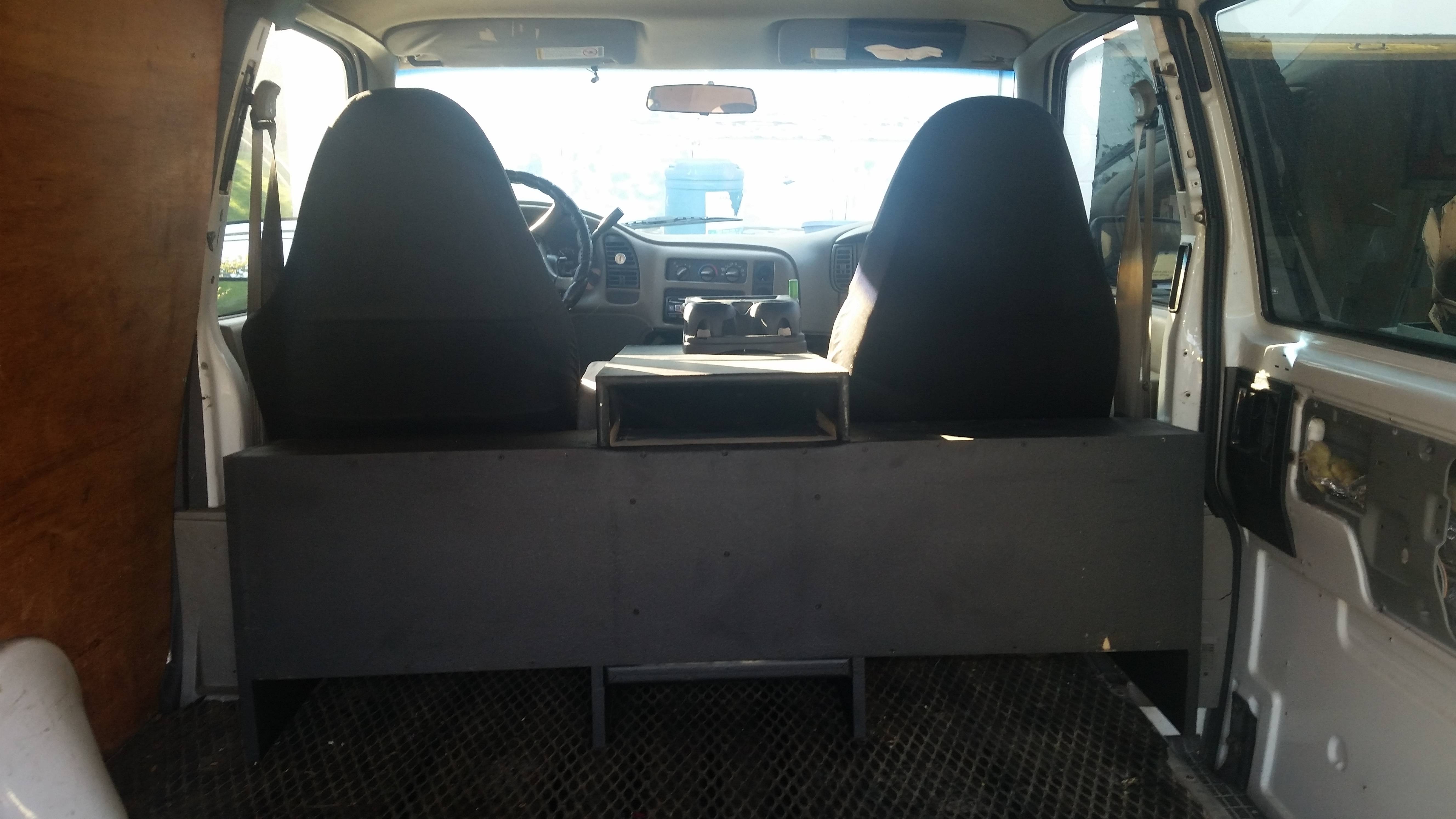
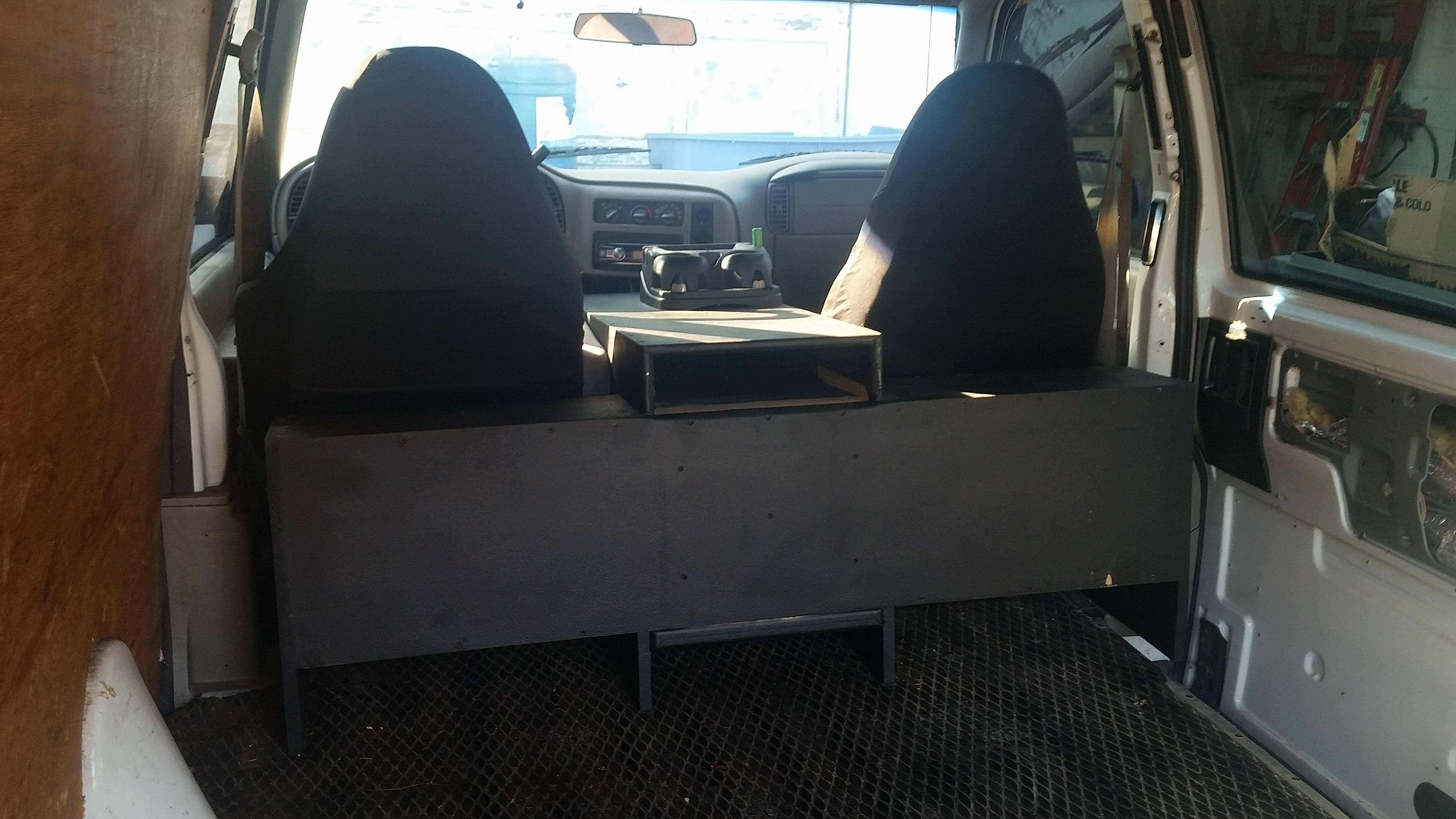
Box looks pretty wild now. Hopefully the extra volume gives you the results you're after, looks like a lot of work transforming it.