Vdub sql

Well, SQL is a misnomer like that other popular one, substage. I hate both of those 'words' and I refuse to acknowledge them, but I'm lovin' that little DD full range amplifier. I'd like to try one of those at some point.
It's important to think of vented enclosures and PR enclosures as practically synonymous, but certainly interchangeable. You can achieve identical frequency response plots with both in the pass band, the only exception is the 28dB rolloff with PR compared to 24dB with vented. Other than that, they do exactly the same thing. Each has it's own advantages. PR is a little touchier and a horrid transient response is guaranteed if done wrong. Vented is much more forgiving if tuning is off target.

To say that you can't have a sound quality setup with a vent is incorrect, you can. You just need to preserve certain things like frequency extension and low group delay within the important thresholds. Another point of interest is the response from 20-80hz. Even if I have an absolutely perfect frequency response profile from 5 to 500hz as measured in an anechoic space, the second I introduce it into the vehicle's interior, that is out the window. The vehicle's acoustics will dominate no matter what. This is why it is ABSOLUTELY essential to have equalization capabilities.

I'm at work so gotta go for now.
Thanks for clearing that up , this is definitely not a pure sq setup but hopefully it does what I want and that's play anything I throw at it and be able to enjoy my music which is why I got into CA in the first place

 
20130408_133322.jpg


20130408_133404.jpg


Xcon 15" D2

 
Thanks for clearing that up , this is definitely not a pure sq setup but hopefully it does what I want and that's play anything I throw at it and be able to enjoy my music which is why I got into CA in the first place
I'm sure it will sound great, man. The Pioneer head should allow you to work around any obstacle you may encounter. Sorry for the clutter in your build thread.
 
Here you go, man.


The enclosure was designed by Pete at http://pwkdesigns.com/
Beautiful work, thank you for the link. I love the approach you took with the kick panels.
I'm noticing now that the enclosure is actaully a 6th order, which is even more impressive with regard to group delay and transient response. I'm sure between the one octave sub-40hz passband and T/A, it's not an issue. Again, very nice.

 
tweeters used to almost ALWAYS go in the kicks with the mids. it seems to have evolved recentlyto the dash. I like them in the kicks, personally, but maybe I just haven't heard the right setup to change my mind!
There's good reason for that, especially for anyone still using the passive crossover that was supplied with the components. Back in the day there wasn't much T/A so the best way to equalize path-lengths was to mount drivers in the kicks. Aside from that, it's crucial to keep the mid and tweet as close together as possible to preserve phase coherency and a good/even power response. Splitting the mids and tweets apart by more than a full wavelength at the set crossover frequency introduces phase anomalies and comb filtering issues. People tend to think that you can solve this by simply inverting the polarity on the tweets, but that throws the design of the partnership between the components and the passive crossover right out the window as the polarity was already taken into consideration based on the slopes involved.
With T/A and steep filters, splitting drivers is not as big of an issue but there's still penalties involved when compared to setups acting more like a point source, coax and full range.

 
Let me let you in on a secret.. Most of these kids shouldnt run active. they dont know how to properly do it. Properly set up passives>>>>poorly set up active. You know this though //content.invisioncic.com/y282845/emoticons/smile.gif.1ebc41e1811405b213edfc4622c41e27.gif
Amen, brutha.
 
Your welcome. I don't really have much experience. It's just what I have heard.
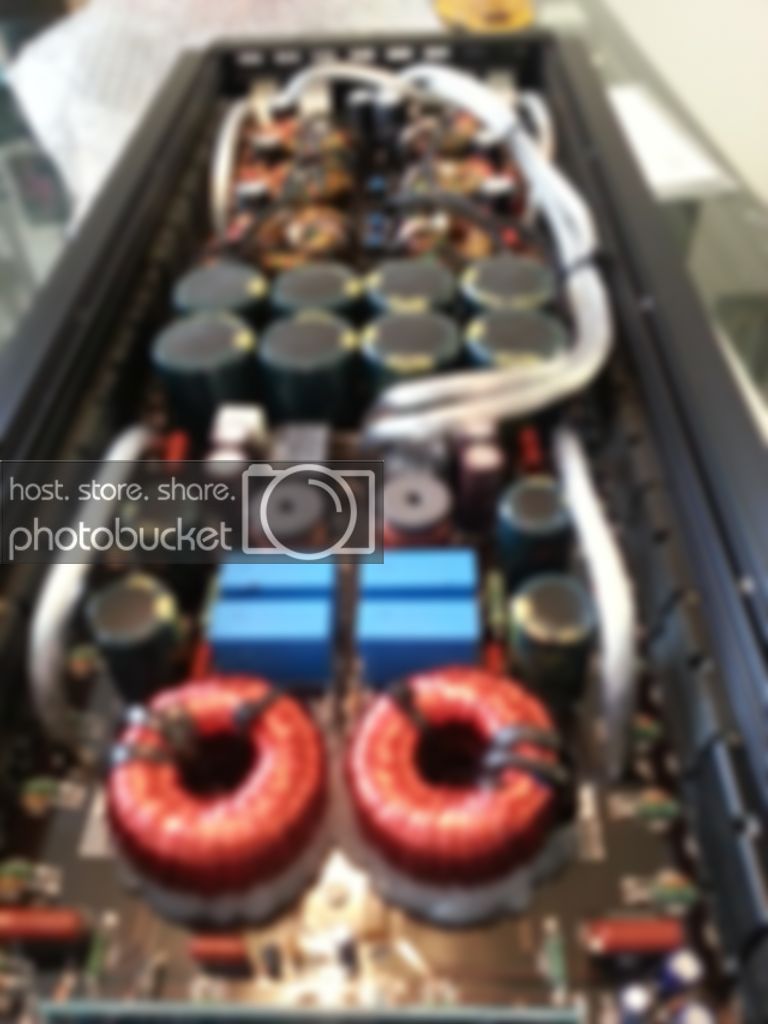
How come you chose to crimp the 0-rings instead of solder them?
A proper crimping, as in utilizing the needed pressure and material(s), do to the terminal and cable, what is called cold-fuse them together. Although, for the size cables and terminals we use, the amount of pressure needed is indeed immense :p A cold fusing of say OFC cabling and an OFC terminal, actually fuses them as ONE continuous piece of cable. Sure, CCA cabling for instance with an aluminum or copper terminal can cold fuse as well; total resistivity of the piece will still be low, but a tiny bit higher than using the same material for it. Yes you can fuse different metals together, but that is a process that requires a cave and LOTS of explosives lol. Anyhow, I don't want to clog this thread up much more because it is a nice build thread //content.invisioncic.com/y282845/emoticons/smile.gif.1ebc41e1811405b213edfc4622c41e27.gif; but for a given piece, proper crimping has less total resistivity than a soldered piece from say one terminal's end to the other terminal's end. However, for most of the world, the difference is not too big of a concern.

 
Activity
No one is currently typing a reply...
Old Thread: Please note, there have been no replies in this thread for over 3 years!
Content in this thread may no longer be relevant.
Perhaps it would be better to start a new thread instead.

About this thread

Bassballer150

10+ year member
Member
Thread starter
Bassballer150
Joined
Location
Salem Oregon
Start date
Participants
Who Replied
Replies
47
Views
7,143
Last reply date
Last reply from
Bassballer150
IMG_0710.png

michigan born

    May 14, 2026
  • 0
  • 0
IMG_0709.png

michigan born

    May 14, 2026
  • 0
  • 0

New threads

Top