Testing a CAPACITOR?

XORstatus
10+ year member

CAR audio IDIOT :P
I know that most of you don't like capacitors, or even despise them.

PLEASE DO NOT reply to this tread if you are one of these people.

I understand your views, please don't perpetuate them.

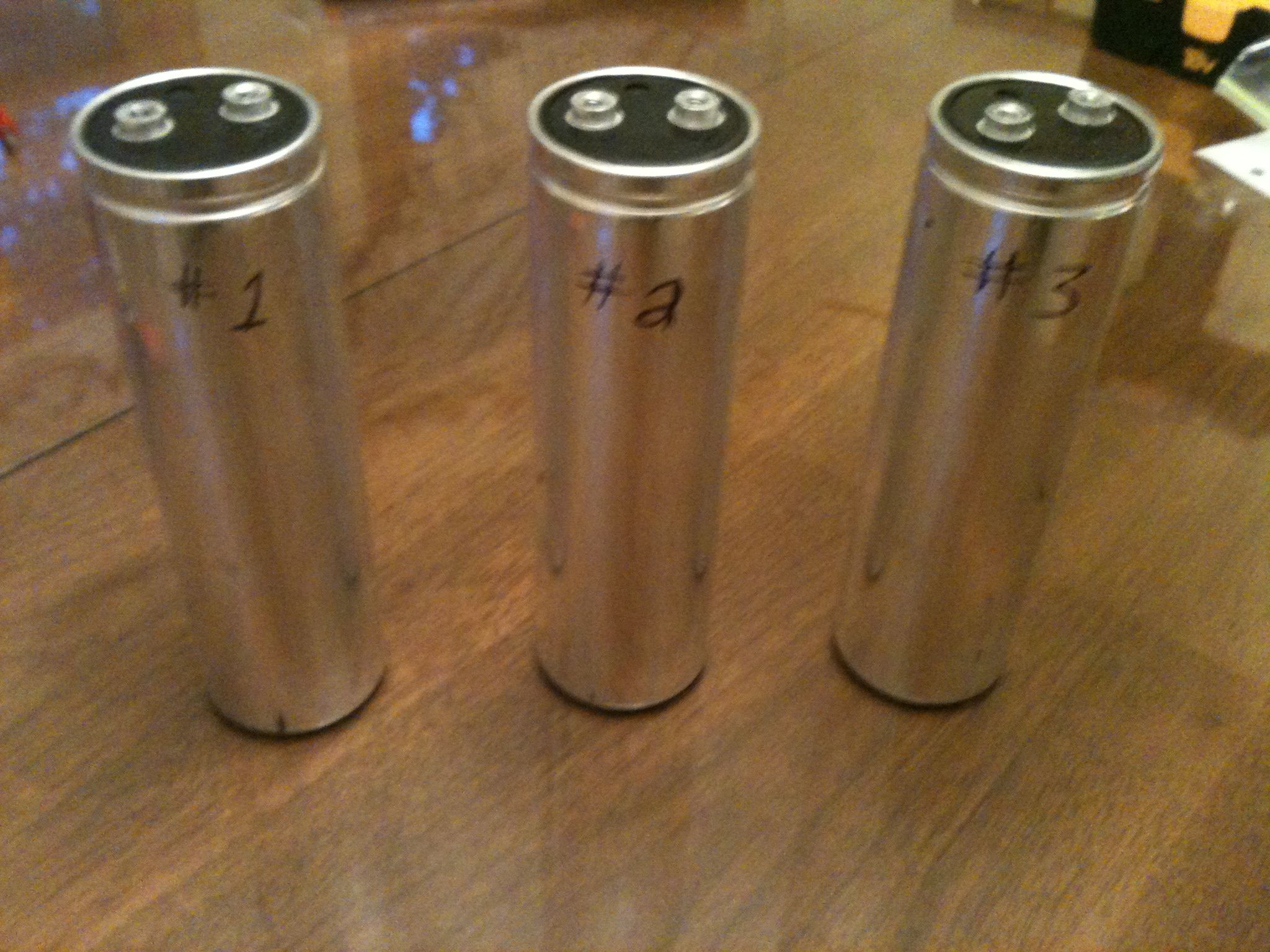
I have a cap bank, three capacitors connected together, and I am trying to test them to see if they are functional in a capacity in which they should be.

They accept and hold a charge, BUT they bleed power very quickly within a few hours a charge which initially registered at 13 to 14 volts will bleed down to like 3 to 4 volts.

How do I test theses things to see if they are currently in a functional capacity?

 
sounds like one is bad or there is a drain on the system. a cap should hold it's charge when not connected.

disconnect and separate them. charge to 13.8V or so. they should hold that charge for months, even years, if not connected. you won't wait that long, but after a few days you can check the voltage on them.

to test capacity, charge to a known voltage, then insert a resistor of a known value, monitor voltage and observe how long it takes for voltage to drop to a minimal level. calculate current then calculate the energy dissipated and compare to the energy stored.

 
The bank is of three ~2 farad caps.

Should i separate them and charge them all independently?

Testing their true "capacity" lol or their true farad rating is not important to me, just wanting to see if they are functional capacitors.

 
Here are the INITIAL results:

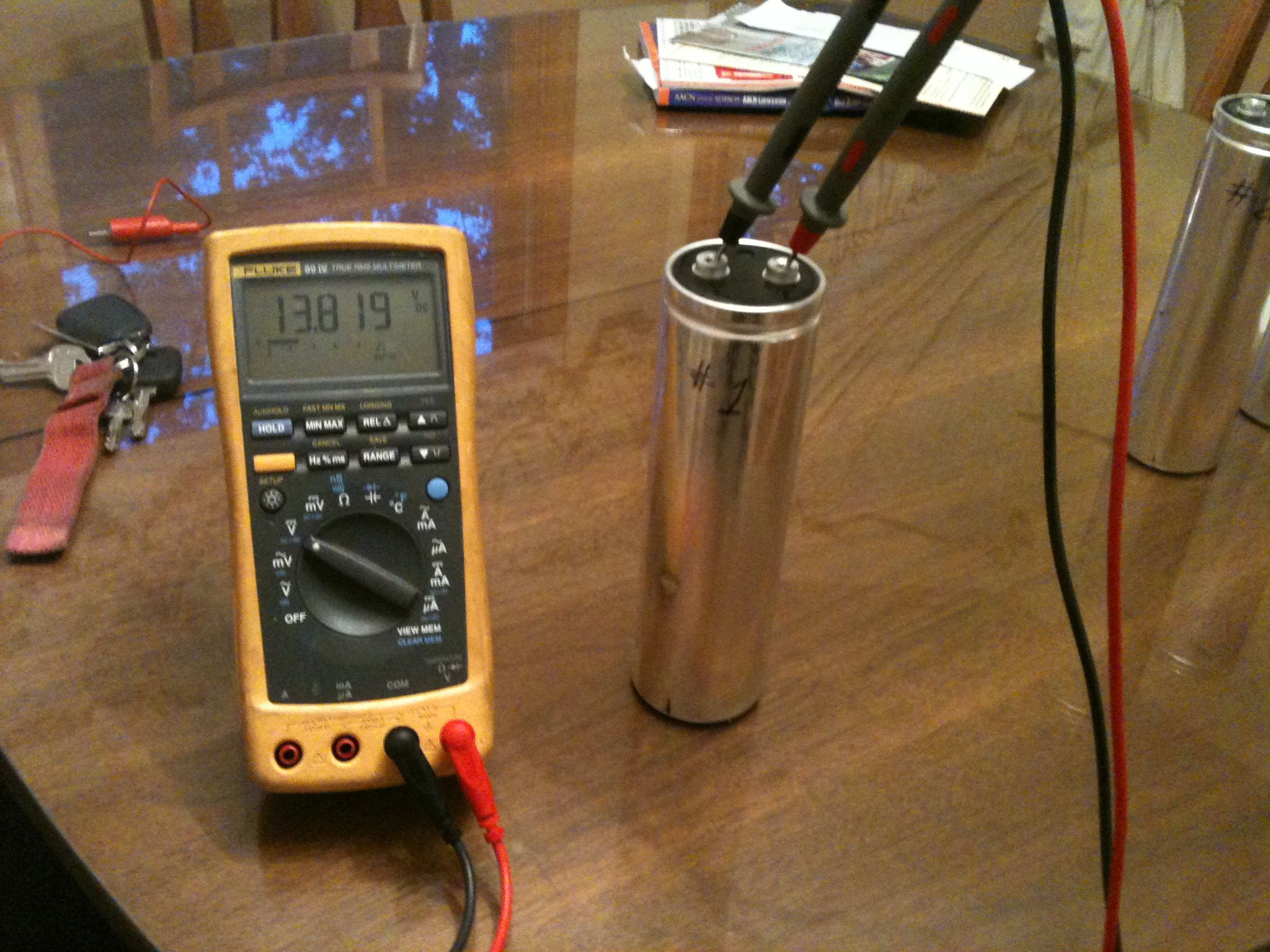
Cap #1: 13.819 volts

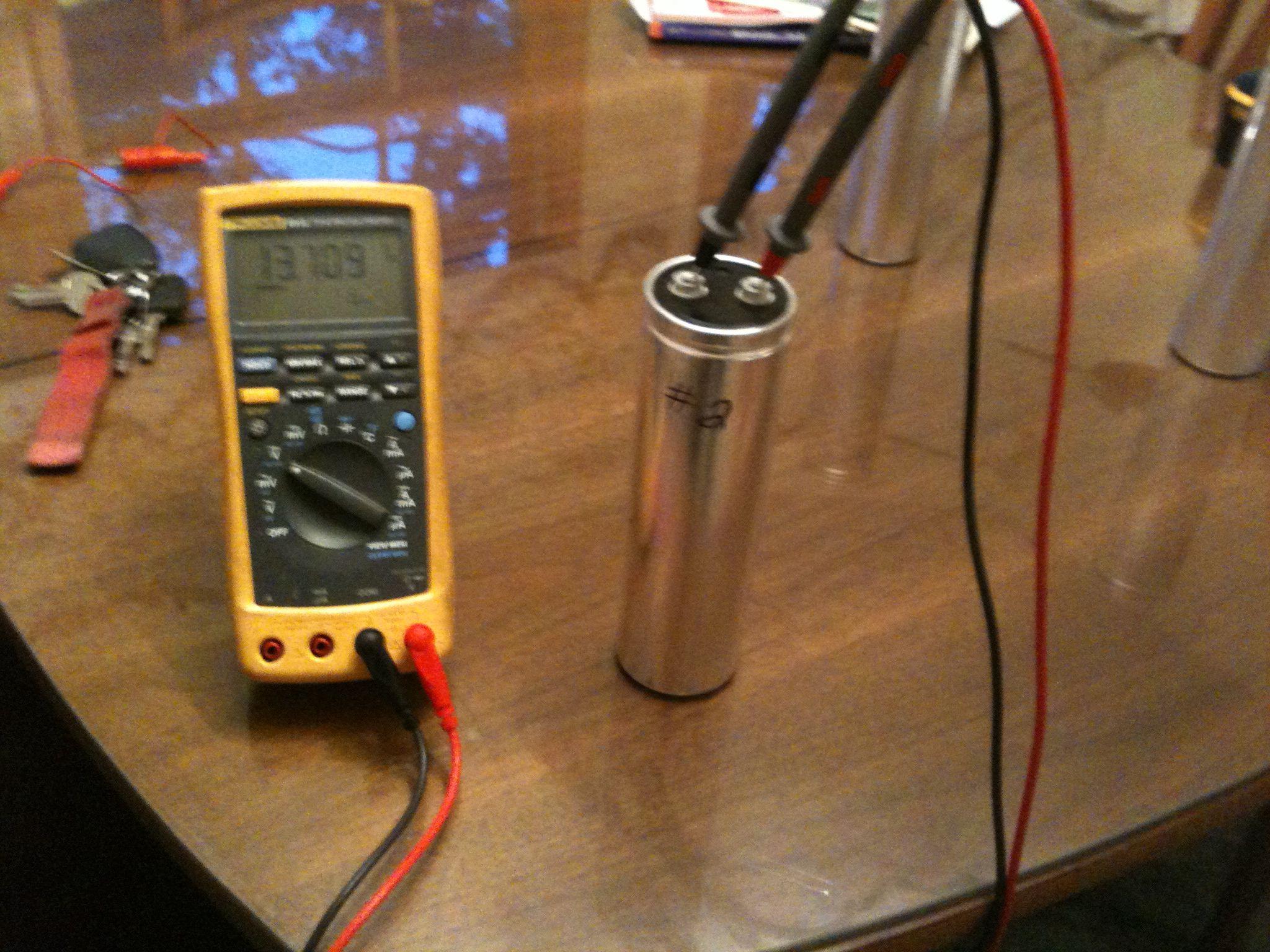
Cap #2: 13.709 volts

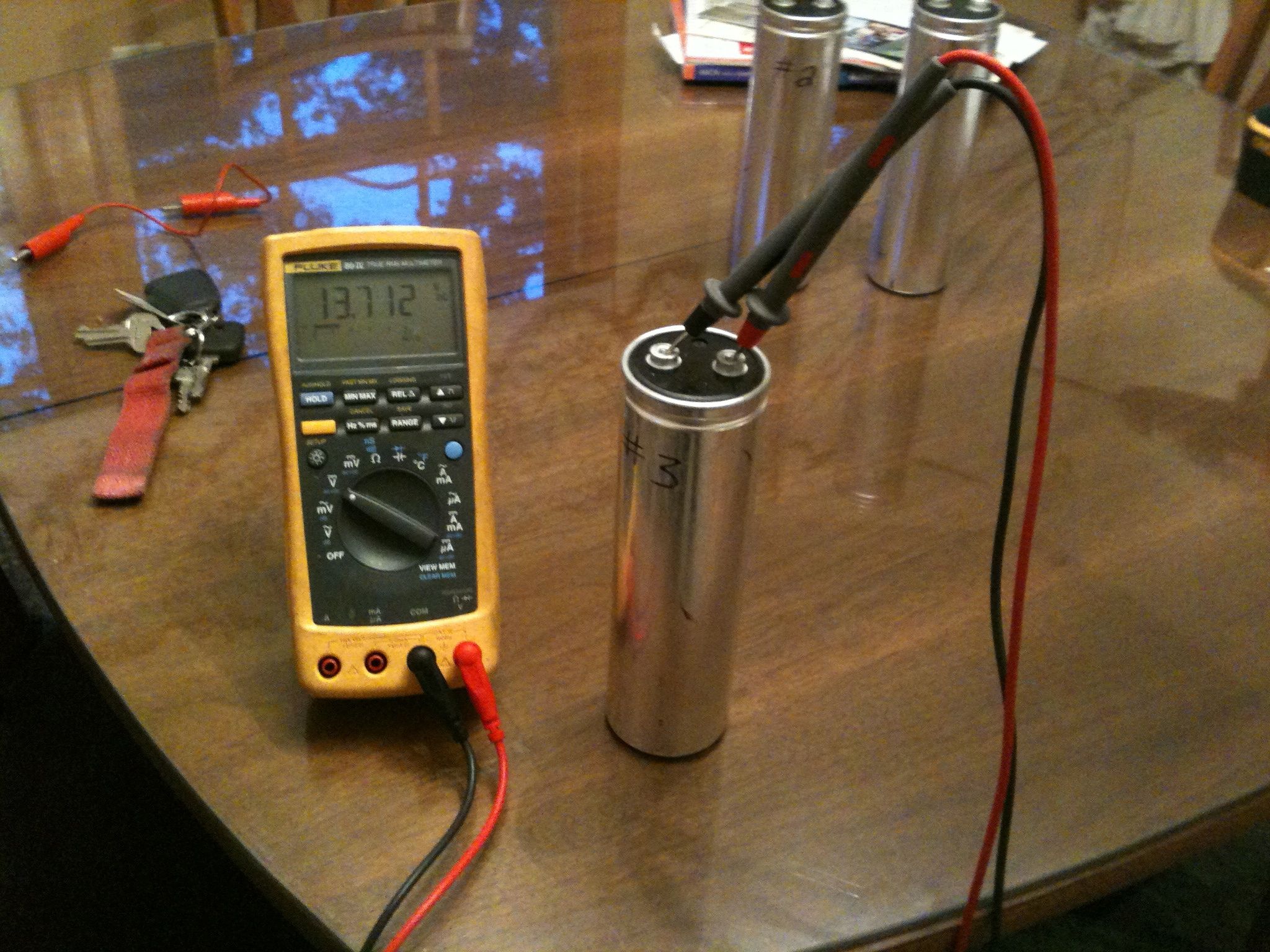
Cap #3: 13.712

The third cap has a different result due to the fact that as I disassembled these from the bars, the second to last cap slipped out prematurely and the bars touched, POP and then NO voltage so I had to charge it separately.

How many days should I wait between the second test?

yiAlC.jpg


GNylg.jpg


tvb9K.jpg


taFOx.jpg


Here are the INITIAL results:
Cap #1: 13.819 volts

Cap #2: 13.709 volts

Cap #3: 13.712

The third cap has a different result due to the fact that as I disassembled these from the bars, the second to last cap slipped out prematurely and the bars touched, POP and then NO voltage so I had to charge it separately.

How many days should I wait between the second test?
You probably have something going on in your car like the cooling fans that stay on for 30s or so when you leave the vehicle. The fans will draw from the highest voltage source first, which would be your caps.

The only way for a cap to discharge by itself is an internal short. You'd notice bulging or a fluid leaking. I've never seen that in large caps though, however I have seen them blow up and make a huge mess in the trunk. This has only happened when 1st hooking up a new cap though.

 
I took some more readings, these are results about 4 hours after the initial.

.....Initial.....CURRENT

1) 13.819 vs. 13.289

2) 13.709 vs. 13.258

3) 13.712 vs. 13.283

DOES THIS MEAN THAT THEYRE FAULTY, ~ .45 volts drop in 4 hours?

 
There is internal leakage on any capacitor, even a new one. The numbers you posted indicate about 25000 ohms of internal leakage resistance which seems a bit low though I don't know the specs on those caps so can't say for sure. The real question is if they will do the job you expect, and leakage current doesn't tell you that. You would need to discharge them quickly with high current load and measure Equivalent Series Resistance (ESR) and you can't do that with a DMM.

I'd say the caps are good to go.

 
Activity
No one is currently typing a reply...
Old Thread: Please note, there have been no replies in this thread for over 3 years!
Content in this thread may no longer be relevant.
Perhaps it would be better to start a new thread instead.

About this thread

XORstatus

10+ year member
CAR audio IDIOT :P
Thread starter
XORstatus
Joined
Location
North Carolina
Start date
Participants
Who Replied
Replies
8
Views
1,458
Last reply date
Last reply from
bubbagumper6
IMG_20260506_140749.jpg

74eldiablo

    May 22, 2026
  • 0
  • 0
design.jpeg

WNCTracker

    May 22, 2026
  • 0
  • 0

New threads

Top