Gyrothex
Junior Member
Hi folks, first post hope it's in the right place...
I have just had a full active install carried out in my 2012 W204 Mercedes C-Class using part new kit and part old. The old kit was purchased 2004 and removed from my last car 4 years ago and stored until this installation. Am clarifying what's old and new as this may be related to the issue I'll get to below and the thing I need advice on.
OEM Comand Online Head Unit into Audison Bit One (new) with ES3 stop/start module (new) for the Bit One
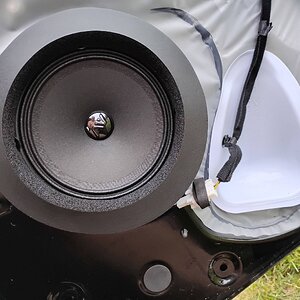
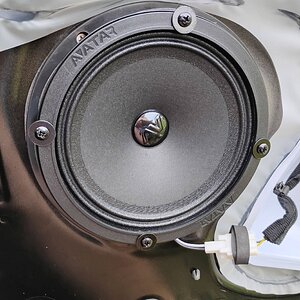
JL 300/2 (old) into front mid bass (new)
JL 1000/1 (old) into sub (old)
Hertz HCP4D (new) 2 channels into front tweeters (old), 2 channels into rear door OEM (Harman Kardon) speakers
The problem....
The car has a stop/start engine and when it stops at junctions or traffic lights, the front mid bass drivers cut out as the JL300/2 is shutting down its output stage. I’m sure it's this and not the amp switching off as it would normally via the 12v remote feed as when the engine starts again there's an almighty zap from the front mid bass drivers where the amp's output relay is already connected when it powers back up. It doesn't seem to occur when I stop and turn the engine off at the end of a journey, keeping the accessory key position on.
Had the JL1000/1 been cutting out too the installing dealer was considering split charge system with dry cell battery in the boot to maintain voltage to the amps. As there weren't stop/start engined cars about in 2004 we suspected the JLs might be more voltage sensitive than the newer Hertz. However it's only the JL300/2 so current proposed solution under consideration is simply to replace the 300/2 with a new Hertz HDP4 into 2 channels then do all the Bit Tune stuff again. The thinking being that being brand new, the Hertz amp will be less susceptible to the voltage change as it's been designed in the age of stop/start vehicles.
Am after advice and suggestions on what you folks think is the best way to resolve and also the best way to properly diagnose the problem and prove whether my supposition is actually correct as this is all getting much more expensive than I anticipated!
Thanks very much,
Lee
I have just had a full active install carried out in my 2012 W204 Mercedes C-Class using part new kit and part old. The old kit was purchased 2004 and removed from my last car 4 years ago and stored until this installation. Am clarifying what's old and new as this may be related to the issue I'll get to below and the thing I need advice on.
OEM Comand Online Head Unit into Audison Bit One (new) with ES3 stop/start module (new) for the Bit One
JL 300/2 (old) into front mid bass (new)
JL 1000/1 (old) into sub (old)
Hertz HCP4D (new) 2 channels into front tweeters (old), 2 channels into rear door OEM (Harman Kardon) speakers
The problem....
The car has a stop/start engine and when it stops at junctions or traffic lights, the front mid bass drivers cut out as the JL300/2 is shutting down its output stage. I’m sure it's this and not the amp switching off as it would normally via the 12v remote feed as when the engine starts again there's an almighty zap from the front mid bass drivers where the amp's output relay is already connected when it powers back up. It doesn't seem to occur when I stop and turn the engine off at the end of a journey, keeping the accessory key position on.
Had the JL1000/1 been cutting out too the installing dealer was considering split charge system with dry cell battery in the boot to maintain voltage to the amps. As there weren't stop/start engined cars about in 2004 we suspected the JLs might be more voltage sensitive than the newer Hertz. However it's only the JL300/2 so current proposed solution under consideration is simply to replace the 300/2 with a new Hertz HDP4 into 2 channels then do all the Bit Tune stuff again. The thinking being that being brand new, the Hertz amp will be less susceptible to the voltage change as it's been designed in the age of stop/start vehicles.
Am after advice and suggestions on what you folks think is the best way to resolve and also the best way to properly diagnose the problem and prove whether my supposition is actually correct as this is all getting much more expensive than I anticipated!
Thanks very much,
Lee