Is that the ying and yang of backpeddling>?
no backpeddling. i just expected this thread to be full of name calling and i didn't have time to read and respond. but a sick kid brought me home from work, they are sleeping, now i have time. let me explain:
good acoustics incorporates envelopment. good envelopment is achieved though proper application of diffusion and absorption. For more on theory of good diffusion, read papers written by Peter D'Antonio (you'll know this already if you're an ASA member).
so, how do you get envelopment in an outdoor venue? For an example of a successful approach using... active rear fill... look no further than Millenium Park in Chicago, IL. Here is a good explanation of that approach:
Millenium Park Chicago
I've heard the two-channel purist argument - and I like many two-channel home audio systems. I've heard many >$100k home audio systems, and they are all lovely. I'd never spend that much, but I appreciate the engineering and end result. There are plenty of white papers on the topic, mostly marketing B.S., but there is usually good information hidden in some.
As a recording engineer, it's your responsibility to provide the mastering. You should already know that most musicians are dumb, just turn the "do nothing" knob and watch them say "yea, that's better". You are educated, you are experienced, you provide the end result. The "artist" hasn't a clue as to how to do your job. There is no consistency in the industry. Every studio is different, using different speakers in different rooms, with different engineers with unique hear loss and preferences, etc. There is no "right or wrong" - there is only personal preference. Granted, there are recordings that people consider to be "reference" but even that is subjective.
When we design recording studios, we've taken the approach of a reflection-free zone for the mixing location because we don't want coloration for the recording engineer. We want you to hear exactly what was played, and work from there. For an example of a recording studio project of ours, check out this video on the adjustable binary absorbers/diffusers we designed and check out the video:
Cincinnati Audio Production at Curtis Inc - studio & location recording, editing, audio sweetening/sound design, and original music.
I work with a ex-recording engineer who both ran a recording studio and did live sound (now he's an acoustics engineer). We're building a $6k car audio system for him that does have rear fill per his request. He recognizes the difference between the studio, the concert hall, and the car. What he wants to experience in a car is envelopment - something not possible without rear fill.
Rear fill is applied in 99% of automobiles - very few car audio systems are devoid of rear speakers. The ones that are are for three reasons:
1. competition sound systems with hundreds of hours of tuning for proper imaging
2. basic sound systems that have rear deck speakers removed to reduce distortion and increase bass in the cabin
3. the small vehicle didn't have space for rear speakers
#2 has been a recommendation of mine for many vehicles over the years. if you have subs in the trunk and rear deck speakers - you have a problem. either seal the speakers to prevent pressurization of the cones by the sub(s) or remove them.
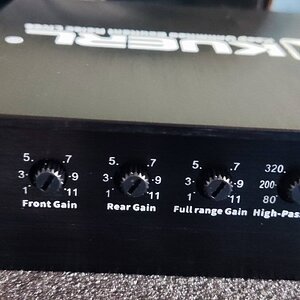
the original purpose of this post was how to get 20ms of delay using cascaded processors.
the secondary discussion was regarding if rear fill is even necessary and how to properly apply it.
there is no magical 20ms delay that works for all cars and all systems. i argue that the desired delay may range from 0ms to 100ms. who knows until you sit down and listen. use your ears and decide what you like best. if you haven't sat down in a car with rear fill and a processor that lets you filter and delay - you shouldn't talk about something you haven't experienced. if you have, then explain the settings you tried and the results. if you have full range rear speakers - that's not what we consider "rear fill". as i've already stated, rear fill is attempting to add a "room" to the car. and it can work - try it for yourself.
As an acoustics engineer, I deal with many subjective opinions on a regular basis. Everyone has an opinion on acoustics, and according to them - they are all "experts" on how something should sound. You are welcome to like whatever you want. what isn't subjective is the science behind acoustics - the math is sound. we still disagree (as an industry) on the best way to develop computer models of acoustics, and i've worked on software to create auralizations. at the last ASA meeting, i heard various arguments as to the best methods.
if you don't like analog equipment - then that's your preference. many people still do like the harmonic distortion that tubes offer. who know why - it certainly doesn't look good on paper. Abbey Roads put out many good recordings using analog gear. At ASA this year there was a presentation on the old (70's) vs new (2000's) methods of mastering and recording an album. Everything was reproduced - including equipment used, room arrangement, etc. The resounding opinion of all in attendance was that the old method "sounded better" - mostly because it was devoid of processing.
your argument is one that i hear often from recording engineers. "i have determined how it's supposed to sound, you are just supposed to faithfully reproduce that somehow without having a room effect". basically, you believe that everyone should wear headphones. that is your argument. EVERY reproduction is a coloration of the original. It is IMPOSSIBLE to reproduce a recording without the environment and equipment changing it. Physically and electrically impossible. With a million dollars, you can come pretty close.
Since every reproduction that doesn't use headphones has an environmental effect - we get back to acoustics and envelopment.
have fun with this post. i'll be back next week. if you have anything to say to ME - usepmkthxbye