
building an enclosure..........

adio
5,000+ posts

THE STEREOTYPE FIGHTER!!!
like this:
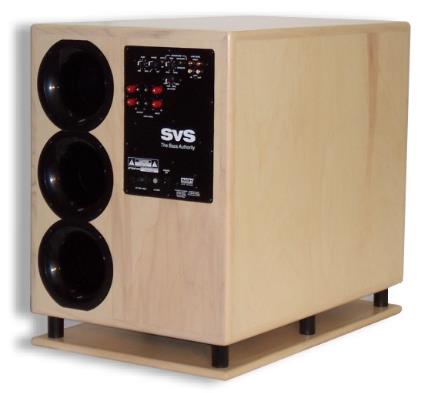
svs-pb2-ultra-subwoofer-rear-panel.jpg


In addition, there is a subsonic filter knob, with settings of 25 Hz, 20 Hz, 16 Hz, and bypass. These are used with port blocking foam plugs to allow customizing the sub to suit your taste and room. 25 Hz with no plugs will yield the highest overall SPL, while a 16 Hz setting with two plugs will give you some serious bottom trolling extension. It should be noted that in room, at each of the settings, plenty of bass was still apparent below the filter point.

and

Tuning Options:

The PB2-Ultra is a bass reflex design, and venting is accomplished with three widely flared 4" rear discharge ports. The rated tune point with three ports open is 25 Hz, and lower states of tune can be achieved by plugging one port (20 Hz) or two ports (16 Hz), and adjusting the tune switch accordingly.
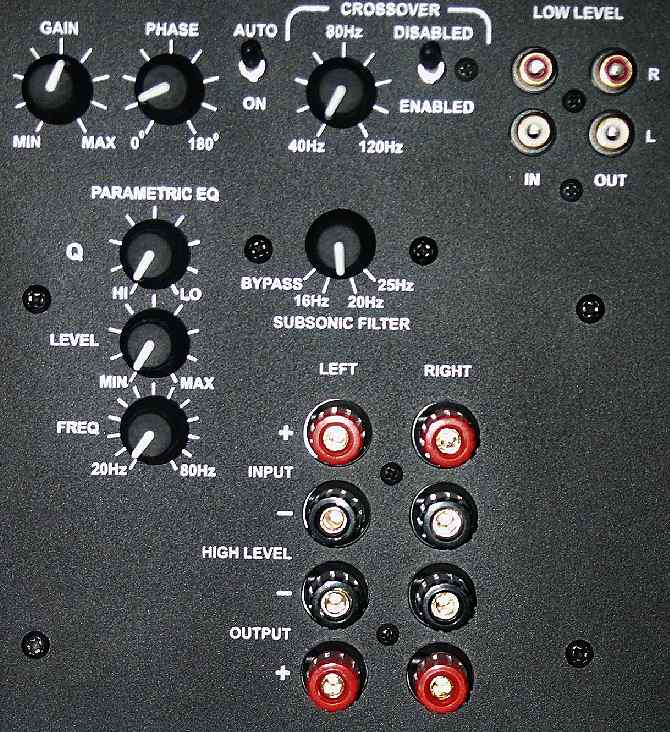
svs-pb2-ultra-subwoofer-rear-panel-closeup.jpg


1.) if i were to make one of these boxes, do i really need to have those subsonic filters when i change the tuning??

2.) has ANYONE attempted to make these types of enclosures or enclosures with switchable tuning in general??

3.) is there ever such a thing as 'too big' for a sealed box for HT if i plug up all the ports???

 
..what's special about it? plate amp with internal xover, ssf, flared ports...
ahahahahah and more ha and another ha!! it's speacial because you can change the tuning for music and movies whereas most boxes have 1 tuning and that's it. don't you find that to be a great feature??

 
i was thinking of an enclosue like this:

front of it

254_57.jpg


and

back of it

254_58.jpg
i made these on photoshop.

i would would it to look EXACTLY like this, same color and very glossy
884_46.jpg


and i don't know if i should 2 or 3 ports. 2 ports = 18Hz and 25Hz 3 ports= 17Hz, 23Hz and 28Hz. i wonder why i would need the 23Hz??

 
get a sub that pushes a lot of air and fire things out the port. rocket launcher in disguise my friend. but in all seriousness, i dont see why it wouldnt work and it is a bad *** little feature to have.
yes, cause most people seem to have to compromise between a tune where it kicks *** for movies or music or does a so-so job for both. with the ability to change tuning, you don't have to compromise and you can plug up the ports for a sealed box........... best of both worlds!!!

 
I would do 3 (if those calculations are correct) Just for the added output that you would get at 28Hz.
yeah, i'm really thinkin 3 too. but i wonder what i would need that middle tuning for though?? 16 - 18Hz is for movies 26 - 29Hz for music. 22 - 24Hz for what?

 
http://www.diysubwoofers.org/prt/

snip;

A ported enclosure system consists of a driver mounted on one side of a box that has an open tunnel or port which allows the passage of air in and out of the box. At low frequencies, the vent contributes substantially to the output of the system.

Ported boxes can be more efficient than a sealed box, a bonus if you want

more SPL.

The ported enclosure system is characterised by lower distortion and higher power handling in the system's operating range, and lower cutoff frequency than a sealed enclosure system using the same driver.

Some woofers are better suited for sealed box, some are better for ported box,

you have to model the woofer to see how it might perform. A woofer designed

for a ported box will have a lower cutoff frequency than the same woofer in

a sealed box so you get more lower end bass.

Distortion rapidly increases below the cutoff frequency however as the driver becomes unloaded

When you play frequencies below tuning the woofer cone can go into higher

excursion causing woofer damage and/or nasty distortion. That's why a good

design will use a subsonic filter and people try to tune as low as the design

allows to cover the 20hz and up range. Some folks try to tune lower down to

17hz if the woofer/design allows. This doesn't mean 20hz tuning is worse than

17hz, can you really notice a difference of 3hz for a single woofer system? Most

recorded music is 35hz and up, the 17hz - 20hz is recommended for HT because

movies are recorded with low frequency 'special effects', but because you are tuned low doesn't mean the music will suffer.

and the transient response of a ported enclosure system is usually inferior to that of a sealed enclosure system using the same driver.

This is true but over-rated, if you design a good ported box it will perform well

and you may never prefer a sealed box version of the same woofer.

However, the lower cutoff frequency and better power handling within the system's passband often makes ported systems the alignment of choice for many speaker builders.

Subjective

Ported enclosure systems are much more sensitive to misaligned parameters than sealed enclosure systems, which makes their construction more difficult for the beginning DIYer. I advise that you don't attempt to build these systems, unless you're certain that the T/S parameters for the driver that you want to use are correct.


Almost any driver can be used in a ported enclosure system, however, only drivers which have a Qts value between 0.2 to 0.5 will generally give satisfactory results. If the driver has a Qts above 0.4, try using it in a sealed enclosure or single reflex bandpass system instead.

....

The first thing you have to do is pick woofers and model them in ported boxes

to see what the response is for various tunings because you may find out that you may not achieve

your goal... Also room acoustics will play a role that the common modeling software doesn't account for

and most people will eventually EQ their subwoofers after taking in-room measurements. So, don't

make plans unless you 'run the numbers' because you may want to buy a Ford F250, do some mods, and it will handle like

a Porsche? and accellerate like a bullet ? ... /hehe

If you are serious about audio the woofer system should be two part. The subwoofer system tuned low and crossed over low, perhaps low

pass 40hz - 60hz and the second woofer would be bandpassed from 40/60hz to whereever your midrange is. The subwoofer should be

of 'monster' high excursion variety and the regular woofer should be chosen for better SQ at the higher frequencies {think bass guitar reproduction}.

If you mains are good and powerful then you don't need the two part design, but mains with small drivers {unless arrayed} won't give you

the bass guitar punch you want.

 
http://www.diysubwoofers.org/prt/
snip;

A ported enclosure system consists of a driver mounted on one side of a box that has an open tunnel or port which allows the passage of air in and out of the box. At low frequencies, the vent contributes substantially to the output of the system.

Ported boxes can be more efficient than a sealed box, a bonus if you want

more SPL.

The ported enclosure system is characterised by lower distortion and higher power handling in the system's operating range, and lower cutoff frequency than a sealed enclosure system using the same driver.

Some woofers are better suited for sealed box, some are better for ported box,

you have to model the woofer to see how it might perform. A woofer designed

for a ported box will have a lower cutoff frequency than the same woofer in

a sealed box so you get more lower end bass.

Distortion rapidly increases below the cutoff frequency however as the driver becomes unloaded

When you play frequencies below tuning the woofer cone can go into higher

excursion causing woofer damage and/or nasty distortion. That's why a good

design will use a subsonic filter and people try to tune as low as the design

allows to cover the 20hz and up range. Some folks try to tune lower down to

17hz if the woofer/design allows. This doesn't mean 20hz tuning is worse than

17hz, can you really notice a difference of 3hz for a single woofer system? Most

recorded music is 35hz and up, the 17hz - 20hz is recommended for HT because

movies are recorded with low frequency 'special effects', but because you are tuned low doesn't mean the music will suffer.

and the transient response of a ported enclosure system is usually inferior to that of a sealed enclosure system using the same driver.

This is true but over-rated, if you design a good ported box it will perform well

and you may never prefer a sealed box version of the same woofer.

However, the lower cutoff frequency and better power handling within the system's passband often makes ported systems the alignment of choice for many speaker builders.

Subjective

Ported enclosure systems are much more sensitive to misaligned parameters than sealed enclosure systems, which makes their construction more difficult for the beginning DIYer. I advise that you don't attempt to build these systems, unless you're certain that the T/S parameters for the driver that you want to use are correct.


Almost any driver can be used in a ported enclosure system, however, only drivers which have a Qts value between 0.2 to 0.5 will generally give satisfactory results. If the driver has a Qts above 0.4, try using it in a sealed enclosure or single reflex bandpass system instead.

....

The first thing you have to do is pick woofers and model them in ported boxes

to see what the response is for various tunings because you may find out that you may not achieve

your goal... Also room acoustics will play a role that the common modeling software doesn't account for

and most people will eventually EQ their subwoofers after taking in-room measurements. So, don't

make plans unless you 'run the numbers' because you may want to buy a Ford F250, do some mods, and it will handle like

a Porsche? and accellerate like a bullet ? ... /hehe

If you are serious about audio the woofer system should be two part. The subwoofer system tuned low and crossed over low, perhaps low

pass 40hz - 60hz and the second woofer would be bandpassed from 40/60hz to whereever your midrange is. The subwoofer should be

of 'monster' high excursion variety and the regular woofer should be chosen for better SQ at the higher frequencies {think bass guitar reproduction}.

If you mains are good and powerful then you don't need the two part design, but mains with small drivers {unless arrayed} won't give you

the bass guitar punch you want.
wow man!!! thanks for the time you put into this and the info you've given.

 
Activity
No one is currently typing a reply...
Old Thread: Please note, there have been no replies in this thread for over 3 years!
Content in this thread may no longer be relevant.
Perhaps it would be better to start a new thread instead.

About this thread

adio

5,000+ posts
THE STEREOTYPE FIGHTER!!!
Thread starter
adio
Joined
Location
college park, ga
Start date
Participants
Who Replied
Replies
12
Views
690
Last reply date
Last reply from
adio
IMG_20260516_193114554_HDR.jpg

sherbanater

    May 16, 2026
  • 0
  • 0
IMG_20260516_192955471_HDR.jpg

sherbanater

    May 16, 2026
  • 0
  • 0

New threads

Top


