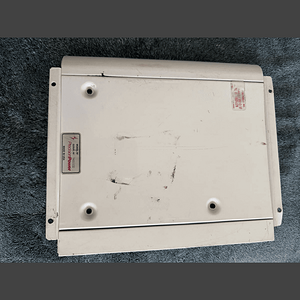
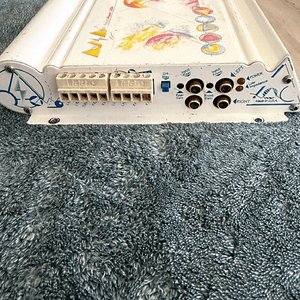
13v 2nd bats?

i have a volt meter rigged into the car so i may moniter it at all times. you are not monitering the output of the alty,if you where you'd be able to see when it attempted to overcharge the bat and when it clicks off. a volt meter is reading volts off the bat. it will never go above 14v for a good reason...
I have a voltmeter too. A lot of us do. While driving it sees 14.8v. That is the alternators voltage output. Turn the engine off and it sits at 12.5v which is just pure battery voltage. The alternator obviously has a higher voltage to charge the batts.

 
High output alternators don't do much at idle(depends) but most don't, so you're wrong again.
And why do you need 200a at idle? Are you one of those fegs who bump at the stoplight?

Rashad > you
rofl god **** your a loser. why would i need 200a at idle huh. a *** that bumps at the stoplight. do you just turn your shit off when you pull up to a stop light? 200a a tidle is not like it will be hurting anything buddy but thanks for *****ing all over this thread.

 
this makes no sence dude. the voltage is allways read off the bat, while driving its while the alty is putting out its max i understand what you are trying to say but you dont know what your talking about. if you want to respond to a post atleast have some advice man not just run your mouth about bs. a ho alt is great because it has a high output at idle.... or am i wrong? the point of having two bats is eather to get the voltage that your amp wants or to run your beats for long periods of time with the car off. my qustion was can i just use another 12v bat in the back and buy a ho alt that puts out around 200a at idel and let it just recharge two crappy bats before i go out and spend 200 on a yellow top to get the desired voltage for my amp (wich is 14.4v) and if that will prevent the prob i am having at this moment( droping to low 11v at long idle periods).
For one, learn how to type you fucking moron, and for two, learn what the fuck you're talking about before you call people out.

 
I have a voltmeter too. A lot of us do. While driving it sees 14.8v. That is the alternators voltage output. Turn the engine off and it sits at 12.5v which is just pure battery voltage. The alternator obviously has a higher voltage to charge the batts.
And I'll second this along with what Jbizzle said.

/

 
rofl god **** your a loser. why would i need 200a at idle huh. a *** that bumps at the stoplight. do you just turn your shit off when you pull up to a stop light? 200a a tidle is not like it will be hurting anything buddy but thanks for *****ing all over this thread.

Your thread is getting shat on because your being a stubborn a$shole.

They're trying to explain how the sh!t works, and you're giving them your bullshit story.

Now since this thread is pissing me off and may get ugly, I'm going to the lounge.

 
OK, I gave up trying to read what you were saying after the first sentence. But skmfkr was right, the voltage you see when your car is running is the alternator more than the battery. All of your systems are meant to run off the alternator, the reason why your voltage drops down is because your alt can not keep up with the power demands and power is pulled from the battery.

As for any other questions you had, clean it up so I don't have to spend an hour trying to make sense of what you said, and I may try and help out more.

 
Yellow tops do not sit at 15v. There are no 15v batteries.

Yellow tops are 12v batteries that sit at about 12.6v with no load. When installed in a vehicle and the vehicle is running, the alternator will sit at around 13-14.6v depending on the car and the state of charge on the battery.

If you are running a large amp or multiple amps, you will benefit greatly from adding a second battery as long as it is either the same exact battery as your main battery, or it is isolated from the main battery.

 
rofl god **** your a loser. why would i need 200a at idle huh. a *** that bumps at the stoplight. do you just turn your shit off when you pull up to a stop light? 200a a tidle is not like it will be hurting anything buddy but thanks for *****ing all over this thread.


You sir are showing how much of an idiot you are. An alternator does not shut off while your driving, it continually puts out voltage.

Quoted from wikipedia:

Alternators are used in modern automobiles to charge the battery and to power a car's electric system when its engine is running. Alternators have the great advantage over direct-current generators of not using a commutator, which makes them simpler, lighter, less costly, and more rugged than a DC generator. The stronger construction of automotive alternators allows them to use a smaller pulley so as to turn twice as fast as the engine, improving output when the engine is idling. The availability of low-cost solid-state diodes from about 1960 onward allowed car manufacturers to substitute alternators for DC generators. Automotive alternators use a set of rectifiers (diode bridge) to convert AC to DC. To provide direct current with low ripple, automotive alternators have a three-phase winding.

Typical passenger vehicle and light truck alternators use Lundell or claw-pole field construction, where the field north and south poles are all energized by a single winding, with the poles looking rather like fingers of two hands interlocked with each other. Larger vehicles may have salient-pole alternators similar to larger machines. The automotive alternator is usually belt driven at 2-3 times the engine crankshaft speed.

Modern automotive alternators have a voltage regulator built into them. The voltage regulator operates by modulating the small field current in order to produce a constant voltage at the stator output. The field current is much smaller than the output current of the alternator; for example, a 70-amp alternator may need only 2 amps of field current. The field current is supplied to the rotor windings by slip rings and brushes. The low current and relatively smooth slip rings ensure greater reliability and longer life than that obtained by a DC generator with its commutator and higher current being passed through its brushes.

Efficiency of automotive alternators is limited by fan cooling loss, bearing loss, iron loss, copper loss, and the voltage drop in the diode bridges; at part load, efficiency is between 50-62% depending on the size of alternator, and varies with alternator speed.[7] In comparison, very small high-performance permanent magnet alternators, such as those used for bicycle lighting systems, achieve an efficiency of around only 60%. Larger permanent magnet alternators can achieve much higher efficiency.

A typical automotive alternator mounted in a spacious pickup truck engine bay.

The field windings are initially supplied via the ignition switch and charge warning light, which is why the light glows when the ignition is on but the engine is not running. Once the engine is running and the alternator is generating, a diode feeds the field current from the alternator main output, thus equalizing the voltage across the warning light which goes out. The wire supplying the field current is often referred to as the "exciter" wire. The drawback of this arrangement is that if the warning light fails or the "exciter" wire is disconnected, no excitation current reaches the alternator field windings and so the alternator, due to low residual magnetism in the rotor will not generate any power. However, some alternators will self-excite when the engine is revved to a certain speed. The driver may check for a faulty exciter-circuit by ensuring that the warning light is glowing with the engine stopped.

Very large automotive alternators used on buses, heavy equipment or emergency vehicles may produce 300 amperes. Very old automobiles with minimal lighting and electronic devices may have only a 30 ampere alternator. Typical passenger car and light truck alternators are rated around 50-70 amperes, though higher ratings are becoming more common. Very large automotive alternators may be water-cooled or oil-cooled.

Many alternator voltage regulators are today linked to the vehicle's on board computer system, and in recent years other factors including air temperature (gained from the mass air flow sensor in many cases) and engine load are considered in adjusting the battery charging voltage supplied by the alternator.

 
this makes no sence dude. the voltage is allways read off the bat, while driving its while the alty is putting out its max i understand what you are trying to say but you dont know what your talking about. if you want to respond to a post atleast have some advice man not just run your mouth about bs. a ho alt is great because it has a high output at idle.... or am i wrong? the point of having two bats is eather to get the voltage that your amp wants or to run your beats for long periods of time with the car off. my qustion was can i just use another 12v bat in the back and buy a ho alt that puts out around 200a at idel and let it just recharge two crappy bats before i go out and spend 200 on a yellow top to get the desired voltage for my amp (wich is 14.4v) and if that will prevent the prob i am having at this moment( droping to low 11v at long idle periods).
everytime ur car is started, u read voltage from ur alt tard. turn ur car off and itll be around 12.5. HO alts put out much less amps at idle. no, batts arent just for playing with the car off, makes a bigg diff with them in the car if ur elec is lacking.

 
this makes no sence dude. the voltage is allways read off the bat, while driving its while the alty is putting out its max i understand what you are trying to say but you dont know what your talking about. if you want to respond to a post atleast have some advice man not just run your mouth about bs. a ho alt is great because it has a high output at idle.... or am i wrong? the point of having two bats is eather to get the voltage that your amp wants or to run your beats for long periods of time with the car off. my qustion was can i just use another 12v bat in the back and buy a ho alt that puts out around 200a at idel and let it just recharge two crappy bats before i go out and spend 200 on a yellow top to get the desired voltage for my amp (wich is 14.4v) and if that will prevent the prob i am having at this moment( droping to low 11v at long idle periods).
lmao...

this thread provided lolz and //content.invisioncic.com/y282845/emoticons/woot.gif.aaa6090e619a97b6090d16dd863c5a69.gif, who'd a thought I'd have people stickin up for me?//content.invisioncic.com/y282845/emoticons/cool.gif.3bcaf8f141236c00f8044d07150e34f7.gif

 
lmao...
this thread provided lolz and //content.invisioncic.com/y282845/emoticons/woot.gif.aaa6090e619a97b6090d16dd863c5a69.gif, who'd a thought I'd have people stickin up for me?//content.invisioncic.com/y282845/emoticons/cool.gif.3bcaf8f141236c00f8044d07150e34f7.gif
We defendz teh homiez //content.invisioncic.com/y282845/emoticons/fyi.gif.9f1f679348da7204ce960cfc74bca8e0.gif

 
OP = ***

you understand the alternator charges the batteries while the vehicle is running right?

the alternator charges the batteries between 13.8-14.6v normally, you knew this right?

the voltage you are reading from your batteries when the vehicle's running is coming from the alternator.

you think its just magic that the batteries have a higher voltage when the car is running? LMAO. the voltage you were reading IS FROM THE ALTERNATOR CHARGING THE BATTERIES ABOVE ~12.6v.

/

 
Activity
No one is currently typing a reply...
Old Thread: Please note, there have been no replies in this thread for over 3 years!
Content in this thread may no longer be relevant.
Perhaps it would be better to start a new thread instead.

About this thread

rumple4skin

10+ year member
CarAudio.com Elite
Thread starter
rumple4skin
Joined
Location
mo
Start date
Participants
Who Replied
Replies
29
Views
1,302
Last reply date
Last reply from
denali804
IMG_0710.png

michigan born

    May 14, 2026
  • 0
  • 0
IMG_0709.png

michigan born

    May 14, 2026
  • 0
  • 0

New threads

Top