Question about setting gains with DMM

That measurement has nothing to do with the amp being underrated. Your measurement doesn't include distortion, which is important when trying to compare to "rated" power which is rated at a specific distortion level. Every amplifier on the market is capable of producing more power than it's rated for, but the distortion increases to a significant amount at those levels. We also don't even know if that measurement with the DMM was RMS or peak, and that makes a huge difference.
It also depends on how badly you were clipping the amplifier. Worst case scenario if you drove the amplifier to the point of producing a true square wave it would "appear" to have 2x the output since Vrms = Vpeak for a square wave. Point is, with knowing nothing but the voltage it's impossible to determine whether or not the amplifier is "underrated" as the results are in no way comparable to the rated power figure and generally aren't really useful at all.

I'm not sure where your information is coming from, but plenty of amps put out more *clean* power than they are rated for.


 
I'm not sure where your information is coming from, but plenty of amps put out more *clean* power than they are rated for.
You are correct, I wasn't implying they don't. My point was that up until you hit the rail voltage limits of the amplifier the voltage output is going to continue to increase, but that doesn't make it "underrated" just because you measured a voltage beyond the voltage output at rated power since the DMM doesn't measure distortion but power is rated at a specified level of distortion. If your measurement ignores distortion, then it can not be compared to "rated" power for the purpose of determining if the amplifier is "underrated".

 
FYI, setting a 3 to 6db bass boost on a gain set with a DMM with a 0db sine wave would be the same as setting the gain with a -3 or -6db sine wave.
Not really. And you would have to set the bass boost before setting the gain, and used a test tone of the same frequency as the bass boost. I.E. set the bass boost first, and gain second and not vice-versa.

But it'd be a little idiotic to do it this way since you would be forcing the amplifier to produce a large peak in the response and power would fall on either side of the peak. One the other hand if you left bass boost at 0 and set the gain with a -6db test tone the amplifier would produce the same power over the entire bandwidth rather than more power at one peak and power falling on both sides of the peak. So, it's not "the same" //content.invisioncic.com/y282845/emoticons/wink.gif.608e3ea05f1a9f98611af0861652f8fb.gif

 
Not really. And you would have to set the bass boost before setting the gain, and used a test tone of the same frequency as the bass boost. I.E. set the bass boost first, and gain second and not vice-versa.
But it'd be a little idiotic to do it this way since you would be forcing the amplifier to produce a large peak in the response and power would fall on either side of the peak. One the other hand if you left bass boost at 0 and set the gain with a -6db test tone the amplifier would produce the same power over the entire bandwidth rather than more power at one peak and power falling on both sides of the peak. So, it's not "the same" //content.invisioncic.com/y282845/emoticons/wink.gif.608e3ea05f1a9f98611af0861652f8fb.gif
Yeah exactly what I was getting at before. And I'm trying to get away from the peaky response a little bit hopefully with these new woofers. I'm still putting them in a ported enclosure but it's being built to have a better response across a wider bandwidth. At least I hope so anyways, DC Creations designed it for me and getting the build started tomorrow by my local car audio guy.


---------- Post added at 08:31 PM ---------- Previous post was at 08:30 PM ----------


But regardless I'm sure these 2 SA-8v2s will sound worlds better than my old W7

 
I'm not sure where your information is coming from, but plenty of amps put out more *clean* power than they are rated for.
Just out of curiosity have you ever seen anywhere what an Audison LrX 5.1k will actually put out for "clean" power on the sub channel. It's a pretty high end amp so I have a feeling like it's more than 1150W @2ohms but I've never seen anywhere of anyone saying otherwise. A guy I know says they do like 1500+ but I usually take whatever he says with a grain of salt haha.

 
Just out of curiosity have you ever seen anywhere what an Audison LrX 5.1k will actually put out for "clean" power on the sub channel. It's a pretty high end amp so I have a feeling like it's more than 1150W @2ohms but I've never seen anywhere of anyone saying otherwise. A guy I know says they do like 1500+ but I usually take whatever he says with a grain of salt haha.
I've never understood why people are so worried about their amps being underrated. Even if it did do 1500w it's only a difference of 1.2db which would be borderline audible under ideal conditions, and power compression is going to eat up a large chunk of that. In the end even if it did output 1500w you wouldn't hear a difference, so it doesn't matter.

While this doesn't always hold true, most higher end companies like Audison, McIntosh, Brax, Sinfoni, etc aren't worried as much about the power numbers game played by the lower end (comparatively) companies who target the kiddie market, so they don't largely underrate their equipment. One thing they might do is rate the amplifier's power at a lower distortion figure as distortion is a bigger trigger for their customer base than power is. For example rated power might be at .5% or .1% THD instead of 1%, so if you also measured their power output at the "standard" 1% THD it would end up outputting more power than it was rated for simply because you are allowing a higher threshold of distortion. But again, the difference in power (as well as the difference in distortion) won't be audible so it's a moot point.

Good luck with the setup. As I mentioned before if you must follow the DMM method, I'd suggest a test tone recorded at a lower level. And leave the bass boost off.

 
I've never understood why people are so worried about their amps being underrated. Even if it did do 1500w it's only a difference of 1.2db which would be borderline audible under ideal conditions, and power compression is going to eat up a large chunk of that. In the end even if it did output 1500w you wouldn't hear a difference, so it doesn't matter.
While this doesn't always hold true, most higher end companies like Audison, McIntosh, Brax, Sinfoni, etc aren't worried as much about the power numbers game played by the lower end (comparatively) companies who target the kiddie market, so they don't largely underrate their equipment. One thing they might do is rate the amplifier's power at a lower distortion figure as distortion is a bigger trigger for their customer base than power is. For example rated power might be at .5% or .1% THD instead of 1%, so if you also measured their power output at the "standard" 1% THD it would end up outputting more power than it was rated for simply because you are allowing a higher threshold of distortion. But again, the difference in power (as well as the difference in distortion) won't be audible so it's a moot point.

Good luck with the setup. As I mentioned before if you must follow the DMM method, I'd suggest a test tone recorded at a lower level. And leave the bass boost off.
But if I use a test tone recorded at -6db and set the gain to give full power at -6db then wouldn't that potentially be a problem if I end up having recordings that are -3db or even 0db? Because then wouldn't the amp possibly be pushed into 6db worth of clipping? Or would 6db of distortion be so minimal that it wouldn't be a problem?

 
No commercially available music is recorded with an average level of 0db, and you would have to be listening to some highly compressed music to have an average level of -3db. Would I recommend you blast a 0db test tone with that gain setting? No, obviously this would cause some big problems. So use your head. But -6db is actually a little more conservative than some people use.....the "old school" recommendation was a gain ratio of ~3:1 with using a -10db test tone. This is probably fine for people who listen to music that has a high dynamic range and recorded at a lower average level. For today's compressed music -6db is a good compromise between safety and still allowing for higher average power output from the amplifier.

Now, with this gain setting will the amplifier potentially clip a little when the peaks in the music exceed -6db, which will happen? Yes, but due to the transient and dynamic nature of music the time period where this occurs is so brief that it's not damaging to the equipment, and those reasons along with the masking effects of music mean the potential distortion is not going to be audible. If -3db makes you feel better you can use that instead, or try them both and see what you think of the difference. Ideally you are using this method only to get a rough baseline anyways and should make final adjustments by ear to your preference.

 
No commercially available music is recorded with an average level of 0db, and you would have to be listening to some highly compressed music to have an average level of -3db. Would I recommend you blast a 0db test tone with that gain setting? No, obviously this would cause some big problems. So use your head. But -6db is actually a little more conservative than some people use.....the "old school" recommendation was a gain ratio of ~3:1 with using a -10db test tone. This is probably fine for people who listen to music that has a high dynamic range and recorded at a lower average level. For today's compressed music -6db is a good compromise between safety and still allowing for higher average power output from the amplifier.
Now, with this gain setting will the amplifier potentially clip a little when the peaks in the music exceed -6db, which will happen? Yes, but due to the transient and dynamic nature of music the time period where this occurs is so brief that it's not damaging to the equipment, and those reasons along with the masking effects of music mean the potential distortion is not going to be audible. If -3db makes you feel better you can use that instead, or try them both and see what you think of the difference. Ideally you are using this method only to get a rough baseline anyways and should make final adjustments by ear to your preference.
Alright I will give that a shot. It's still gonna be a few days before I really need to fine tune everything as the box may or may not even get built before Friday and then I've got at least 2 days of breaking the sub in before I will probably throw full power at it and get it dialed in.

What is the average time that people usually break in subs nowadays? And at what power level? Especially considering a lot of companies, including sundown bench test their subs before they're shipped out.

 
Alright I will give that a shot. It's still gonna be a few days before I really need to fine tune everything as the box may or may not even get built before Friday and then I've got at least 2 days of breaking the sub in before I will probably throw full power at it and get it dialed in.
What is the average time that people usually break in subs nowadays? And at what power level? Especially considering a lot of companies, including sundown bench test their subs before they're shipped out.
Just hammer on them they've got a warranty, lol.

 
While I agree with what is being said, this is very dangerous in the wrong hands....

The average idiot will take this info as "I have adjusted to -6db for music, now I can play modern rap" (chopped and screwed, etc)

Some of the music they make is upwards of -3db. It might even be higher. If you analylize it on a graph, a lot of music is recorded clipped, or on the ragged edge of clipping. Definitely "overmod".....

Again, if you use you head, -6DB is fine.

I would stress that pushing to the limits for an extended period could heat up a woofer to the point of damage. Even if the distortion doesn't affect the woofer initially, eventually it will heat it up and can char the coil. A non contact thermometer would come in handy for a rough test. //content.invisioncic.com/y282845/emoticons/smile.gif.1ebc41e1811405b213edfc4622c41e27.gif

 
While I agree with what is being said, this is very dangerous in the wrong hands....
The average idiot will take this info as "I have adjusted to -6db for music, now I can play modern rap" (chopped and screwed, etc)

Some of the music they make is upwards of -3db. It might even be higher. If you analylize it on a graph, a lot of music is recorded clipped, or on the ragged edge of clipping. Definitely "overmod".....

Again, if you use you head, -6DB is fine.

I would stress that pushing to the limits for an extended period could heat up a woofer to the point of damage. Even if the distortion doesn't affect the woofer initially, eventually it will heat it up and can char the coil. A non contact thermometer would come in handy for a rough test. //content.invisioncic.com/y282845/emoticons/smile.gif.1ebc41e1811405b213edfc4622c41e27.gif
K someones gonna have to help me understand this a little better as I'm slightly confused. Why would I want to tune with a -3db or -6db track instead of a 0db track? If I tuned with a 0db track wouldn't it be almost impossible at that point for music recorded at -3 or -6db to over-stress the woofer? Like sure I might be 3db quieter than I could be but wouldn't it be safer at that point? And 3db is nearly an inaudible difference is it not?

 
using a 0dB tone ensures that you will not clip when any clean signal is fed into it. it is the safest method but you won't see rated power out of the amp.

this is fine because at rated power you also get the most distortion. if you buy amplifiers larger than you need, then you can be as loud as you desire, with no concern for clipping due to your gain structure.

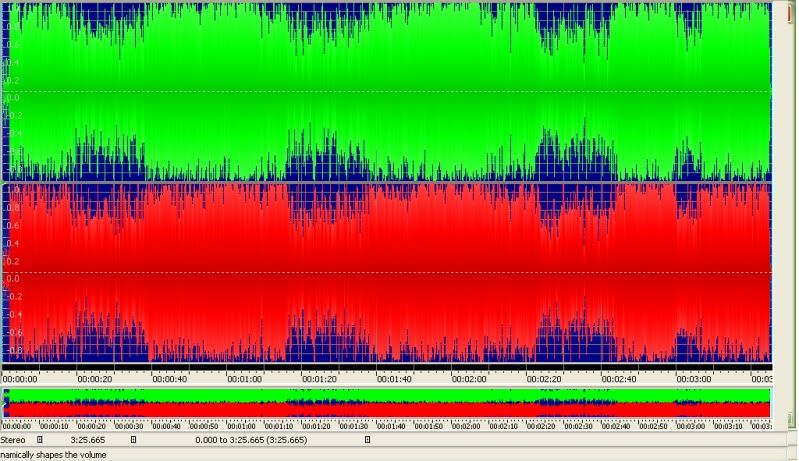
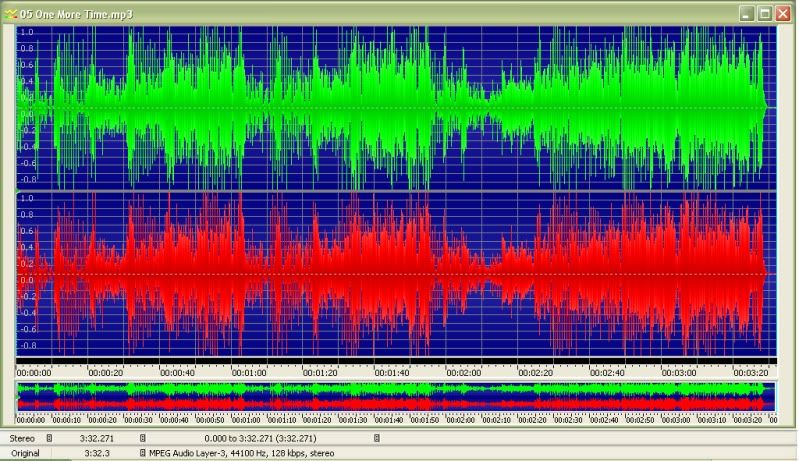
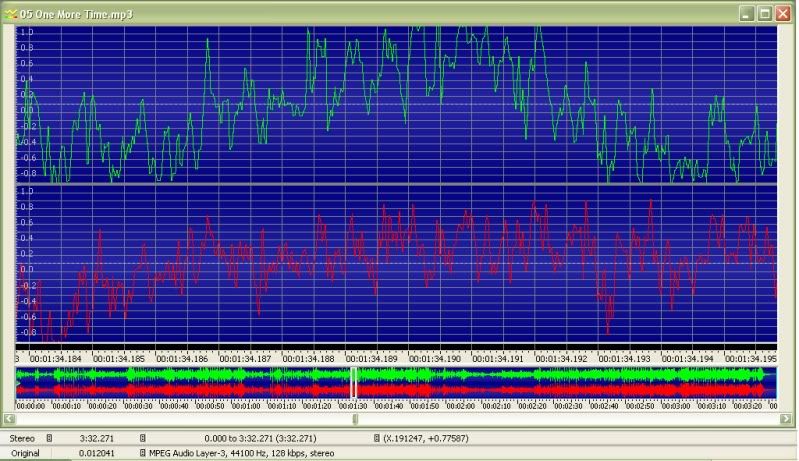
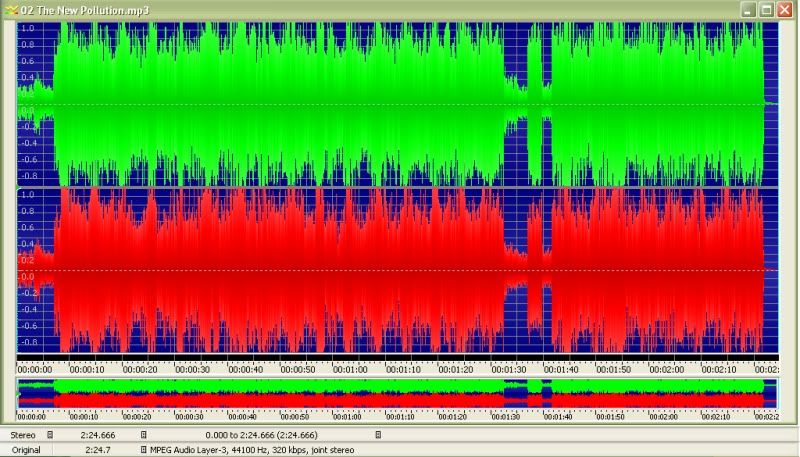
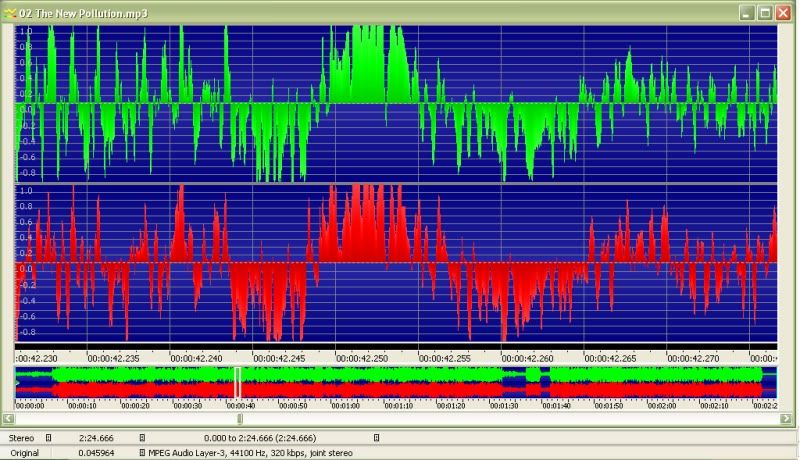
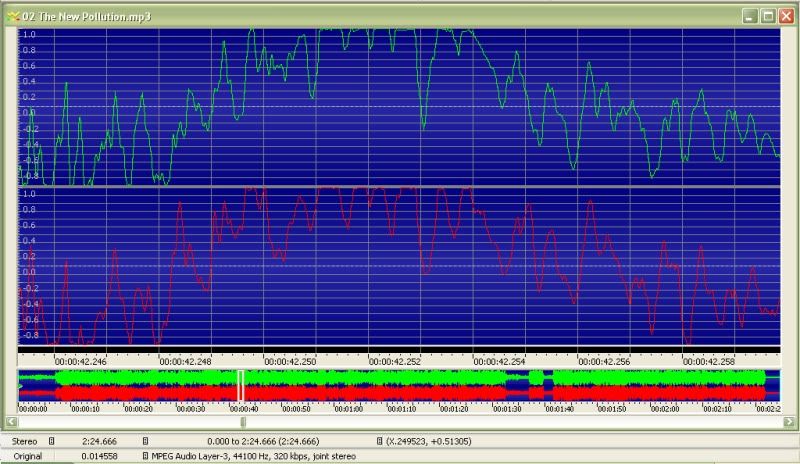
certainly, a lot of modern music is clipped. and a lot of modern music uses the entire range.

time for some pictures.

AudioClipping_6.jpg


AudioClipping_4.jpg


AudioClipping_5.jpg


AudioClipping_1.jpg


AudioClipping_2.jpg


AudioClipping_3.jpg


now, bass itself is usually -3dB to -6dB down since it is just part of the signals shown, and there are vocals and music riding on top of the low frequency signal... except for lone bass drops which can be mixed at max... or the example above where the bass signal is clearly near 0dB and the music just flat out clips. for speaker amps, i always use a 0dB tone - since that range is usually maxed out and those speakers are most sensitive to overheating. for sub amps, i keep sub level at the HU low, use a 0dB tone, then intelligently increase sub level based on the album.

clipping from gain structure is pretty **** obvious and easy to avoid.

Autosound 2000 Disc 102 includes test tones that are intentionally clipped for a bit so you can set gains by ear.

 
Activity
No one is currently typing a reply...
Old Thread: Please note, there have been no replies in this thread for over 3 years!
Content in this thread may no longer be relevant.
Perhaps it would be better to start a new thread instead.

About this thread

gamehawk55

10+ year member
CarAudio.com Elite
Thread starter
gamehawk55
Joined
Location
Canada
Start date
Participants
Who Replied
Replies
43
Views
2,987
Last reply date
Last reply from
gamehawk55
IMG_20260516_193114554_HDR.jpg

sherbanater

    May 16, 2026
  • 0
  • 0
IMG_20260516_192955471_HDR.jpg

sherbanater

    May 16, 2026
  • 0
  • 0

New threads

Top