headunits with active/passive option

Passive setups utilize the passive crossover that comes with a component set. Active setups do not. Instead, they use the crossovers built into the head unit. You'll need a HU that can support a 3 way network for that to work properly.

An easy way to distinguish between active and passive setups is to think of them based on where the crossovers are placed. If the crossover is after the amplification, it's a passive setup. If the crossover is before amplification, it's an active setup.

There is no way, whatsoever, to press a button on a HU and switch from a passive setup to an active setup. Unless the button on the HU controls a robot that very quickly and efficiently rewires the system...

 
Passive setups utilize the passive crossover that comes with a component set. Active setups do not. Instead, they use the crossovers built into the head unit. You'll need a HU that can support a 3 way network for that to work properly.

An easy way to distinguish between active and passive setups is to think of them based on where the crossovers are placed. If the crossover is after the amplification, it's a passive setup. If the crossover is before amplification, it's an active setup.

There is no way, whatsoever, to press a button on a HU and switch from a passive setup to an active setup. Unless the button on the HU controls a robot that very quickly and efficiently rewires the system...

 
No, but that kinda makes sense for what he's asking. I don't know why you'd want to be able to switch on the fly with that though. You usually either want the internal amp on or off 100% of the time.

 
i agree that a HU alone cannot switch between active or passive without a series of relays that rewire/reconfigure the system (bypass passive crossovers, reconfigure amplifier outputs, etc.) and the HU setting won't be able to control the relays, HU's don't have outputs like that.

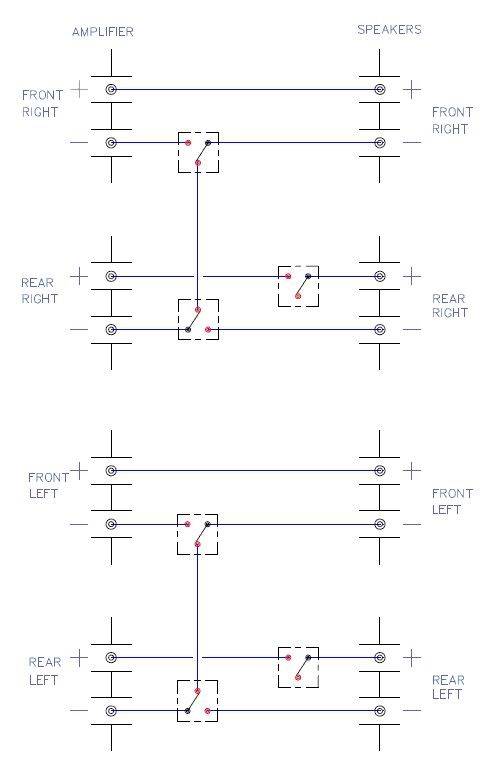
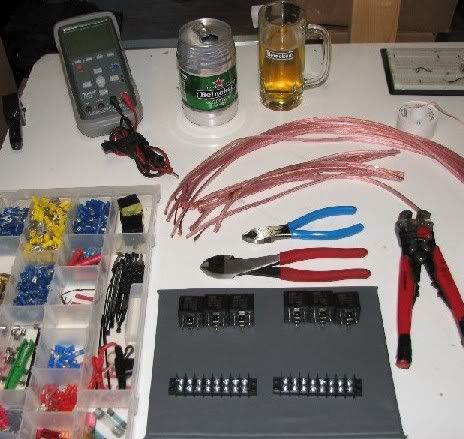
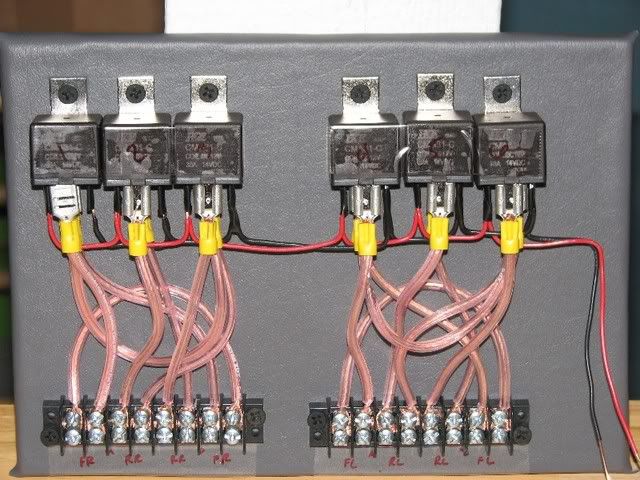
i had a relay board that would change between bridged amplifier outputs into the passive crossover inputs, or non-bridged but bi-amp crossover inputs. still have the board wired up actually (and a schematic if anyone is interested). in bi-amp i could use T/A for each driver and play with a few other settings, and in bridged mode I had to make front/rear equal. so i could load a preset on the processor (was a ERA-G320 at the time) and then flip a switch to change modes. one was louder and the other had a better sound stage. neither resulted in any possible damage since the passives were always used (comps were SPX-177R).

i could design and build a relay board that would let you switch between passive or active, but in passive mode you would have two unused amp channels. you'd need some tweeter protection and you'd still have to change settings on the HU.

most likely, the "friend" didn't explain what he was doing well enough for the OP to understand, and he has terminology mixed up.


 
might as well just share it. 5-pin relays. black dot is common pin 30. N.C. pin 87a is shown connected. N.O. pin 87 is shown not connected. "Rear" was used to the tweeter inputs. This could also work for someone wanting to switch between Front only bridged or Front and Rear non-bridged (with fader control).

speakerbridgingrelays.jpg


relaybridgingb4.jpg


relaybridgingafter008.jpg


thansk. my design and creation, i drew the schematic in CAD. i knew what i wanted the end goal to be, and i wanted to do it with relays, so i figured it out. as an EE, solving problems with wires and devices is what i've been training and devoting my life to. this one was fairly quick and simple.

my next project is going to be for rear fill. i'm going to make some L-R and R-L op amp circuits to generate a rear fill signal. then maybe even use my 8051 microprocessor board (that is in a box collecting dust) to give myself a rear fill processor.

as an acoustics engineer, i commonly have to write programs and GUI's that are for processing audio files or even creating simulations of what a room/hall will sound like with my recommended treatments. i could build my own processor if i wanted to spend the time. this winter i have a list of projects. the test bench is already cleared off. //content.invisioncic.com/y282845/emoticons/smile.gif.1ebc41e1811405b213edfc4622c41e27.gif one of my projects was generating simulations in 5.1, so i had to write a program that would be able to place a sound anywhere in the 360 degree sound field. if you study how pro logic and dolby digital works, it's not that complicated. pro logic is just addition or subtraction, then varying amounts of signal strength.

 
Activity
No one is currently typing a reply...
Old Thread: Please note, there have been no replies in this thread for over 3 years!
Content in this thread may no longer be relevant.
Perhaps it would be better to start a new thread instead.

About this thread

Nick Spence

10+ year member
Member
Thread starter
Nick Spence
Joined
Location
Minneapolis, Minnesota, United States
Start date
Participants
Who Replied
Replies
27
Views
1,827
Last reply date
Last reply from
Louisiana_CRX
IMG_20260516_193114554_HDR.jpg

sherbanater

    May 16, 2026
  • 0
  • 0
IMG_20260516_192955471_HDR.jpg

sherbanater

    May 16, 2026
  • 0
  • 0

New threads

Top