

If you were to go by price alone then maybe these-
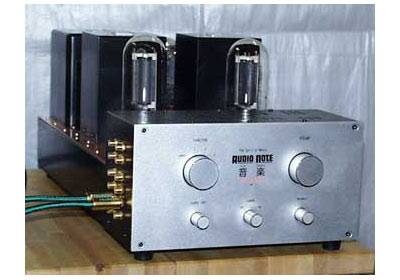
Ongaku Amplifier
Audio Note Japan
$80,000
This legendary 27-watt power amplifier uses a single-ended triode circuit and is hand crafted in a Tokyo workshop by Hiroyasu Kondo, a world-renowned engineer who uses 20 pounds of silver throughout the amp, including silver wire in the windings of the hand-made transformers. The Ongaku has been in production since the 1980s and produces a pure, transparent sound that no other amplifier can match. "You are buying a work of art," says Steven Klein, whose Nashua, N.H.-based company, Sounds of Silence, is the sole U.S. distributor for Audio Note Japan. For the ultimate sound, Klein recommends customers add Kondo-san's handmade M-1000 preamplifier, which costs $85,000 and includes a phono stage. Also, because Audio Note Japan amplifiers put out relatively few watts of power, they require high-efficiency speakers.
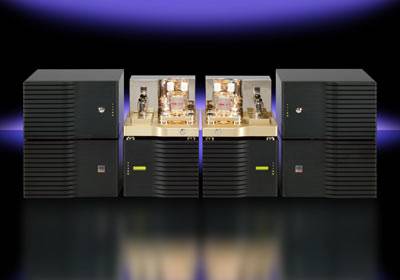
SH-833 Monoblock Power Amplifier
WAVAC Audio Lab
$350,000
Think "Ongaku on steroids," and you get a rough idea of what this amplifier is all about. The WAVAC SH-833 is a single-ended triode design, but it isn't flea-powered like most SET designs. In fact, it puts out 150 watts of tube power. That means it is beefy enough to drive pretty much any speaker but still delivers the special sound quality that only SET amps provide. "Purity is the one word I use for all WAVAC products," says Jim Ricketts, president of TMH Audio, of Dayton, Ohio, the U.S. distributor for WAVAC. The SH-833 has four chassis per channel--one for the circuit that produces sound, one for the power supply, one for the power transformer and one for a power conditioner, which cleans up the electricity coming out of your wall. Since it's a monoblock design, you need one amp for each speaker--or eight chassis in total. Plus you'll need a preamp, like the three-chassis WAVAC PR-T1 ($30,000). And if you want to listen to records, you'll need a phono stage, like the three-chassis WAVAC LCR-X2 ($25,000). All told, you're looking at 14 boxes and a price tag that climbs over $400,000. Buy one, and WAVAC will send a pair of engineers from Japan to set it up in your listening room. (You do have a listening room, right?) "This is state of the art," Ricketts says. "If cost is no object, this is the best-sounding amplifier in the world." For those on a budget, WAVAC makes two other 150-watt amps, one costing $150,000 and the other a mere $69,000.
Ongaku Amplifier
Audio Note Japan
$80,000
This legendary 27-watt power amplifier uses a single-ended triode circuit and is hand crafted in a Tokyo workshop by Hiroyasu Kondo, a world-renowned engineer who uses 20 pounds of silver throughout the amp, including silver wire in the windings of the hand-made transformers. The Ongaku has been in production since the 1980s and produces a pure, transparent sound that no other amplifier can match. "You are buying a work of art," says Steven Klein, whose Nashua, N.H.-based company, Sounds of Silence, is the sole U.S. distributor for Audio Note Japan. For the ultimate sound, Klein recommends customers add Kondo-san's handmade M-1000 preamplifier, which costs $85,000 and includes a phono stage. Also, because Audio Note Japan amplifiers put out relatively few watts of power, they require high-efficiency speakers.
SH-833 Monoblock Power Amplifier
WAVAC Audio Lab
$350,000
Think "Ongaku on steroids," and you get a rough idea of what this amplifier is all about. The WAVAC SH-833 is a single-ended triode design, but it isn't flea-powered like most SET designs. In fact, it puts out 150 watts of tube power. That means it is beefy enough to drive pretty much any speaker but still delivers the special sound quality that only SET amps provide. "Purity is the one word I use for all WAVAC products," says Jim Ricketts, president of TMH Audio, of Dayton, Ohio, the U.S. distributor for WAVAC. The SH-833 has four chassis per channel--one for the circuit that produces sound, one for the power supply, one for the power transformer and one for a power conditioner, which cleans up the electricity coming out of your wall. Since it's a monoblock design, you need one amp for each speaker--or eight chassis in total. Plus you'll need a preamp, like the three-chassis WAVAC PR-T1 ($30,000). And if you want to listen to records, you'll need a phono stage, like the three-chassis WAVAC LCR-X2 ($25,000). All told, you're looking at 14 boxes and a price tag that climbs over $400,000. Buy one, and WAVAC will send a pair of engineers from Japan to set it up in your listening room. (You do have a listening room, right?) "This is state of the art," Ricketts says. "If cost is no object, this is the best-sounding amplifier in the world." For those on a budget, WAVAC makes two other 150-watt amps, one costing $150,000 and the other a mere $69,000.








