Featured How Much AH for ~ 250 Amps

Blackout67

CarAudio.com Exclusive
Have a JP13 (~220 amps, 2050 watts @ 1 ohm) and Recoil 80.4 (~20-30 amps @ 4 ohms) and tryna pick out a supporting battery. Going stock alt and starting batt with big 3 and looking to put an AGM in the trunk.
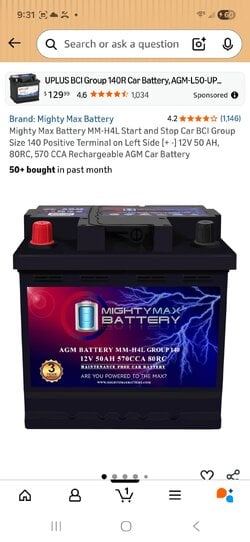
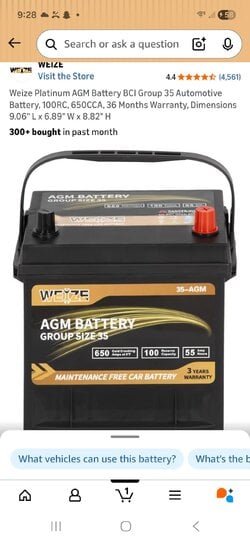
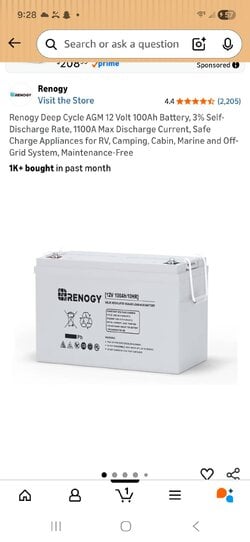
Screenshot are some decent priced ones with good reviews and decent warranties. Also was considering Everstart AGMs from Walmart

Just want enough to support my amp draw, dont plan on going full tilt constantly just want steady voltage, and will get the better one if the advances are worth it but I'd prefer to stay cheaper and lighter in weight
No I do not want to pay or deal with setting up a lithium battery.

Thanks in advance
 

Attachments

  • Screenshot_20260511_213147_Amazon Shopping.jpg
    Screenshot_20260511_213147_Amazon Shopping.jpg
    180.3 KB · Views: 2
  • Screenshot_20260511_212842_Amazon Shopping.jpg
    Screenshot_20260511_212842_Amazon Shopping.jpg
    170 KB · Views: 1
  • Screenshot_20260511_212804_Amazon Shopping.jpg
    Screenshot_20260511_212804_Amazon Shopping.jpg
    122.3 KB · Views: 2
Have a JP13 (~220 amps, 2050 watts @ 1 ohm) and Recoil 80.4 (~20-30 amps @ 4 ohms) and tryna pick out a supporting battery. Going stock alt and starting batt with big 3 and looking to put an AGM in the trunk.
Screenshot are some decent priced ones with good reviews and decent warranties. Also was considering Everstart AGMs from Walmart

Just want enough to support my amp draw, dont plan on going full tilt constantly just want steady voltage, and will get the better one if the advances are worth it but I'd prefer to stay cheaper and lighter in weight
No I do not want to pay or deal with setting up a lithium battery.

Thanks in advance
When selecting a supporting battery for your audio setup, you want to ensure that the battery's capacity and discharge rates can accommodate your amp's draw. Here’s a quick comparison of the options you shared:

1. Mighty Max Battery (50 Ah, 570 CCA):
- Pros: Affordable, compact size, decent reviews, maintenance-free.
- Cons: May not provide enough sustained power for peak demands, limited capacity.

2. Weize Battery (55 Ah, 650 CCA):
- Pros: Higher cold cranking amps, good reviews, slightly larger capacity.
- Cons: Still may be on the lower side for power needs if used frequently at high output.

3. Renogy Battery (100 Ah, 1100 A max discharge):
- Pros: Significantly higher capacity, better suited for extensive use, can handle high discharge rates.
- Cons: More expensive and heavier—may not fit your preference for lighter weight or budget.

### Recommendations:
  • For your needs, if you primarily want steady voltage without going full tilt constantly, the Weize Battery would likely offer a good balance between price and performance.
  • Consider the Renogy Battery if you think you might use your system at higher outputs more often, as it offers substantial capacity.
  • Avoid the Mighty Max Battery if you anticipate frequent high demand, as it may not keep up.

### Additional Tips:
  • Ensure your alternator and main battery setup can adequately support your system.
  • The Big 3 upgrade will significantly enhance voltage delivery to your audio equipment.

These choices will help support your amp's demands. Consider how you plan to use the system to determine the best balance of cost and performance.
 
Have a JP13 (~220 amps, 2050 watts @ 1 ohm) and Recoil 80.4 (~20-30 amps @ 4 ohms) and tryna pick out a supporting battery. Going stock alt and starting batt with big 3 and looking to put an AGM in the trunk.
Screenshot are some decent priced ones with good reviews and decent warranties. Also was considering Everstart AGMs from Walmart

Just want enough to support my amp draw, dont plan on going full tilt constantly just want steady voltage, and will get the better one if the advances are worth it but I'd prefer to stay cheaper and lighter in weight
No I do not want to pay or deal with setting up a lithium battery.

Thanks in advance
AH (Amp Hour) means exactly what it says. It's how many amps the battery can provide for an hour. So, a 100 ah battery will supply 100 amps for 1-hour. Is it accurate? NOPE! Due to the battery's material design, you can only discharge a battery to about 50% capacity before damage. So, instead of 1-hour is, it's more like 30-miutes.

Now that was explained, to supply the right amount of power depends on the size of your alternator and how long you plan on cranking your sound system. You might have over 2000 watts, but you may only crank it to for a short period of time because your eyes will explode. As a daily driver, you might use 500 watts, at most. What type of car do you have?
 
AH (Amp Hour) means exactly what it says. It's how many amps the battery can provide for an hour. So, a 100 ah battery will supply 100 amps for 1-hour. Is it accurate? NOPE! Due to the battery's material design, you can only discharge a battery to about 50% capacity before damage. So, instead of 1-hour is, it's more like 30-miutes.

Now that was explained, to supply the right amount of power depends on the size of your alternator and how long you plan on cranking your sound system. You might have over 2000 watts, but you may only crank it to for a short period of time because your eyes will explode. As a daily driver, you might use 500 watts, at most. What type of car do you have?
Its an 03 mustang. I dont use it with the car off so it'll never be an issue of being able to run it for X amount of time.

I want to be able to handle heavy bass hits and high power transients and I need the power reserve to take it and recharge rapidly, and I know music is dynamic and isnt pulling 2k all the time but theres a lot of music that I listen to where it will be pulling decent power regularly throughout the song and I'd like the voltage to be steady for the times where I may need it.

My question really is, would there be any benefit to getting a large heavy 100ah battery vs a smaller lighter 50ah battery in my situation
 
Its an 03 mustang. I dont use it with the car off so it'll never be an issue of being able to run it for X amount of time.

I want to be able to handle heavy bass hits and high power transients and I need the power reserve to take it and recharge rapidly, and I know music is dynamic and isnt pulling 2k all the time but theres a lot of music that I listen to where it will be pulling decent power regularly throughout the song and I'd like the voltage to be steady for the times where I may need it.

My question really is, would there be any benefit to getting a large heavy 100ah battery vs a smaller lighter 50ah battery in my situation
No. Not really. It mostly depends on the quality of the battery. To help out even more, I would bump your alternator up to at least a 200 amp. The will drastically help. Also, perform the "big-3" under your hood. Even with your stock alternator. The "big-3" means to upgrade the power and ground under your hood. You would increase the gauge wire going from your alternator to your batter, the ground wire from your battery to chassis, and the ground wire from your battery to your engine block. I would use 2-gauge wire.
 
Its an 03 mustang. I dont use it with the car off so it'll never be an issue of being able to run it for X amount of time.

I want to be able to handle heavy bass hits and high power transients and I need the power reserve to take it and recharge rapidly, and I know music is dynamic and isnt pulling 2k all the time but theres a lot of music that I listen to where it will be pulling decent power regularly throughout the song and I'd like the voltage to be steady for the times where I may need it.

My question really is, would there be any benefit to getting a large heavy 100ah battery vs a smaller lighter 50ah battery in my situation
You're looking at this from the wrong perspective.

AH is a measure of storage, not burst or constant electrical discharge.

A 50AH battery or a 350AH battery with the same voltage and discharge ratings will do the same thing; only one will do it for a lot longer period.

What you need is something that is going to provide a bit of extra constant voltage(marginal with your setup) and take care of bursts (virtually instaneouse) where bass notes are going to hit and require a bit more than your stock alternator is going to provide - somthing only lithium or a super or ultra capcitor can do, AGMs not so much.

I have a different take on this and usually consider an HO Alt as a last or absolute need, not the first thing, as some would do.

Alternator upgrades are just as costly, more so if you don;t do it yourself and they can be more complicated than one realizes given the modern electical setups in many cars in the last 10 years.

Modern lithium solutions that offer both those attributes without overly taxing a stock alternator, I see no need to upgrade your alternator unless you're pulling an awful lot of current in excess of the electrical capcity, thereby taxing the alt.

I've run a GloweVoltage with as little as 2500 watts and as much as 5000-watt systems, on a 110A stock alternator.

You're on the right path, but here is a solution that will more than handle your setup all day long and then some.

First, watch this video, get an idea of what you're actually going to pull, even in heavy volume listening, I'd say it's unlikely you'll ever pull more than 60-70 amps consistently or anything over 100a burst, not while you're actually sitting in the car.


And in the almost impossible event that you get anywhere near a 200A burst, this will still cover all the bases.

Get the big three.
Get the largest lead acid or AGM (same thing, and you'll get more for your immediate $$ spent) on a good ol lead acid you can fit under the hood.
Run parallel OFC 1/0 +/- cable to the front and auxiliary battery.
Run a parallel ground close to the rear battery.
Don't bother with an LA in the rear, you want something that charges at the same rate, yes, but something that will provide faster burst, that would be a Lithium solution.

Any of these will do the trick.

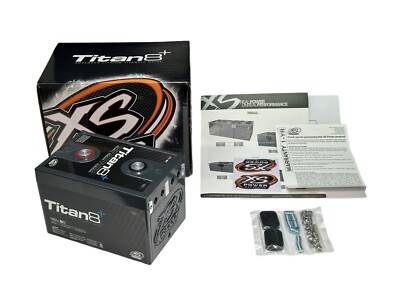
Right now, there is but one battery that you should get, and this is it.


Read the fine print, these are $600 batteries for $350.00 becuase they goofed up when marking the polarity. This means you are looking at a steal of a deal, just remember to put large thin black and red plastic washers on each terminal, or however you want to re-mark the +/- terminals correctly, just make sure to do it!

I'm not even going to suggest anything else, as this is hands down the very best, lowest cost (comparatively) lithium Titanate solution out there right now.

It has all the +/- distribution built in, and it will support systems with 2-3 times the power you're going to use. Seriously, it's a no-brainer.

Hell, I have no need but may get one to have around, just in case!

Here is the wiring for that setup.

1778722900318.png


Amp or Amps, the distro is built in on these XS powerTitan 8s,

Again, it's a no brainer AND THAT IS THE LAST ONE HE HAS SO JUMP ON IT!

 
Last edited:
You're looking at this from the wrong perspective.

AH is a measure of storage, not burst or constant electrical discharge.

A 50AH battery or a 350AH battery with the same voltage and discharge ratings will do the same thing; only one will do it for a lot longer period.

What you need is something that is going to provide a bit of extra constant voltage(marginal with your setup) and take care of bursts (virtually instaneouse) where bass notes are going to hit and require a bit more than your stock alternator is going to provide - somthing only lithium or a super or ultra capcitor can do, AGMs not so much.

I have a different take on this and usually consider an HO Alt as a last or absolute need, not the first thing, as some would do.

Alternator upgrades are just as costly, more so if you don;t do it yourself and they can be more complicated than one realizes given the modern electical setups in many cars in the last 10 years.

Modern lithium solutions that offer both those attributes without overly taxing a stock alternator, I see no need to upgrade your alternator unless you're pulling an awful lot of current in excess of the electrical capcity, thereby taxing the alt.

I've run a GloweVoltage with as little as 2500 watts and as much as 5000-watt systems, on a 110A stock alternator.

You're on the right path, but here is a solution that will more than handle your setup all day long and then some.

First, watch this video, get an idea of what you're actually going to pull, even in heavy volume listening, I'd say it's unlikely you'll ever pull more than 60-70 amps consistently or anything over 100a burst, not while you're actually sitting in the car.


And in the almost impossible event that you get anywhere near a 200A burst, this will still cover all the bases.

Get the big three.
Get the largest lead acid or AGM (same thing, and you'll get more for your immediate $$ spent) on a good ol lead acid you can fit under the hood.
Run parallel OFC 1/0 +/- cable to the front and auxiliary battery.
Run a parallel ground close to the rear battery.
Don't bother with an LA in the rear, you want something that charges at the same rate, yes, but something that will provide faster burst, that would be a Lithium solution.

Any of these will do the trick.

Right now, there is but one battery that you should get, and this is it.


Read the fine print, these are $600 batteries for $350.00 becuase they goofed up when marking the polarity. This means you are looking at a steal of a deal, just remember to put large thin black and red plastic washers on each terminal, or however you want to re-mark the +/- terminals correctly, just make sure to do it!

I'm not even going to suggest anything else, as this is hands down the very best, lowest cost (comparatively) lithium Titanate solution out there right now.

It has all the +/- distribution built in, and it will support systems with 2-3 times the power you're going to use. Seriously, it's a no-brainer.

Hell, I have no need but may get one to have around, just in case!

Here is the wiring for that setup.

View attachment 71850

Amp or Amps, the distro is built in on these XS powerTitan 8s,

Again, it's a no brainer AND THAT IS THE LAST ONE HE HAS SO JUMP ON IT!

Yea ive been thru the upgrading alternator phase on my last mustang. It was crazy easy and was only $380 powder coated from Autotech. I didnt have a volt meter hooked up so im not sure how much it helped voltage sag. The biggest difference that was made was going from stock wires and battery to upgraded OFC wires and a decent sized AGM starting battery that I had to mangle the battery tray to fit kind of.


Unfortunately the Titan8 is out of my budget and i wouldnt have the money in enough time to get it. Ive looked at those in the past and was heavily considering one when I did my last mustangs setup. I was also looking into those Glowe batteries cause I kept seeing people mention them in Facebook CA groups. They are pricey tho. And every time ive checked tbeir store over the past year or so theyve all been out of stock unless im looking in the wrong spot.


Id love to buy a 6 pack of cells to make my own lithium bank but im terrified of messing something up and burning my car down lmao. And im too cheap to buy a complete package with a BMS built in.
 
Yea ive been thru the upgrading alternator phase on my last mustang. It was crazy easy and was only $380 powder coated from Autotech. I didnt have a volt meter hooked up so im not sure how much it helped voltage sag. The biggest difference that was made was going from stock wires and battery to upgraded OFC wires and a decent sized AGM starting battery that I had to mangle the battery tray to fit kind of.


Unfortunately the Titan8 is out of my budget and i wouldnt have the money in enough time to get it. Ive looked at those in the past and was heavily considering one when I did my last mustangs setup. I was also looking into those Glowe batteries cause I kept seeing people mention them in Facebook CA groups. They are pricey tho. And every time ive checked tbeir store over the past year or so theyve all been out of stock unless im looking in the wrong spot.


Id love to buy a 6 pack of cells to make my own lithium bank but im terrified of messing something up and burning my car down lmao. And im too cheap to buy a complete package with a BMS built in.
Well, keep an eye on that Titan 8, beg, borrow, or steal, that's a real deal.

If that doesn't work out, take a look at certain Solar LifePo4 options.

I'm gonna get roasted for this, always do, but I've done the legwork(and have actually used the product), and this is a viable option.

I spent the better part of a year researching this before actually trying it; for systems up to 3k, keep an eye out for the "B" stock Litime options.

I can't vouch for any other brand; it was enough of a headache to get the info I needed on this brand alone, as the Litime engineering personnel in China I actually ended up speaking to didn't quite understand the application!

I ran this very unit for almost 6 months before totaling the car, and on my 3200-watt system (DS18 EXL P2500.1, dual Si SQL 12s monoblock and dual Focal FPS2160s), it worked very well.

Yes, it has a 100A BMS, but I never once triggered a shutdown because with the 3200-watt system I had, even at 110db (loud as $hit), I never exceeded 87A continuous.

This battery has grade "A" cells, will give you a constant 100A delivery and a 250A, 5-second burst. It's the main brand I researched due to its build quality (and the price at the time of only $249.00, compared to the $499 GV S1 that I was eyeing, now $539.00), and the 100AH/100A BMS, temp Charge controlled LifePo4 is a legitimate performer.

I installed the biggest lead-acid battery I could fit under the hood, ran 2/0 tinned marine-grade welding wire front to aft, and I would do it all over again if I hadn't been able to land the GV series 1 for $449.00 for the new system build.

1778763859842.png


They drop down to around $279 now and then on some of the returned units in like-new condition, and this "B" stock is $319.99.


Specs:

  • LiTime's 100A BMS (over-charging, over-discharging, over-current, over-temperature, and short-circuit protection)
  • 1280Wh of Energy, 1280W of Output Power
  • 8X Higher Mass Energy Density (60.95Wh/lbs VS. 7.23Wh/lbs of Group 24 AGM Battery)
  • EV Grade-A Cells, 4000+ cycles @100%DOD
  • 100A Continuous Discharge/Charge Current, 400A/1S Continuous Discharge Current
  • 10X Charging Efficiency, 2X Operating Time
  • 20.48kWh Expandable Energy (Max. 4P4S
  • 10+ Years Lifespan & 5 Years Warranty
It is always surprising to me that people will plunk down $180 to $340 for a 5 or 10 farad stinger hybrid cap but ignore those LiTime batteries as a viable, superior performing option; the two really don't compare.

If that doesn't appeal to you or the unfair roasting I usually get for suggesting such disways you, consider a super/ultra capacitor instead.

Used these for years, very reasonable.


As for building your own lithium bank, I had the same fear as you did, and at the end of the day, 2 years ago, it was an absolutely tempting, much lower cost option, sort of.

I found that with the quality Diy lithiums setups, they were generally high-performance 16V cells, which in the end required isolators, etc, things that, when done correctly, jacked the price up to near what was already available as a complete package already.

That gap has largely evaporated compared to what is out there today, so if it can be had for almost the same price and it's ready to go, charges at almost the identical rating, all the more reason to consider the LiTime option.

Not sure how $380 for the HO alt is a less expensive option considering you still have battery support to utilize/store the extra juice, but I'm just getting too old and too lazy to incorporate it into my current build, battery options are simple and effective for anything under 3k watts, that's my experience anyway.
 
Last edited:
Yea ive been thru the upgrading alternator phase on my last mustang. It was crazy easy and was only $380 powder coated from Autotech. I didnt have a volt meter hooked up so im not sure how much it helped voltage sag. The biggest difference that was made was going from stock wires and battery to upgraded OFC wires and a decent sized AGM starting battery that I had to mangle the battery tray to fit kind of.


Unfortunately the Titan8 is out of my budget and i wouldnt have the money in enough time to get it. Ive looked at those in the past and was heavily considering one when I did my last mustangs setup. I was also looking into those Glowe batteries cause I kept seeing people mention them in Facebook CA groups. They are pricey tho. And every time ive checked tbeir store over the past year or so theyve all been out of stock unless im looking in the wrong spot.


Id love to buy a 6 pack of cells to make my own lithium bank but im terrified of messing something up and burning my car down lmao. And im too cheap to buy a complete package with a BMS built in.
Your car's electrical is powered by your alternator. Your battery is only there to start your car. That info is "Automotive Electrical 101." You can slam a 500 ah battery in your car, along with a 1,000 ah lithium bank, but you're still not doing the correct upgrades. The correct way to do it is, install the proper size alternator and a secondary battery, near the amp. The secondary battery is there to provide extra juice during those instant sound bursts. You can upgrade your regular battery, if you like, but it's not necessary if you do the other upgrades.

Example?
My son is pushing about 2,000 watts in a ranger. His alternator is 225 amps, the battery is a red top Optima, and he has a 5-farad stinger capacitor. He's 18 years old, so he loves to crank the crap out of it. While cranked up, his headlights don't even blink, and the truck is just idling. His digital voltmeter shows voltage never drops below the high 13's.
 
Your car's electrical is powered by your alternator. Your battery is only there to start your car. That info is "Automotive Electrical 101." You can slam a 500 ah battery in your car, along with a 1,000 ah lithium bank, but you're still not doing the correct upgrades. The correct way to do it is, install the proper size alternator and a secondary battery, near the amp. The secondary battery is there to provide extra juice during those instant sound bursts. You can upgrade your regular battery, if you like, but it's not necessary if you do the other upgrades.

Example?
My son is pushing about 2,000 watts in a ranger. His alternator is 225 amps, the battery is a red top Optima, and he has a 5-farad stinger capacitor. He's 18 years old, so he loves to crank the crap out of it. While cranked up, his headlights don't even blink, and the truck is just idling. His digital voltmeter shows voltage never drops below the high 13's.
It's not unequivocal; it's conditional - not everyone, actually, 95% of the people setting up 2k systems are EVER going to need an upgraded alternator, that's a fact, not an opinion.

LifePo4 and Lithium options not only store enough reserve ( and replensish it quickly when not needed), but they will also deliver a burst at much faster rates than a flooded or AGM can, not as fast as a cap, but your 5 farad capacitor, with little to no reserve (and one reason to actually have an HO alt) well, it's tapped out long before a similarly priced LifePo4 battery, not even close.

One has to take into account the balance between the various options, and what works best, which is to say, one is not more "correct" or "incorrect" than the other.

There are considerations with upgrading an alternator, such as different pulley sizes, belt sizes, reduced mileage, and reduced power.

In a Mustang GT, you're not going to notice, so there is that.

It's a far more difficult option, almost impossible in some newer cars, not so much in older ones, due to various electrical functions that are tied to the way it operates.

Additionally, not everyone can get under the hood and change out an alternator, and while I'm fully capable of such, it's locatioin makes it a real PITA for some.

All these options are viable; one is not better than the other, unless the system demands it, and then it's likely going to be a combination of both HO alt and lithium support.

In the 2-3k wattage systems, new battery tech provides an absolutely viable option, an option, and in my experience, that is an easier and often less costly and less labor-intensive option as well.
 
AH (Amp Hour) means exactly what it says. It's how many amps the battery can provide for an hour. So, a 100 ah battery will supply 100 amps for 1-hour. Is it accurate? NOPE! Due to the battery's material design, you can only discharge a battery to about 50% capacity before damage. So, instead of 1-hour is, it's more like 30-miutes.
This is partially true. Battery capacity is not constant, it's a function of current. The long standing industry standard is to rate capacity at a 10 hour discharge. A 100 AH battery will provide 10 amps for 10 hours. It will NOT provide 100 amps for 1 hour (as you noted correctly). The higher the current, the lower the capacity. Again as you noted, a "typical" lead acid battery will last about 1/2 hour at rated capacity (100 amps in this case).

As a side note, some manufacturers have abandoned the standard 10 hour spec and are now rating their batteries at a 20 hour discharge. The same battery that can supply 10 amps for 10 hours (100AH) might be capable of 6 amps for 20 hrs (120AH). Gotta read the fine print!

And, oh yeah, I designed battery chargers for a living for 7 years.
 
Your car's electrical is powered by your alternator. Your battery is only there to start your car. That info is "Automotive Electrical 101." You can slam a 500 ah battery in your car, along with a 1,000 ah lithium bank, but you're still not doing the correct upgrades. The correct way to do it is, install the proper size alternator and a secondary battery, near the amp. The secondary battery is there to provide extra juice during those instant sound bursts. You can upgrade your regular battery, if you like, but it's not necessary if you do the other upgrades.

Example?
My son is pushing about 2,000 watts in a ranger. His alternator is 225 amps, the battery is a red top Optima, and he has a 5-farad stinger capacitor. He's 18 years old, so he loves to crank the crap out of it. While cranked up, his headlights don't even blink, and the truck is just idling. His digital voltmeter shows voltage never drops below the high 13's.

Hes not getting that 220 amps at idle tho. When I got the spreadsheet for my 320 amp HO alternator when it was tested, idle output was near 100 amps and the full 320 amps didnt kick in till like 2.2k rpms. You dont need a steady supply to match your amp exactly unless your running full tilt burp sine waves.

As was mentioned, music is dynamic and the average power draw will not always be equal to what its actually capable of at max output. You dont need a HO alt if your battery capitance is sufficient to take a hit and recharge before the next one

Also thag 3 Farad capacitor is doing nothing for a system of that output, especially with a red top.
 
Well, keep an eye on that Titan 8, beg, borrow, or steal, that's a real deal.

If that doesn't work out, take a look at certain Solar LifePo4 options.

I'm gonna get roasted for this, always do, but I've done the legwork(and have actually used the product), and this is a viable option.

I spent the better part of a year researching this before actually trying it; for systems up to 3k, keep an eye out for the "B" stock Litime options.

I can't vouch for any other brand; it was enough of a headache to get the info I needed on this brand alone, as the Litime engineering personnel in China I actually ended up speaking to didn't quite understand the application!

I ran this very unit for almost 6 months before totaling the car, and on my 3200-watt system (DS18 EXL P2500.1, dual Si SQL 12s monoblock and dual Focal FPS2160s), it worked very well.

Yes, it has a 100A BMS, but I never once triggered a shutdown because with the 3200-watt system I had, even at 110db (loud as $hit), I never exceeded 87A continuous.

This battery has grade "A" cells, will give you a constant 100A delivery and a 250A, 5-second burst. It's the main brand I researched due to its build quality (and the price at the time of only $249.00, compared to the $499 GV S1 that I was eyeing, now $539.00), and the 100AH/100A BMS, temp Charge controlled LifePo4 is a legitimate performer.

I installed the biggest lead-acid battery I could fit under the hood, ran 2/0 tinned marine-grade welding wire front to aft, and I would do it all over again if I hadn't been able to land the GV series 1 for $449.00 for the new system build.

View attachment 71866

They drop down to around $279 now and then on some of the returned units in like-new condition, and this "B" stock is $319.99.


Specs:

  • LiTime's 100A BMS (over-charging, over-discharging, over-current, over-temperature, and short-circuit protection)
  • 1280Wh of Energy, 1280W of Output Power
  • 8X Higher Mass Energy Density (60.95Wh/lbs VS. 7.23Wh/lbs of Group 24 AGM Battery)
  • EV Grade-A Cells, 4000+ cycles @100%DOD
  • 100A Continuous Discharge/Charge Current, 400A/1S Continuous Discharge Current
  • 10X Charging Efficiency, 2X Operating Time
  • 20.48kWh Expandable Energy (Max. 4P4S
  • 10+ Years Lifespan & 5 Years Warranty
It is always surprising to me that people will plunk down $180 to $340 for a 5 or 10 farad stinger hybrid cap but ignore those LiTime batteries as a viable, superior performing option; the two really don't compare.

If that doesn't appeal to you or the unfair roasting I usually get for suggesting such disways you, consider a super/ultra capacitor instead.

Used these for years, very reasonable.


As for building your own lithium bank, I had the same fear as you did, and at the end of the day, 2 years ago, it was an absolutely tempting, much lower cost option, sort of.

I found that with the quality Diy lithiums setups, they were generally high-performance 16V cells, which in the end required isolators, etc, things that, when done correctly, jacked the price up to near what was already available as a complete package already.

That gap has largely evaporated compared to what is out there today, so if it can be had for almost the same price and it's ready to go, charges at almost the identical rating, all the more reason to consider the LiTime option.

Not sure how $380 for the HO alt is a less expensive option considering you still have battery support to utilize/store the extra juice, but I'm just getting too old and too lazy to incorporate it into my current build, battery options are simple and effective for anything under 3k watts, that's my experience anyway.
What i meant was that for my application, changing the alternator was easy installation wise cause I kept the single starting bat in the factory location. I was drawn in by all the pros and other people saying its dead necessary for the system is was running. At the time I had no bills and lots of disposable income. Now I have a house and a kid so I cant chase my hobbys with disregard for my wallet anymore, and I was just inexperienced as well and ive done much more research since then
 
What i meant was that for my application, changing the alternator was easy installation wise cause I kept the single starting bat in the factory location. I was drawn in by all the pros and other people saying its dead necessary for the system is was running. At the time I had no bills and lots of disposable income. Now I have a house and a kid so I cant chase my hobbys with disregard for my wallet anymore, and I was just inexperienced as well and ive done much more research since then
No issue with what you laid down, none whatsoever, and I completely understand.

If it were a simple thing, in new-ish cars, say 8 years old or less, as it were, say cars 10-15 years ago, I'd have considered it.

I even went so far as to pre-order one from Apex HO alternators, then wrecked that car. The latest car is a bit more complicated, and after doing a TON of research, it's an option, but not the first option anymore.

I think if one is stuck in that flooded battery era (I've been at this hobby for almost 50 years, been there and done that, or watched it come and go), it's easy, based on old-school application, to assume that you'll need all that current to satisfy the electrical needs.

This is where most get lost, in that you rarely (as you are aware of) will rarely get anywhere near the theoretical max current draw that a 2-3k watt system "could" ask of the car, not if you're actually sitting "inside" the car, and certainly not if you value your hearing.

Installation technique, battery technology, amplifier topology and efficiency have all combined to give you alternative options that in most cases work as well or better.

That's my story, and I'm sticking to it! ;)

And on that note, that Titan 8 is still out there on eBay, I think it's calling your name!!!
 
Activity
No one is currently typing a reply...

About this thread

Blackout67

CarAudio.com Exclusive
Thread starter
Blackout67
Joined
Location
Ohio
Start date
Participants
Who Replied
Replies
14
Views
223
Last reply date
Last reply from
Doxquzme
IMG_20260515_202650612_HDR.jpg

sherbanater

    May 15, 2026
  • 0
  • 0
IMG_20260515_202732887_HDR.jpg

sherbanater

    May 15, 2026
  • 0
  • 0

New threads

Top