BrazilianBassBuster
CarAudio.com Newbie
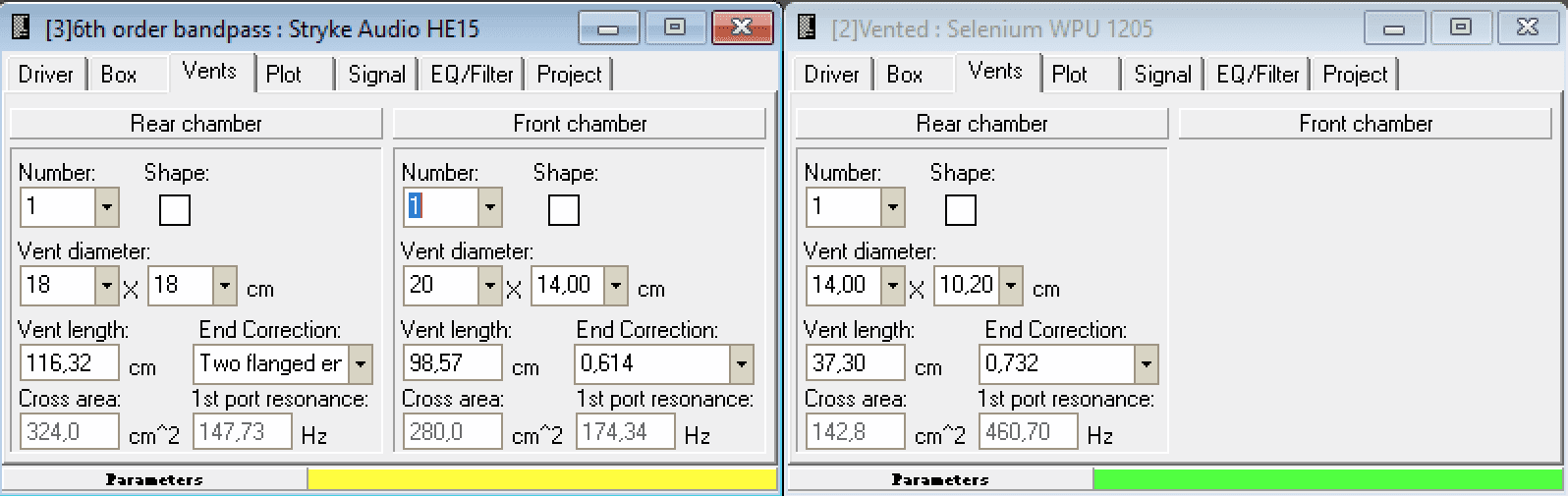
Hi everyone. Following my passion for real bass (20 Hz - 40 Hz), I'm designing a bandpass 6th-order dual-reflex box that may take up a lot of space:
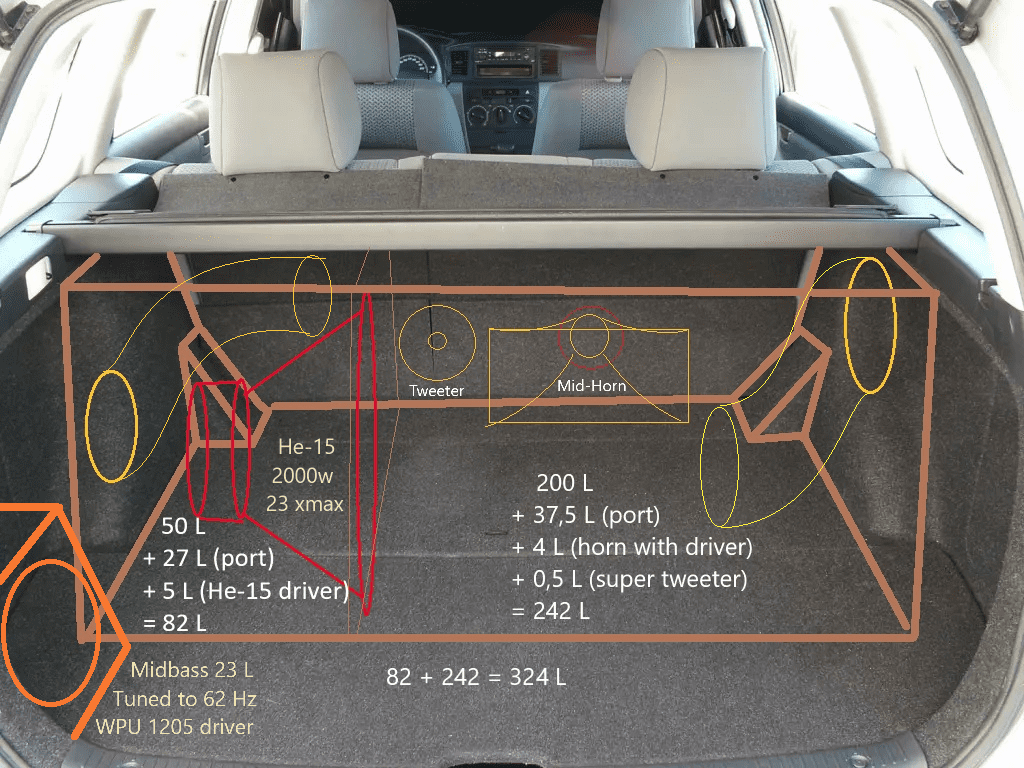
Final estimated volume 324 L plus the volume occupied by all the wood, including the bracing
Trunk size: 450 L
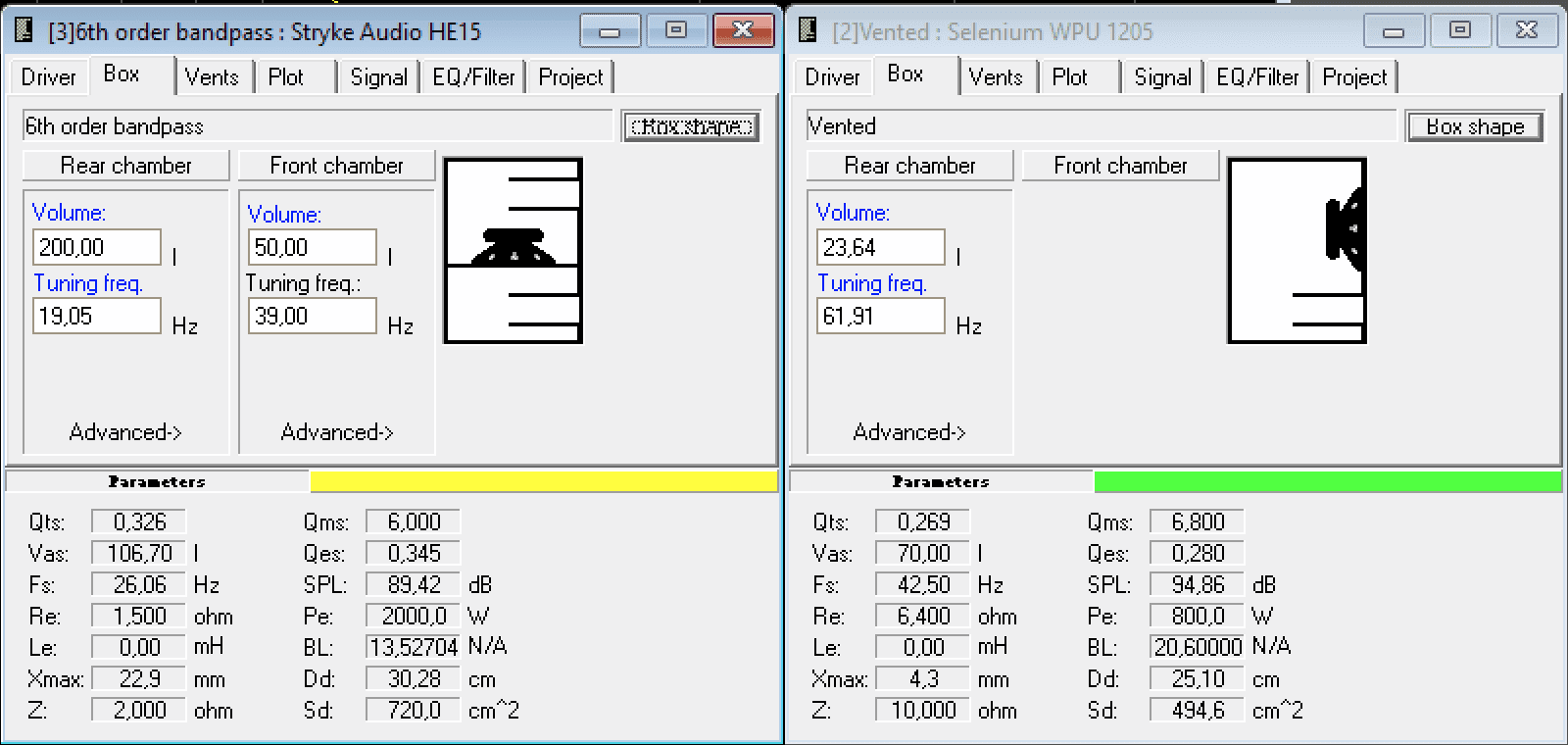
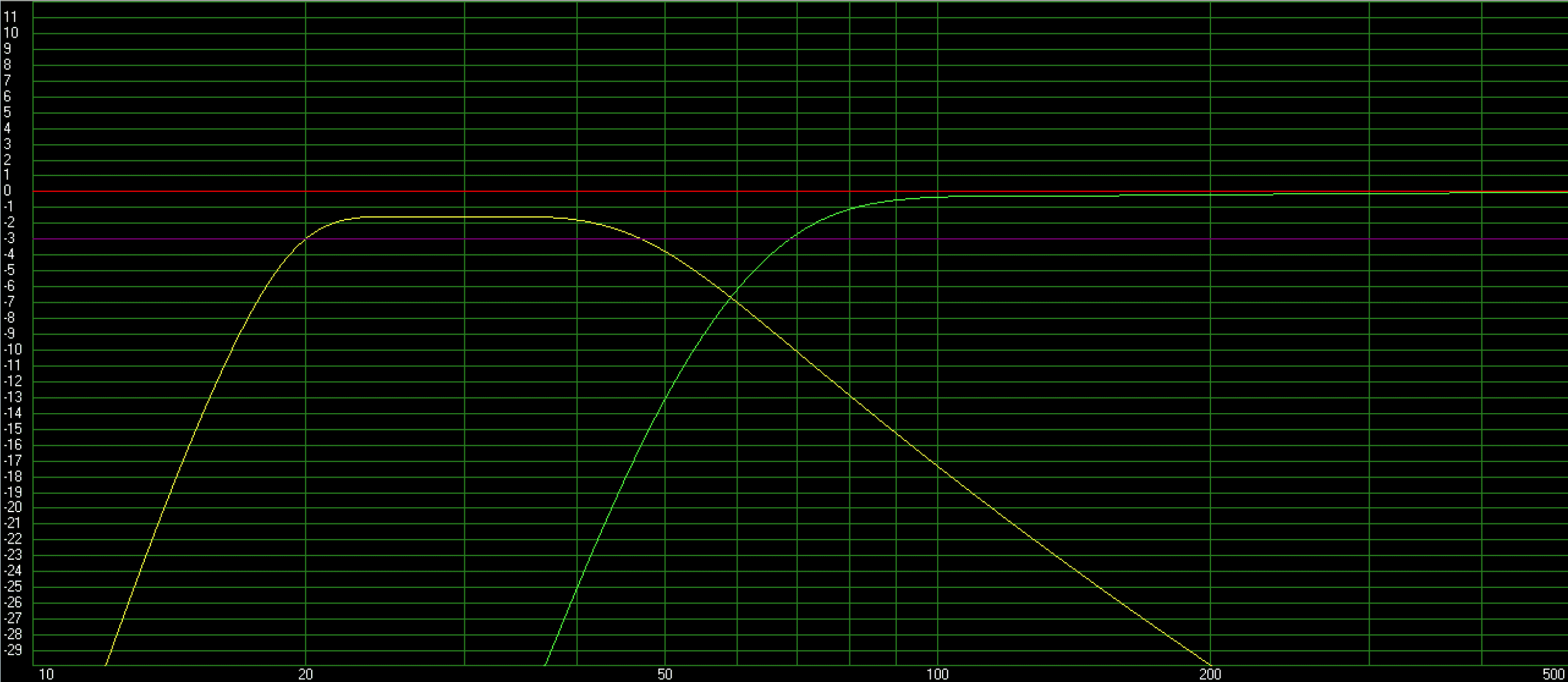
This is my first post, but not my first project. After many years of simulating and building subwoofer boxes, I figured out that nothing beats the BP6 box when we are targeting the 20-40 Hz range. This can be proven by this WinISD simulation which shows it can hit 20 Hz at just -3 dB from the speaker's reference efficiency:
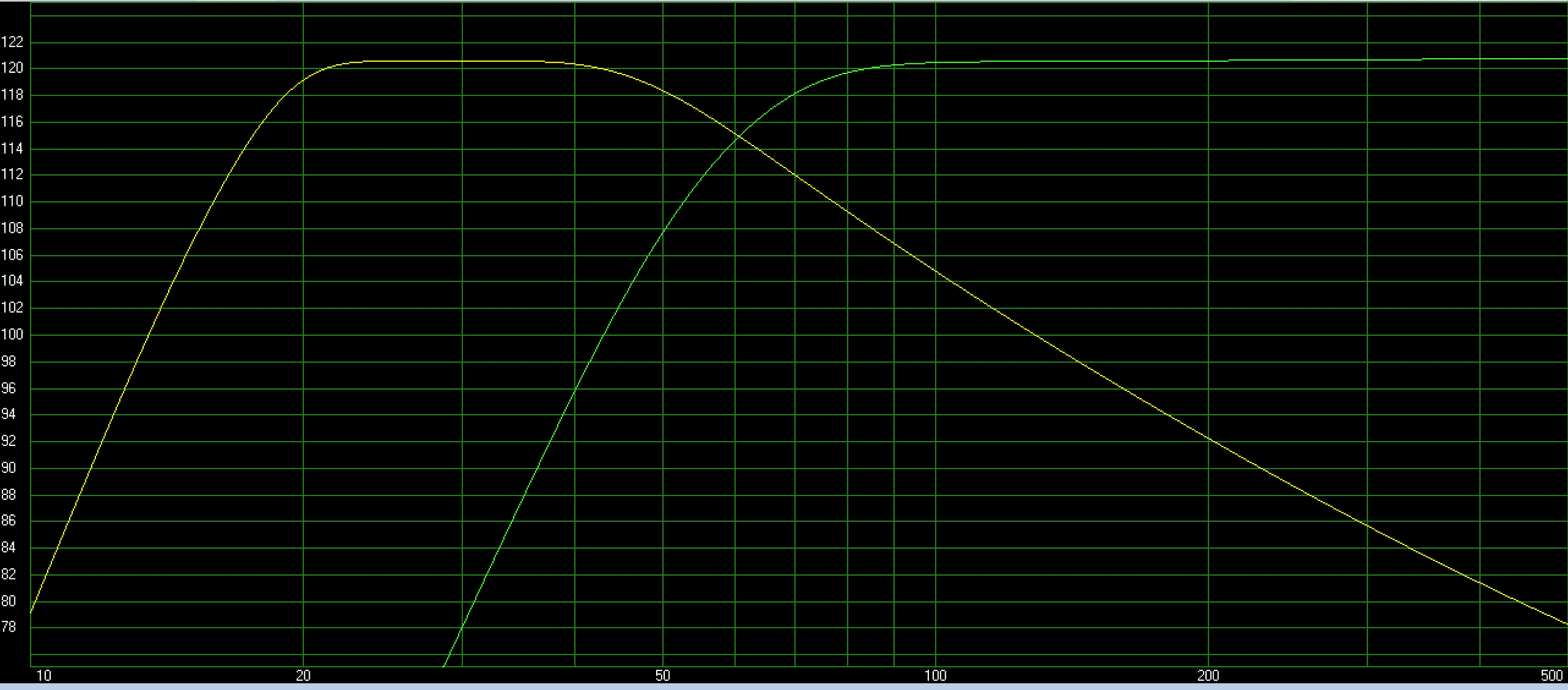
SPL response:
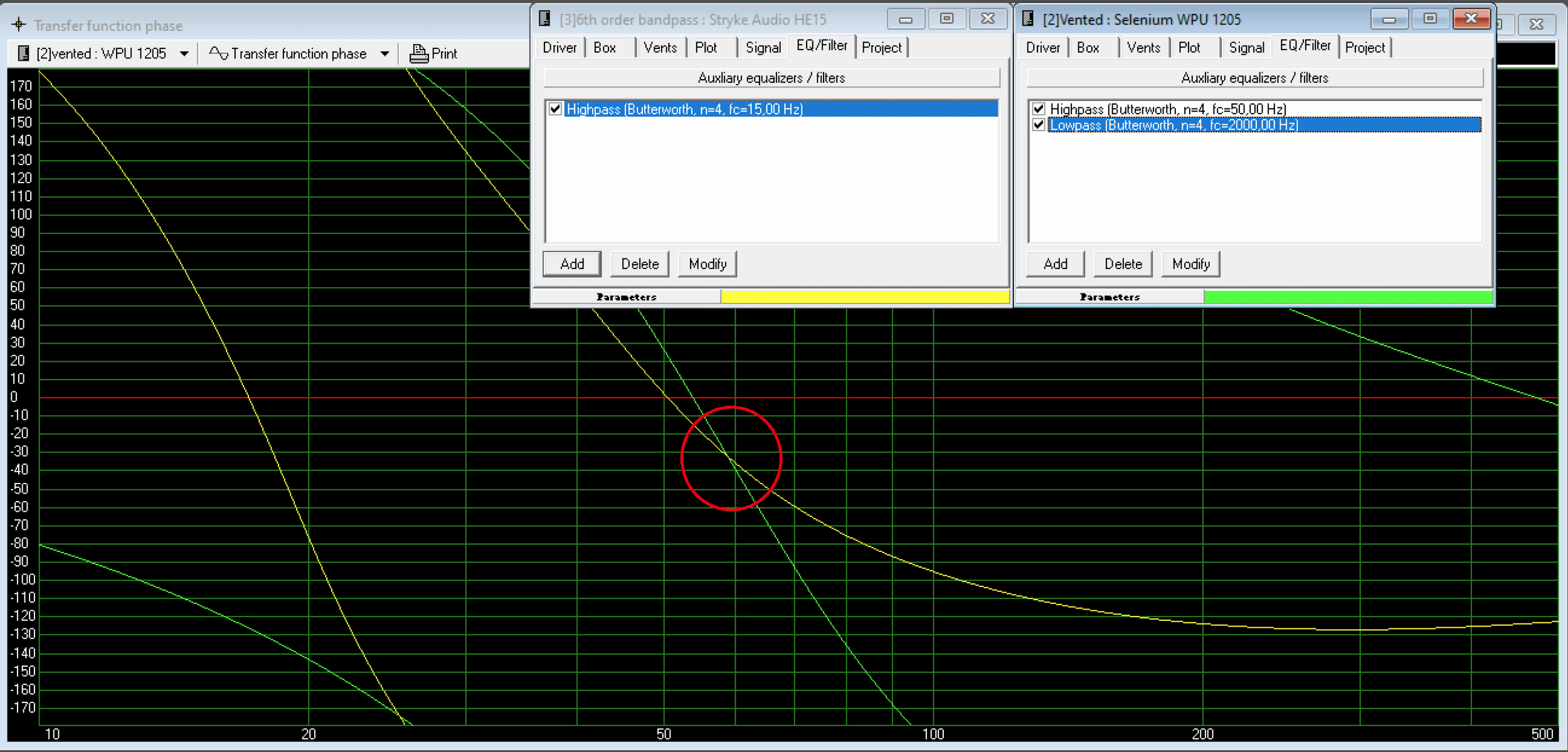
The phase responses of both drivers match at 60 Hz, so I can expect a 6 dB gain at that frequency, which will cover the -6 dB drop shown in this graph at 60 Hz.
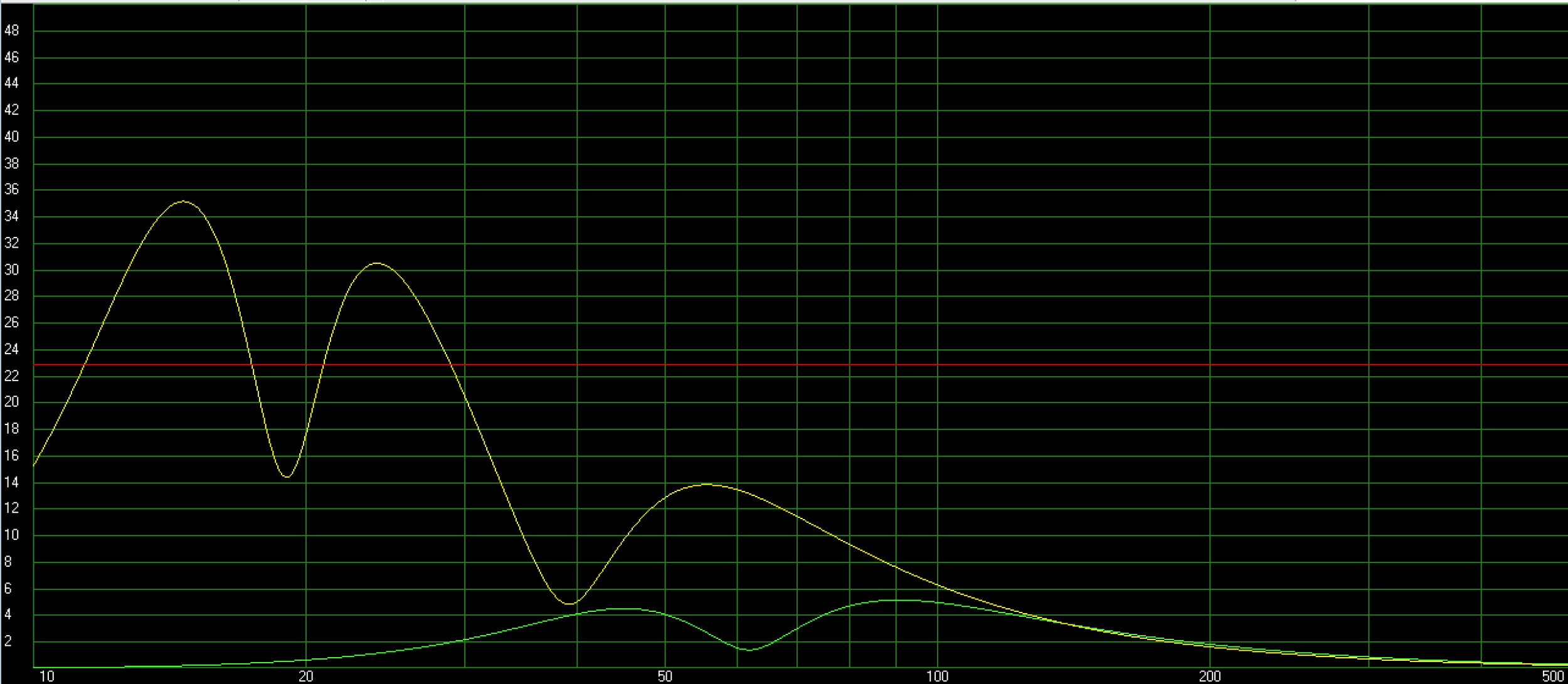
Cone excursion is slightly above each driver's xmax at peaks (23 mm vs 4.3 mm):
Rear port velocity:
Front port Velocity:
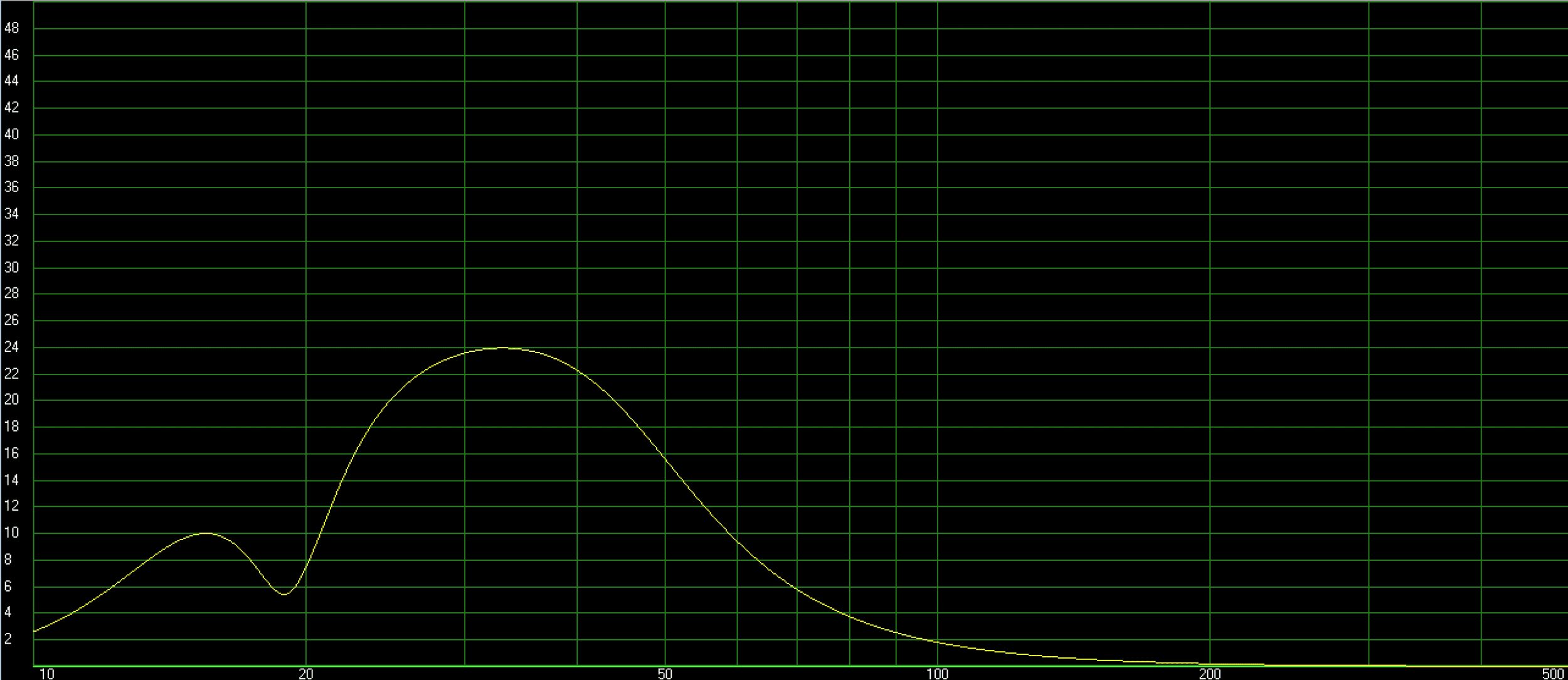
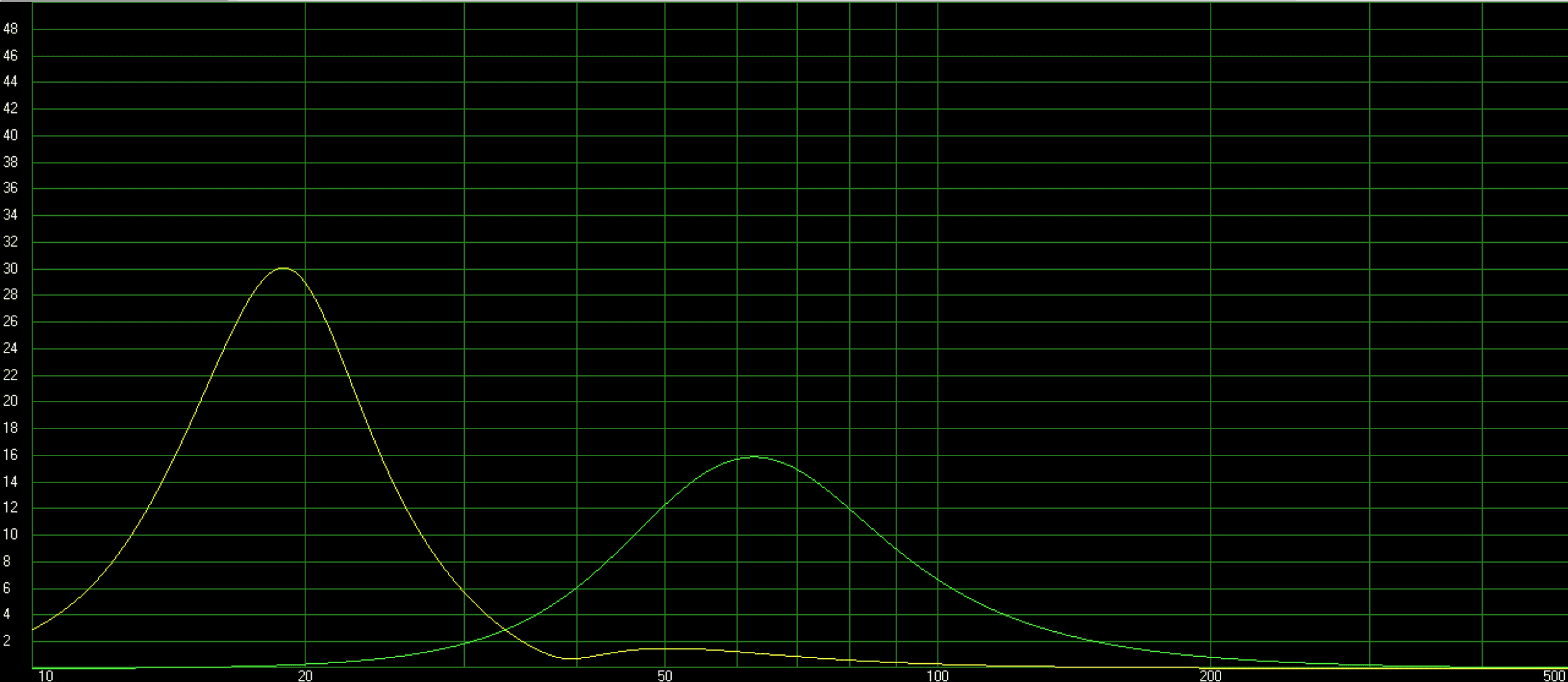
I know air velocity should usually be below 17 m/s (or 25 m/s if well flared in both ends). However, many have reported using much higher air velocities with large flared ports even above 30 m/s without any turbulence. In my understanding, the large sub-bass port allows enough space and time for the air to accelerate and decelerate without creating turbulence. Comments?
I have already built an experimental BP6 box covering that same range. It was a cheap but special 12" driver which had a very low Qts around 0,21. It was tested over the back seat along a 50 L bass reflex box tuned to 40 Hz that was on the trunk. The result was the most pleasurable sound I have heard in my entire life. I had placed the BP6 box over the back seat. The challenge now is to make one much bigger that fits in the trunk.
The former experiment was designed to produce about 110 dB of 25 Hz. Since the car gain gives +12db/octave from 70 Hz down, the bass was probably hitting 120-130 dB at 25 Hz. Yet, since our ears are very unsensible at that range, I felt like having the bass much louder would be even better. So my target now is 120 dB flat down to 20 Hz. With the cabin gain, that would perhaps hit 145 dB at 20 Hz. That's something a normal decibel-meter won't be able to measure, but the sound would be indistinguishable.
Those are the potential issues I have with my current design:
Final estimated volume 324 L plus the volume occupied by all the wood, including the bracing
Trunk size: 450 L
| Driver | Range it will cover | Efficiency | Power needed (to reach 120 dB) |
| Stryke Audio He15 (23 mm xmax) | 20 Hz - 60 Hz | 89.4 dB/w | 2000 w |
| Selenium WPU 1205 (4.3 mm xmax) | 60 Hz - 500 Hz | 94,9 dB/w | 400 w |
| Selenium Neodymium Driver + Horn | 500 Hz - 5,000 Hz | 110 dB/w | 10 w |
| Selenium Supertweeter | 5,000 Hz - 20,000 Hz | 110 dB/w | 10 w |
This is my first post, but not my first project. After many years of simulating and building subwoofer boxes, I figured out that nothing beats the BP6 box when we are targeting the 20-40 Hz range. This can be proven by this WinISD simulation which shows it can hit 20 Hz at just -3 dB from the speaker's reference efficiency:
SPL response:
The phase responses of both drivers match at 60 Hz, so I can expect a 6 dB gain at that frequency, which will cover the -6 dB drop shown in this graph at 60 Hz.
Cone excursion is slightly above each driver's xmax at peaks (23 mm vs 4.3 mm):
Rear port velocity:
Front port Velocity:
I know air velocity should usually be below 17 m/s (or 25 m/s if well flared in both ends). However, many have reported using much higher air velocities with large flared ports even above 30 m/s without any turbulence. In my understanding, the large sub-bass port allows enough space and time for the air to accelerate and decelerate without creating turbulence. Comments?
I have already built an experimental BP6 box covering that same range. It was a cheap but special 12" driver which had a very low Qts around 0,21. It was tested over the back seat along a 50 L bass reflex box tuned to 40 Hz that was on the trunk. The result was the most pleasurable sound I have heard in my entire life. I had placed the BP6 box over the back seat. The challenge now is to make one much bigger that fits in the trunk.
The former experiment was designed to produce about 110 dB of 25 Hz. Since the car gain gives +12db/octave from 70 Hz down, the bass was probably hitting 120-130 dB at 25 Hz. Yet, since our ears are very unsensible at that range, I felt like having the bass much louder would be even better. So my target now is 120 dB flat down to 20 Hz. With the cabin gain, that would perhaps hit 145 dB at 20 Hz. That's something a normal decibel-meter won't be able to measure, but the sound would be indistinguishable.
Those are the potential issues I have with my current design:
- Installation: I need some sort of screwable window that allows me to access the driver He15 to install it after the box is already in place. Because the mounted box can get too heavy.
- Bracing: The box has very big walls, so it may need too much internal bracing. That may take up too much internal space and add too much weight.
- Other parts: I need to plan some space for the amplifiers and the supercapacitor (such as Xstatic Batcap).
Last edited: