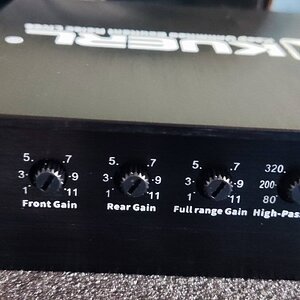
The amp takes a measurement when it powers up to set the rail voltage
From Manville:
A) Amp turns on and wakes up in the 4 ohm setting (highest rail voltage)
B) If the user never turns it up loud and never clips the amp, it will stay in the high-voltage setting"
I didn't make anything up. I read that thread just recently, and have read several like it in the past. I've actually followed a lot of Manville's various forum contributions over the past several years. I just understand what he was talking about and you don't seem to.RIPS doesn't limit the rail voltage to keep from "blowing up". It limits it because to drive low impedance loads it doesn't need high voltage, it needs high current.
I didn't call you a brain dead novice either. I said you were summarizing the amp like one.
Manville also says: " the circuit has been tweaked to allow the amplifier to deliver
the most rail voltage that is safe into a given load. "
Why would you call it "high current" at low impedance if the amp will be producing the SAME MAXIMUM CURRENT at each rail voltage "gear"? A high current amp does NOT need to drop down the rail voltage, it keeps it steady and just delivers more current (because it can).
Spin this however you like, but earlier in that post he explains how in early versions of that design with manual impedance switches people would simply switch to the high current setting, run low impedance and blow up amps because they cannot deliver that much current. He is indeed dancing around the fact that the amp lowers rail voltage not because you want the same power at 1.5 or 4 ohms, but because if it kept it's 4 ohm rail voltage into a 1.5 ohm load it would blow up.
He explains also (as I quoted above) that the amp powers up into 4 ohms and doesn't test the impedance of your load ever. It does not run a test on startup to decide which rail voltage to set as you claimed. He further explains that if you never drive the amp hard it will NEVER step down and lock into a lower rail voltage. Put this all together and you have an amp that is designed to make 500W into 4 ohms but without a big enough power supply to be stable down to 1 ohm so rail voltage is limited to protect the amp.
It boils down to semantics and design philosophy but perhaps you should re-read that thread. Or at least the first page worth of comments. OR if he claims elsewhere that the amp tests the load when you power up, or that it could safely produce more current than the rail voltage "steps" allow please point that out.