Question about setting gains with DMM

using a 0dB tone ensures that you will not clip when any clean signal is fed into it. it is the safest method but you won't see rated power out of the amp.
this is fine because at rated power you also get the most distortion. if you buy amplifiers larger than you need, then you can be as loud as you desire, with no concern for clipping due to your gain structure.

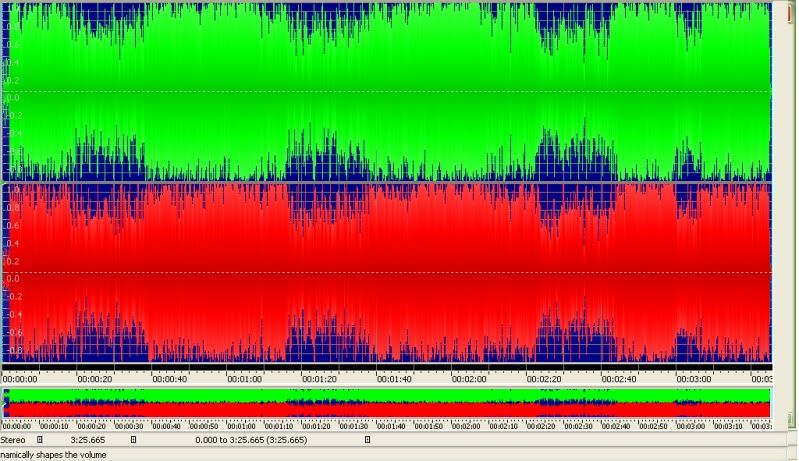
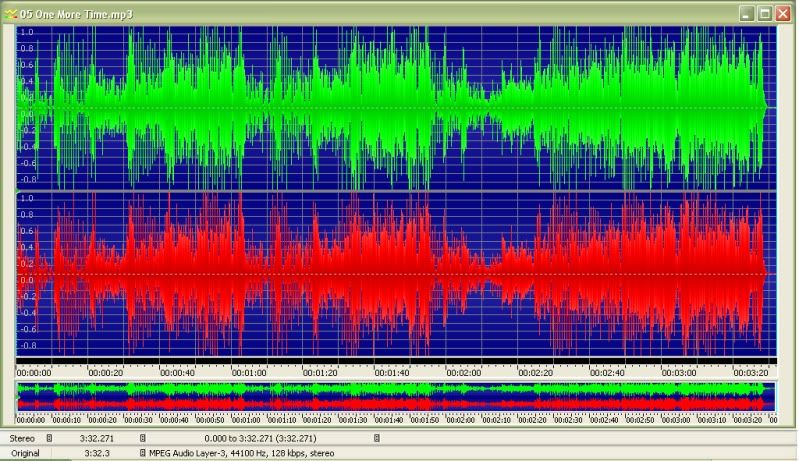
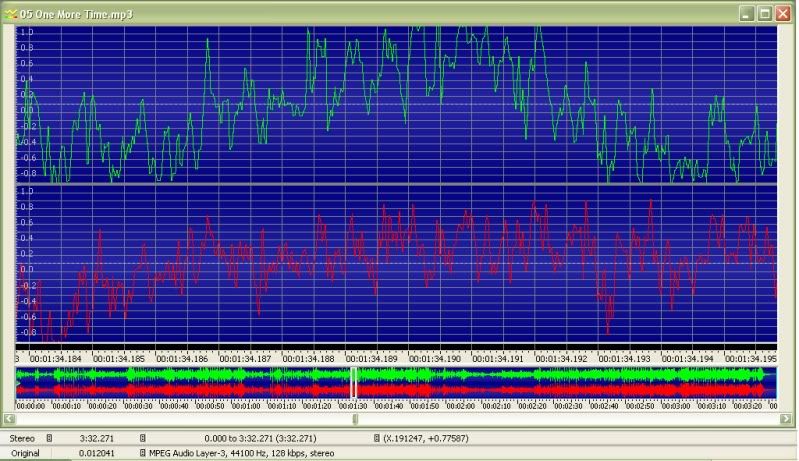
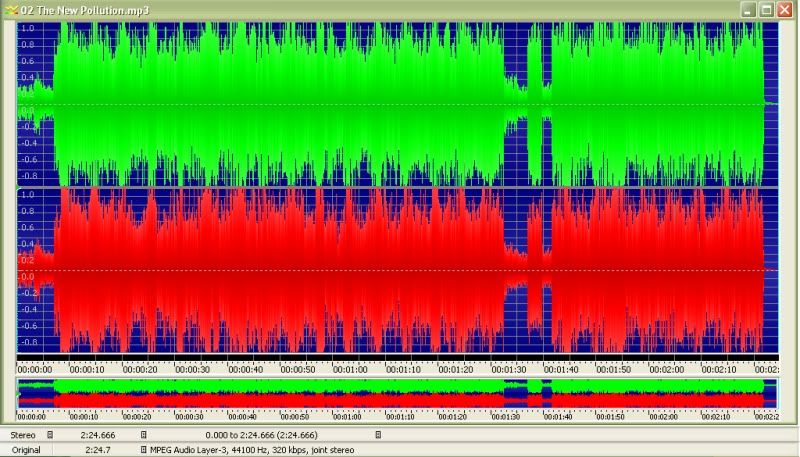
certainly, a lot of modern music is clipped. and a lot of modern music uses the entire range.

now, bass itself is usually -3dB to -6dB down since it is just part of the signals shown, and there are vocals and music riding on top of the low frequency signal... except for lone bass drops which can be mixed at max... or the example above where the bass signal is clearly near 0dB and the music just flat out clips. for speaker amps, i always use a 0dB tone - since that range is usually maxed out and those speakers are most sensitive to overheating. for sub amps, i keep sub level at the HU low, use a 0dB tone, then intelligently increase sub level based on the album.

clipping from gain structure is pretty **** obvious and easy to avoid.

Autosound 2000 Disc 102 includes test tones that are intentionally clipped for a bit so you can set gains by ear.

Can always count on you to drop the science. Thanks for taking some time to produce visuals. Exactly why I will continue tuning with 0dB test tones.

 
You are correct, I wasn't implying they don't. My point was that up until you hit the rail voltage limits of the amplifier the voltage output is going to continue to increase, but that doesn't make it "underrated" just because you measured a voltage beyond the voltage output at rated power since the DMM doesn't measure distortion but power is rated at a specified level of distortion. If your measurement ignores distortion, then it can not be compared to "rated" power for the purpose of determining if the amplifier is "underrated".

thank you for providing some science behind your points.

i am always annoyed with power "ratings" that don't include THD at rated power at a specific impedance. when the THD rating is not taken at the same time as the power rating. if only they also included time as well - i think 1 hour should be part of the standard as it would prove thermal stability. but music is dynamic, so it's relative. and testing with an unlimited power supply is different than a car with voltage sags.

in the end; the rail voltage, current handling capabilities, gain structure, and amount of acceptable THD will determine how much power someone can get out of an amp.

i think its a misnomer to say that amps make "more power than rated". as you've mentioned - they just make more power at higher distortion.

 
using a 0dB tone ensures that you will not clip when any clean signal is fed into it. it is the safest method but you won't see rated power out of the amp.
this is fine because at rated power you also get the most distortion. if you buy amplifiers larger than you need, then you can be as loud as you desire, with no concern for clipping due to your gain structure.

certainly, a lot of modern music is clipped. and a lot of modern music uses the entire range.

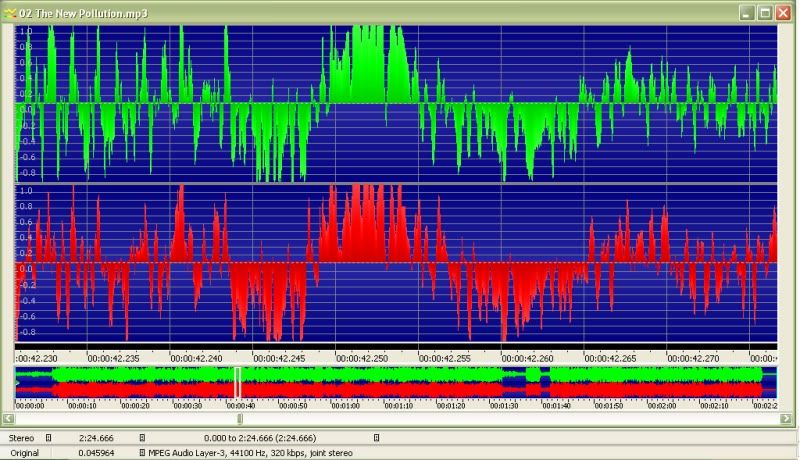
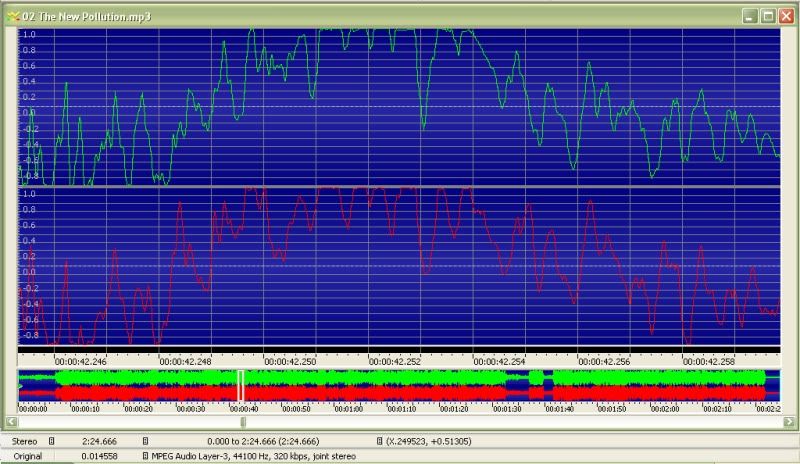
time for some pictures.

AudioClipping_6.jpg


AudioClipping_4.jpg


AudioClipping_5.jpg


AudioClipping_1.jpg


AudioClipping_2.jpg


AudioClipping_3.jpg


now, bass itself is usually -3dB to -6dB down since it is just part of the signals shown, and there are vocals and music riding on top of the low frequency signal... except for lone bass drops which can be mixed at max... or the example above where the bass signal is clearly near 0dB and the music just flat out clips. for speaker amps, i always use a 0dB tone - since that range is usually maxed out and those speakers are most sensitive to overheating. for sub amps, i keep sub level at the HU low, use a 0dB tone, then intelligently increase sub level based on the album.

clipping from gain structure is pretty **** obvious and easy to avoid.

Autosound 2000 Disc 102 includes test tones that are intentionally clipped for a bit so you can set gains by ear.
Alright well that explains it a bit better then. Maybe in that case I might tune using a -3db tone. That way it should be a nice mix between rated power and safety from distortion haha. Kinda like how I'm having my box built. A nice balance between SQ and SPL :p

Side note. Does anyone here think 33hz tuning in a 1.8ft^3 box after displacements will give me a good enough range for all types of music to get loud and accurate? Especially Rock and Metal. Or should I maybe go a tad shorter on the port and go 35hz? I still wanna be able to slam the lows and move air though.

 
Alright well that explains it a bit better then. Maybe in that case I might tune using a -3db tone. That way it should be a nice mix between rated power and safety from distortion haha. Kinda like how I'm having my box built. A nice balance between SQ and SPL :p
Side note. Does anyone here think 33hz tuning in a 1.8ft^3 box after displacements will give me a good enough range for all types of music to get loud and accurate? Especially Rock and Metal. Or should I maybe go a tad shorter on the port and go 35hz? I still wanna be able to slam the lows and move air though.
Depends on what you listen to more. If you're going to predominately listen to rock, go for 35. For hip-hop/electronic, go 32. They'll both sound great, but it really comes down to what you'll listen to more for your tuning.

 
box tuning mostly determines what your low end limit will be. below that your sub is "unloaded" and subject to damage from excessive excursion. low 30's is fairly common. as long as you shoot for an overall Q around .707 you will sound fine with rock and metal.

i have no objection to people using a -3dB tone. for most cases, it's fine.

if you listen to analog recorded music, you can get away with -6dB tones no problem. back then magnetic tape only had ~60-80dB of dynamic range so when put on a CD there is a ton of headroom left. they also had to allow for headroom for impulsive sounds. now we have >100dB in the digital realm. with modern music being mostly digital in nature, it's easy for them to max everything out, and have -0dB bass drops since they are just editing sections together and generating it with synths.

 
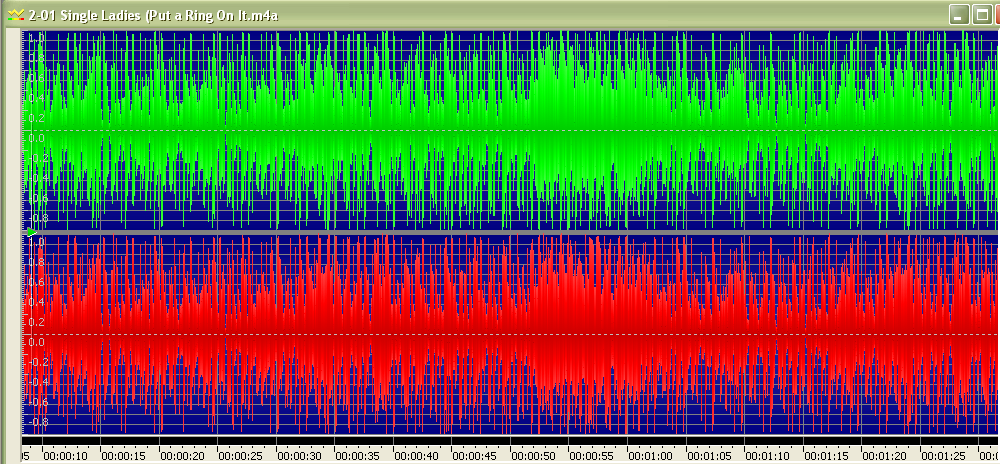
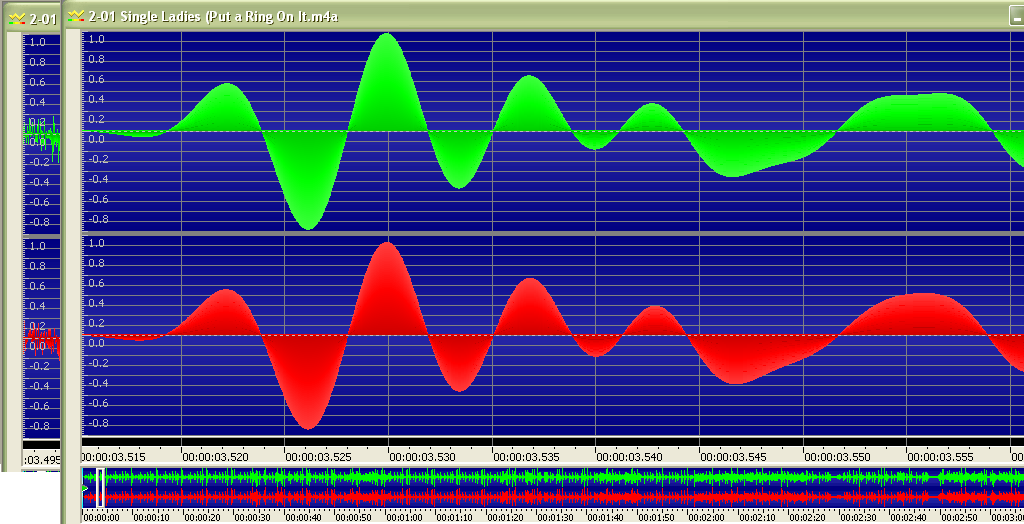
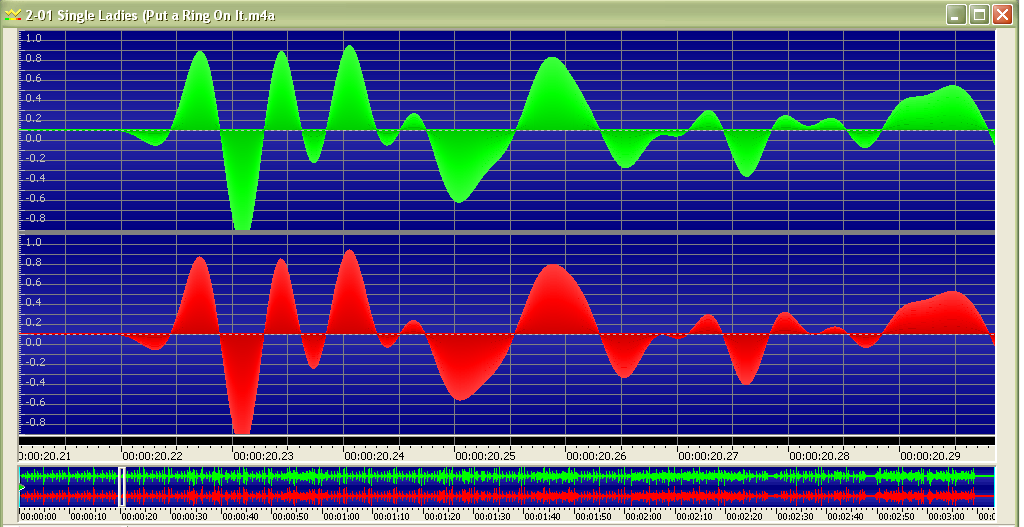
some more proof. modern music - Beyonce - All the Single Ladies. first bass beats - clip. why? because when you view the track after a 200Hz Low Pass Filter, you see a clean bass note near -0dB

singleladiesoverall.png


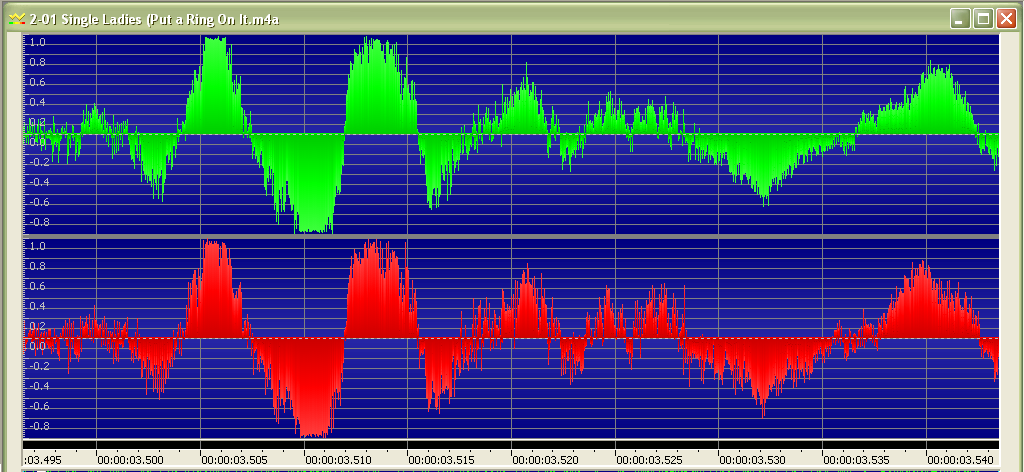
zoomed in. - clipping evident (and audible)

singleladieszoom.png


after a 200Hz low pass filter.

singleladies200hz.png


box tuning mostly determines what your low end limit will be. below that your sub is "unloaded" and subject to damage from excessive excursion. low 30's is fairly common. as long as you shoot for an overall Q around .707 you will sound fine with rock and metal.
i have no objection to people using a -3dB tone. for most cases, it's fine.

if you listen to analog recorded music, you can get away with -6dB tones no problem. back then magnetic tape only had ~60-80dB of dynamic range so when put on a CD there is a ton of headroom left. they also had to allow for headroom for impulsive sounds. now we have >100dB in the digital realm. with modern music being mostly digital in nature, it's easy for them to max everything out, and have -0dB bass drops since they are just editing sections together and generating it with synths.
OK I have seen this a lot lately since I've been researching a lot more lately about car audio and I still have no idea what that means to have a Q of .707. Except for the fact that it reminds me a lot of the overuse of the term 808 in a lot of todays bassy pop music haha.

But in all seriousness what does it mean to have a Q of .707 and how would I know if I have it or not? I had the box designed by DC Creations here on the forum. So all I have are the dimensions and specs of the box and the 3D sketchup file. So have no idea what the more detailed parameters of the box would be. Unless there's an easy way for me to figure it out from the dimensions of everything combined with the TS parameters of the sub?


---------- Post added at 11:02 PM ---------- Previous post was at 11:01 PM ----------


And also I wouldn't say all modern music is shytty haha. Although I don't much care for that song haha

 
i swear they aren't even trying anymore.
this is proof that listening to shytty music is more harmful than improper gain setting!!!
I was going to say the same thing!! One more reason not to listen to the new pop music! //content.invisioncic.com/y282845/emoticons/smile.gif.1ebc41e1811405b213edfc4622c41e27.gif

I am a big fan of having a lot of headroom. I usually go around 1.5 to 2x of the rated RMS power of the speakers I am using. More so for subwoofers.

Even if the volume can only be turned up to around 50-70%. This way, I can keep my gain settings low. When you run an amp to the max RMS all the time, it is easy to introduce more distortion and sometimes pick up noise in your preamp section. By keeping the gain low and running a higher power amp, you can avoid introducing noise.

I know you already know this, just trying to help the others who might not understand the whole "headroom" concept. //content.invisioncic.com/y282845/emoticons/wink.gif.608e3ea05f1a9f98611af0861652f8fb.gif

Again, great post with graphics on the clipping issues I mentioned with modern music. Very helpful to the bass head types. It is a lot easier to accidentally send a square wave signal than it used to be. Nice way to DC our amps Beyonce! //content.invisioncic.com/y282845/emoticons/wink.gif.608e3ea05f1a9f98611af0861652f8fb.gif

 
For rock music and metal, I would tune somewhere around 31hz. I have a box tuned to that frequency for my main rig. It works well down to around 25-28hz before unloading, and I can cleanly play up to around 80hz or higher if needed.

Cabin gain will also be a major factor in what range to tune to. If you have a large cabin, I would probably tune a little higher to avoid unloading the subs on the low notes due to the increased cabin volume. If you have a small cabin, you could probably get away with tuning down around 28-30hz. It is very easy to unload the subs below 25hz the closer you go to 28hz tuning. The benefit however, you can have a VERY flat response curve, so your subs don't sound so "boomy". Similar to how a properly designed box will play most frequencies cleanly, while a cheap pre-fab box tuned to the high 40's will sound like a fart box/boom box...

The Q factor is another way to describe how flat the response curve is.

Here is a good description:

Q - the magnification of resonance factor of any resonant device or circuit. A driver with a high Q is more

resonant than one with a low Q.

Qes - the electrical Q of the driver.

Qms - the mechanical Q of the driver.

Qts - the total Q of the driver at Fs. Qts = Qes x Qms/Qes + Qms.

Qtc - value for the damping provided for a driver in a sealed enclosure. Denotes the enclosures ability to

control the driver response at resonance. Qtc = 0.707 is the optimum value for sealed enclosures, providing

flattest response and highest SPL for deep bass extension. Enclosures for this value are often rather large.

Lower Qtc can give even better transient response, down to a Qtc of 0.577 for the best damping and

transients, but the enclosure is usually huge and SPL's are down. A Qtc of 1.0 is a compromise between deep

bass and transient response vs. smaller sized enclosure. Larger subs can go with an even higher Qtc, as their

resonant frequency is often very low, but Qtc's above 1.5 can begin to sound very muddled and boomy, and

sacrifice deep bass extension and transient response for enhanced mid-bass peaks (louder).

 
OK I have seen this a lot lately since I've been researching a lot more lately about car audio and I still have no idea what that means to have a Q of .707. Except for the fact that it reminds me a lot of the overuse of the term 808 in a lot of todays bassy pop music haha.
But in all seriousness what does it mean to have a Q of .707 and how would I know if I have it or not? I had the box designed by DC Creations here on the forum. So all I have are the dimensions and specs of the box and the 3D sketchup file. So have no idea what the more detailed parameters of the box would be. Unless there's an easy way for me to figure it out from the dimensions of everything combined with the TS parameters of the sub?


---------- Post added at 11:02 PM ---------- Previous post was at 11:01 PM ----------


And also I wouldn't say all modern music is shytty haha. Although I don't much care for that song haha
If you had the box designed by someone, ask them what Q the box was designed for. for information, refer to the Loudspeaker Design Cookbook by Vance Dickason

 
note that i've seen plenty of metal and rock in the past 10 years that is also mixed poorly, though not usually clipped like this, it certainly lacks dynamics. such a shame.
Hmm. Well either way I may be stressing about the new system too much. The 2 SA-8v2's are replacing a 4 year old JL 10W7 that was no longer "stiff" by any stretch of the word haha. So I'm thinking I could have the shyttiest box ever buit for these new subs and it would probably sound better than the W7 and get louder and hit harder too. The W7 was starting to get really sloppy. Got $400 for it though //content.invisioncic.com/y282845/emoticons/biggrin.gif.d71a5d36fcbab170f2364c9f2e3946cb.gif

 
Activity
No one is currently typing a reply...
Old Thread: Please note, there have been no replies in this thread for over 3 years!
Content in this thread may no longer be relevant.
Perhaps it would be better to start a new thread instead.

About this thread

gamehawk55

10+ year member
CarAudio.com Elite
Thread starter
gamehawk55
Joined
Location
Canada
Start date
Participants
Who Replied
Replies
43
Views
2,995
Last reply date
Last reply from
gamehawk55
IMG_20260516_193114554_HDR.jpg

sherbanater

    May 16, 2026
  • 0
  • 0
IMG_20260516_192955471_HDR.jpg

sherbanater

    May 16, 2026
  • 0
  • 0

New threads

Top