Factory Sound Dampening vs Aftermarket

SimulatedZero
10+ year member

Member
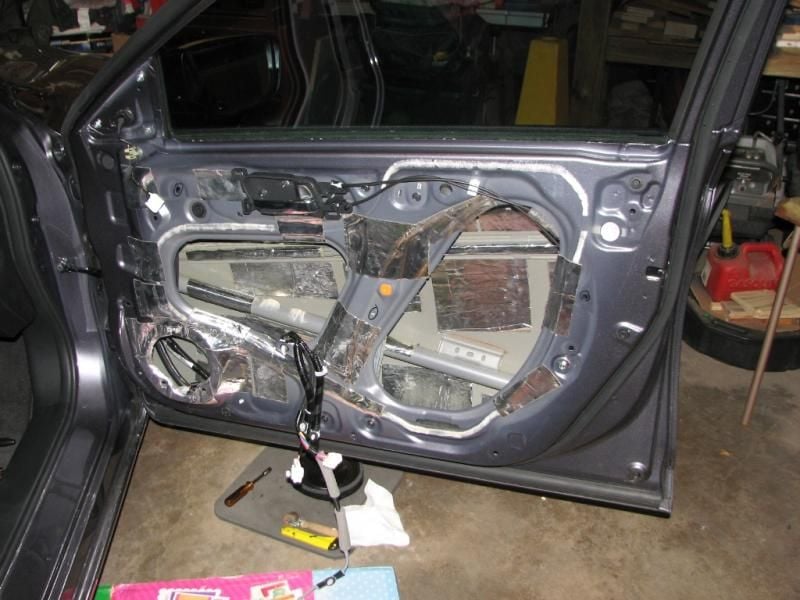
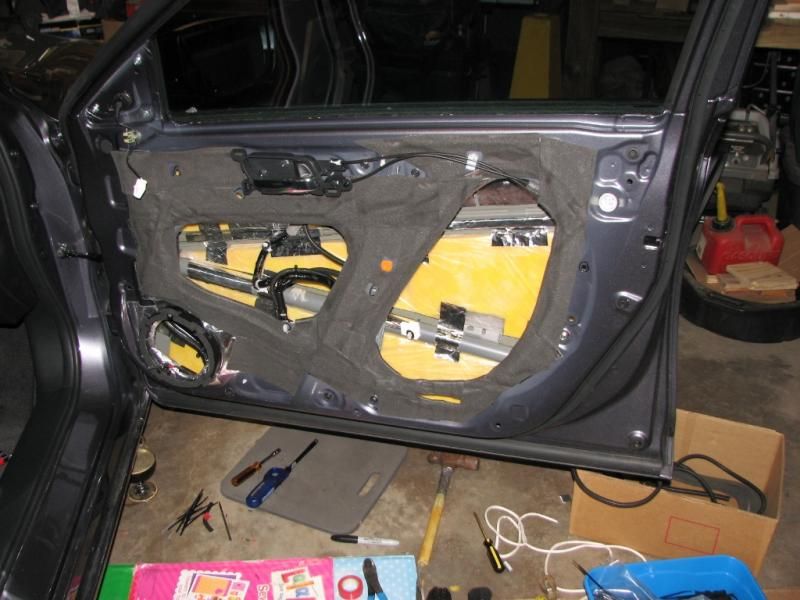
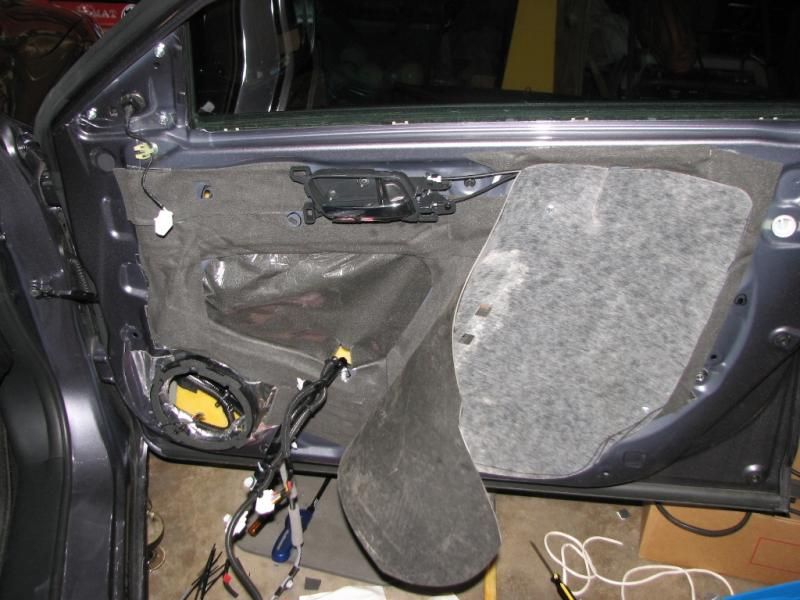
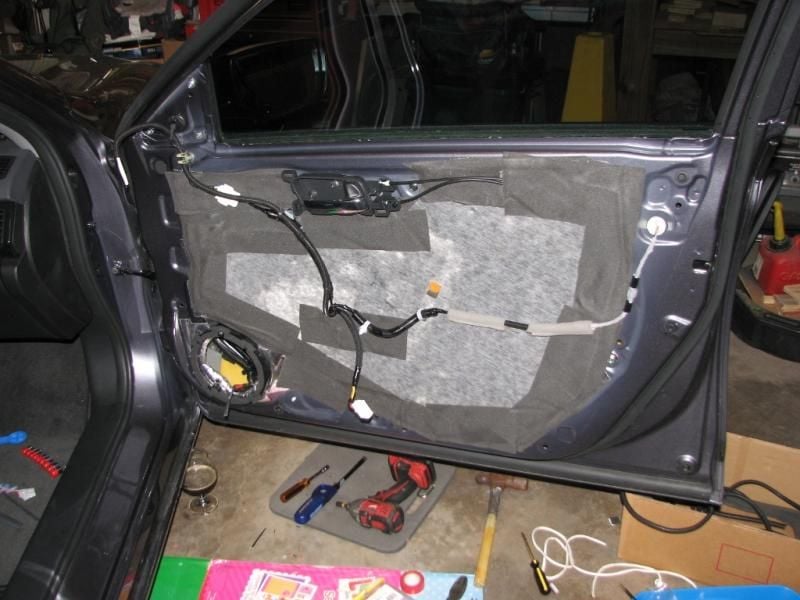
I have a 2005 Nissan Pathfinder. I pulled the door panels last night to start sketching out designs for sheet metal plugs for the inner panel and I found out that my car already has some dampening on the outer panel. Relatively smart dampening too.

There are two horizontal braces running the length of the door, one at the bottom and one halfway up. The one at the bottom is a 1 inch pipe welded to the the outer skin every 2 inches and the upper one is a standard I brace design. In between the upper and lower brace there is a 6"x12" sheet of some dampener slapped right in the middle of the space. About 25% coverage. The space above the upper brace is completely covered in one layer of that same stuff.

It looks factory to me, so the question is, would it really be worth it to either pull the existing sheets off and redo it or just add new material on top?

My goal here is to increase midbass out of my 6.5 more than reduce outside noise. I'm still going to seal the inner panel with sheet metal and run a layer of dampening on each side to reduce resonance. Do I really need to touch that outer skin, or is it good?

 
dont mess with the factory deadener if you can. deaden around it, and if those spots that were factory deadened give you problems, then mess with them.

sealing the door and putting deadener where plastic meets metal is the best thing. if you can pull out the locks and other plastic trims, handles, etc from the door and put a good sized piece between them and the panel.

 
Always put a nice base layer of dampener right around where the speaker is. It will help keep the panel from flexing a good amount. Also make sure to seal the door as well. You can just use dampener over the holes but it won't be as effective as ccf/mlv in the door.

 
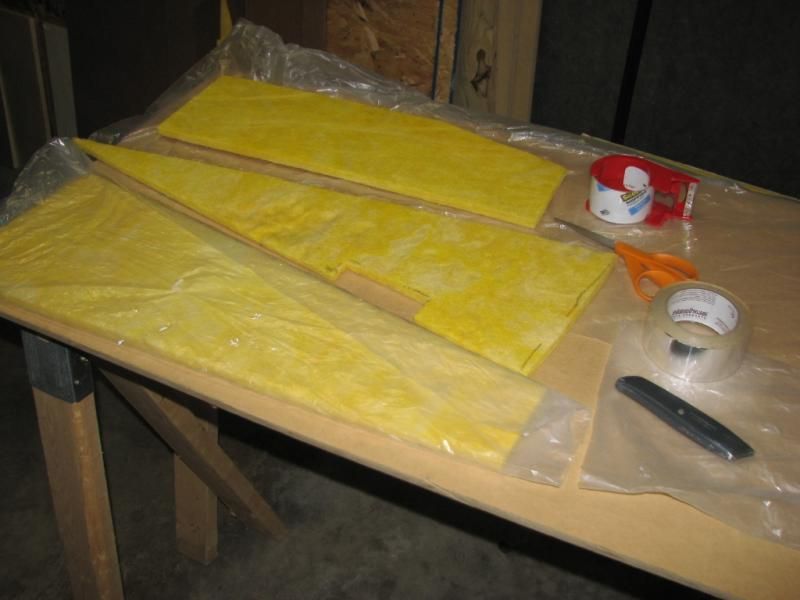
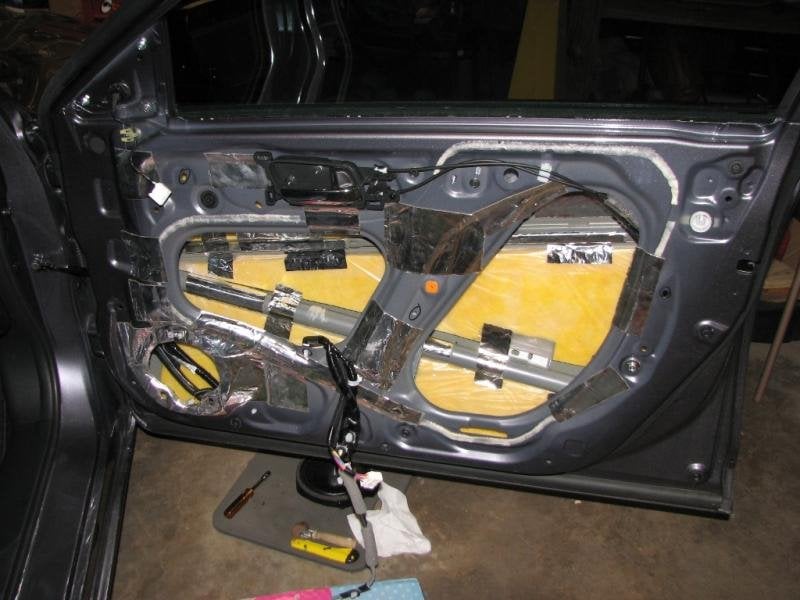
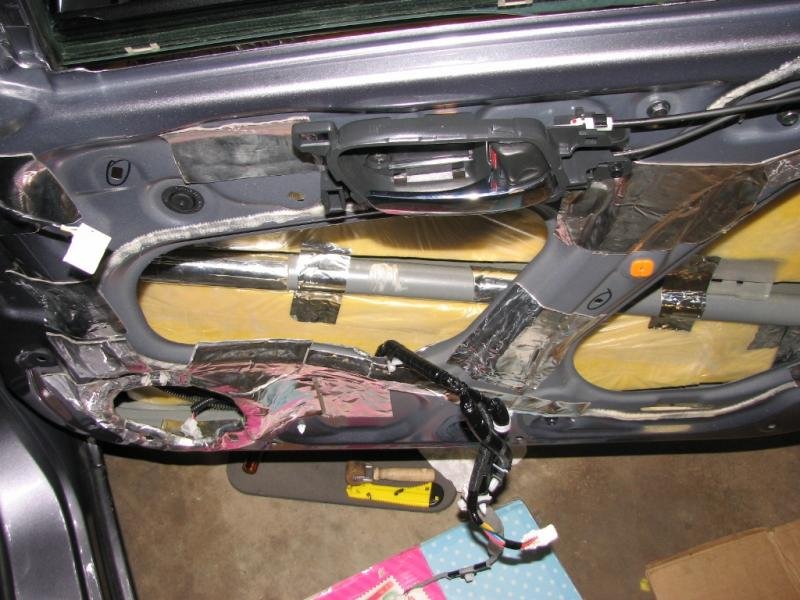
That makes sense. It saves me from having to do half the door. I'll fill in the areas around the existing deadener. I am going to run two layers behind the speaker, maybe a third just because if I have extra, topped with sealed egg crate foam. That and I found some 3/16" thick "Camper Sealing Foam" in 50" rolls at home depot that I am going to use to decouple the plastic door panel from the inner door completely and decouple the speaker mount from the door and the speaker from the mount.

After that I have extra sheet metal laying around that I can cut to shape and seal with deadener on both sides for the gaps on the inner door. I thought a bit about using MLV, but I'm on a tight budget and I'm lucky if i can get deadener right now.

I think that should just about cover everything though. When I added it all up I should have around 15ft^2 of deadener per door.

 
You really don't need that much.. keep in mind too much deadener can be a bad thing. Put it in areas ir needs it and leave it off areas it doesn't. Remember, 25% coverage is all you need for great results. I just did my truck with about 50% coverage deadener only and it's a whole different experience

That's 36 sq ft for 4 doors and the roof

 
I didn't know that too much could actually be worse. I just figured you run into diminishing returns or no effect at all.

After looking at my doors, I don't think there's too much more I can do to the outer skin. Its got decent coverage and its reinforced. Most of that would be going to the inner skin. One layer on each side to completely separate the front wave and back wave. I figured it'd be similar to using MLV in that aspect. Still too much you think?

 
I haven't personally experienced it but I've heard there's a point where you start losing output once you keep adding deadener.
@keep_hope_alive might know more about this phenomenon

its moreso because of waste imo, why waste it where its not needed. put it where its needed and save the rest for later when you're chasing rattles or put it in another car or sell it
 
Ok, I'll start off with with finishing the outer door and just running the one layer on the inner door with sealing it as best I can and see how much of a difference that makes.

Thanks //content.invisioncic.com/y282845/emoticons/thumbsupwink.gif.129404938effda6ad9cca39e7f4b58a3.gif

 
Ok, I'll start off with with finishing the outer door and just running the one layer on the inner door with sealing it as best I can and see how much of a difference that makes.
Thanks //content.invisioncic.com/y282845/emoticons/thumbsupwink.gif.129404938effda6ad9cca39e7f4b58a3.gif
another good place is the floor, feel free to pile up whatever is left and fits and im sure that'll make a big difference as well.

 
another good place is the floor, feel free to pile up whatever is left and fits and im sure that'll make a big difference as well.
I've thought about the floor, but I never really thought it would do much. I figured that was more for people going after that luxury car feel. I'll definitely give it a shot with any extra I have though.

 
When doing the floor on a budget, remember the seats themselves will act as a bit of a barrier. Also, the floor up front near the engine should be a priority.
So, is deandening the floor more for blocking road noise or increasing woofer performance? I mean, I know that decreasing outside noise helps, but would doing a single layer over just a portion of the floor make a big difference?

 
So, is deandening the floor more for blocking road noise or increasing woofer performance? I mean, I know that decreasing outside noise helps, but would doing a single layer over just a portion of the floor make a big difference?
Its more for blocking road/engine noise. But remember, every tenth of a db that you drop the noise threshold is in fact increasing the perceived performance of your speakers. Not only in perceived volume, but also in clarity/detail.

Usually the most critical places on the floor are already done by the manufacturer. And the carpet backing is usually *very* good as a sound absorbing layer. Beyond that, I have no way of telling you how happy you would be. I would advise that if your budget is tight, probably worry about the floor some other time.

 
factory deadener is pretty decent. no reason to remove it or add on top. remember that the way deadener works to remove resonance is by converting vibration into heat. The elastomeric and viscoelastic properites of a good sound damping (not dampening, it's not wet) remove resonance.

you can test for resonance by knocking on a panel and listening for how long it "rings out". if it starts sounding like a piece of wood and less like metal, you can stop.

when i acoustically treat a car, i use several materials. deadener is the first step and 25% - 50% coverage yields good results. beyond that you are adding mass. adding mass isn't a bad thing, deadener is just a really expensive way to do it.

all of the doors i build also include sound absorption inside. my build logs show you how i do that, $10 for both doors, no exception to the materials i use. foams are terrible for sound absorption.

after reducing resonance, you can move to transmission loss. transmission loss is an attribute of how well something blocks sound. the most effective transmission loss is achieved with a 100% layer of mass loaded vinyl that is decoupled from the metal with an acoustical underlayment.

most commonly used on the floor, MLV is what kills floor-based road noise.

the doors need transmission loss as well for both road noise and to prevent you from hearing the rear wave off the door speakers. there are numerous ways to seal up a door - and my build logs show several methods.

 
how i did my latest set of doors

4 hours of effort treating the passenger door. that's deadening, absorption, MLV barrier and CCF decoupler, and then terminating the speaker wires i had previously ran into the door.

the passenger door needed deadening, so a few sheets of BXT II did the trick.

accorddoors001.jpg


then came the most important part of treating a door - adding absorption. this is a 1" thick compressed fiberglass ceiling tile (with the white cover removed). $6 per 2'x4' piece. this is easier to work with than the loose batt insulation and being compressed it offers more absorption with less hassle.

accorddoors002.jpg


accorddoors003.jpg


accorddoors005.jpg


next came the barrier. the factory barrier is thin. i wanted to use MLV for the barrier but had the challenge of keeping water out. the factory setup has a slit where water can drain but it is flawed. so i added Ensolite (CCF( to the metal where the MLV will contact and also to the entire inside (one piece, sticky side out) to stick to the MLV and create a watertight barrier.

accorddoors014.jpg


accorddoors016.jpg


accorddoors018.jpg


there are 6-7 sheet metal screws holding the MLV in place. it won't fall due to heat or adhesive failures.

 
Activity
No one is currently typing a reply...
Old Thread: Please note, there have been no replies in this thread for over 3 years!
Content in this thread may no longer be relevant.
Perhaps it would be better to start a new thread instead.

About this thread

SimulatedZero

10+ year member
Member
Thread starter
SimulatedZero
Joined
Location
Tallahassee, Florida
Start date
Participants
Who Replied
Replies
19
Views
1,421
Last reply date
Last reply from
keep_hope_alive
IMG_20260516_193114554_HDR.jpg

sherbanater

    May 16, 2026
  • 0
  • 0
IMG_20260516_192955471_HDR.jpg

sherbanater

    May 16, 2026
  • 0
  • 0

New threads

Top