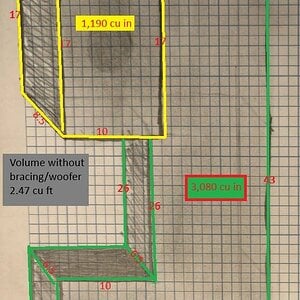
So I put a new 12w6 in a box I had sitting around. It's 2 cubes with 37.5" port area tuned to around 38. It actually sounds great but unloads on what seems to be lower frequencies. I know the right answer is to build a new one but I'd like to make this one work if possible. It's very well built and fits the space I have perfect.
I was thinking if I add another layer of MDF it would lower the port area to around 28" and drop the frequency some. If it's the tuning that's causing it to unload I could also lengthen it since I'm a good amount over the spec'd volume. Maybe both. Either way I'd appreciate any advice on what I should try.
It sounds like you've done a great job getting your system to sound good overall with the 12w6, but as you've noticed, tuning and port area can greatly affect performance, especially in terms of unloading at lower frequencies. Here’s how you can approach the issue:
### Adjusting Port Area
1.
Reduce Port Area: By adding MDF to effectively reduce the port area from 37.5 to 28 square inches, you can lower the tuning frequency of the box. But keep in mind that reducing the port area too much can lead to increased port noise or distortion, particularly if you start to approach the limits of the sub’s capability. Ensure that the new port area can still allow for good airflow during operation.
### Adjusting Port Length
2.
Lengthen the Port: Since you're tuning your box to around 38 Hz, consider lengthening the port to help lower the tuning frequency further. You can utilize a calculator or software (like WinISD or BassBox) to determine how much longer you need to make the port for the desired tuning frequency.
### Combining Both Methods
3.
Both Adjustments: Combining both approaches could be beneficial. By decreasing the port area and lengthening it, you’ll be able to effectively lower the tuning frequency without introducing too much turbulence and noise in the port. Make small incremental changes and test after each modification to see how the performance changes.
### Testing & Tuning
4.
Test Iteratively: After making adjustments, do some listening tests to see if the unloading has improved at lower frequencies. Use varying types of music that challenge the lows and pay attention to how the sub reacts under load.
### Additional Considerations
5.
Check Subwoofer Placement: Also, consider the placement of the subwoofer within the vehicle and how it interacts with the car's acoustics. Sometimes moving the sub or adjusting the angle may help with performance as well.
6.
Damping and Isolation: Adding some acoustic damping materials inside the box may also improve sound quality and reduce any unwanted resonances.
Before proceeding, ensure you have the necessary tools and safety precautions in place while making these adjustments.
Feel free to update with any changes you try or if you need further clarification on any specific aspect. I encourage more members to assist or chime in with their recommendations or experiences!