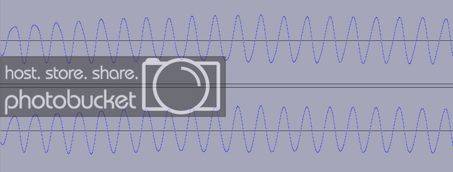
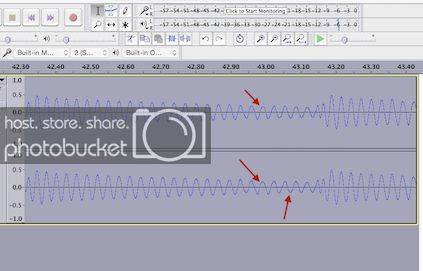
Boosting the bass in the song only does one thing - it changes the relativity in level between frequencies above and below the boosting corner frequency. Minor details would be whether the Q of the boost is wide or narrow, or if it is a shelf boost.
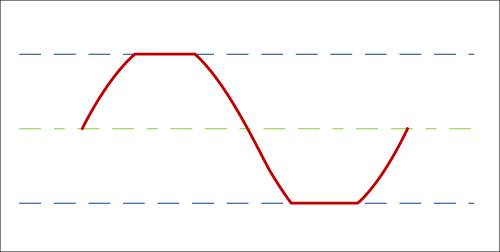
Other than that, if the applied boost has clipped the input section during production (creation of the music file), you will always be playing a clipped waveform during playback no matter what volume level. Which brings us to the one and only important factor for playback through
your system - average power vs. time vs.
your thermal limits.
Your amplifier has voltage rails that represent your headroom. So long as you never exceed that headroom, you will never clip your amplifier. You might very well be playing someone's clipped music file but you are not clipping your amplifier. At least, not until you are actually exceeding your amplifier's rail voltage.
But think about it. If you're playing a file that has heavily clipped waveforms, then when those waveforms actually do hit the hard limits of your voltage rails, there's actually not much being clipped by your amplifier. It was already clipped off in production.
Doesn't matter, though. Brings us right back to average power vs. time vs.
your thermal limits. Bottom line, if you have a very powerful amplifier and you are playing heavily clipped waveforms that reside in the music file, you are greatly increasing the exposure time of continuous average power in the form of heat to the voice coil. Even if your amplifier is not struggling with this because you are nowhere near your headroom limits (power clipping), your voice coils may be. That continuous average power is analogous to straight DC current as seen by the voice coil. Especially if you are actually experiencing power clipping.
This is why today's compressed, over-normalized, or even clipped music, is not so good for your drivers. But so long as you are very familiar with the limits of all of your equipment, you can play distortion to your heart's content. I do at times, although it usually resides in the midrange as something crunchy that was intended by the artist. Electronic music and such.


 So I tried searching the forums and this thread got closed otherwise I'd a bumped it...