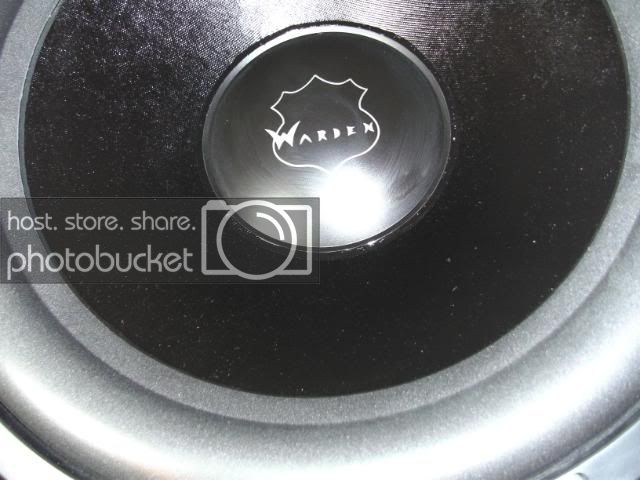
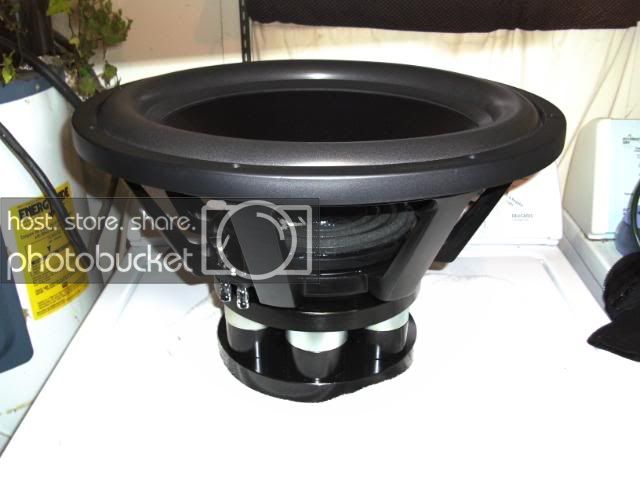
15" Warden

You know daddy just playing
Duh... I mean come on these just look loud

DSCN0035.jpg


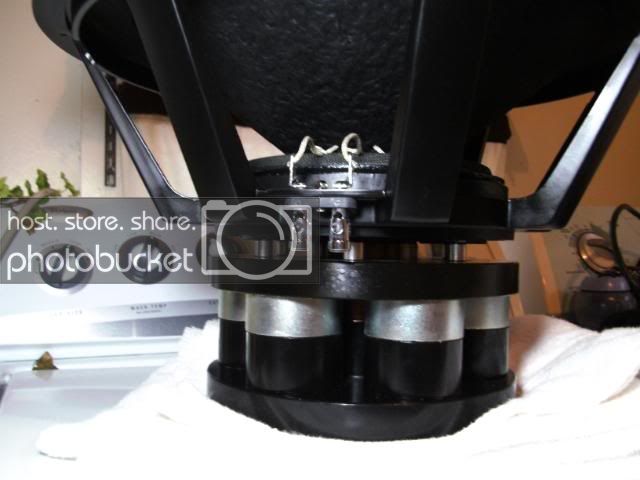
it works like every other motor in existence, magnet couples to the steel which provides a high permeable return path and there is some air gap at some point in the process. In this case, it’s a straight forward axial motor like 99% of the motors out there. South faces up, North faces down, the magnets are glued to a steel gap plate that is centered around a steel t-yoke. The air gap is between the two. In this case, a single magnet could replace the 6 or 8 smaller disc magnets without changing the geometry of the motor. The smaller magnets are probably chosen for ease of assembly and can also be assembled charged which is much more difficult with a larger single magnet.


^ Here is an axial neo motor with a single neo magnet. The single magnet was chosen here because its easier to assemble uncharged and can me charged after assembly. There are not many magnetizers or fixtures that can charge neo this large so a custom one was constructed for this motor.


^ Here we have the alternative, radial neo. South faces in, North faces out. These can not be charged after assembly and must be constructed with charged magnets and it can be very tricky! This is the same construction you'll find in a the DD 99-Z, or the Aura NRT, but it looks quite a bit different than the 99-Z, same principal however. The radial has less flux loss and better coupling than axial, but it loses its advantages with shorter gaps because it can not be focused with steel which is why axial motors are preferred for shorter gaps. This is why the NRT, 99-Z and this motor all have tall gaps. The 99-Z uses an overhung coil, but its gap is still very tall for reasons outlined above.


 
it works like every other motor in existence, magnet couples to the steel which provides a high permeable return path and there is some air gap at some point in the process. In this case, it’s a straight forward axial motor like 99% of the motors out there. South faces up, North faces down, the magnets are glued to a steel gap plate that is centered around a steel t-yoke. The air gap is between the two. In this case, a single magnet could replace the 6 or 8 smaller disc magnets without changing the geometry of the motor. The smaller magnets are probably chosen for ease of assembly and can also be assembled charged which is much more difficult with a larger single magnet.


^ Here is an axial neo motor with a single neo magnet. The single magnet was chosen here because its easier to assemble uncharged and can me charged after assembly. There are not many magnetizers or fixtures that can charge neo this large so a custom one was constructed for this motor.


^ Here we have the alternative, radial neo. South faces in, North faces out. These can not be charged after assembly and must be constructed with charged magnets and it can be very tricky! This is the same construction you'll find in a the DD 99-Z, or the Aura NRT, but it looks quite a bit different than the 99-Z, same principal however. The radial has less flux loss and better coupling than axial, but it loses its advantages with shorter gaps because it can not be focused with steel which is why axial motors are preferred for shorter gaps. This is why the NRT, 99-Z and this motor all have tall gaps. The 99-Z uses an overhung coil, but its gap is still very tall for reasons outlined above.
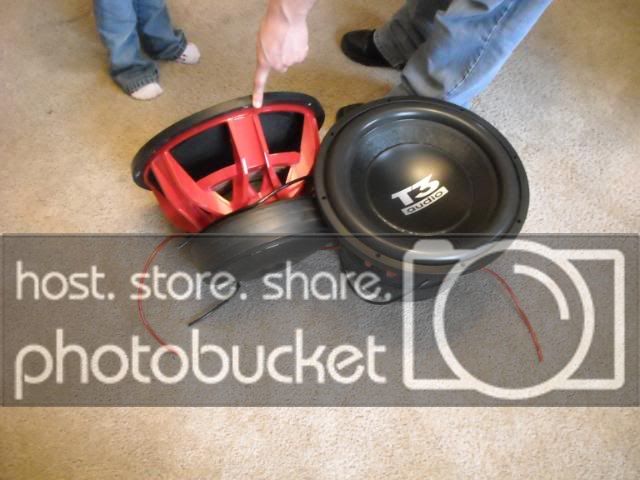
nukka what?

 
it works like every other motor in existence, magnet couples to the steel which provides a high permeable return path and there is some air gap at some point in the process. In this case, it’s a straight forward axial motor like 99% of the motors out there. South faces up, North faces down, the magnets are glued to a steel gap plate that is centered around a steel t-yoke. The air gap is between the two. In this case, a single magnet could replace the 6 or 8 smaller disc magnets without changing the geometry of the motor. The smaller magnets are probably chosen for ease of assembly and can also be assembled charged which is much more difficult with a larger single magnet.


^ Here is an axial neo motor with a single neo magnet. The single magnet was chosen here because its easier to assemble uncharged and can me charged after assembly. There are not many magnetizers or fixtures that can charge neo this large so a custom one was constructed for this motor.


^ Here we have the alternative, radial neo. South faces in, North faces out. These can not be charged after assembly and must be constructed with charged magnets and it can be very tricky! This is the same construction you'll find in a the DD 99-Z, or the Aura NRT, but it looks quite a bit different than the 99-Z, same principal however. The radial has less flux loss and better coupling than axial, but it loses its advantages with shorter gaps because it can not be focused with steel which is why axial motors are preferred for shorter gaps. This is why the NRT, 99-Z and this motor all have tall gaps. The 99-Z uses an overhung coil, but its gap is still very tall for reasons outlined above.
thanks for the info. wish i could understand all of it. haha.

 
Activity
No one is currently typing a reply...
Old Thread: Please note, there have been no replies in this thread for over 3 years!
Content in this thread may no longer be relevant.
Perhaps it would be better to start a new thread instead.

About this thread

S.B.C.

10+ year member
CarAudio.com Elite
Thread starter
S.B.C.
Joined
Location
IL
Start date
Participants
Who Replied
Replies
79
Views
4,780
Last reply date
Last reply from
iamamp3pimp
IMG_20260516_193114554_HDR.jpg

sherbanater

    May 16, 2026
  • 0
  • 0
IMG_20260516_192955471_HDR.jpg

sherbanater

    May 16, 2026
  • 0
  • 0

New threads

Top