Show Me A TC-9+

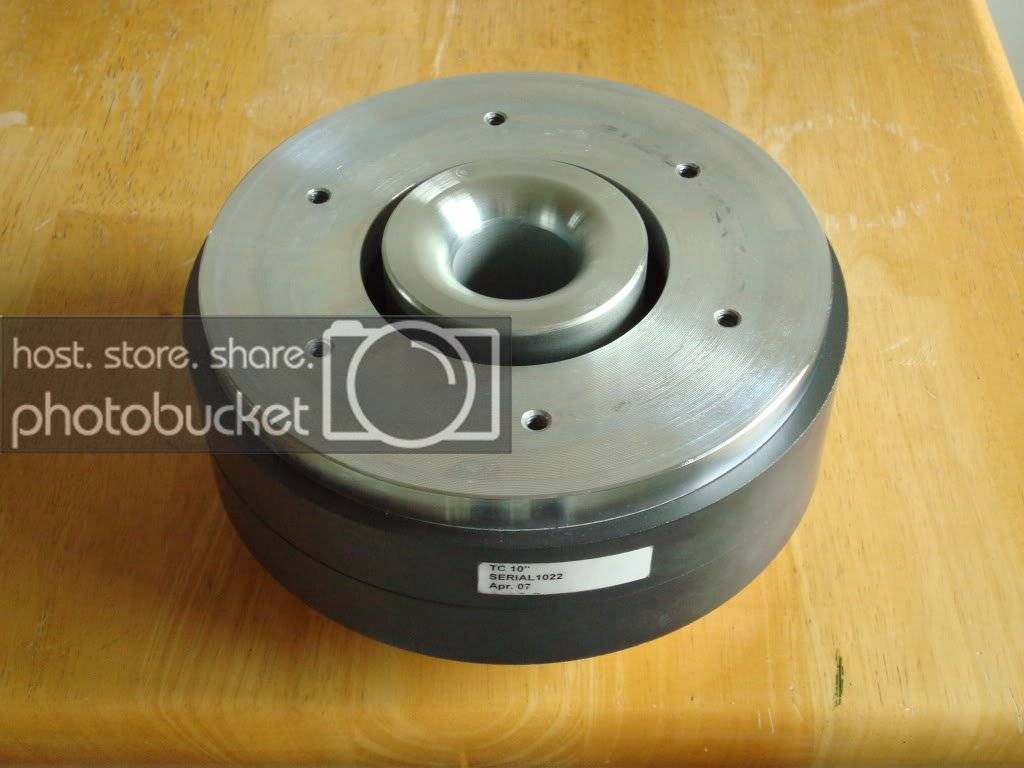
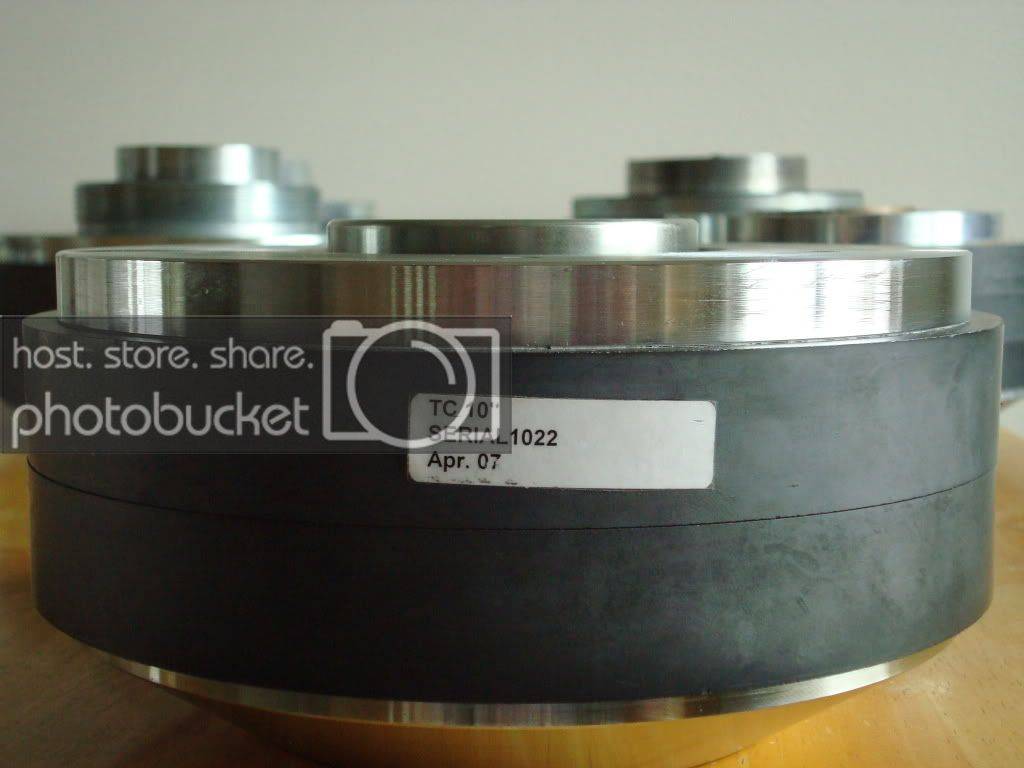
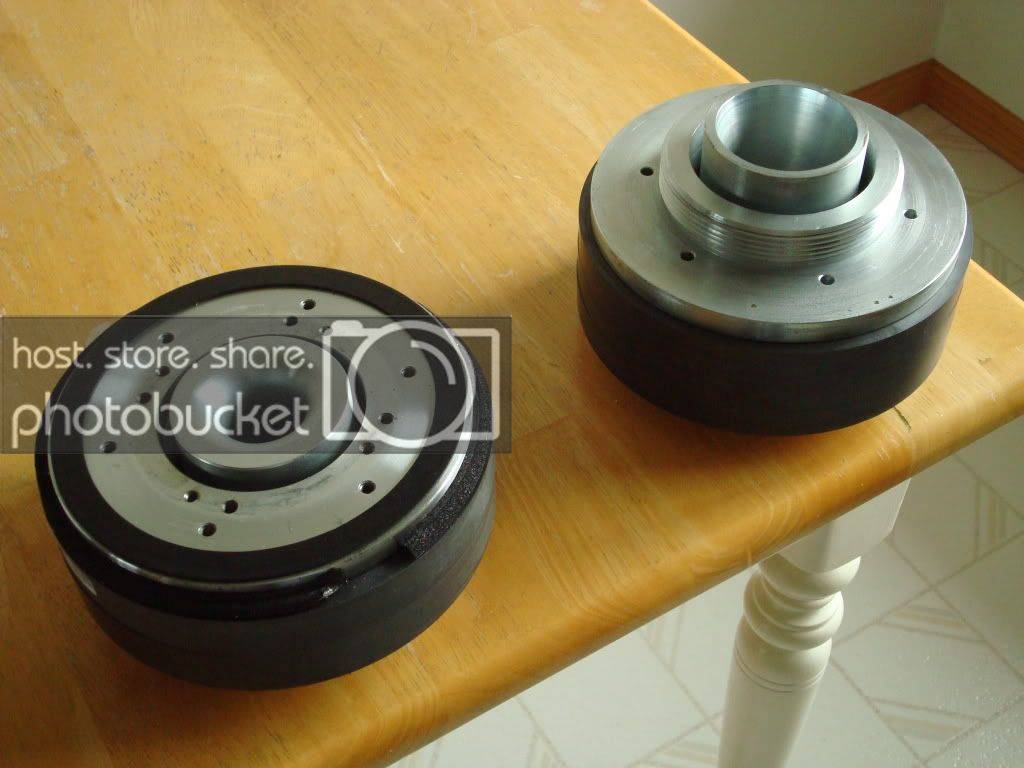
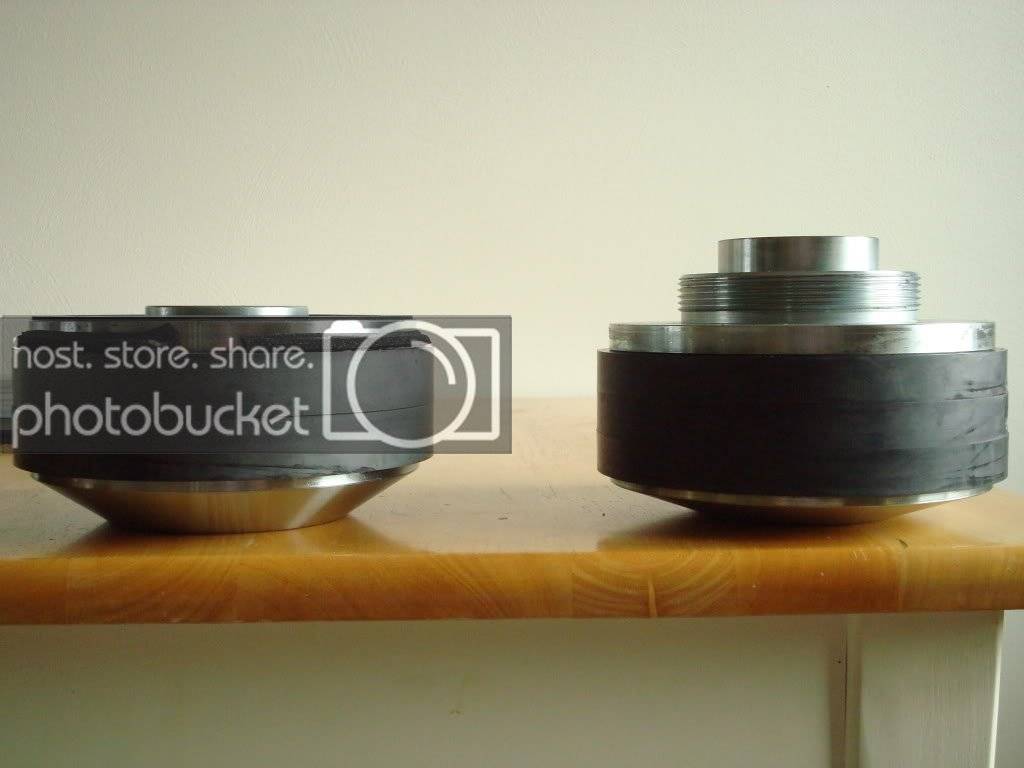
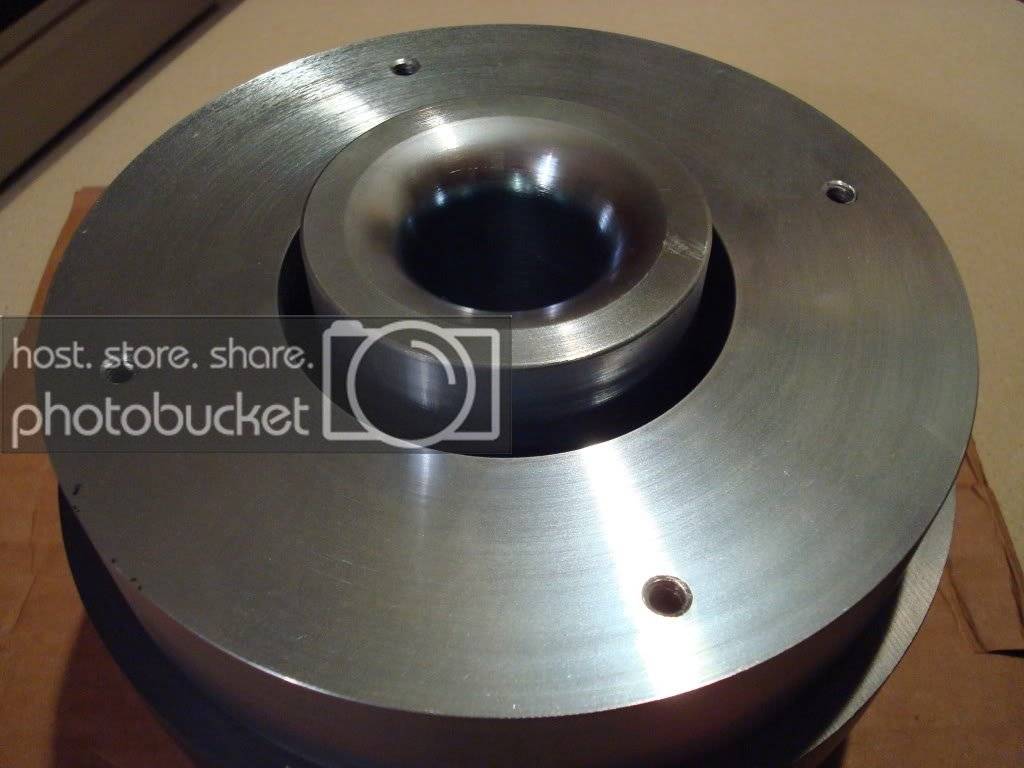
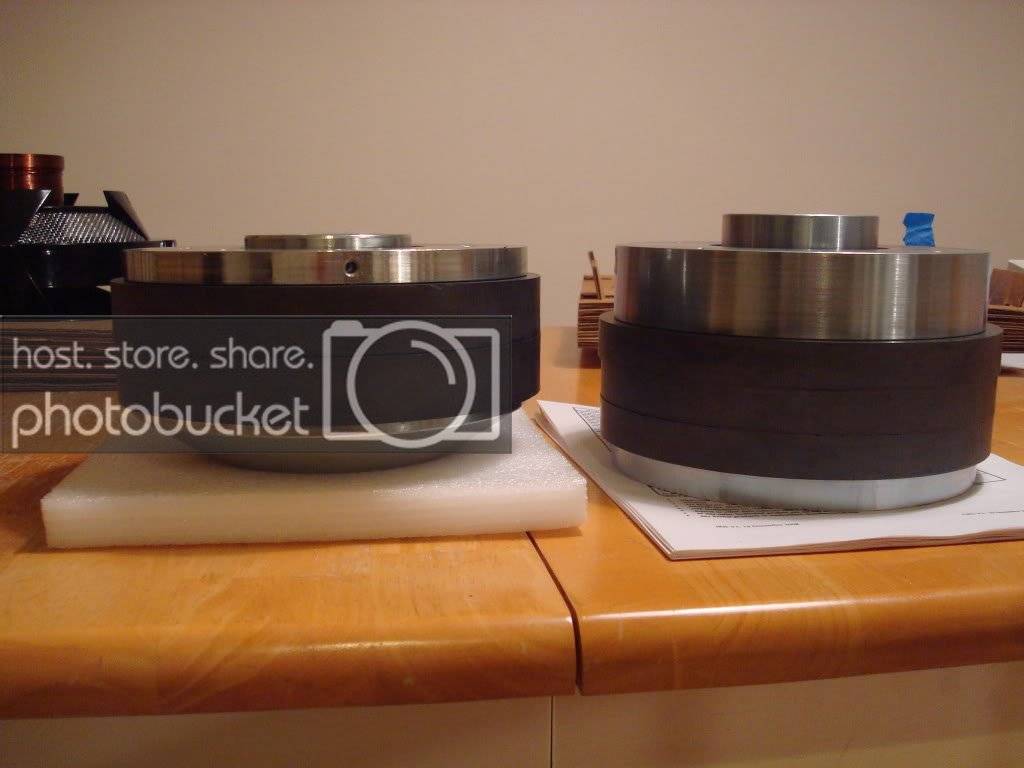
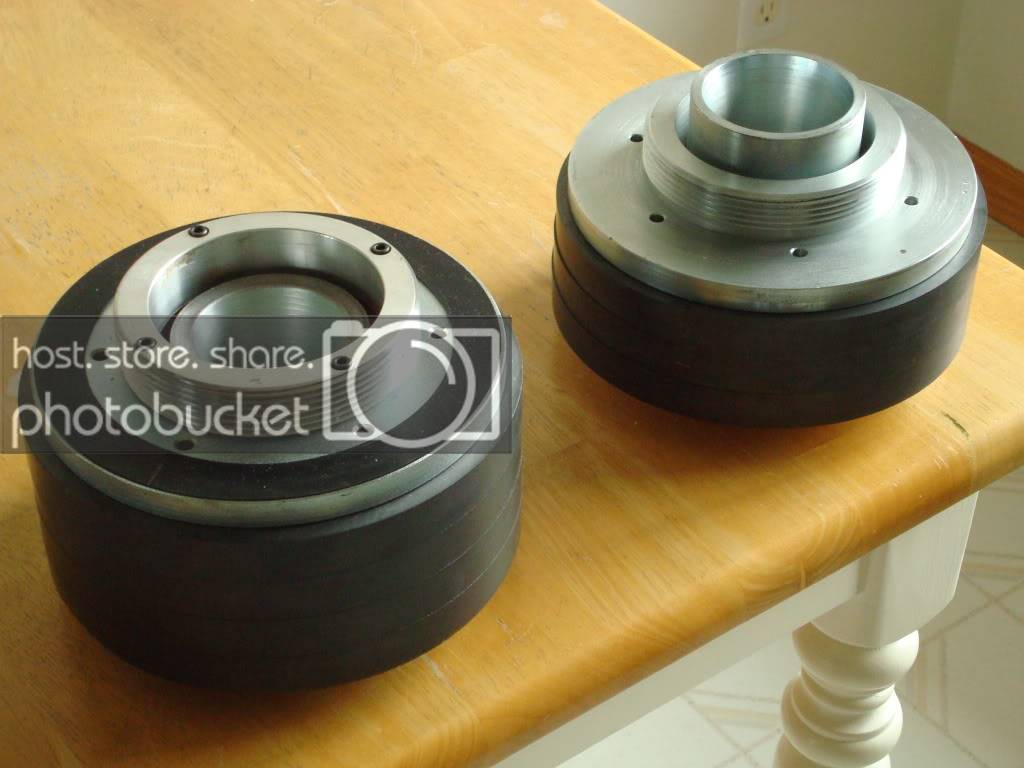
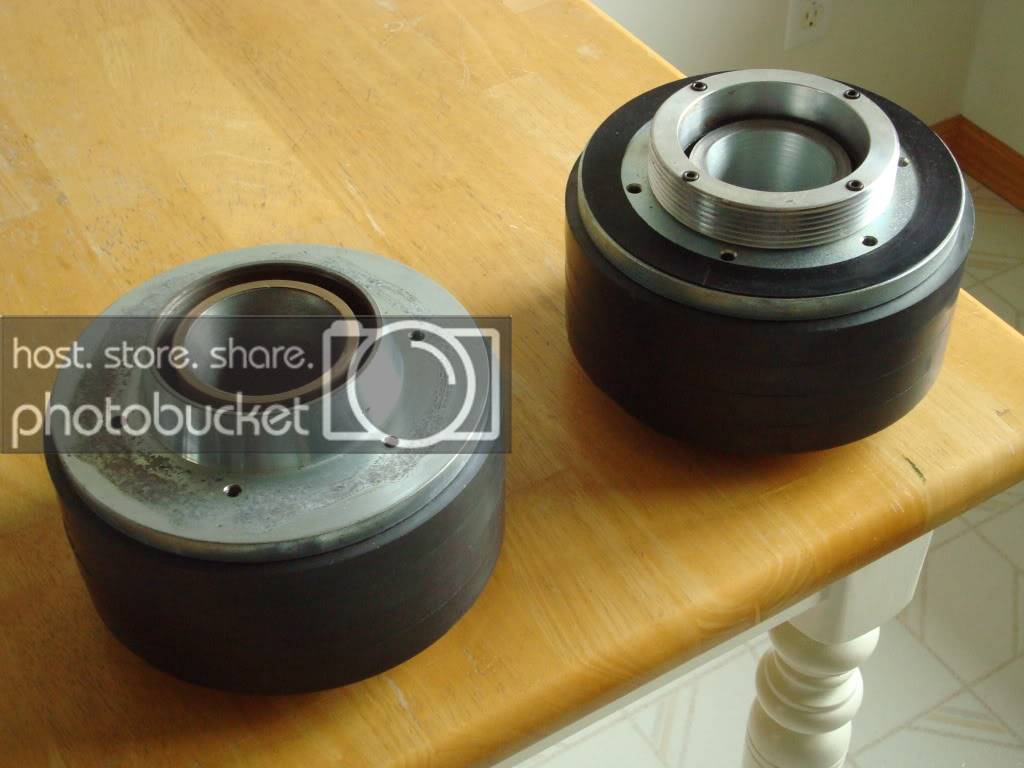
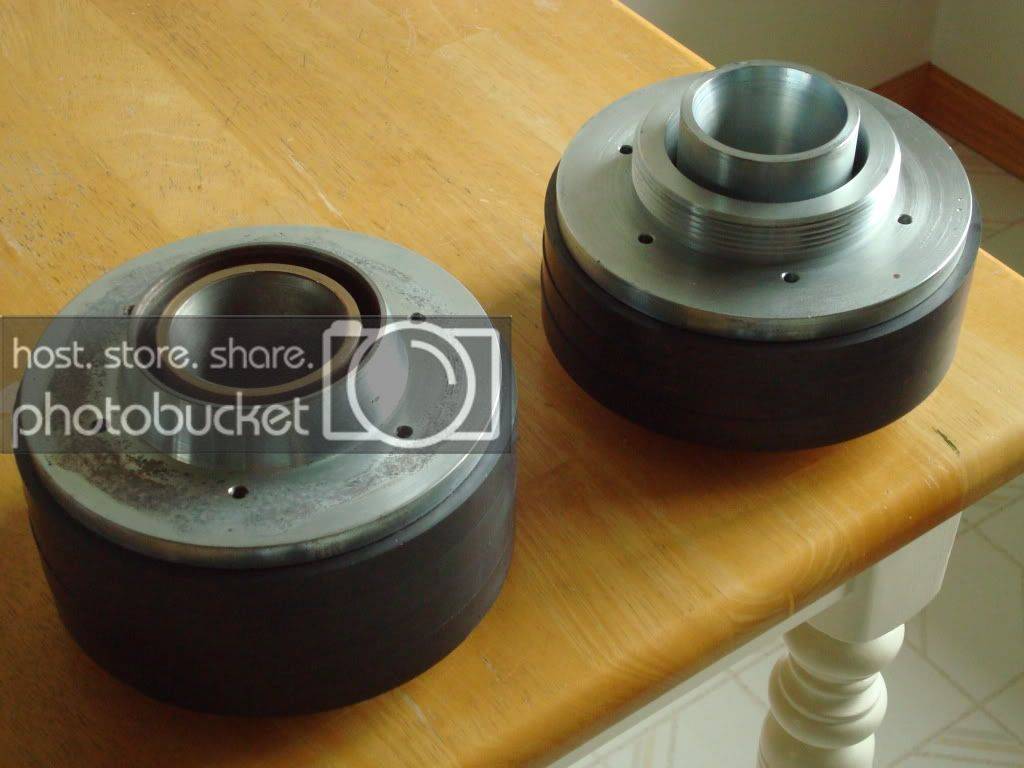
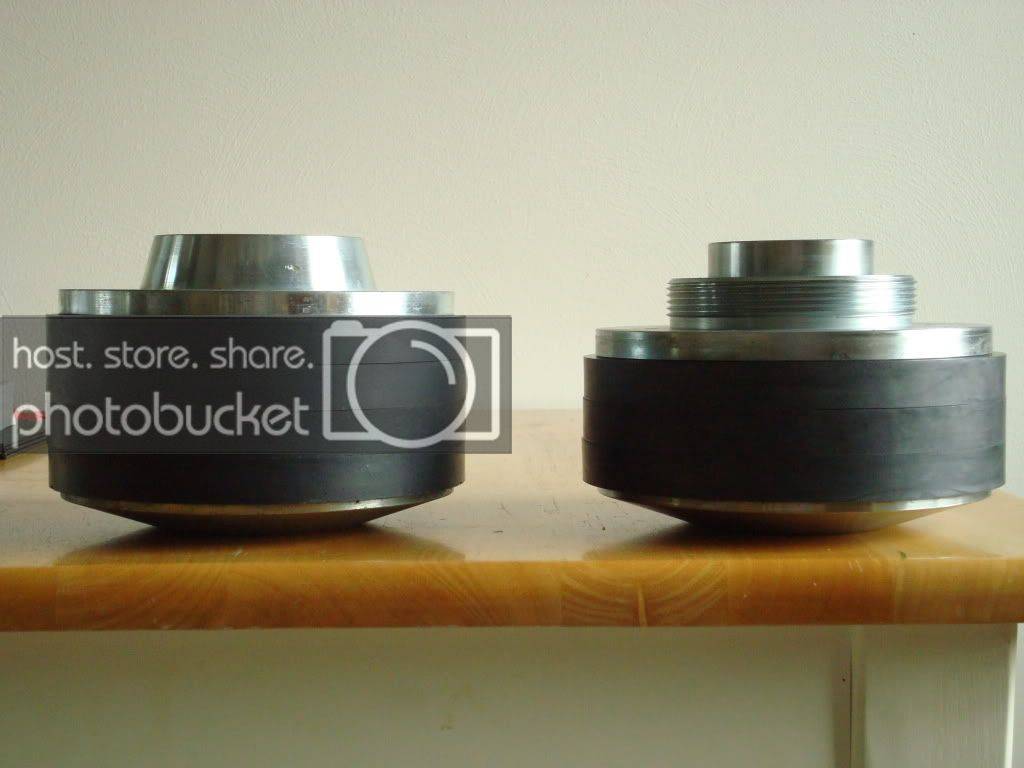
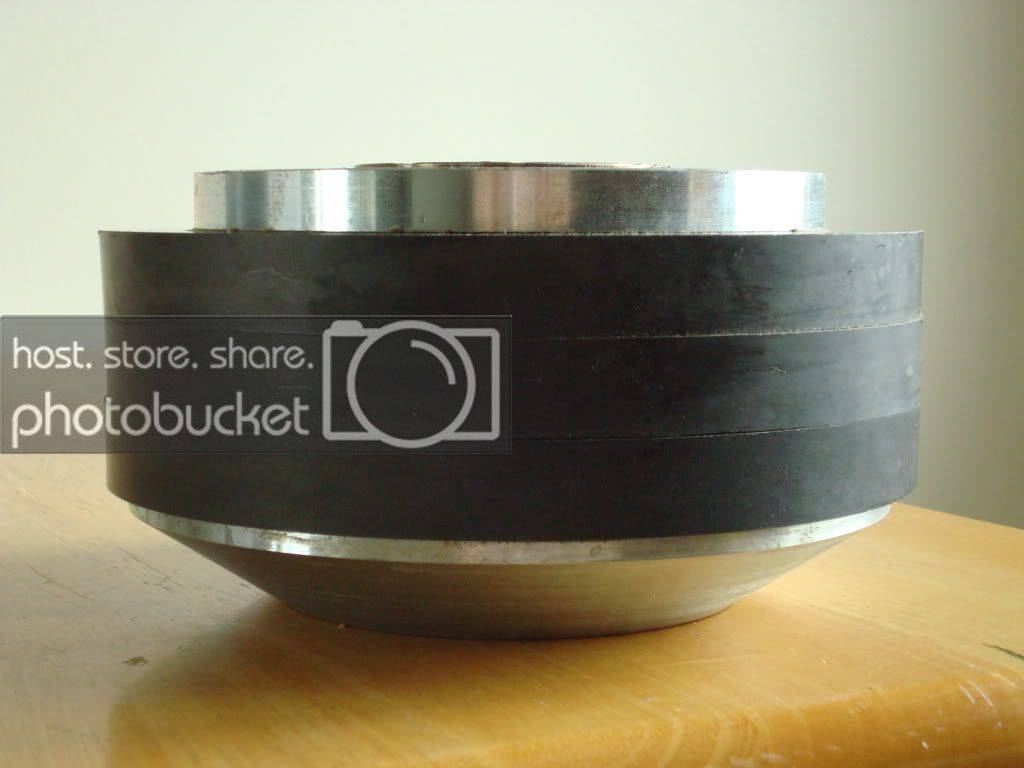
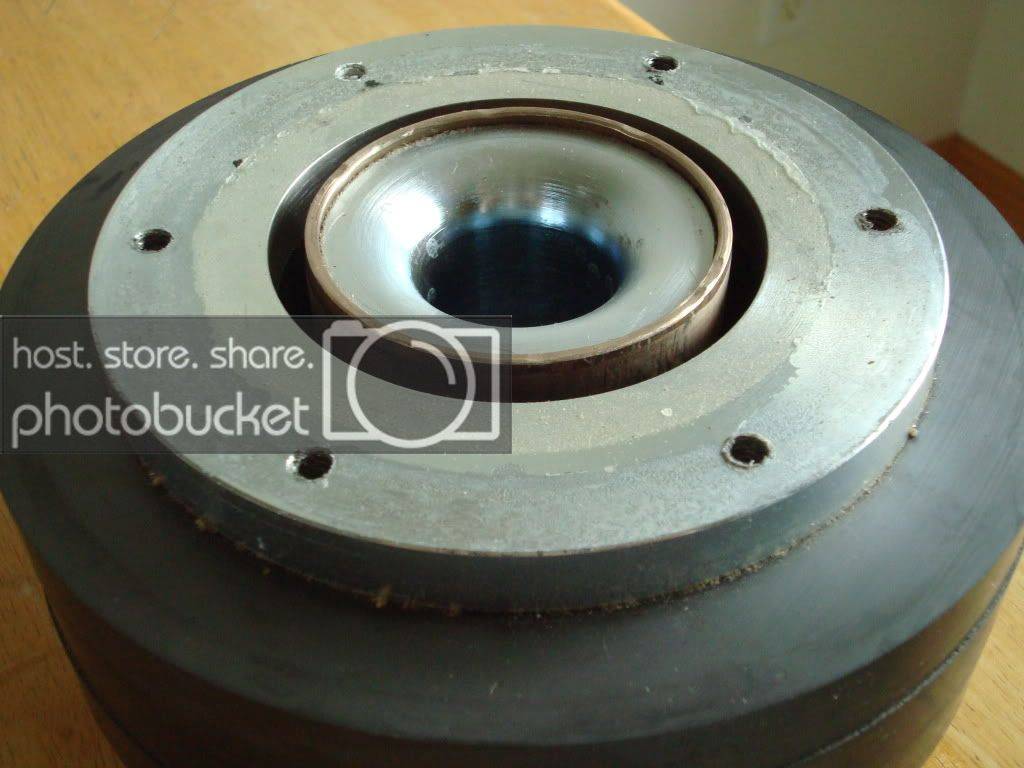
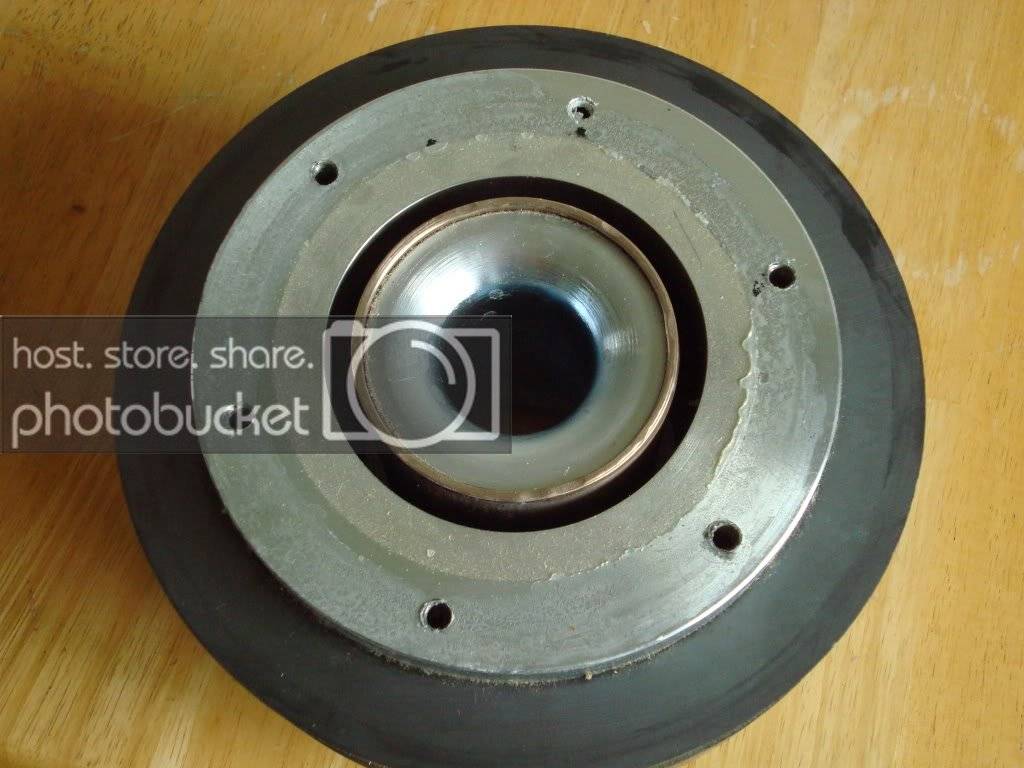
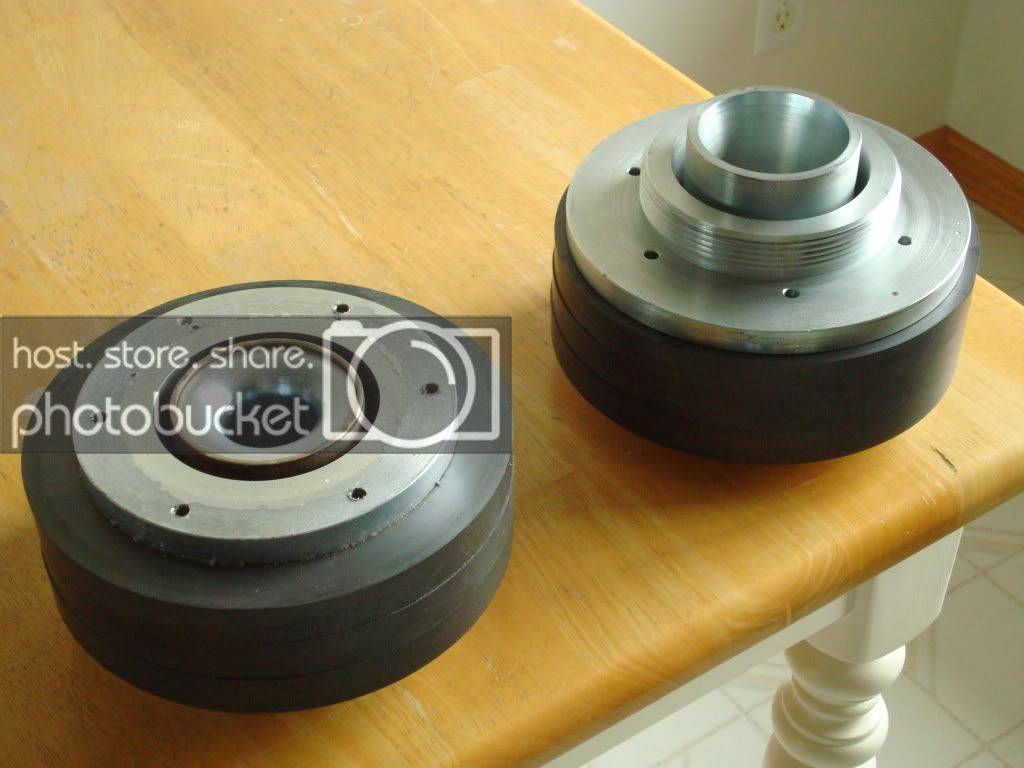
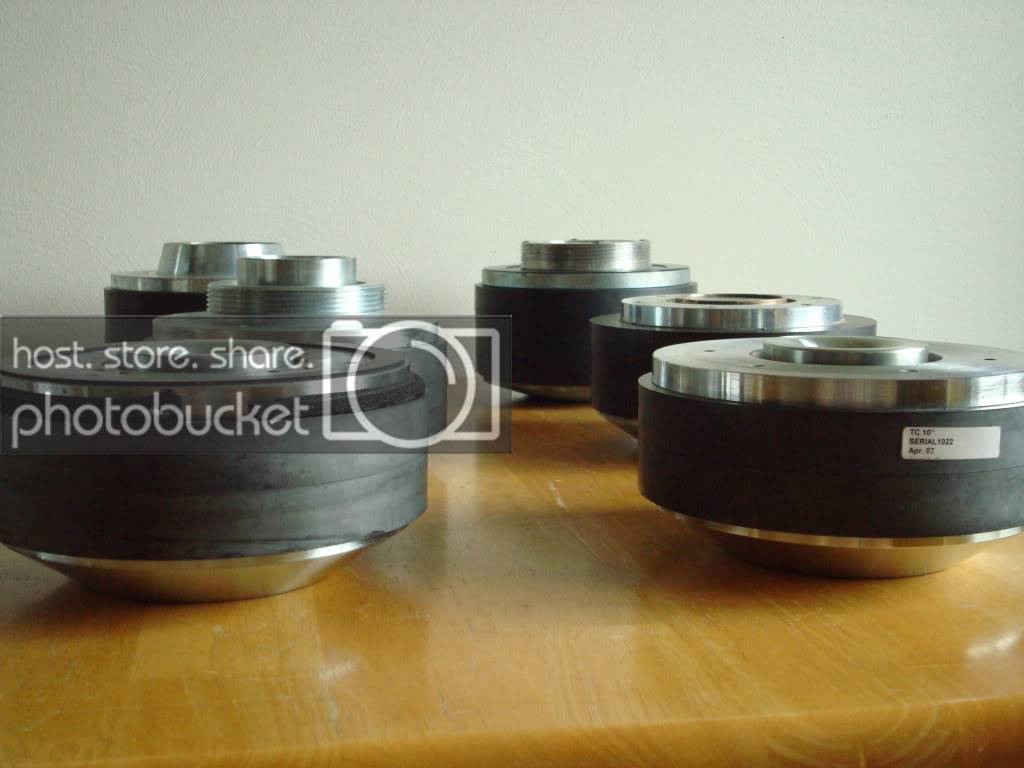
This is a standard TC-9 without a shorting ring.

DSC04061.jpg


DSC04065.jpg


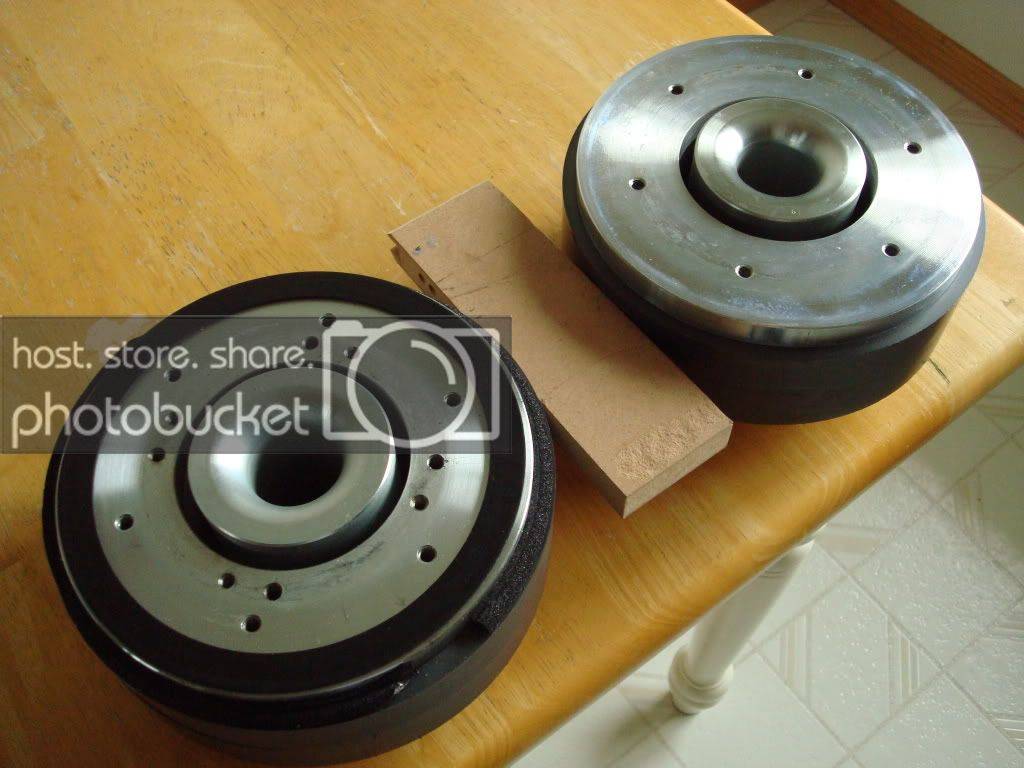
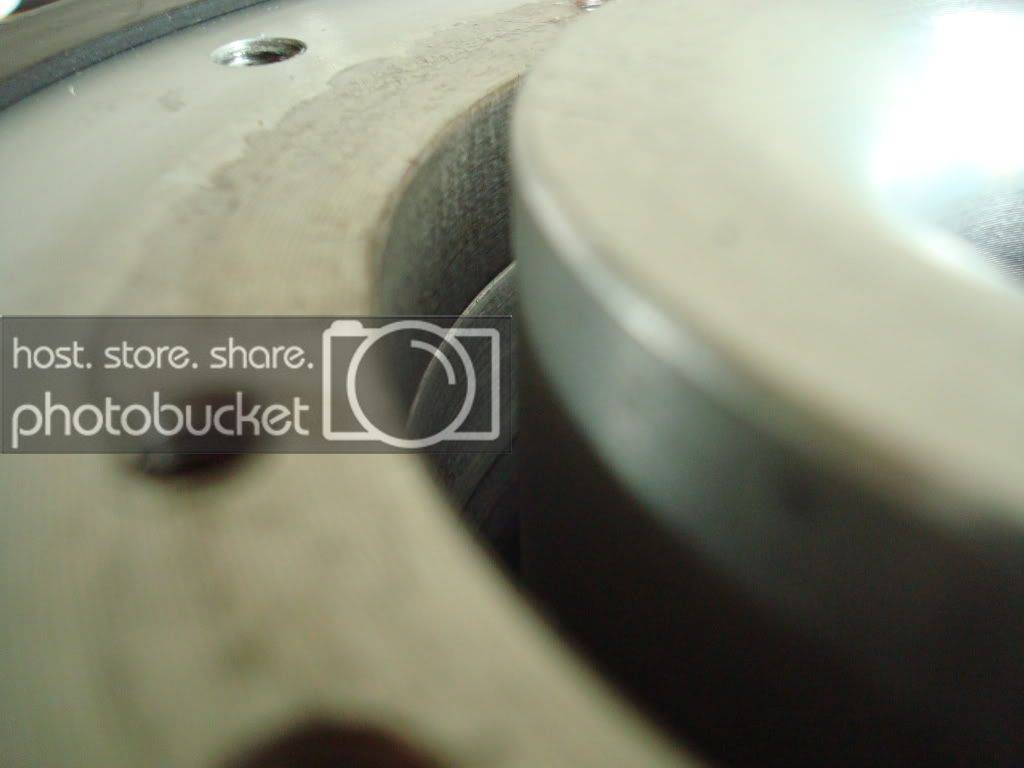
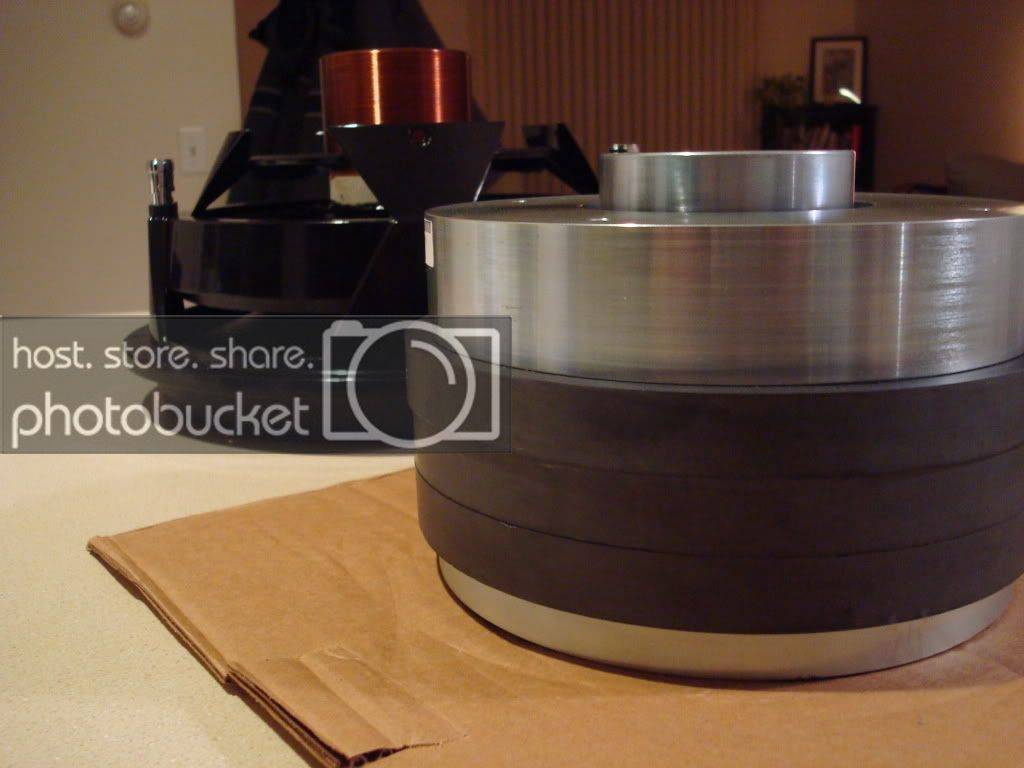
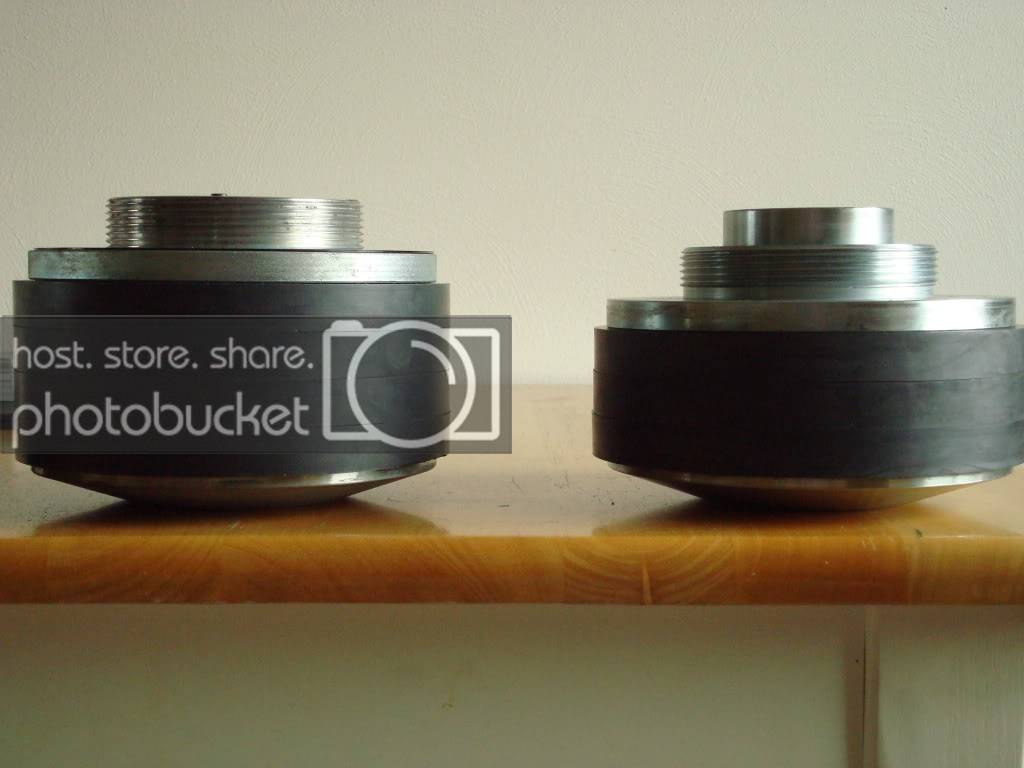
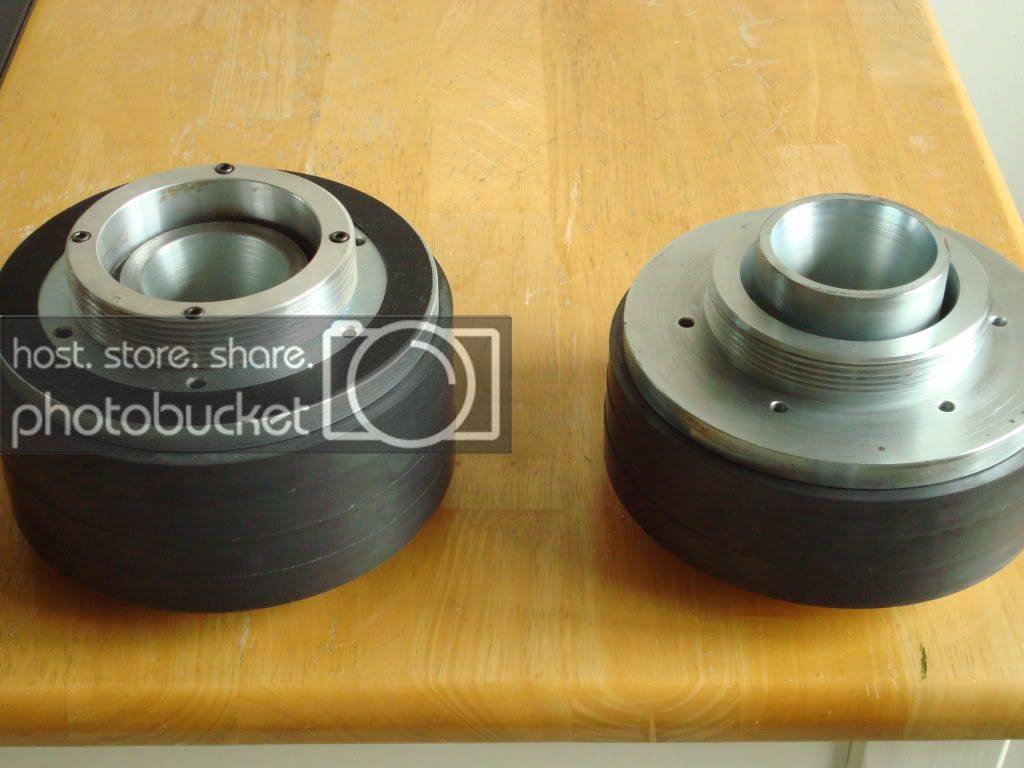
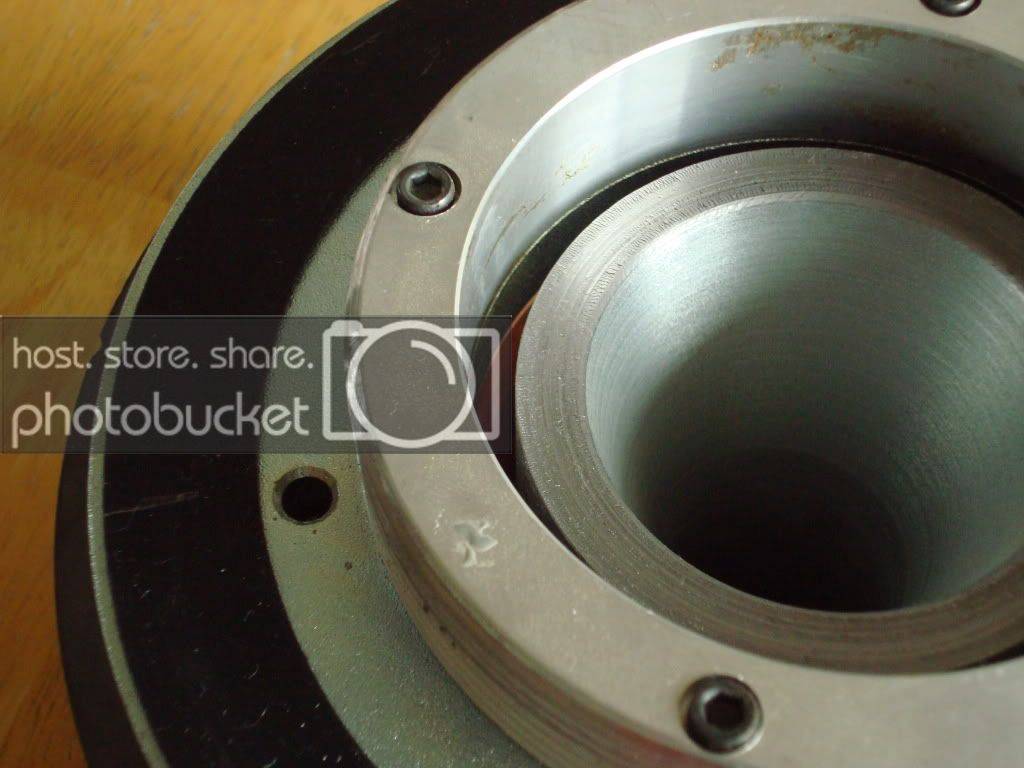
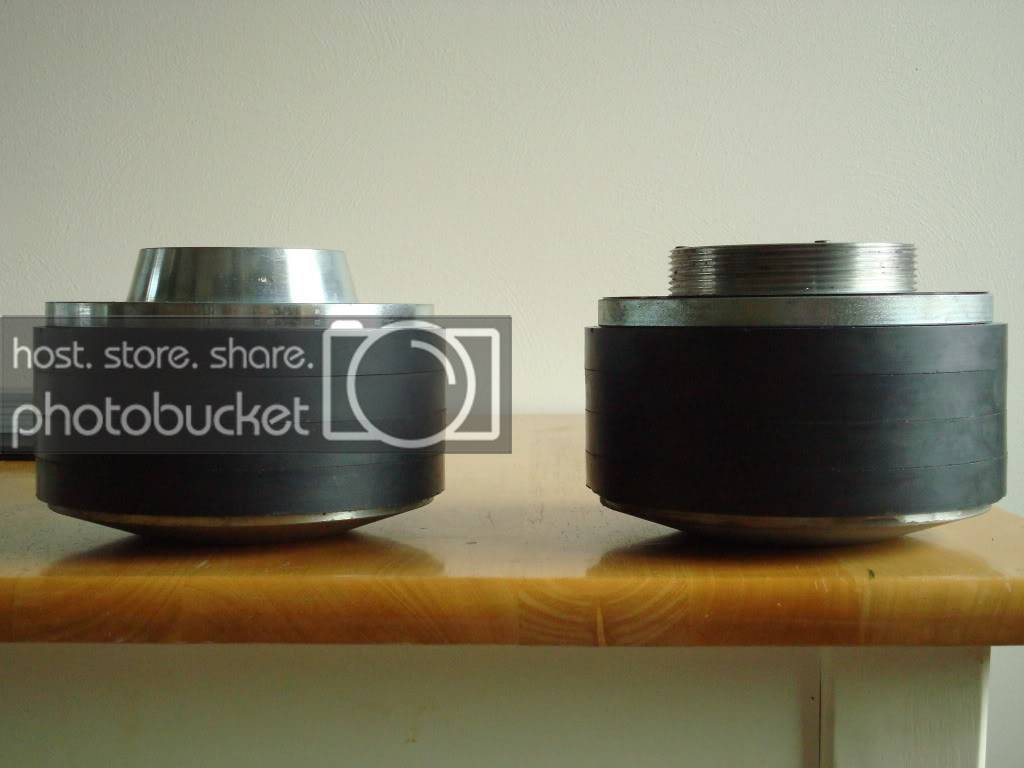
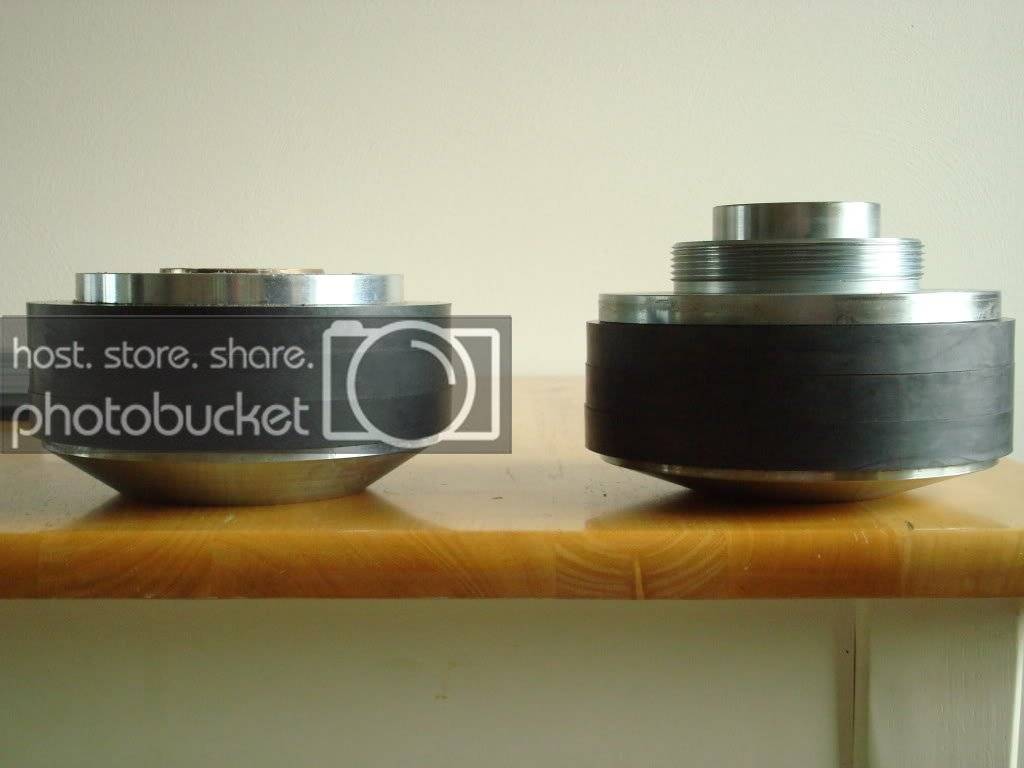
This is the same motor next to a TC-9 from a REVO. Basically the same but with the addition of a shorting ring and threaded ring mounted on top for the QCA (removed for the photos), both of which help to combat flux modulation. The aluminum shorting ring can be seen in the last photo, just beneath the top plate and extends for 2" downward.

DSC03996.jpg


DSC03983.jpg


DSC03989.jpg


This is the TC-9 next to the 3HP meant to be used with Ti baskets. The difference is pretty obvious for the traditional versions. Magnet height is different, as well as the top plate and the T-yoke height. The threaded part is part of the flux gap so the total height is 35mm. Gap width is the same. It's easy to distinguish which is which.

DSC04005.jpg


DSC03998.jpg


This is another version of 3HP to be used with AXIS style baskets. The thickness of the top plate is the same between the two and so is the gap width, but the T-yoke is different. Instead of venturi-type venting it's just a nominal pole vent with a heavy radius. It doesn't extend up as far as the older version either, which means the flux pattern would be slightly different.

DSC01329.jpg


DSC01331.jpg


DSC01438.jpg


So at this point, you might think that a 3HP equals a 35mm top plate or that it has three .75" slugs or a total of 2.25" of magnet height.

You might also think that a TC-9 equals a 12mm top plate or that it has two 1" slugs or 2" of magnet height.

The problem with that logic is that the motor for an LMS 4000 is called a 3HP+ (the plus sign presumably meaning that an extra slug was added) which might suggest that it has a 35mm top plate but it has a 12mm top plate as seen in these photos, sitting next to the 3HP. I've left the threaded ring on but it is not part of the flux circuit (though, it does play a part in reducing flux modulation). Only the 12mm thickness is carrying flux. Also, notice how the T-yoke is cut down to maintain the traditional relationship of a TC-9 top plate and T-yoke. Clearly that specific flux pattern is a strict requirement and resembles a TC-9 more than it does a 3HP, yet it's called a 3HP+. You can also see the copper shorting ring beneath the top plate.

DSC04022.jpg


DSC04011.jpg


DSC04025.jpg


DSC04014.jpg


Now let me throw a couple of other motors at you. Not really, because that would hurt. //content.invisioncic.com/y282845/emoticons/smile.gif.1ebc41e1811405b213edfc4622c41e27.gif

This one is also called a 3HP+ but it is clearly different from the one I just showed you. It has the same four .75" slugs and T-yoke, although, it's not cut down so the height is the same as the traditional 3HP. It has a 35mm top plate and the relationship of the T-yoke and top plate are different from both the LMS 4000 3HP+ and the traditional 3HP. Also, notice that instead of a shorting ring under the top plate, there is a copper sleeve on the pole. The gap is much wider than all the other motors, 8mm for the air gap. Factor in the thickness of the copper sleeve which is at least 2mm and you now have a 10mm wide gap that is 35mm tall. The resulting flux pattern would be extremely different from the LMS 4000 version. I've tested a 4000 top assembly on it in free-air, observing the correct centering of the coil (up and down center) in the flux pattern and the excursion behavior was very different. It's as if there was a plateau for bit where excursion didn't increase as frequency decreased, maybe for a bandwidth of 10 to 15 cycles, beginning at about 38Hz and extending down to around 25Hz. This is not how an LMS driver normally behaves. Here's a comparison next to the LMS 4000 3HP+.

DSC04049.jpg


DSC04059.jpg


Here's a comparison next to the traditional 3HP. Same T-yoke and same 35mm top plate thickness. Wider gap on the 3HP+ and an extra slug.

DSC04047.jpg


DSC04040.jpg


So what is a TC-9+?

This is what I think a TC-9+ is. At first it looks like 3HP because of the three .75" slugs but it has the T-yoke and the 12mm top plate thickness of a TC-9. How it differs from traditional TC-9 is that it has a copper sleeve on the pole to help prevent flux modulation, instead of a shorting ring under the top plate. That increases the gap width to a full 9mm for the flux to travel across, even though the physical air gap width is still the standard 6mm for a TC-9. This is where the extra slug comes in, to restore flux strength lost due to the wider gap. Hence, a TC-9+? That's my theory anyway. I really don't know, which is why I'm asking.

DSC03968.jpg


DSC03974.jpg


DSC03977.jpg


Here it is next to the 3HP.

DSC04037.jpg


DSC04028.jpg


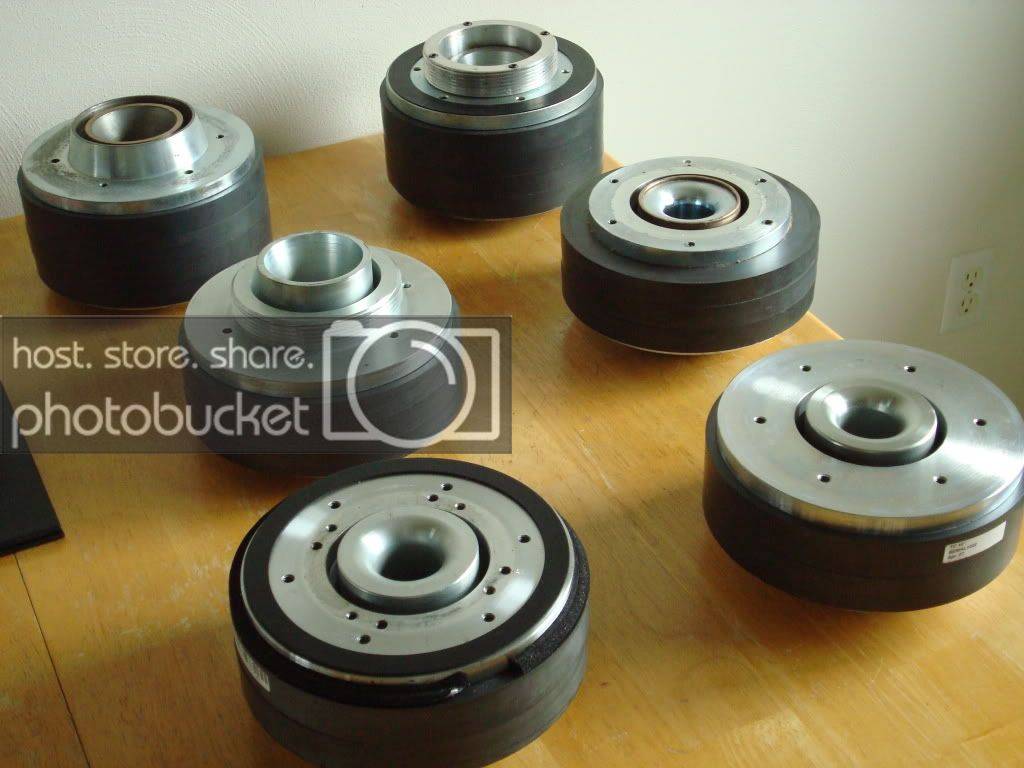
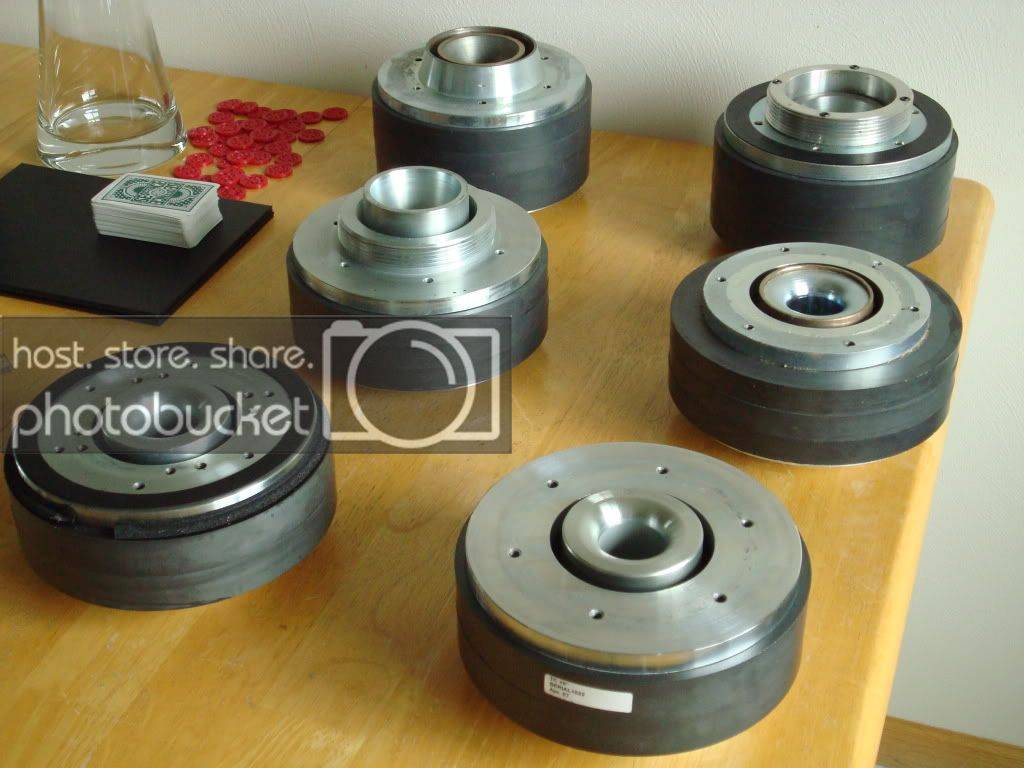
Here are all the motors highlighted, sitting together for reference.

DSC04067.jpg


DSC04070.jpg


DSC04076.jpg


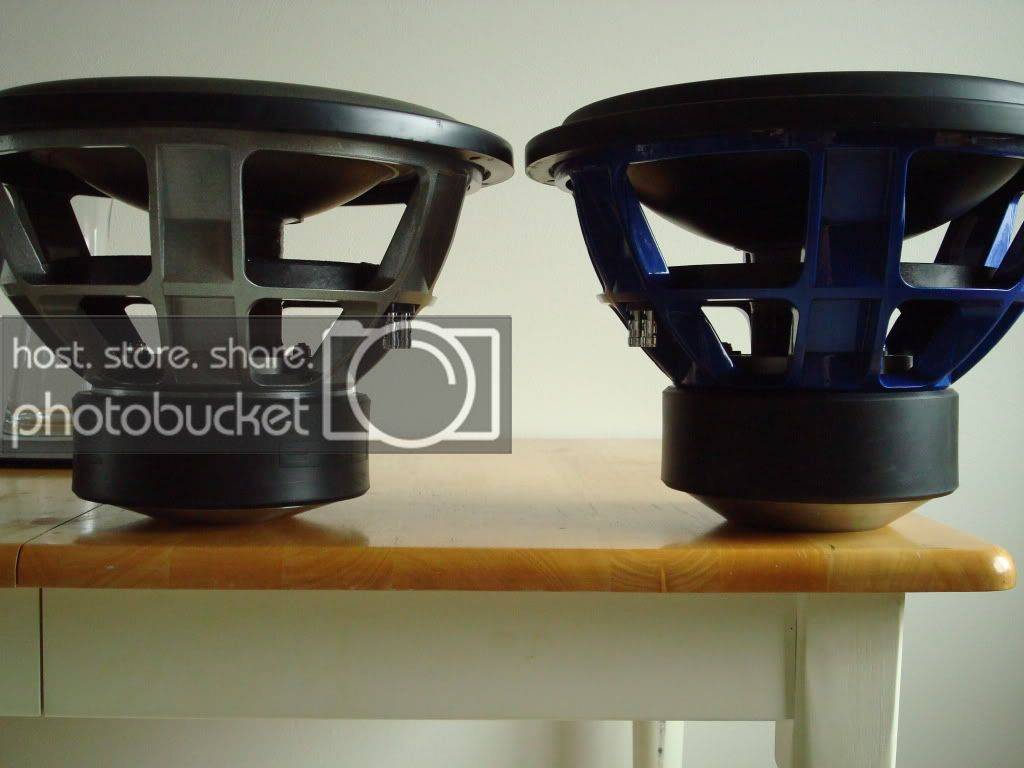
And on a side note, it's no mystery why some people are under the impression that a REVO uses a 3HP. When the magnet boot is on, they look very similar since they use the same sized boot. (15" Eclipse Ti and 15" REVO)

DSC04085.jpg


if anything we have seen a nice collection of tc motors...
At least we have that, huh? //content.invisioncic.com/y282845/emoticons/laugh.gif.48439b2acf2cfca21620f01e7f77d1e4.gif

I think you're the one person I didn't put to sleep with all that babbling. I'm hoping someone can bring some validity to all of this mumbo jumbo.

 
Activity
No one is currently typing a reply...
Old Thread: Please note, there have been no replies in this thread for over 3 years!
Content in this thread may no longer be relevant.
Perhaps it would be better to start a new thread instead.

About this thread

ciaonzo

5,000+ posts
TheContinental
Thread starter
ciaonzo
Joined
Location
WI
Start date
Participants
Who Replied
Replies
54
Views
9,407
Last reply date
Last reply from
ciaonzo
IMG_20260516_193114554_HDR.jpg

sherbanater

    May 16, 2026
  • 0
  • 0
IMG_20260516_192955471_HDR.jpg

sherbanater

    May 16, 2026
  • 0
  • 0

New threads

Top