
Inventing two 12" R's

as mentioned, inverting is fine, and gains extra enclosure volume. the only downside, as mentioned, is possible mechanical noise from the motor structure and airflow noise from the basket. this varies for each sub.

of course, being careful to not have the surround touching anything is key. but the Type-R gaskets keep the surround tucked-in and safe. inverting the ID in the pic below would be difficult and probably unsuccessful. The ultra is doable, but you have to be very careful. the Type-R is easy.

ultra10comparision005.jpg


the next challenge is protecting the magnet and wiring attractively.

i am building a cover for the ML2500
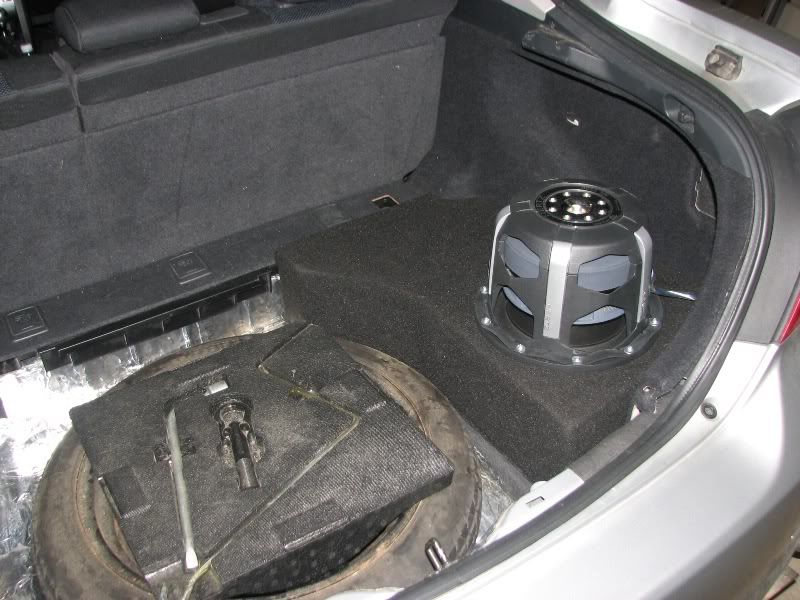
sciontcbox002.jpg


i had to be careful with this sub and i rounded the edges to help soften the transition. i spent hours making sure this hole was safe for the sub - made with a jig saw and sanding.
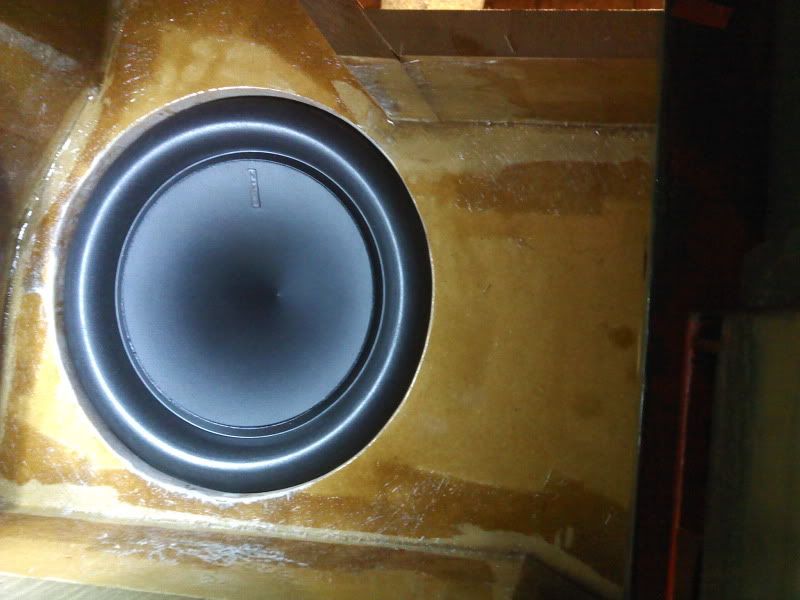
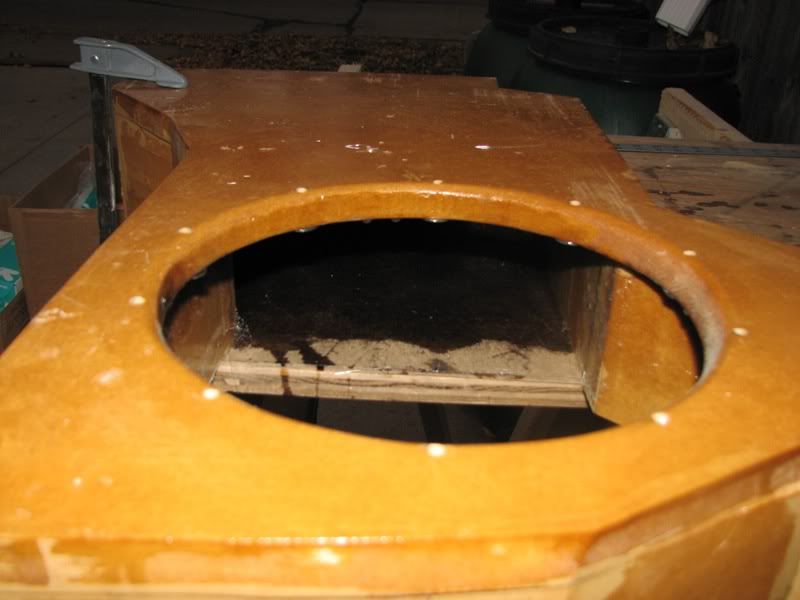
1014112144.jpg


sciontCbox_fg_pt1010.jpg


in the Loudspeaker Design Cookbook, Vance Dickason compares various fill materials. Polyfill scores the lowest. it's cheap and doesn't itch, which is why it is used. but it's absorptive qualities are poor. fiberglass is king, but working with fiberglass is a PITA. Refer to LDC 7th Edition Table 1.21.
recycled denim acoustical batt is an excellent alternative.

UltraTouch Acoustical*– Thermal Insulation for Walls & Ceilings*– Green Product

you want to review tested/published sound absorption (ASTM tested)

From the LDC:

"Traditional enclosure damping, to suppress standing waves in a vented-box system, consists of lining one of each opposite side with 1"-2" of fiberglass. It is recommended, however, that you cover all surfaces directly behind, and adjacent to, the woofer. Colloms recommends that such damping material be placed within the volume or open area, not on the box walls.

The effects of damping can be observed by computer simulation. Using the same 12" woofer and QB3 enclosure from Section 2.50 simulation, three enclosures were built with 0%, 10%, and 50% fill of standard R19 fiberglass. The 10% was made by lining one of each opposite sides with 1" fiberglass. The 50% sample would be equivalent to lining all four sides and the rear wall with 3" thick material. The computer-generated graphs shown in Figs. 2.58-2.60 show the results. The SPL curves in Fig 2.58 show minor response changes, while the damping changes seen in the group delay in Fig 2.59 are also slight. The impedance curves in Fig. 2.60 likewise indicate only minor changes. This being the case, the primary benefit would be from decreased response changes due to box standing wave modes, making the 50% fill an attractive choice. Be sure you do not obstruct the vent with fill."

the "minor" changes are a shift lower in frequency.
so from what i understand, damping the internal chamber of an enclosure will help with the lower frequencies, a little.

would applying Denim to 3/4 faces in the box help with Db levels, along with "mimicing" a box larger than it really is.

 
so from what i understand, damping the internal chamber of an enclosure will help with the lower frequencies, a little.would applying Denim to 3/4 faces in the box help with Db levels, along with "mimicing" a box larger than it really is.
all it does is provide a bit more output at slightly lower frequencies. the real benefit is up in the midrange region where it helps reduce internal modes and smooths out frequency response.

 
all it does is provide a bit more output at slightly lower frequencies. the real benefit is up in the midrange region where it helps reduce internal modes and smooths out frequency response.
gotcha. if damping does that, is it more beneficial than coating the internal of the box with resin?

 
How much lower did polyfill score then denim? Cuz I plan on building a different box soon. I'm just trying to improve what I got with pennies.

I'm confused to how I should use the poly though. From what you quoted it sounds like I should line the walls. Is there a difference between lined and loose? If I line it how far should I keep it from the vent (the vent is only 3" from the back wall)? I liked the idea of chicken wire around the inside of the port, but will the fill stay in suspension or will it just get clogged and hurt the efficiency? If it stays suspended then I'd think it would increase efficiency being that it addes vol and lowers freq.

I should probably start a new thread to get more insight, cuz everyone reading the header is thinking I'm some crackhead trying to reinvent the wheel lol.

 
if you start a new thread, mention me so i see it.

denim scores as high as fiberglass. but it's specific acoustical insulation.

lining the walls with 3" of fiberglass or denim fill , you can glue it to the walls, you could hold it with a few runs of string stapled, you just want to avoid compressing it.

some kinds of acoustical fill come in sheets, those are easy to cut and glue.

 
if you start a new thread, mention me so i see it.
denim scores as high as fiberglass. but it's specific acoustical insulation.

lining the walls with 3" of fiberglass or denim fill , you can glue it to the walls, you could hold it with a few runs of string stapled, you just want to avoid compressing it.

some kinds of acoustical fill come in sheets, those are easy to cut and glue.
I asked how polyester compared to denim. Fiberglass, eww, itchy and unhealthily. I'll just start a new thread titled "polyfill and vented enclosures"...

 
Activity
No one is currently typing a reply...
Old Thread: Please note, there have been no replies in this thread for over 3 years!
Content in this thread may no longer be relevant.
Perhaps it would be better to start a new thread instead.

About this thread

moparerrnocar

10+ year member
Senior VIP Member
Thread starter
moparerrnocar
Joined
Location
Fargo, ND
Start date
Participants
Who Replied
Replies
23
Views
2,323
Last reply date
Last reply from
moparerrnocar
IMG_20260516_193114554_HDR.jpg

sherbanater

    May 16, 2026
  • 0
  • 0
IMG_20260516_192955471_HDR.jpg

sherbanater

    May 16, 2026
  • 0
  • 0

New threads

Top


