Problem with that is that you want a stiff material. Something that wont flex from the pressure of the speaker. Sealing your door is pretty much creating a large enclosure for your speaker. When your enclosure flexes, it changes the acoustic properties. You want a solid stiff enclosureEver considered using something like vinyl? The same stuff they make banners and signs out of. They come in roll with adhesive. Just cut to shape? or ... maybe use the fabric for a subwoofer box with some silicon or other adhesive? Might be difficult to get to set though ...
Some people use mdf and something to bind it to the metal. Some people just get sticky sound deadener and cover the holes.![]()
Thanks.
Some people use mdf and something to bind it to the metal. Some people just get sticky sound deadener and cover the holes.![]()
Thanks.
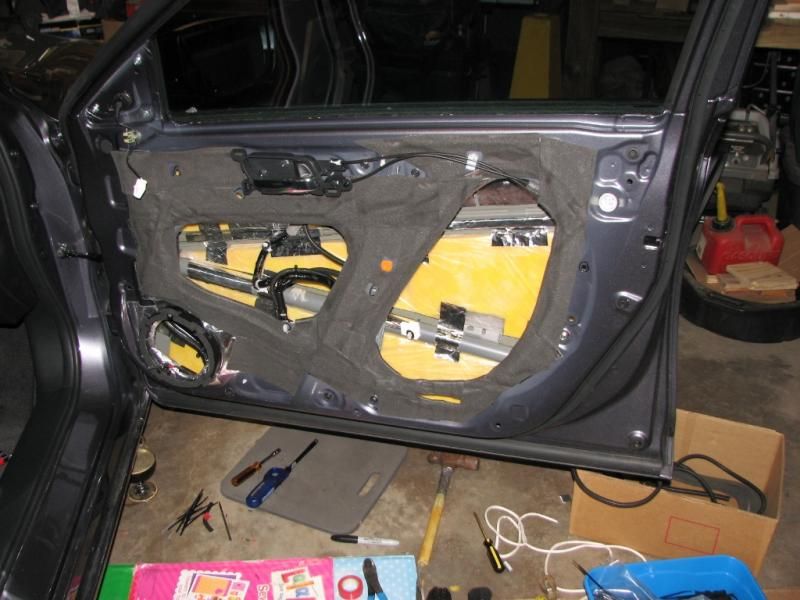
HA! See?! VINYL! LOL!4 hours of effort treating the passenger door. that's deadening, absorption, MLV barrier and CCF decoupler, and then terminating the speaker wires i had previously ran into the door. tomorrow i will repeat for the passenger door. //content.invisioncic.com/y282845/emoticons/smile.gif.1ebc41e1811405b213edfc4622c41e27.gif
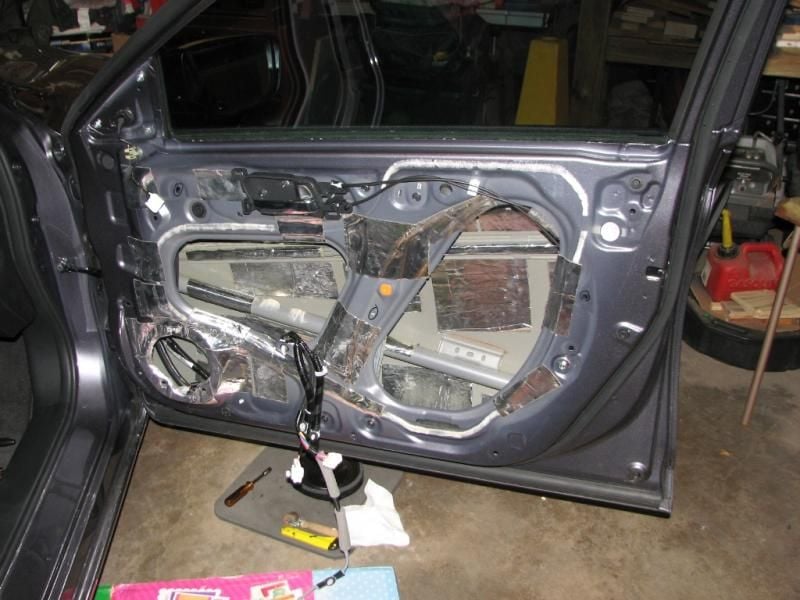
the passenger door needed deadening, so a few sheets of BXT II did the trick.
![]()
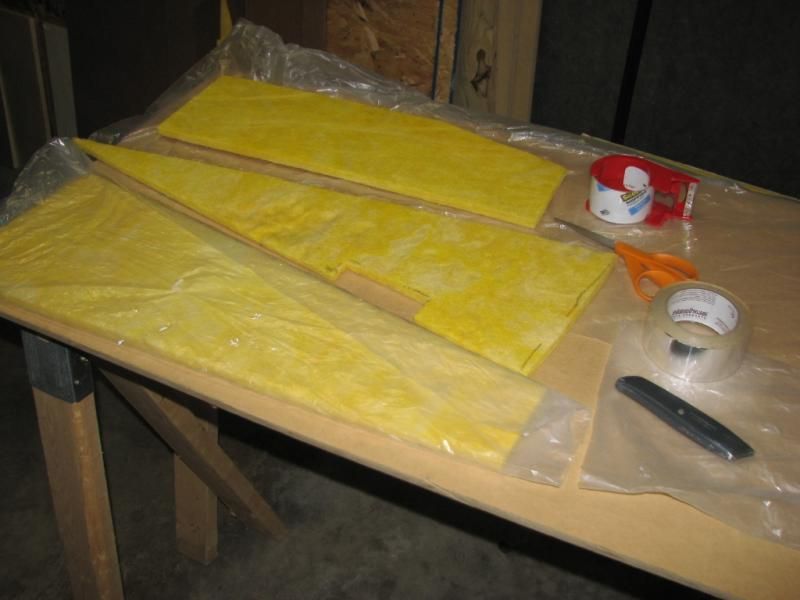
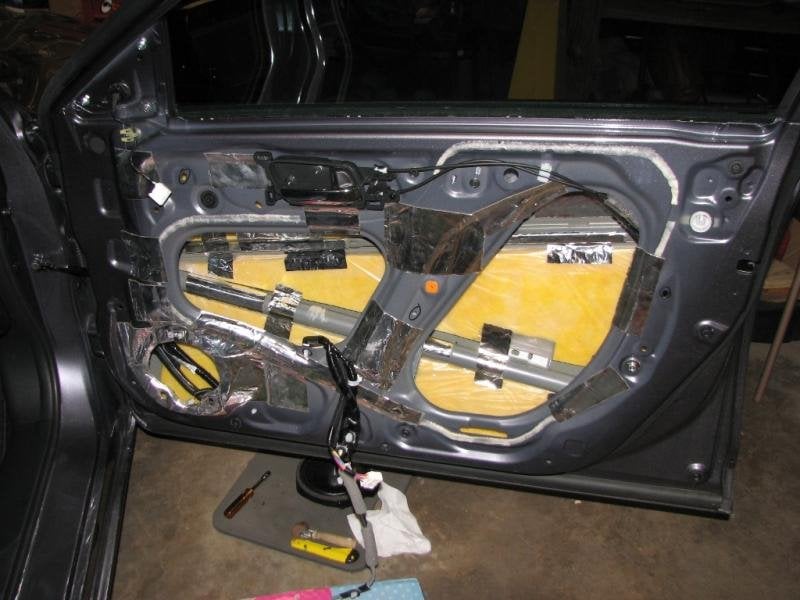
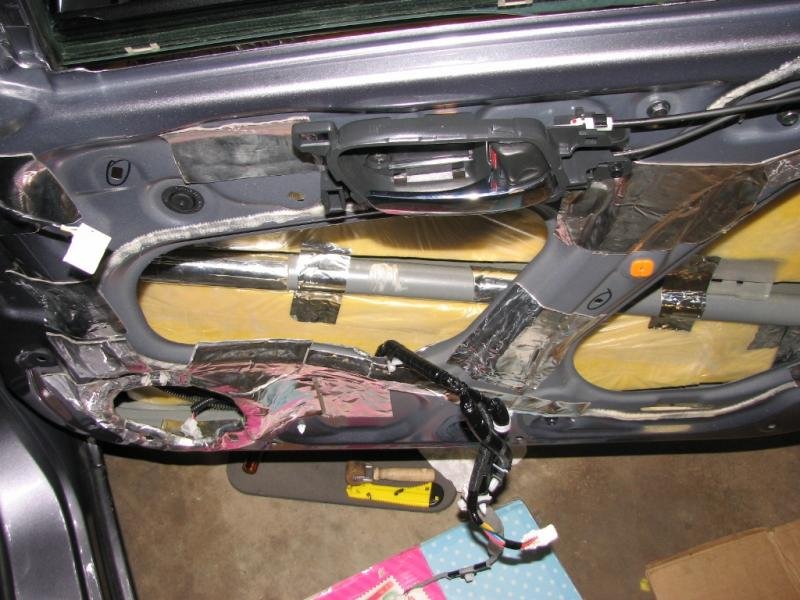
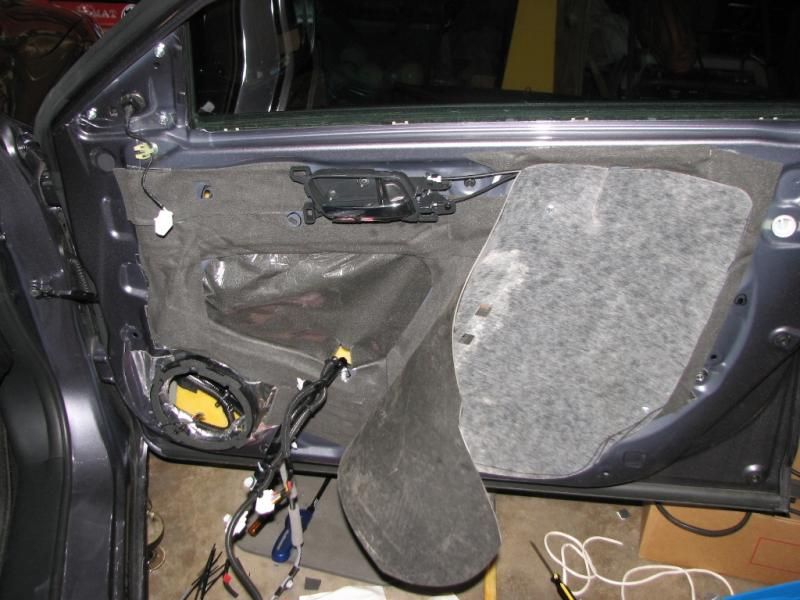
then came the most important part of treating a door - adding absorption. this is a 1" thick compressed fiberglass ceiling tile (with the white cover removed). $6 per 2'x4' piece. this is easier to work with than the loose batt insulation and being compressed it offers more absorption with less hassle.
![]()
![]()
![]()
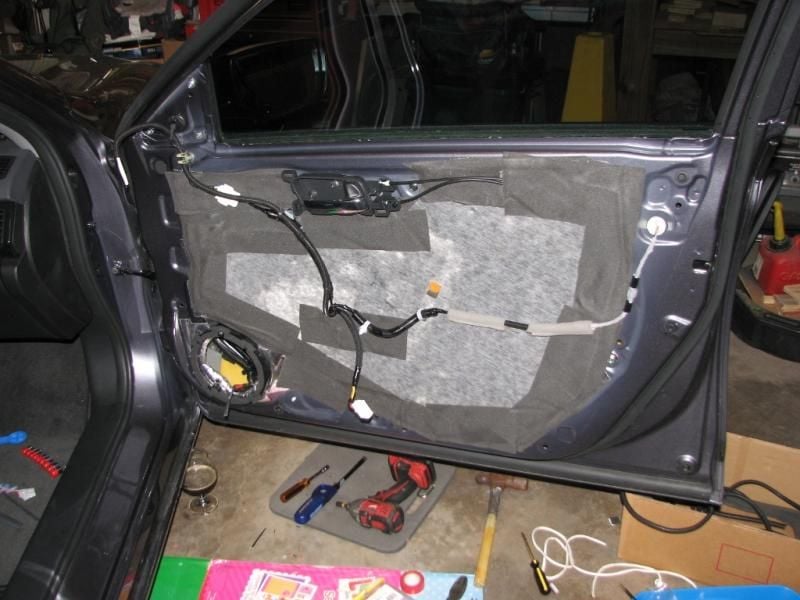
next came the barrier. the factory barrier is thin. i wanted to use MLV for the barrier but had the challenge of keeping water out. the factory setup has a slit where water can drain but it is flawed. so i added Ensolite (CCF( to the metal where the MLV will contact and also to the entire inside (one piece, sticky side out) to stick to the MLV and create a watertight barrier.
![]()
![]()
![]()
HA! See?! VINYL! LOL!4 hours of effort treating the passenger door. that's deadening, absorption, MLV barrier and CCF decoupler, and then terminating the speaker wires i had previously ran into the door. tomorrow i will repeat for the passenger door. //content.invisioncic.com/y282845/emoticons/smile.gif.1ebc41e1811405b213edfc4622c41e27.gif
the passenger door needed deadening, so a few sheets of BXT II did the trick.
![]()
then came the most important part of treating a door - adding absorption. this is a 1" thick compressed fiberglass ceiling tile (with the white cover removed). $6 per 2'x4' piece. this is easier to work with than the loose batt insulation and being compressed it offers more absorption with less hassle.
![]()
![]()
![]()
next came the barrier. the factory barrier is thin. i wanted to use MLV for the barrier but had the challenge of keeping water out. the factory setup has a slit where water can drain but it is flawed. so i added Ensolite (CCF( to the metal where the MLV will contact and also to the entire inside (one piece, sticky side out) to stick to the MLV and create a watertight barrier.

![]()
![]()
![]()
I'm using the same materials and methods I use in architectural acoustics, but without the huge price markups associated with commercial products.HA! See?! VINYL! LOL!
He also used compressed ceiling tiles? $6 for a 2x4 feet tile?