[quote name='calebkhill']
@keep_hope_alive;
Let me first say that that post was completely awesome. It explains allot of different phenomenon and sheds light on how exactly and why certain things happen to the signals. someone mentioned earlier not to get caught up in theory butt I think understanding the theory can give insight on how to control certain phenomenon.
I can see exactly how this would affect hrtf.
Let me ask. How would you go about counteracting ITS, ILD, and hrtf.
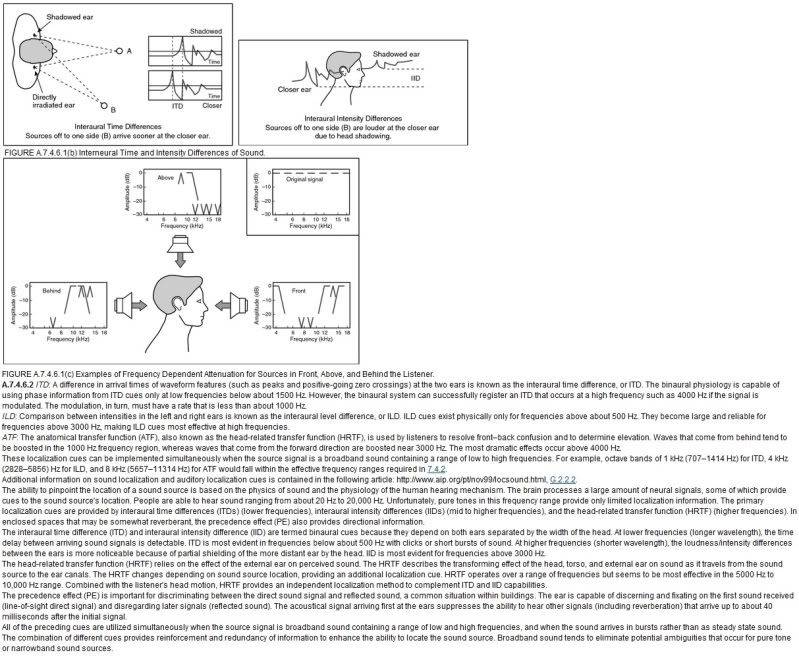
Also, could you explain what the graphs in the bottom picture are showing. I don't know what the lines are saying, its also somewhat hard to see on my phone.
Lastly what all have you learned from playing with your mids
I know it may take some time to respond but I'm patient. Take your time, just whenever you have a chance.
p.s., where did you get that picture from.

[/QUOTE]
that picture is straight out of NFPA 72 - national fire alarm and signalling code - appendix on speech intelligibility. one of my tasks is computer modeling (with EASE) to design voice evacuation/notification systems and ensure intelligibility is maintained. i also recommend acoustic treatments and speaker layouts/selection to achieve that goal.
you have a PM to whet your appetite for acoustics knowledge...
ITD is handled with Time Alignment and placement
IID is handled with level adjustment and sometimes aiming
HRTF is handled with speaker placement and aiming
ITD and IID is not an issue when you are equi-distant from the left and right speakers
HRTF is resolved by ensuring the speakers are far apart and have some toe-in to ensure shadowing
the remaining challenges are room acoustics and eliminating/controlling reflections that would otherwise muddy the signals.
the bottom graph illustrates typical attenuation due to source location relative to head placement. i.e. what filtering is expected from sources behind you relative to in front of you.