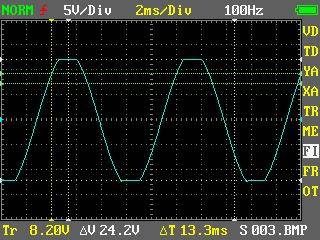
The amount of power the speaker receives is shown as the area under the sine wave. As the waveform begins to square off, the area under the wave still increases (drastically), but the amplitude does not. This means the speaker is accepting more and more power, while its excursion remains at a given level. Since a speaker cools itself by pumping cold air through itself, increasing power to it while its excursion does not increase drastically increases the chances of the speaker failing thermally. This is, of course, if the clipped amplifier is capable of producing enough output to create that thermal failure. Do not make the common mistake of thinking clipping in and of itself damages speakers, it does not. A 10watt amplifier will never create enough power to blow a 500 watt speaker, no matter how radically it is clipped. A heavily clipped amplifier is capable of producing as much as twice its normal rated output, which is why clipping is so often the cause of speaker failure.
Someone above said a clipped wave is when part or all the wave is flat. That is technically not true. A completely flat wave is not a wave at all, as amplitude would be zero. This occurs when there is no signal present. Nitpicking a bit here, but that statement may have confused some people so I decided to clarify.
Also remember that the amplifier is not the only thing that can clip a signal. A preamp device such as an EQ or crossover can clip the waveform also. Its imperative that the gains of all devices in the signal chain are properly set.